Rooftop Cargo Carriers and Truck Bed Storage: A Buyer's Guide for Road Trips
Published

Why Cargo Carriers Are the Secret to Stress-Free Road Trips
Pack for a week-long road trip with four people and you'll hit the same wall every time: there just isn't enough room inside the vehicle. Coolers eat the trunk. Duffel bags pile onto laps. Someone's golf clubs end up riding shotgun. A cargo carrier is the fix, and for this guide, that term covers a lot of ground: rooftop boxes, rooftop cargo bags, open roof baskets, and truck bed storage systems like cargo bars and bed boxes.
The problem they all solve is the same. You've got more stuff than cabin space, and stuffing a vehicle to the roofline isn't just uncomfortable, it blocks your rear visibility too. This guide splits into two buyer paths. SUV and car owners usually need to add roof storage where none exists. Truck owners already have a bed to work with, they just need to organize it, secure the load, and maybe weatherproof it. Either way, the buying decision comes down to the same handful of factors: what your vehicle can actually support, how much capacity you need, whether the gear needs to stay dry, and what you're willing to spend. We'll walk through all four.
Rooftop Cargo Carriers: Hard-Shell, Soft-Sided, and Cargo Bags Compared
Not all rooftop cargo carriers are built for the same trip. A weekend grocery run to the lake house has different needs than six states in nine days.
| Type | Price range | Weatherproofing | Best for |
|---|---|---|---|
| Hard-shell box | $200 to $600 | Fully sealed, lockable | Frequent long-distance travelers |
| Soft-sided bag | $50 to $150 | Water-resistant, needs a rain cover for full protection | Occasional trips, tight storage space |
| Roof basket | Varies, often sold separate from a mesh cover | Open design, least weatherproof | Bulky or irregular items like coolers and firewood |
Hard-shell carriers are the ones you see on SUVs cruising the interstate, aerodynamic, fully enclosed, and lockable. That lock matters more than people think. It's not just about theft, it keeps the lid from popping open at highway speed if a latch isn't seated right. They run $200 to $600 depending on size, and they're the better buy if you road trip more than once or twice a year.
Soft-sided cargo bags are the budget pick, usually $50 to $150, and they fold flat for storage in a closet or garage when you're not using them. The tradeoff is attention to detail. Straps need real tension, not just snugged down, or the bag will shift and flap at speed. Most are water-resistant rather than waterproof, so pair one with a rain cover if you're driving through anything heavier than light drizzle.
Roof baskets are the open, cage-style option, great for firewood, coolers, or kayaks that don't fit inside a box. They're the least weatherproof of the three since there's no enclosure at all, just a mesh cargo net or bungee cords holding things down.
Capacity-wise, compact carriers run 10 to 18 cubic feet, and large family-trip models stretch to around 22 cubic feet. If you take a couple of trips a year with modest gear, a soft bag covers it. If you're loading up for long hauls every month, the hard-shell box earns its higher price tag in durability and peace of mind.
Roof Racks and Cargo Rack Compatibility: What to Check Before You Buy
Before you buy any cargo carrier, check what your roof can actually hold. This is the step people skip, and it's the one that causes returns.
There are three common roof setups: crossbars (bars running side to side across the roof), raised side rails (bars running front to back along the edges), and flush rail or track systems (low-profile channels built into the roofline). A cargo carrier or cargo rack has to clamp onto one of these, so knowing which one you've got determines what will actually fit.
Then there's weight rating, and it comes in two numbers. Dynamic (or driving) weight rating is how much your roof can carry safely while the vehicle is moving, factoring in bumps and cornering forces. Static (parked) weight rating is much higher, since it only accounts for weight sitting still. Rooftop cargo always gets measured against the dynamic number, not the static one. Overload that rating and you're not just risking the carrier, you're risking roof deformation.
If your vehicle has a naked roof, no rails, no rack, nothing, you'll need an aftermarket crossbar kit before a rooftop carrier goes anywhere near it. Factory rail systems complicate things further. Something like the Toyota RAV4 uses raised factory rails that need specific clamp-style crossbar adapters, not generic universal bars. Buying the wrong adapter is the single most common fitment mistake we see.
Last thing to check: quick-release versus bolted crossbars. Quick-release systems let you pull the bars off in a couple of minutes when you're not road-tripping, which helps with wind noise and fuel economy day to day. Bolted systems are more permanent and usually a bit more rigid under load, but you're committing to driving with bars on the roof full time.
Truck Bed Storage and Accessories: Cargo Bars, Boxes, and Organizers
Truck owners have a different problem. The space exists, it just needs organizing so a loose cooler doesn't become a projectile at the first hard stop.
Bed length drives almost every buying decision here, short, standard, or long bed, and the exact measurements vary by make and model. Check the pickup truck bed size guide before ordering anything, because a cargo bar or divider sized for a 6.5-foot bed won't brace properly in an 8-foot one.
Cargo bars (sometimes called bed dividers) are adjustable bars that wedge against the bed walls to keep groceries, coolers, and boxes from sliding around during transit. They're cheap, simple, and solve a real problem: most truck bed cargo loss isn't theft, it's stuff shifting and tipping during a turn.
For bigger gear, you're choosing between a hard truck bed storage box or toolbox, which is better for tools, recovery gear, and anything you want locked down, versus a soft bed organizer, which works fine for smaller, lighter items and packs away easily when not in use.
Pairing bed storage with a tonneau or bed cover keeps everything dry and out of sight, which matters at a rest stop when you've stepped away from the truck. This applies across most popular platforms, including Ram, Ford, and Toyota trucks.
One more thing worth knowing: payload capacity varies a lot between trucks, and it caps how much bed cargo you can realistically carry on top of passengers and fuel. A heavier-duty truck like the Ram 2500 has meaningfully more payload headroom than a half-ton, which matters if you're hauling a loaded bed box plus camping gear plus four people.
Matching Cargo Capacity to Your Road Trip
Bigger isn't always better. Buying the largest cargo carrier on the shelf just means paying for space you won't use, and dragging extra drag and weight around for no reason.
A rough rule of thumb: plan for 3 to 5 cubic feet of extra cargo space per traveler, beyond whatever your trunk or back seat already handles, on a multi-day trip. A family of four doing a week on the road is looking at 12 to 20 cubic feet of added capacity, which lines up with the compact-to-large carrier range we covered earlier.
Weight distribution matters as much as total volume. Keep heavier items low and centered, whether that's in a roof box or a truck bed. Loading all the weight toward the back of a roof carrier, or all the way to the tailgate end of a bed, throws off handling and strains your suspension unevenly.
And don't lose sight of GVWR, the gross vehicle weight rating. Once you add cargo, passengers, and anything you're towing, the total has to stay under that number, not just under what looks like it fits. If you're towing a boat, camper, or watercraft, the math gets tighter: you need to plan your cargo carrier load around whatever tongue weight and payload you have left over, not around how much open space is available. Running the numbers before you leave beats finding out at a weigh station.
Installation, Safety, and Fuel Economy Considerations
Installation isn't glamorous, but it's where most cargo carrier problems start.
Torque your crossbar clamps to spec, then recheck them after the first 50 miles. Vibration settles hardware in, and a clamp that felt tight at the driveway can loosen just enough on the highway to matter. This is a two-minute check that prevents a genuinely bad outcome.
Fuel economy takes a real hit with rooftop cargo, typically 5 to 20 percent worse due to added wind drag, more at highway speeds. Pull the carrier off when you're not actively road-tripping. It's not just about saving on gas, it also cuts wind noise and reduces strain on the roof mounts over time.
If anything in your truck bed extends past the tailgate, check your state's overhang rules. Many require a reflective flag or marker on protruding loads, especially past dusk. It's an easy thing to overlook until a trooper points it out.
Locking matters too. A lockable hard-shell rooftop carrier or a locking bed box is basic theft deterrence for overnight stops, gas station breaks, or anywhere you're leaving the vehicle unattended for more than a few minutes.
Protecting Your Vehicle and Gear Between Trips

What happens after the trip matters almost as much as the gear you bought for it.
Soft-sided rooftop bags should be stored folded and completely dry, otherwise you're looking at mildew by the next trip. Hard-shell boxes are better off stored away from the vehicle entirely when not in use, both to protect the roof finish underneath and to cut down on long-term UV fade on the box itself.
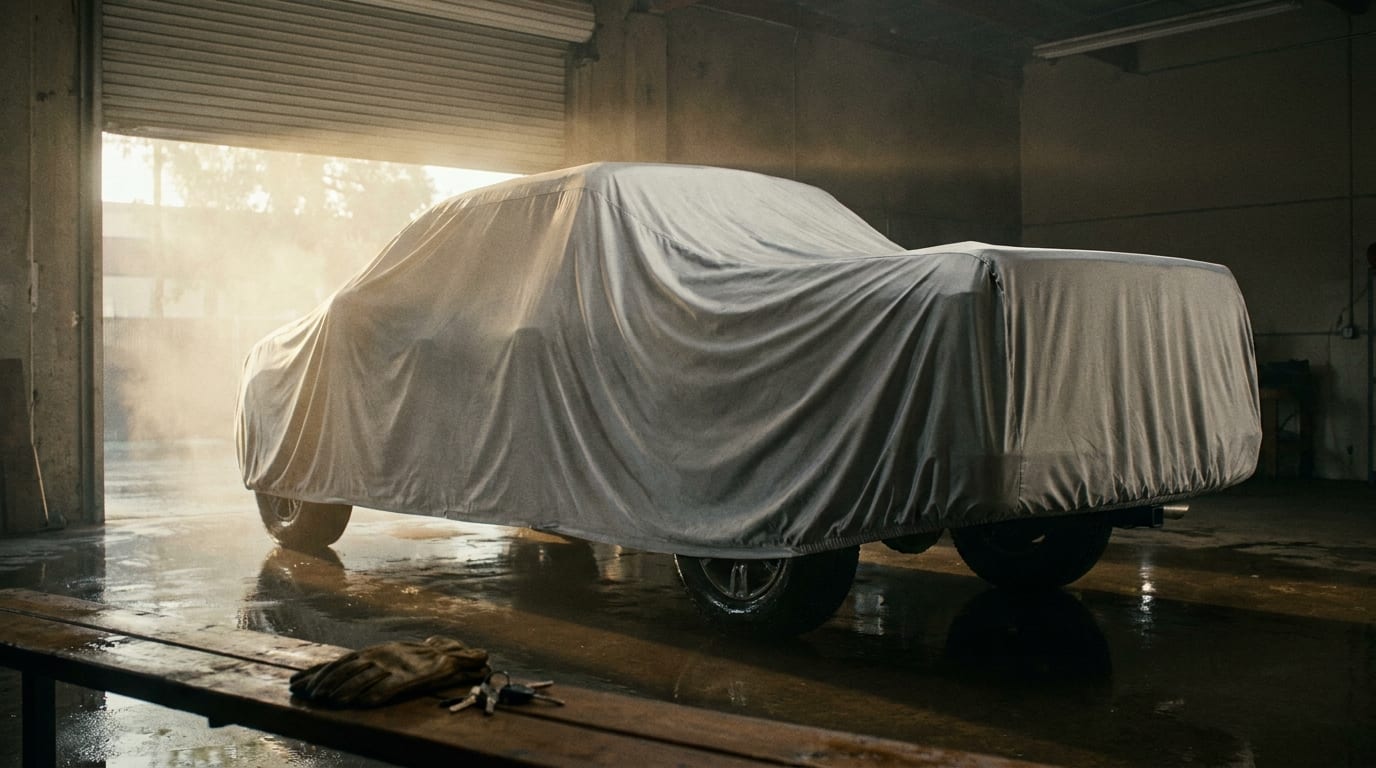
If you're leaving gear in a truck bed between outings, pairing it with a bed cover protects both the cargo and the paint from sun, rain, and road debris. For daily protection beyond the bed, something like the Platinum Shield truck cover or the broader car covers lineup covers the rest of the vehicle while it sits.
Heavy cargo loading in and out of a bed is also how dents happen, a cooler corner against the bed wall, a toolbox dropped at the wrong angle. If that happens, there are legitimate DIY methods for removing car and truck dents worth trying before you book a body shop visit.
Quick post-trip checklist: hose off the carrier or cargo bars to clear road salt and grime, inspect straps and hardware for fraying or stripped threads, and store everything covered and dry.
Choosing the Right Cargo Carrier: Final Takeaways
The decision really comes down to this: rooftop carriers solve a volume problem for SUV and car owners who've run out of interior space, truck bed solutions solve an organization and security problem for owners who already have the space but need to control it.
Either way, match capacity and weight rating to your actual trip, not to the biggest box in the catalog. A family of four doing a week away needs real planning around cubic footage and payload, not guesswork.
If you're rounding out your road trip prep, it's worth browsing CarCovers' accessories collection alongside the SUV covers and truck covers categories, and keep an eye on the blog for more ownership guides before your next trip.