


Car Cover Size Chart for Ram 1500: Match Your Cab and Bed Length to the Right Fit
A Ram 1500 isn't a small truck, and it doesn't cover like one. If you're pulling up a car cover size chart for Ram 1500 trucks and seeing numbers that don't match what's on your driveway, the issue usually isn't the chart. It's the size class.
The Right Size Class for a Ram 1500: Full-Size Pickup Truck Cover
Start here: a Ram 1500 needs a full-size pickup truck cover, not a standard or mid-size truck cover. That distinction matters more than people think. A lot of universal covers are sized for compact and mid-size trucks (think older Tacomas, Rangers, Frontiers), and they just won't stretch over a 1500's footprint.
But "full-size" is a starting point, not a final answer. Within that class, the exact length you need still comes down to two things: cab style and bed length. A Regular Cab with a 6'4" bed and a Crew Cab with the same bed length aren't the same truck when it comes to cover fit, even though both are technically full-size.
Across the Ram 1500 lineup, overall length runs roughly 209 to 239 inches bumper to bumper, depending on configuration. That's a 30-inch spread, which is enough to put you in the wrong cover if you just grab "truck size large" and call it done.
Generation matters too. The 1994-2001 Classic body, 2002-2008 DS/DJ, 2009-2018 DS (plus the 1500 Classic reissue that ran alongside the new DT), and the 2019-present DT all shipped with different cab and bed combinations. Jeep and Ram's own history of the Dodge Ram shows how much the body style shifted generation to generation, and cover fit followed right along with it.
Ram 1500 Cover Size Chart by Generation, Cab, and Bed Length
Here's how the major configurations stack up. Use this as a starting point, then confirm against your specific truck before ordering.
| Generation/Years | Cab Style | Bed Length | Approx. Overall Length | Recommended Cover Size Range |
| 2019-present (DT) | Quad Cab | 6'4" | ~232 in | 213-231 in / 232-249 in boundary |
| 2019-present (DT) | Crew Cab | 5'7" | ~229 in | 213-231 in |
| 2019-present (DT) | Crew Cab | 6'4" | ~239 in | 232-249 in |
| 2009-2018 (DS/Classic) | Regular Cab | 6'4" | ~209 in | 191-212 in |
| 2009-2018 (DS/Classic) | Quad Cab | 6'4" | ~224 in | 213-231 in |
| 2009-2018 (DS/Classic) | Crew Cab | 5'7" | ~228 in | 213-231 in |
| 2002-2008 (DS/DJ) | Quad Cab | 6'4" | ~224 in | 213-231 in |
| 1994-2001 (Classic) | Regular Cab | 8' | ~228 in | 213-231 in |
Those "recommended range" boundaries aren't arbitrary. They reflect where most size-range covers on the market break their brackets, so a truck sitting right at 231 or 232 inches is a borderline case worth double-checking.
One more thing: these are factory dimensions. Add a receiver-mounted bike rack, a hitch-mounted cargo carrier, or towing mirrors, and you can push a truck that measures 228 inches at the factory into the next size bracket entirely. Measure what's actually hanging off your truck, not what the spec sheet says it should be.
Why Cab Style and Bed Length Change the Size You Need
Ram has sold three cab styles on the 1500: Regular Cab (two doors, no back seat), Quad Cab (smaller rear doors, a compact back seat), and Crew Cab (full-size four doors, the most common configuration on newer trucks). Each one adds length to the cab section, and that length adds up fast. A Crew Cab can run a foot or more longer than a Regular Cab on the identical frame.
Bed length works the same way, just in reverse. The three common lengths are 5'7" (short), 6'4" (standard), and 8' (long). Long beds mostly showed up on older Regular Cab trucks. Modern DT-generation Ram 1500s don't really offer an 8-foot box at all; Chrysler leaned into the short and standard lengths as Crew Cab sales took over.
Here's the part that trips people up: a short bed with a Crew Cab can land at nearly the same overall length as a long bed with a Regular Cab. Cab and bed length aren't independent variables, they're a pair, and you have to look at both together. That's exactly why a size chart organized by generation and configuration beats one that just says "Ram 1500, pick a size."
And even once you've nailed the length, bed-mounted gear changes the shape your cover has to work around. A tonneau cover raises the profile slightly. A toolbox or bed rack adds width and height a flat size chart was never built to capture. If you're running any of that hardware daily, factor it into your measurement, not just your cover size.
How to Measure Your Ram 1500 Before Buying a Cover
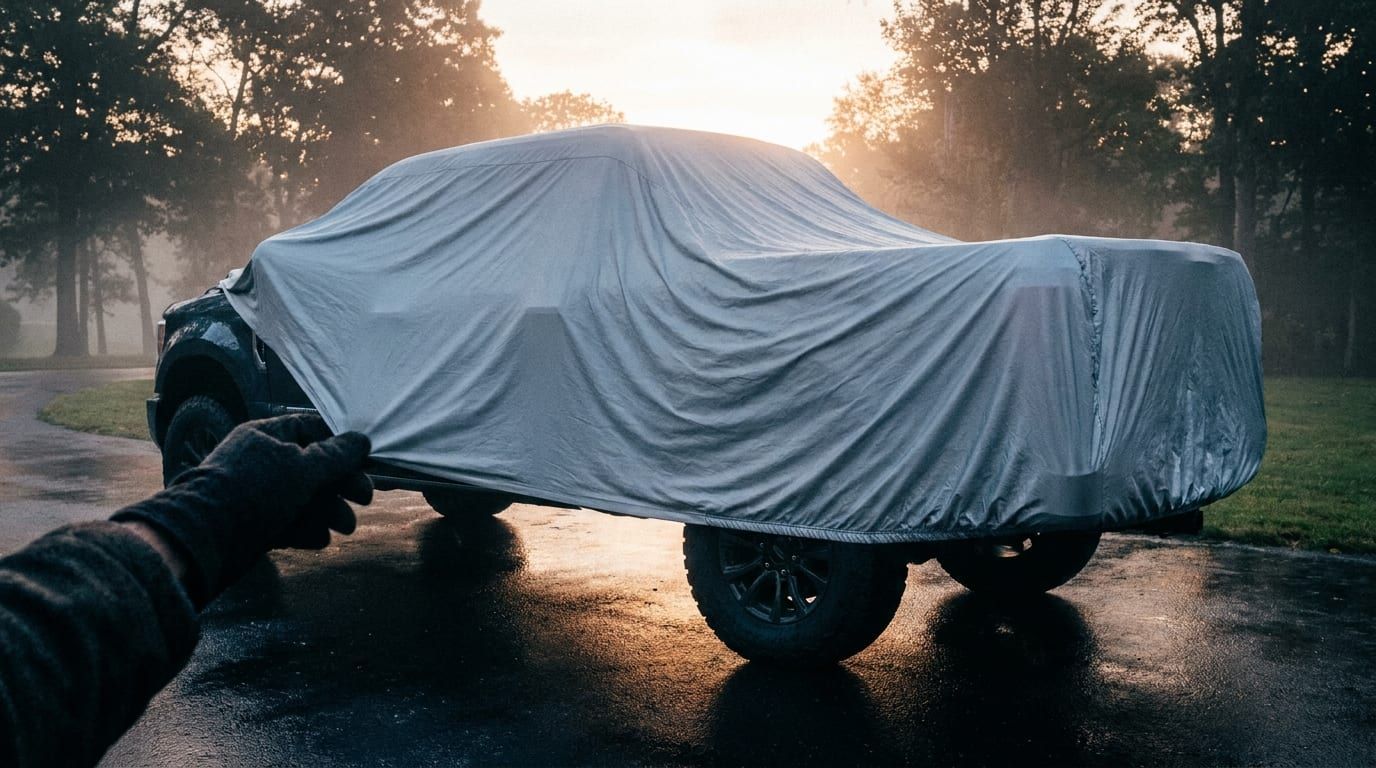
Skip the guessing. Grab a tape measure and do it properly.
Measure bumper to bumper, front to back, at the truck's longest points. If you've got a trailer hitch sticking out past the rear bumper, or towing mirrors extended past the body width, include those. A cover that's an inch short at the hitch is a cover that won't stay on in wind.
Height matters just as much, and it's the measurement people skip most. Measure at the tallest point of the truck, whether that's the cab roof, a roof rack, or a bed cap. Lift kits change this number too. A cover sized off factory height specs won't account for three inches of lift, and you'll end up with fabric stretched tight across the hood and straining at the seams.
If you're not 100% sure whether your truck is a Quad Cab or Crew Cab, or whether you've got the 5'7" or 6'4" bed, don't trust memory. Check the door jamb sticker or decode your VIN. Ram's body codes are specific about cab and bed combination, and it removes the guesswork entirely. If you're still unsure which bed length you're working with, the pickup truck bed size guide walks through how to identify it without crawling under the truck.
Once you've got real numbers, cross-reference them against the chart above, or against a tool built for exact matches like the cover finder. For general guidance on matching dimensions to a cover, the car cover sizing guide covers the basics that apply across vehicle types, not just trucks.
Custom-Fit vs. Semi-Custom Covers for the Ram 1500
Semi-custom covers (sometimes called size-range covers) are sized by overall length bracket, the kind of ranges shown in the chart above. They fit a wide range of trucks reasonably well, but "reasonably well" means looser around the mirrors, bed rails, and wheel wells. There's extra fabric, and that extra fabric is exactly where wind gets underneath and starts working a cover loose.
Custom-fit covers are patterned to your truck's exact year, cab style, and bed length. They contour to the actual body lines instead of draping over them. Tighter fit, less flapping, better protection where it counts.
Which one makes sense depends on how you use the truck. Occasional cover use, budget constraints, or a truck that mostly sits in a garage: semi-custom is fine. Daily outdoor storage, long-term parking, or a truck that lives outside year-round: custom-fit earns its price difference pretty quickly. A loose cover that shifts every time the wind picks up wears out faster and protects less in the meantime.
The other upside of custom-fit: it takes the cab/bed matching problem off your plate entirely. You're not cross-referencing a chart or estimating where your truck lands on a size boundary; you tell them the configuration, and the cover's built for it. Browse custom-fit car covers if that's the route you're leaning toward.
Features That Matter for a Ram 1500 Cover
Size is half the equation. Material and construction are the other half.
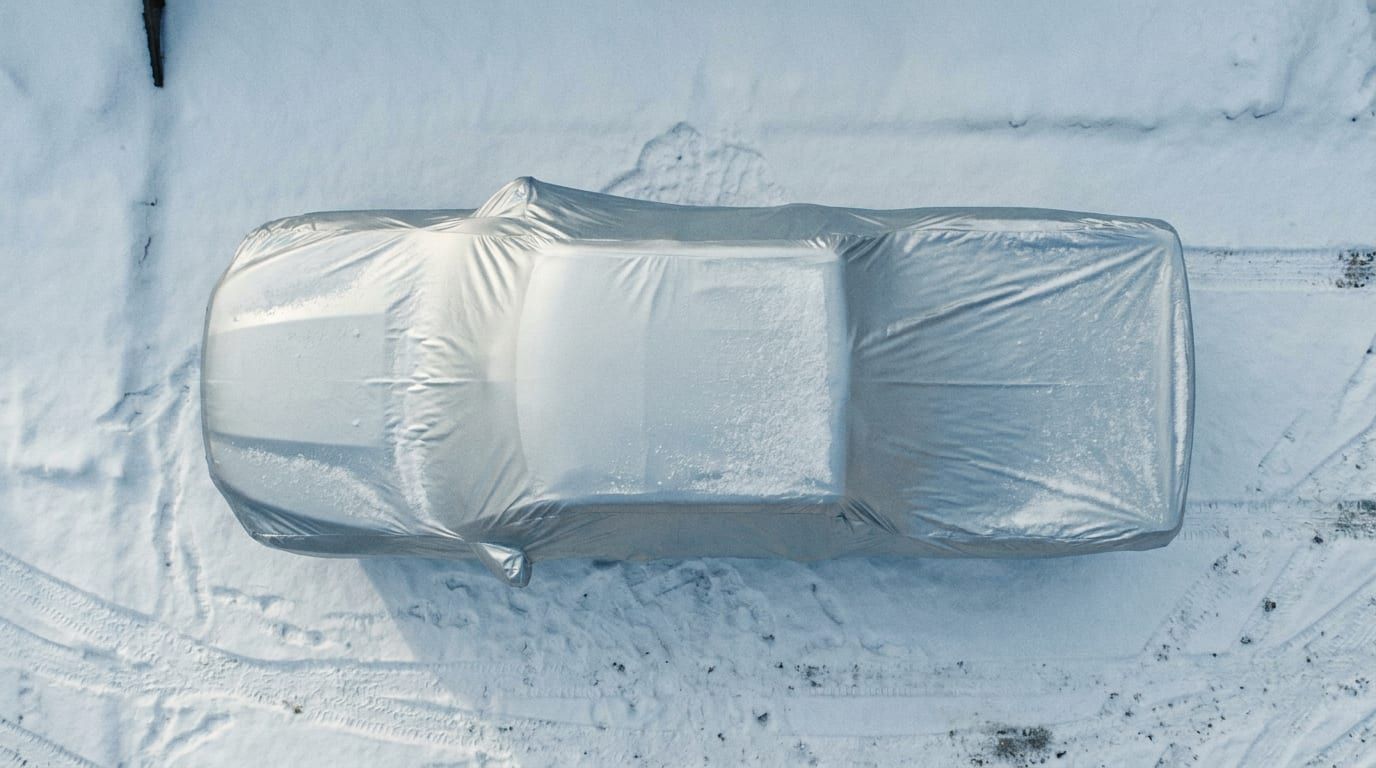
If your truck sits outside through rain or snow, waterproofing isn't optional. A cover that's water-resistant but not actually waterproof will eventually soak through during a long storm, and a soaked cover sitting against paint is worse than no cover at all. Look specifically at waterproof car covers built for that exposure, versus indoor covers that just manage dust.
UV resistance matters just as much, especially for a truck bed and hood that take direct sun most of the day. Pickup beds have a lot of flat, exposed surface area, and that's where sun damage shows up first, both on the paint underneath and on a cheap cover's fabric breaking down over a season or two.
If you're parking on the street or in a driveway, look for a cover with grommets or loops positioned for a cable lock. It won't stop a determined thief, but it does stop casual cover theft, which is more common than people expect. The cable lock installation guide covers how to set one up properly.
And because pickups have a distinct shape, reinforced or elasticized hems around the wheel wells and bed rails matter more here than they would on a sedan. Those are high-friction, high-movement points on a truck specifically, and a cover built for cars won't have reinforcement in the right places.
Get the Right Fit for Your Ram 1500
The size class is simple: full-size pickup. The exact fit is not, and that's fine, it just takes five minutes with a tape measure instead of a guess based on model year.
Match your cab style and bed length against the chart, confirm with your actual measurements, and don't assume two trucks from the same generation are interchangeable. A 2015 Quad Cab and a 2015 Crew Cab aren't the same truck, cover-wise, even if they rolled off the same line.
If you want to skip the manual matching, a cover finder tool can pull the right fit straight from your year, make, and trim. And if you're ready to look at options, Ram truck covers are stocked across the cab and bed combinations covered here. Worth a look before your truck spends another season exposed to whatever's coming next.
Updated