


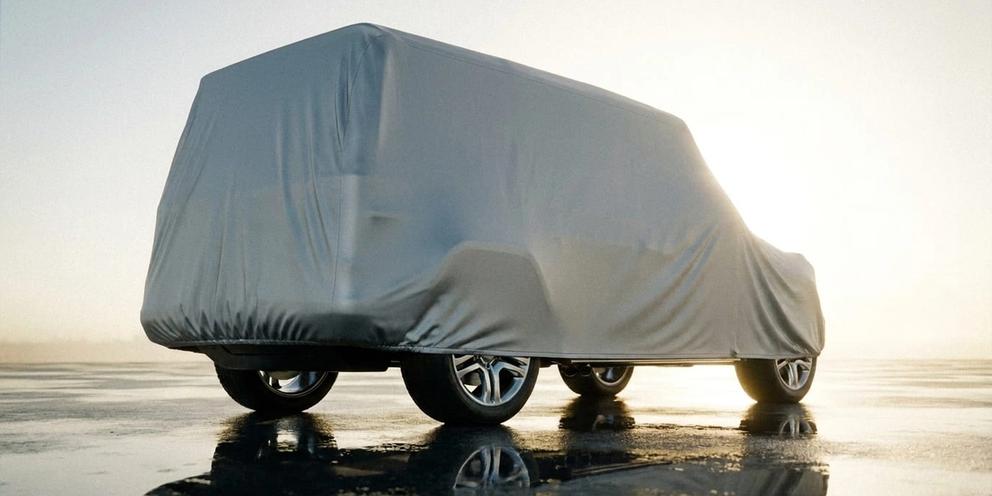
Custom-Fit vs. Universal Car Cover for Your Land Rover Range Rover: Which One Actually Fits?
A Range Rover isn't shaped like most SUVs, and it doesn't cover like most SUVs either. That raked roofline, those flush door handles, the way the body tapers toward the rear glass, all of it makes a generic cover fight against the vehicle instead of working with it. If you've searched for a custom fit car cover for Land Rover Range Rover and found yourself staring at two very different price tags, this is the comparison that actually matters: not brand names, but fit, weatherproofing, and what happens to your paint over time.
Why Cover Choice Matters More on a Range Rover Than on Most SUVs
Here's the thing about Range Rovers: the design language that makes them look expensive is the same thing that makes generic covers a bad match. The raked windshield and sloped roofline don't match the boxier profile a universal cover is cut for. Flush door handles need precise cutouts or they'll snag fabric every time you pull the cover on or off. Some trims carry roof rails, others don't. Certain model years have a rear-mounted spare or a spoiler kicking off the roofline at an angle a generic pattern never anticipated.
Then there's ride height. An SV sits differently than a Sport. An Autobiography on air suspension can raise or lower itself by inches depending on settings, and a Velar's proportions aren't the same as a full-size Range Rover's at all. A cover sized for "large SUV" has to guess at all of this, and it usually guesses wrong, either dragging on the ground or riding up so high that wind gets underneath it.
Let's be blunt about the stakes. This isn't a $20,000 commuter car where a baggy cover is a minor annoyance. A poorly fitted cover on a vehicle in this price range can do real damage: fabric rubbing against clear coat in the wind, grit trapped between loose material and the paint, hems that lift and flap against a fender for hours at a time. A bad cover fit can mark up a finish faster than leaving the car uncovered entirely. That's the whole reason this comparison exists. Below, we'll break down custom-fit versus universal on the specific dimensions that decide whether your cover protects this vehicle or slowly wears on it.
Custom-Fit vs. Universal: Side-by-Side for the Range Rover
Fit Precision
- Custom-fit: Patterned to the Range Rover's actual body lines and model-year dimensions, following the roofline, hood slope, and rear taper without excess material
- Universal: Built to a generic SUV silhouette, with loose slack pooling at the hood and rear hatch regardless of trim
Mirror and Antenna Pockets
- Custom-fit: Includes pockets sized for the Range Rover's flush mirrors and shark-fin antenna, so the cover sits flat around them
- Universal: Either skips these cutouts entirely or fits them loosely, which gives wind an opening to work under the fabric
Wind Resistance
- Custom-fit: Contoured and tight against the body, so it resists flapping and hem lift even in gusty, highway-adjacent parking
- Universal: The extra fabric that doesn't hug the body acts like a sail, and that constant flapping is what wears down fabric and finish alike
Weather Sealing at the Hem
- Custom-fit: Uses elastic or strap systems calibrated to the Range Rover's rocker panel height, closing the gap along the bottom edge
- Universal: Relies on generic elastic that wasn't measured for this body, leaving gaps where rain, dust, and pollen get in
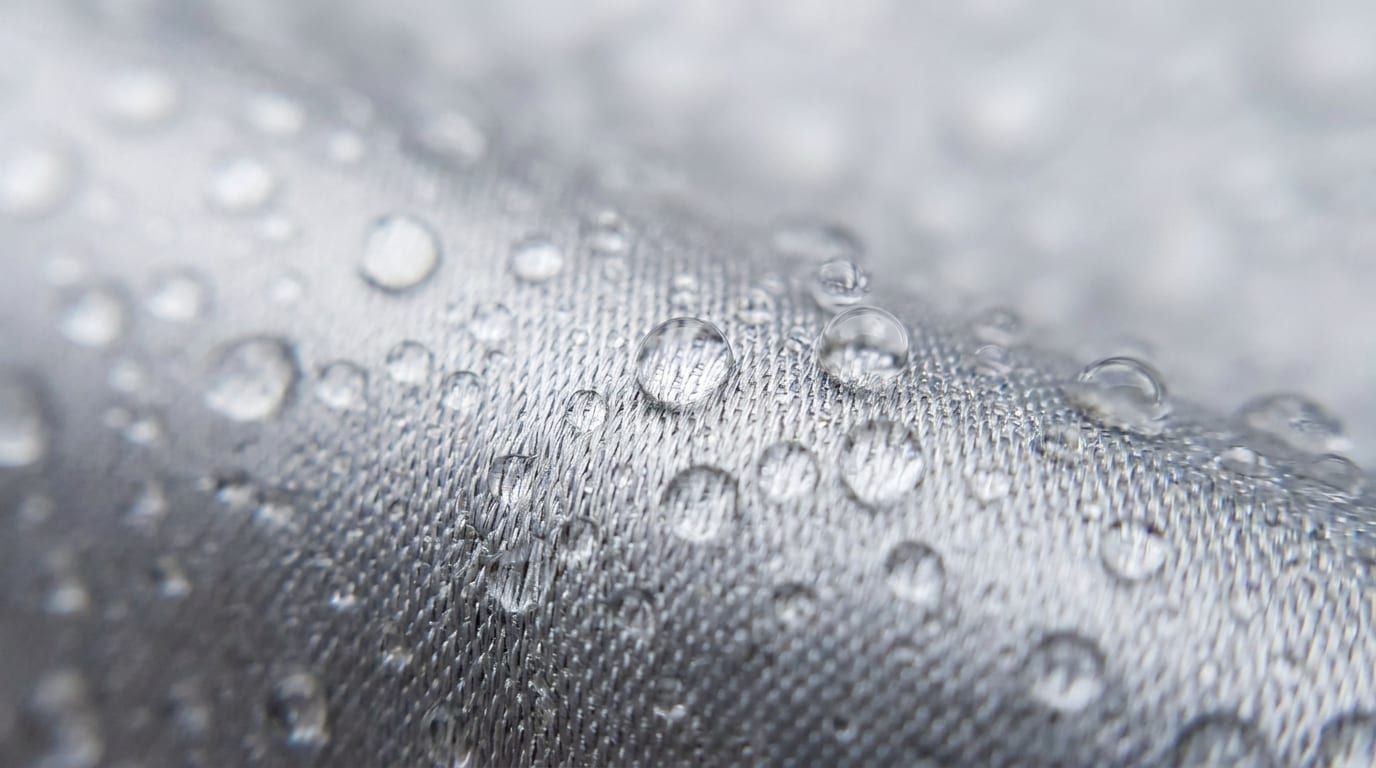
Material Durability Under Stress
- Custom-fit: Fabric lies flat with minimal friction points, since it isn't bunching anywhere
- Universal: Loose fabric bunches at contact points and abrades paint there over months of use, even with a "soft" material
Price
Custom-fit costs more upfront. That's real, and worth saying plainly. But the gap narrows fast once you account for what happens with universal covers, either you're replacing one that's shredded from wind flap within a season, or you're paying for paint correction on swirl marks a loose cover caused. Neither of those costs shows up on the price tag at checkout.
Installation Time
A custom-fit cover goes on in one motion, following the body's contours because it was built to. A universal cover takes longer: more tugging, more adjusting, more cinching straps trying to approximate a fit that was never really there.
Look in the Driveway
Custom-fit reads as a tailored product, sitting close to the body like a fitted cover should. Universal covers look baggy and generic, which matters less for protection but is still worth noting if the car sits in view.
If you're comparing options, the custom-fit car cover guide walks through how patterning works across different vehicle types, and it's worth a look before you commit either way.
Where Universal Covers Genuinely Fall Short on This Model
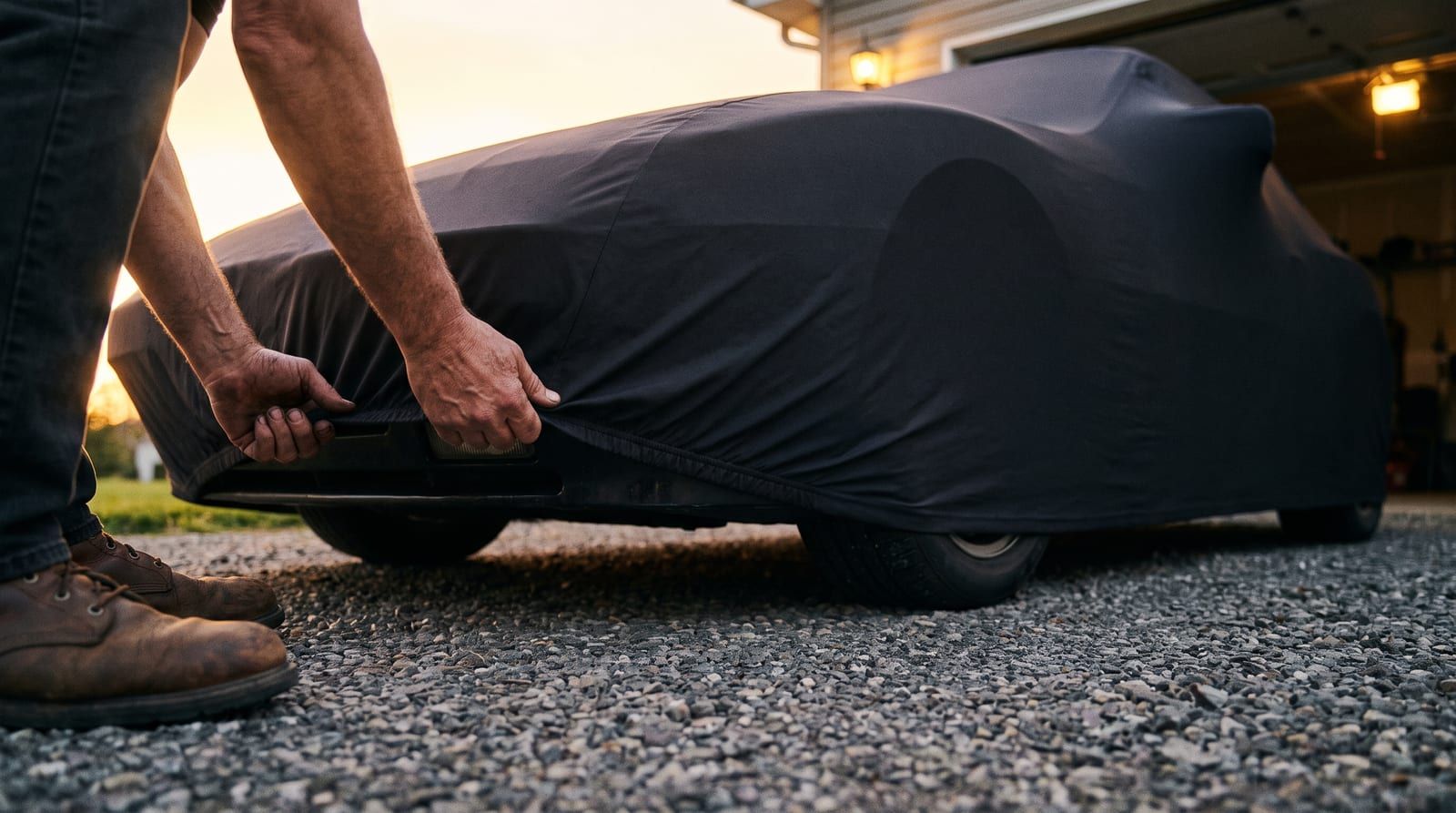
The loose-fit problem isn't abstract. It's mechanical. Wherever a universal cover doesn't hug the body, wind pushes fabric against paint, over and over, thousands of times over a season. On a Range Rover's clear coat, and especially on the matte-finish trim options some buyers choose, that repeated low-grade friction shows up as fine swirling. Matte finishes are worse off here since they can't be buffed out the way gloss paint can.
Universal covers sized for "large SUV" also tend to ignore one specific feature: the Range Rover's flat rear liftgate glass. It's a big, exposed surface, and a generic cover pattern usually doesn't account for the angle or size of it. That makes it a common snag and scratch point, both when you're pulling the cover on and when wind is working the fabric against that edge overnight.
Then there's the practical failure mode nobody likes to think about: the cover just leaving. Universal covers aren't anchored to Range Rover-specific hem points, so in real wind they can slip, ride up, or blow off completely. A cover that's not on the car isn't protecting the car.
None of this means universal covers are useless, full stop. If you need something for a few hours at a job site, or a quick dust barrier while you run inside, a universal cover is a fine stopgap. It's the long-term or overnight storage use case where the gap actually costs you.
What a True Custom-Fit Range Rover Cover Should Include
Not every cover labeled "custom-fit" actually is one. A few things worth checking before you buy.
First, confirm it's patterned to your specific generation and model year. The L460, L405, Sport, Velar, and Evoque are not the same vehicle underneath the badge, and body dimensions shift enough between them that a cover built for one won't sit right on another.
Second, look at the hardware. If the vehicle lives outdoors or in a driveway, you want reinforced grommet points and the ability to run a cable or lock through them, something the outdoor car cover guide covers in more depth.
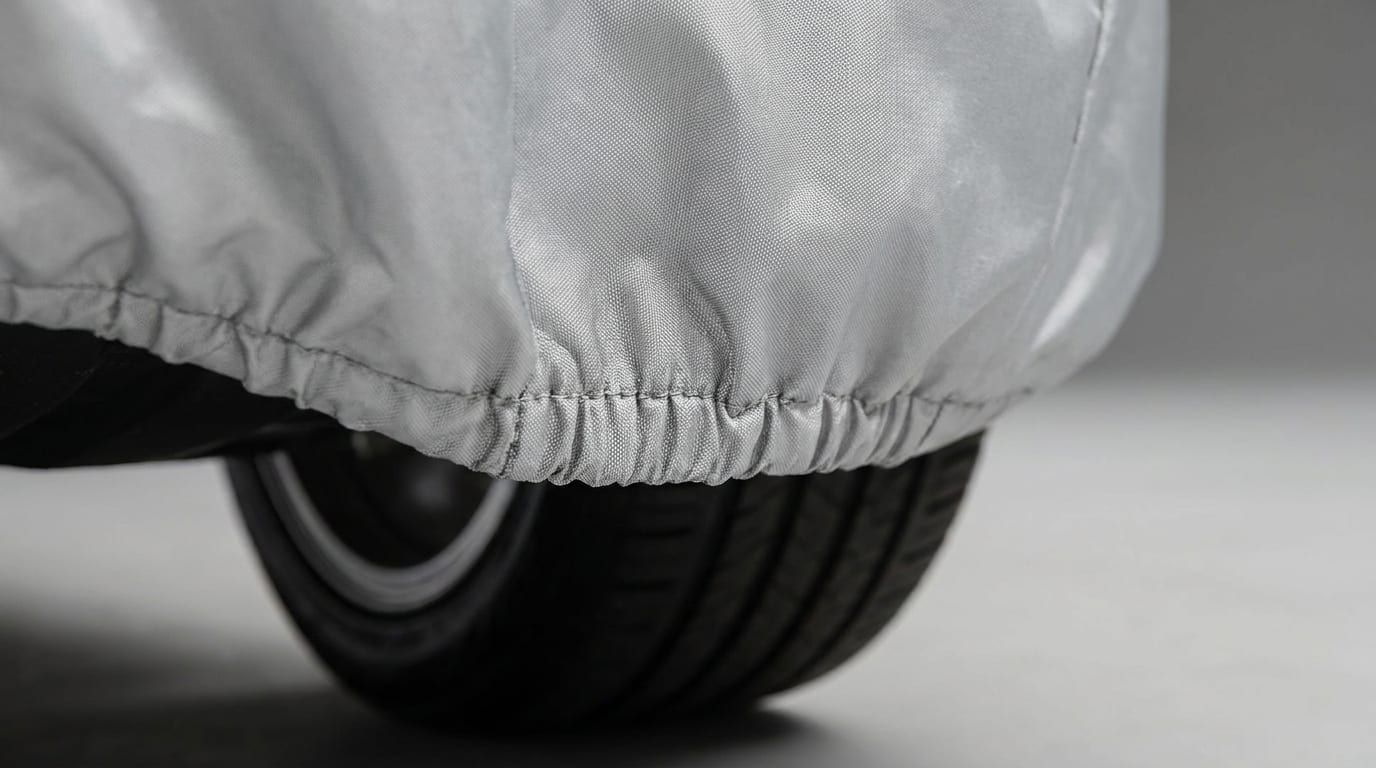
Third, check the hem system itself. You want elastic or strap systems designed around the Range Rover's actual rocker panel height, not a generic drawcord that was designed for nothing in particular.
Fourth, read the fine print on mirror pockets and antenna cutouts. "Universal fit mirror pockets" on a page that's otherwise selling a custom cover is a red flag. It should say this model, specifically.
Finally, match the fabric weight to how you actually store the car. That's worth its own section, so let's get into it. If you're still not sure what dimensions apply to your specific trim, the sizing guide for finding the right car cover is a faster way to check than guessing off a spec sheet.
Matching the Cover Tier to How You Actually Store Your Range Rover
Fit is half the equation. The other half is picking the right fabric for how the vehicle actually lives.
If it's a daily driver parked outside, prioritize a waterproof, UV-resistant custom-fit cover over anything lighter. Sun exposure alone will fade and dry out cheaper fabric within a season, long before wind or rain does any damage.
Garage-kept vehicles, or ones only driven occasionally, don't need that heavy-duty shell. An indoor-focused custom-fit cover handles dust without the bulk, and it's easier to pull on and off for a car you're using more than storing.
If you're in a region that sees hail or regular severe storms, it's worth stepping up to a heavier-duty cover built for impact protection rather than assuming a standard outdoor cover will hold up.
But none of this fabric talk matters if the cut is wrong. A hail-rated cover in the wrong pattern still bunches, still snags on flush handles, still leaves gaps at the hem. Tier and fit have to be solved together, not one instead of the other.
Bottom Line: Which Should You Buy for Your Range Rover?
If you're using the cover regularly, or storing the vehicle for any real length of time, custom-fit is the right call. Not because universal covers are worthless, but because this specific vehicle punishes a bad fit faster than most: the roofline, the flush handles, the liftgate glass, the ride height variance across trims. All of it adds up to a car that needs a cover built for it, not near it.
Universal covers still have a place, but it's a narrow one: short-term, budget-driven, occasional coverage. Not a long-term protection strategy for a vehicle like this.
If you're ready to look at real options, the Land Rover cover page is the fastest way to find fits built for your specific model and year, rather than sorting through generic listings that only sort of apply. And if you want more guides like this one before you decide, it's worth browsing the site's car care articles or subscribing for future posts on keeping your vehicle protected in whatever conditions you actually park in.
Updated