


Ford Ranger Car Cover Size Chart: Find Your Exact Fit
The Ford Ranger sits in the midsize truck category, one size class down from full-size trucks like the F-150 or Silverado. That distinction matters more than most owners realize when it's time to buy a cover. Use a car cover size chart for Ford Ranger sizing, and you'll skip the guesswork of matching a compact car cover or an oversized full-size truck cover to a vehicle that needs neither. Below, we break down sizing by generation, cab style, and bed length, then walk through how to measure your specific truck to confirm the fit before you buy.
Ford Ranger Size Class: Midsize/Standard Pickup Truck
Ford has sold the Ranger nameplate in two very different eras, but both land in the midsize truck class for cover purposes. That's distinct from the full-size class the F-150 occupies, and it's the first thing to get right before you even look at a chart.
Inside the midsize class, though, exact sizing still moves around based on three things: which generation you own (first-gen 1983-2011 versus the current 2019+ truck), the cab style, and the bed length. A 1988 Ranger Regular Cab and a 2023 Ranger SuperCrew are both "midsize trucks," but they're not close to the same length, and a cover built for one will fit the other badly.
That mismatch is exactly what causes problems. Order a compact car cover for a Ranger and you'll get gaps at the bumpers where the fabric just runs out. Order a full-size truck cover instead and you'll end up with loose material flapping in the wind, which wears out seams faster and lets water in at the folds. Getting the size class right is step one. Getting the generation and configuration right is step two. Here's the truck cover lineup and the Ford truck page if you want to browse options while you read through the sizing breakdown below.
Ford Ranger Car Cover Size Chart by Generation
Here's how the Ranger's dimensions break down across its major generations and configurations. Use this as your starting point, then confirm with your own measurements in the next section.
| Generation/Years | Cab Style | Bed Length | Approx. Overall Length | Recommended Cover Size Class |
| 1983-1992 (1st gen) | Regular Cab | Short/Standard | 165-176 in | Compact/small midsize truck cover |
| 1993-2011 | Regular Cab | Short bed | 178-190 in | Midsize truck, short bed |
| 1993-2011 | SuperCab | Short bed | 193-206 in | Midsize truck, extended cab |
| 2019-present | SuperCab | Short bed | 210 in | Midsize truck, extended cab |
| 2019-present | SuperCrew | Short bed | 210-211 in | Midsize truck, crew cab |
The early Ranger is genuinely small by today's standards. That first generation shares more overall length with a compact car than with the modern truck wearing the same name. The 1993-2011 trucks grew some, especially once you add the SuperCab, and the current Ranger (2019 and up) is longer still since it's built on a more modern global platform shared with other Ford trucks. If you want more background on how bed lengths and configurations vary across pickups generally, the pickup truck bed size guide is worth a look, and the history of the pickup truck covers how these body styles evolved over the decades.
One note on trims: the Ranger Raptor and other performance or off-road packages don't change the sizing math. They're built on the same body as whatever cab and bed combo they're based on, so they follow the same row in the chart above. What does change things is anything bolted onto the bed. A tonneau cover, a bed rack, or a topper adds height or length that a stock-bed cover wasn't built to clear, so factor that in before you order.
How to Measure Your Ranger to Confirm the Right Size
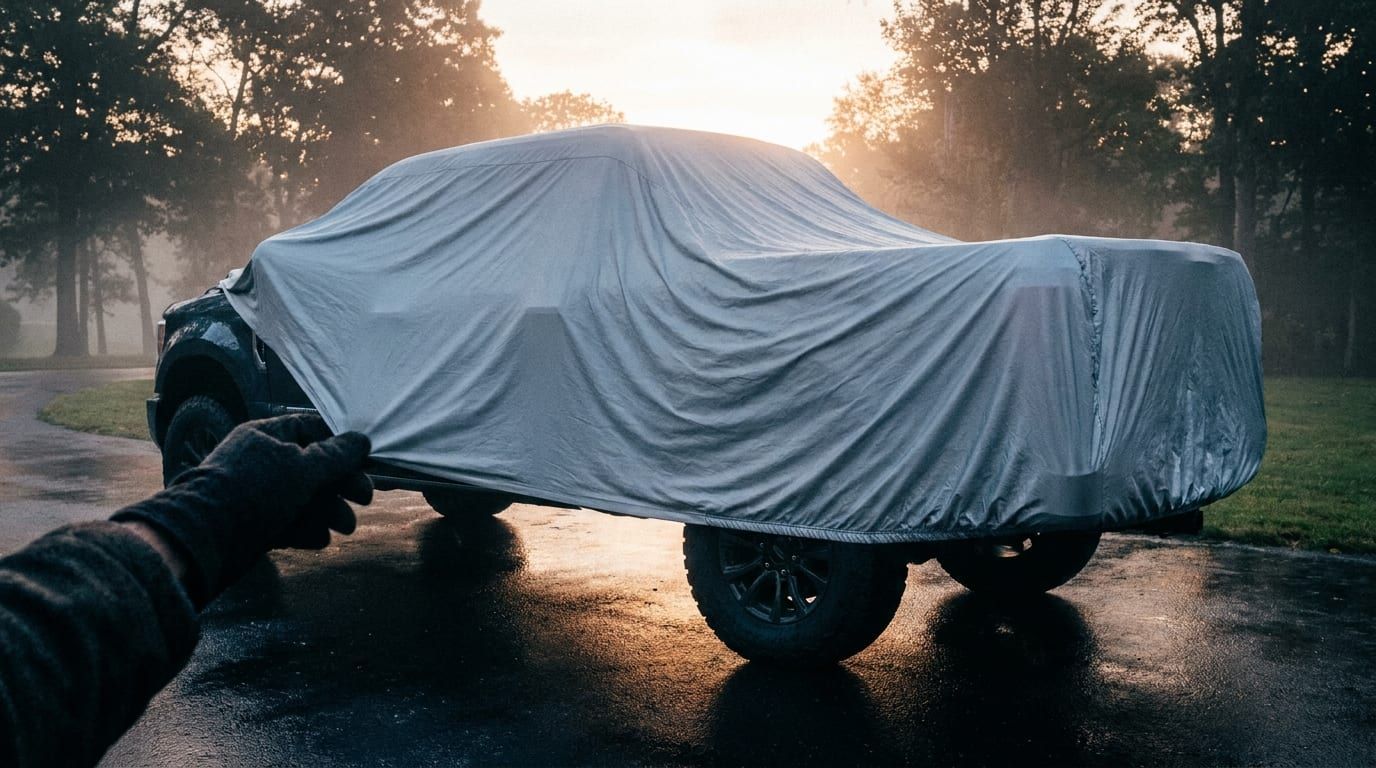
A chart gets you close. Actual measurements get you exact. Here's the process:
- Overall length: Measure bumper-to-bumper, front to back, with the truck on level ground.
- Cab roof height: Measure from the ground to the highest point of the roof.
- Mirror-to-mirror width: Measure across the widest point, mirrors extended in their normal driving position.
Guessing from memory, or assuming your Ranger matches the trim badge on the tailgate, is where a lot of sizing mistakes start. Ford runs mid-cycle refreshes on the Ranger like every other model, and those refreshes sometimes shift bumper styling or mirror housings by an inch or two. Doesn't sound like much, but it's enough to change which size tier fits best.
While you've got the tape measure out, check the door jamb VIN placard or your owner's manual. Factory spec sheets list official length and height figures, and cross-referencing them against your own measurements catches mistakes before they turn into a returned cover. This is also the point where the size and fit guide is worth a few minutes, since it walks through the same process with more detail on edge cases.
Worth flagging: aftermarket parts change your numbers. A lift kit adds height. Oversized towing mirrors add width. A heavy-duty aftermarket bumper adds length. Any of these can nudge your Ranger out of the size tier it shipped in from the factory, so measure the truck as it sits now, not as it left the dealership.
Cab and Bed Configuration: Why It Changes Your Size
Same frame, same engine options in some years, wildly different overall lengths. That's the Ranger in a nutshell once you start comparing cab styles.
Regular Cab trucks are the shortest configuration Ford has offered, with just a single row of seating and the smallest footprint front to back. SuperCab adds a second row (with rear-hinged access doors on most years) and stretches the cab section noticeably. SuperCrew, only offered on the current 2019+ Ranger, adds four full-size doors and a proper back seat, pushing overall length up further even though the bed on the SuperCrew is typically shorter to compensate.
Bed length plays its own role. A short bed and a standard bed on the same cab style can differ by a foot or more, and that difference lands entirely in how much material a cover needs to fully reach the tailgate. A cover sized for a short-bed Ranger will come up short (literally) on a standard-bed truck, leaving the tailgate and rear bumper exposed to weather.
Cab style also affects the roofline height, not just cab length. SuperCrew models sit a bit different than a stripped-down Regular Cab in terms of roof height and contour, and a cover cut for one won't drape the same way over the other. It's a small detail, but it's the difference between a cover that hugs the truck and one that sags or pulls tight in the wrong spots.
Universal, Semi-Custom, or Custom-Fit: Which Matches Your Ranger

Three tiers exist here, and they trade off precision for price in a pretty predictable way.
Universal covers use broad size ranges designed to fit multiple truck lengths within a class. Cheapest option, loosest fit. Fine for occasional short-term coverage, less ideal if you're leaving the truck under a cover for weeks at a time.
Semi-custom covers narrow that down. They're built to fit a specific size class, like "midsize truck, SuperCab, short bed," rather than an exact year and trim. You get a noticeably closer fit than universal without paying for a fully custom pattern.
Custom-fit covers are patterned to your Ranger's exact year, cab, and bed combination. Tightest fit of the three, least excess material flapping around in wind, and generally the best choice if your Ranger sits outside and takes wind gusts regularly. Ranger owners who've dealt with a loose cover snapping in a parking lot overnight tend to upgrade to custom-fit the next time around, and it's easy to see why once you've heard the flapping firsthand.
For a deeper breakdown of how to decide between these tiers based on your storage situation, the custom-fit car covers guide covers the tradeoffs in more detail. Or skip the manual comparison entirely and run your Ranger's specs through the cover finder tool to see what tier and size actually match.
Storage Conditions That Affect Ranger Cover Sizing Choices

Sizing isn't just about the truck. Where it lives matters too.
Outdoor storage, especially in sun, rain, or snow, puts more demand on a cover's fit. A properly sized cover with tight elastic hems at the wheel wells keeps water from pooling in low spots and keeps wind from getting underneath and lifting the fabric. A waterproof car cover paired with the right size does most of the heavy lifting here, since a great waterproof material still fails if the fit leaves gaps.
Garage or carport storage is more forgiving. No wind, no direct sun, so a lighter, closer-fit cover works fine and you don't need the reinforced hems and straps that outdoor use demands.
Accessories complicate things either way. A bed rack, a topper, or a lifted suspension adds dimensions a stock custom-fit pattern wasn't built around. In those cases, sizing up to a semi-custom or even universal cover sometimes makes more sense than forcing a stock custom fit over modifications it wasn't designed for. If you're setting up a cover for the first time, the installation guides section has walkthroughs on securing a cover properly once you've got the right size in hand.
Get the Right Cover for Your Ranger
Between the midsize truck class, the generation, and the cab/bed combination, you've got most of what you need to land on the right size without much guesswork. A car cover size chart for Ford Ranger trucks gets you in the right neighborhood fast, and a quick set of your own measurements confirms it.
Don't stop at the chart alone, though. A fit finder tool accounts for the details a static chart can't, like aftermarket parts or trim-specific quirks. If you're still narrowing things down, browse what's available and see what matches your exact Ranger, or subscribe for more guides like this one as we keep building out sizing resources for other trucks and vehicles.
Updated