


How to Measure a GMC Acadia for a Car Cover: A Step-by-Step Guide
Two GMC Acadias that look nearly identical in a parking lot can need two completely different car covers. That's the part people miss. If you're trying to figure out how to measure a GMC Acadia for a car cover, the process itself is simple, but skipping it (or eyeballing it) is how you end up with a cover that either flaps around like a tarp or won't stretch over the mirrors at all.
Why Getting Your Acadia's Measurements Right Matters
GMC redesigned the Acadia in 2017, and it wasn't a minor refresh. The 2007-2016 model is a genuinely full-size crossover, long and wide with a body-on-frame feel. The 2017-and-newer version rides on a smaller unibody platform, shorter by several inches. A cover built for one generation simply will not sit right on the other. Too short, and it won't reach the bumpers. Too long, and it bunches up and catches wind.
Even within the same generation, small changes matter more than people expect. Roof racks, running boards, spoilers on the Denali trim, they all shift the exterior profile just enough to throw off a fit that would otherwise be perfect. A cover that's too loose flaps in the wind, works its way loose overnight, and lets moisture creep in underneath. One that's too tight stresses the seams every time you wrestle it on and off, and eventually something tears.
This guide walks through the three or four measurements that actually matter, shows you where to take them with a diagram, and explains how to turn those numbers into an actual cover size. It's the same approach we'd point people to for any SUV cover purchase, just tailored to the Acadia's quirks.
What You'll Need Before You Start Measuring
Grab a fabric or retractable tape measure, at least 25 feet if you can find one. Anything shorter and you'll be stopping mid-measurement to reposition, which is where errors creep in. A second person helps a lot here, mostly for holding one end steady while you walk the tape down the length of the vehicle, but it's not required.
Park the Acadia on level ground first. An incline throws off height readings more than you'd think, and it can skew length slightly too if the tape isn't running parallel to the ground.
Before you touch the tape measure, write down the model year and trim: SLE, SLT, Denali, AT4. Roof rails, tow hitches, and running boards on certain trims change the effective dimensions, and you'll want that context later when comparing cover options. Once you've got your own numbers, it's worth cross-checking them against the factory spec sheet in the owner's manual or on GMC's site, just as a sanity check, not a replacement for measuring the actual vehicle in front of you.
Step 1: Measure Overall Length (Bumper to Bumper)
Run the tape from the very front tip of the front bumper to the very back tip of the rear bumper, in a straight line. Keep the tape along the ground or parallel to the body, not diagonal across the vehicle. A diagonal measurement will read longer than the car actually is, and that's how people end up buying a cover a full size too big.
This is also where the generation gap shows up clearest. A 2007-2016 Acadia runs close to 200 inches long. The 2017-and-up model measures closer to 193 to 194 inches. That six-inch difference sounds small until you're standing there with a cover that pools six extra inches of fabric at one end.
Round up to the nearest half inch and write it down right away. Don't trust yourself to remember it accurately five minutes later, once you're distracted taking the next measurement.
Step 2: Measure Width and Height
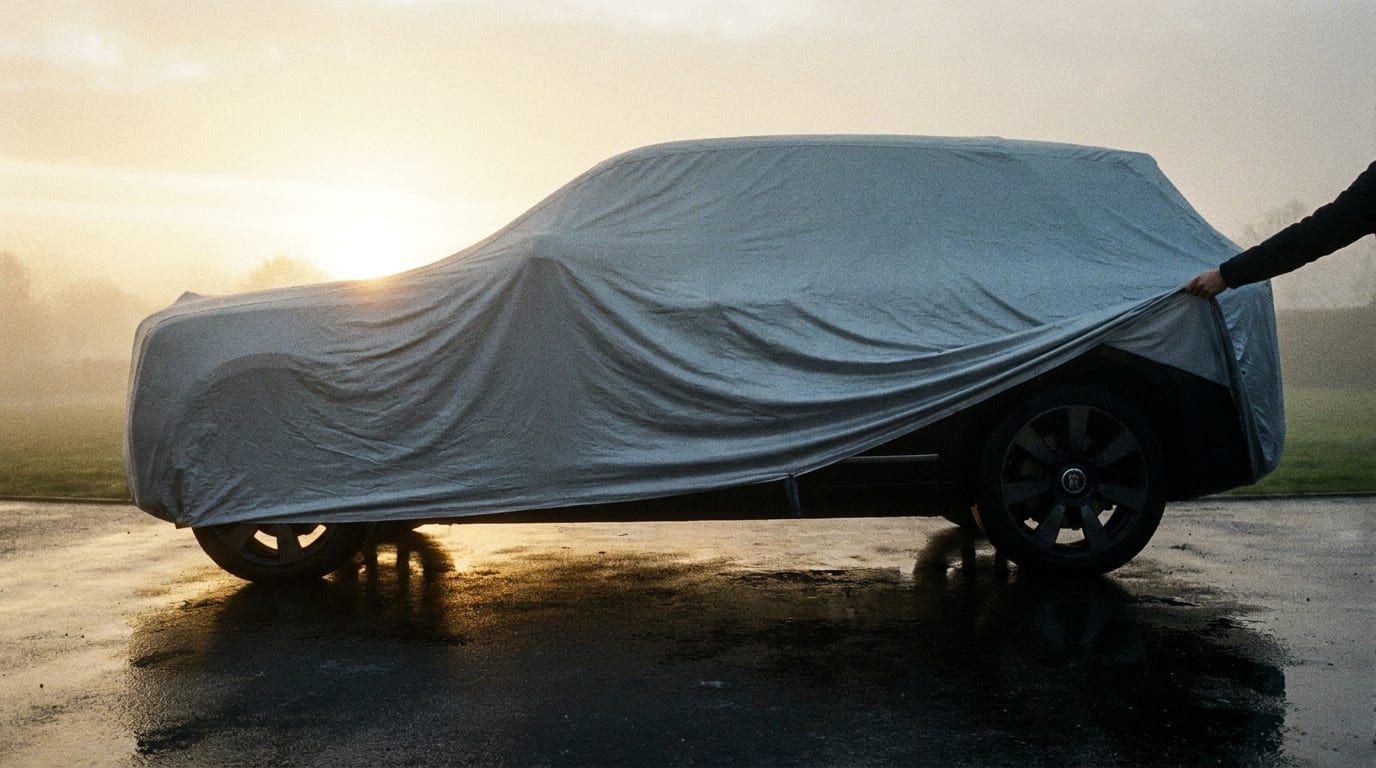
Width gets measured at the widest point of the body, usually right at the fenders or door handles. Leave the mirrors out of this number for now. Then take a second measurement, mirror to mirror, since that number matters separately if you're considering a cover style with built-in mirror pockets rather than one that tucks the mirrors underneath.
Height is measured from the ground straight up to the highest point of the roof. If there's a roof rack, factory or aftermarket, or a tall antenna, account for that clearance too. A cover sized to the bare roofline won't stretch over a rack without straining.
The diagram above shows exactly where each of these three lines falls on the vehicle, which is honestly easier to follow than trying to describe it in a paragraph. Print it out or keep it pulled up on your phone while you work.
Step 3: Factor In Your Acadia's Generation and Trim
Denali and AT4 trims tend to add roof rails, bigger wheel and tire packages, and extra exterior badging, all of which nudge the clearance needs slightly beyond what a base SLE would need. It's not a huge difference, but it's enough to matter if your measurements are landing right on the edge of a size range.
If you've added a roof box or a hitch-mounted bike rack, measure around those separately rather than trying to fold them into your main numbers. Most covers are built for a stock exterior, so permanent accessories usually need their own workaround, whether that's a cover with extra room or just removing the rack before covering the vehicle. Worth checking the GMC vehicle page for cover options built around the Acadia's stock dimensions before you assume you need something custom-built for accessories.
A sunroof or panoramic roof doesn't change the exterior dimensions at all, but it's worth noting anyway. It affects what cover material makes sense, since a poorly ventilated cover can trap heat against that glass on a hot day. Keep your model year and trim written down right next to your measurements. You'll want both handy when you start comparing actual cover listings.
Matching Your Measurements to the Right Cover Size
Most retailers sell covers by length range rather than exact inch, so a cover might be listed for vehicles between 187 and 206 inches. Once you know how to measure a GMC Acadia for a car cover accurately, figuring out which range you fall into is the easy part.
From there, you're choosing between two approaches. A semi-custom cover fits a general SUV shape and works across several different vehicles in a similar size class. A custom-fit cover is built to the Acadia's exact factory dimensions, mirror placement, and roofline. The custom option sits tighter and holds up better in wind, since it's not relying on elastic hems and generous slack to make up for shape differences. If you've got the exact measurements in hand already, there's not much reason to settle for the looser fit.
Use CarCovers' sizing guide to check your numbers against available ranges, and browse custom-fit car covers if you want that tighter build. The coverfinder tool and the find a cover page both let you search by make and model directly, which saves you from cross-referencing length charts by hand.
Common Measuring Mistakes That Lead to a Bad Fit
The tape measure sagging is the big one. A loose, curved line under-measures both length and width, sometimes by a couple of inches, and that's enough to land you in the wrong size bracket entirely. Keep it taut and straight.
Forgetting mirrors and roof racks is another frequent one. People measure the body cleanly, order a cover, then discover it won't stretch far enough to include a rack they forgot was even there.
Using a spec sheet instead of your own tape measure is a subtler mistake. Published dimensions for "the Acadia" don't specify which generation, and if you grab the wrong year's numbers off a random site, you'll be measuring the wrong vehicle entirely without realizing it.
And skipping height because it "doesn't seem important"? That's how you end up with a cover that drags across a roof rack or leaves several inches of undercarriage exposed to rain and road spray. All four measurements matter, not just the two that feel obvious.
Next Steps: Get a Cover That Actually Fits Your Acadia

You should have four numbers by now: overall length, body width, mirror-to-mirror width, and height. Write your model year and trim next to them if you haven't already.
A cover that's actually measured, not guessed at, does the job it's supposed to: keeps sun off the paint, keeps rain out of the seams, keeps dust and tree sap from turning into a weekend detailing project. It's a small bit of upfront effort for something you'll use for years.
Once you've got your numbers dialed in, it's worth browsing what's out there and seeing how the options stack up. No rush on it, just something to look into when you've got a few minutes.
Updated