


Mercedes-Benz E-Class Car Cover Size Chart: Find Your Exact Fit
The Mercedes-Benz E-Class sedan falls into the Large Sedan universal cover size class, the bracket that typically covers vehicles between 190 and 206 inches long. With a body length running roughly 190 to 196 inches depending on the year, a standard E-Class sedan sits comfortably inside that range. If you've been hunting for a car cover size chart for Mercedes-Benz E-Class vehicles and just want the short answer, that's it: Large Sedan.
But the E-Class name covers more ground than just the sedan. The wagon (sold here as the All-Terrain) and any long-wheelbase variant can push into Extra Large territory, while the Coupe and Cabriolet actually run a touch smaller in some dimensions despite sharing a platform with the sedan. A universal size class gets you close, not exact. Fit still depends on which generation and body style you're actually parking in the driveway, which is what the chart below sorts out.
This guide covers the E-Class generations most commonly sold in the US: W211, W212, W213, and the current W214, along with the Coupe and Cabriolet variants (C207/A207 and C238/A238).
Mercedes-Benz E-Class Size Chart by Body Style and Generation
Here's how each generation and body style stacks up, with the recommended universal size class for each.
| Generation/Body Style | Model Years | Length (in) | Width (in) | Height (in) | Recommended Size Class |
| Sedan W211 | 2003-2009 | 189.9 | 71.3 | 57.0 | Large Sedan |
| Sedan W212 | 2010-2016 | 192.5 | 71.3 | 57.7 | Large Sedan |
| Sedan W213 | 2017-2023 | 194.6 | 71.9 | 57.7 | Large Sedan |
| Sedan W214 | 2024-present | 196.0 | 73.6 | 58.0 | Large Sedan / borders Extra Large |
| Wagon/All-Terrain S213 | 2017-2023 | 194.7 | 71.9 | 58.1 | Extra Large |
| Coupe C207/C238 | 2010-2023 | 192.0 | 73.7 | 55.9 | Large Sedan |
| Cabriolet A207/A238 | 2010-2023 | 192.0 | 73.3 | 55.0 | Large Sedan |
A couple of notes on reading this. The wagon lands in Extra Large even though its length is nearly identical to the W213 sedan it's built from, that's the extended roofline and cargo area talking, not raw length. And the coupe/cabriolet, despite being wider across the mirrors than the sedan, sit lower to the ground, which is why they still land in the same Large Sedan bracket rather than needing something bigger.
These are approximate manufacturer specs. AMG trims, wide-body packages, and aftermarket wheels or add-ons can shift width by an inch or two in either direction, so treat the chart as a strong starting point rather than gospel.
Why E-Class Size Varies So Much by Generation and Body Style
Four very different cars share the E-Class badge: sedan, wagon/All-Terrain, coupe, and cabriolet. Even within the same model year, these aren't the same shape. A W213 sedan and a W213-era coupe have different rooflines, different rear ends, and different overhang, even though Mercedes markets them as siblings.
Then there's the generational creep. Each redesign, from W211 to W212 to W213 to W214, has added length and width. It's not dramatic year to year, an inch here, half an inch there, but stack four generations together and you've got a car that's grown by roughly six inches in length and over two inches in width since 2003. That's exactly why a cover bought for your old W211 sedan will sit loose and flap around on a newer W213 or W214.
The wagon is its own case. Its extended rear roofline and larger cargo area mean a sedan-sized cover will come up short at the back, leaving the rear window and bumper exposed to rain and UV. That's the main reason it needs the bigger Extra Large bracket instead of sharing a class with the sedan it's based on.
Smaller details matter too: mirror placement, antenna location, and trim pieces like the running boards on All-Terrain models all affect how a cover drapes and whether it stays put. None of that shows up in a simple length-and-width spec, which is exactly why custom-fit car covers exist as an option beyond the universal classes.
How to Measure Your E-Class Before Buying a Cover
Skip the guesswork and measure your own car. It takes ten minutes.
Start with overall length, bumper to bumper, with the car parked on level ground. Then measure width mirror to mirror, and again with the mirrors folded in, since some covers are cut to accommodate extended mirrors and some aren't. Finally, measure height from the ground to the highest point of the roofline.
Check your trim level while you're at it. AMG and wide-body E-Class variants run wider than the base spec sheet, sometimes enough to matter if you're right on the edge between Large Sedan and Extra Large.
Confirm your body style and model year too. "E-Class" alone doesn't tell you much when it could mean a sedan, a wagon, a coupe, or a cabriolet, and each one needs a different size class. If you'd rather skip the manual math entirely, CarCovers' fit-finder tool will match your exact year, body style, and trim to the right cover without you needing to cross-reference a chart yourself. You can also browse the full Mercedes-Benz cover lineup directly if you already know what you're after.
Custom-Fit vs. Universal Covers for the E-Class
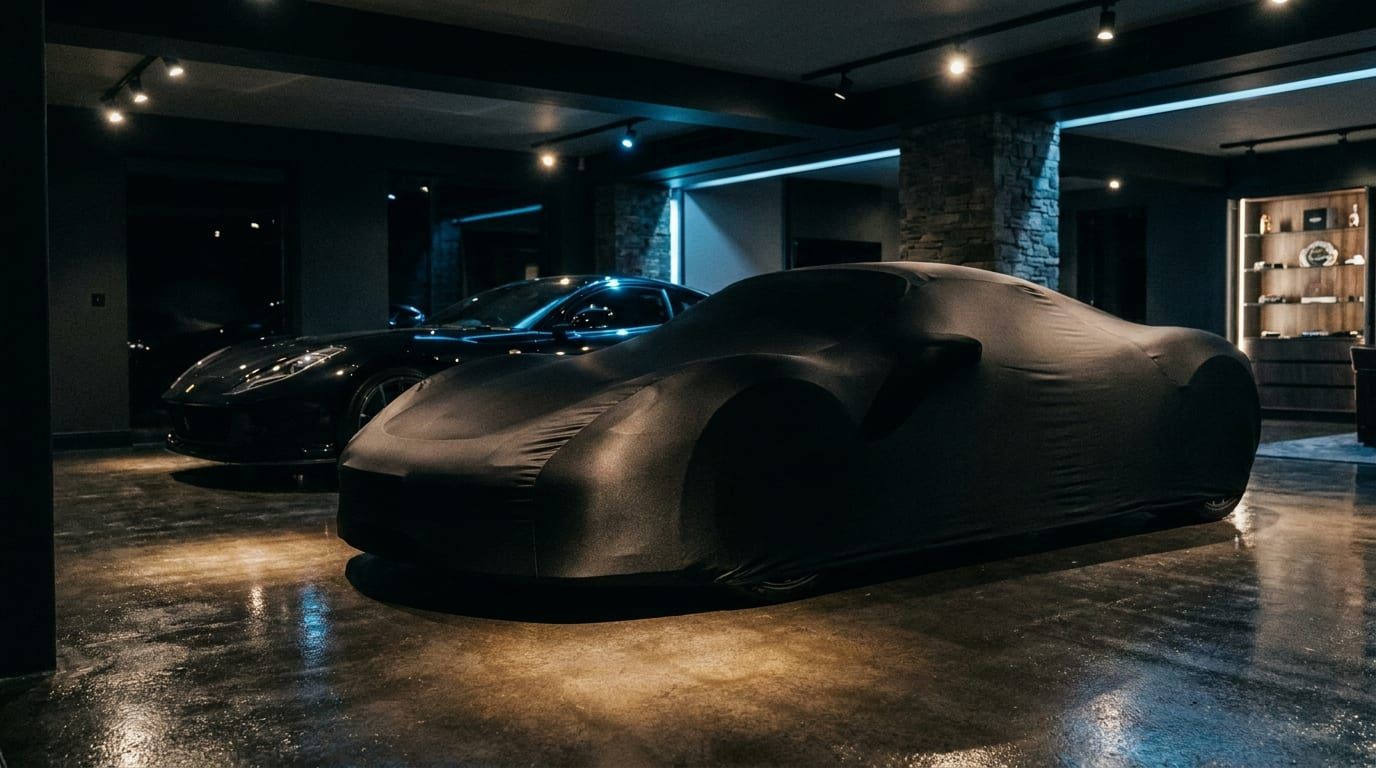
Universal size-class covers (Large Sedan, Extra Large, and so on) are built to a general approximation, a shape that'll fit most cars in that length and width range reasonably well. Custom-fit covers are cut to the exact year, body style, and trim of your specific E-Class.
The tradeoff is straightforward. Universal covers cost less and work across multiple vehicles if you swap cars often. Custom-fit covers cost more but eliminate the gaps where wind gets under the fabric, rain pools around the mirrors, or UV rays hit exposed panels that a loose cover didn't quite reach.
Here's my honest take: on a car with the E-Class's curves, especially the coupe and cabriolet's lower, sloped roofline, a loose universal fit is more likely to shift in wind and chafe the paint over time than it would on a boxier sedan. If you're storing the car outdoors for months at a stretch, that's not a small issue. For owners planning long-term outdoor storage, custom-fit car covers are the better investment, full stop.
Features That Matter Most for an E-Class Cover

Size class is step one. What the cover's made of and how it's built matters just as much.
For outdoor storage, you want UV resistance and real waterproofing, not just water-resistant fabric that wets through after an hour of steady rain. For indoor storage, the priority flips: a softer, breathable fabric that won't scratch the clear coat matters more than weatherproofing you don't need in a garage. CarCovers breaks this down further in its guides to indoor car covers, outdoor car covers, and waterproof car covers, worth a look if you're not sure which category your situation falls into.
Mirror pockets and antenna patches matter more on a correctly sized cover than on a loose universal one. A proper-fit cover holds those pockets in place over the actual mirror; a loose cover just has extra fabric flapping near where the mirror happens to be.
And if the E-Class lives outdoors, don't skip the cable or strap system. A well-sized cover still needs to be secured against wind, especially on a sedan or coupe with a slick, low profile that catches gusts under the front edge. CarCovers has a guide to installing gust straps that's worth five minutes if you've never set one up before.
Get the Right Size Cover for Your E-Class
Most E-Class sedans land in the Large Sedan class. Wagons and All-Terrain models lean Extra Large. Coupes and cabriolets sit slightly smaller than the sedan despite sharing the name. Before you buy, confirm your exact generation and body style against the chart above, since "E-Class" alone isn't specific enough to guarantee a good fit.
If you'd rather not second-guess it, browse the full range of car covers built for different sizes and storage needs, or use the fit finder to get a match based on your car's actual year and trim instead of eyeballing a size class. Either way, worth getting right before your next cover order.
Updated