


What Size Car Cover Fits a Ford Explorer?
The Ford Explorer needs a large/full-size SUV cover, generally one built for vehicles between 187 and 208 inches long. That range covers every generation of Explorer Ford has built, but where your specific SUV falls inside it depends on the model year. So what size car cover fits a Ford Explorer? Short answer: large SUV class, but you still need to confirm against your generation's actual dimensions before you buy.
A semi-custom SUV cover sized for "large SUVs" will fit most Explorer trims reasonably well. A custom-fit cover built to your exact model year does better, though, especially around the mirrors, roof rails, and rear glass where a generic cut tends to sag or gap. The rest of this guide walks through the dimensions by generation, how cover sizing classes work, and how to double-check fit before you spend money on the wrong size.
Ford Explorer Dimensions Across Generations
The Explorer has grown a lot since 1991. The first generation ran about 178 inches long, a genuinely mid-size footprint by today's standards. Each redesign since has added length, width, or both. The current sixth generation (2020 to present) measures roughly 198.8 inches long and 78.9 inches wide, which puts it firmly in large SUV territory alongside three-row competitors from other brands.
That growth wasn't gradual and even. The 2011-2019 generation moved the Explorer onto a unibody crossover platform, and the 2020+ redesign shifted it again, this time to a longer rear-wheel-drive-based architecture shared with the Police Interceptor Utility. That platform change matters for cover fit because it moves where the body tapers toward the rear hatch and where the mirrors sit relative to the windshield. A cover cut for the 2011-2019 body won't drape the same way over a 2020+ Explorer, even if the overall length numbers look close on paper.
Trim level adds another wrinkle. ST and Platinum trims run larger wheels and tires than the base XLT, and both typically come with roof rails that a semi-custom cover has to clear without bunching or pulling tight. Height matters just as much as length here. A cover sized right for bumper-to-bumper length can still fit badly if it doesn't account for a roof rack, running boards, or the taller stance of an ST's wheel package.
Matching Explorer Dimensions to Cover Size Classes
Car cover retailers usually split vehicles into a handful of size buckets: small/midsize sedan, midsize SUV, and large/full-size SUV or truck, mostly sorted by overall length. It's a simple system, but it works as long as you know which bucket your vehicle actually belongs in.
At around 198 inches long, the Explorer sits solidly in the large SUV bracket, in the same size range as vehicles like the Chevrolet Tahoe or the longer trims of the Toyota Highlander. It is not a compact SUV, and it doesn't fit that bracket's dimensions. That distinction is exactly what trips people up when they're figuring out what size car cover fits a Ford Explorer: shop for the wrong class and you end up with a cover that's technically an "SUV cover" but built for something six inches shorter.
Buy a cover sized for a compact SUV, under about 180 inches, and the Explorer's rear bumper and hatch will sit exposed. Rain gets in, dust settles on the parts left uncovered, and the whole point of the cover is undermined.
Here's a myth worth killing while we're at it: bigger isn't safer. A cover that's too large for the vehicle it's on will flap around in wind, and loose fabric flapping against paint is its own kind of damage over time. Excess material also creates low spots where water pools instead of running off. Sizing correctly, not generously, is what actually protects the vehicle. If you're unsure where your Explorer lands, CarCovers' sizing guide walks through how to match dimensions to size class before you commit to a purchase.
Custom-Fit vs. Semi-Custom vs. Universal Covers for the Explorer
Not all "large SUV" covers are built the same way, and the differences matter more than the price gap suggests.
Universal covers are the cheapest option, sized by a broad length range with no attention to the actual shape of the vehicle underneath. They'll technically cover an Explorer, but the fit is loose everywhere: baggy at the mirrors, loose at the bumpers, prone to shifting in wind.
Semi-custom covers step up from there. They're sized specifically to "large SUV" dimensions, so they contour better around the bumpers and roofline than a universal cover does. They're still not built to any particular model, though, so you'll get a good fit rather than an exact one.
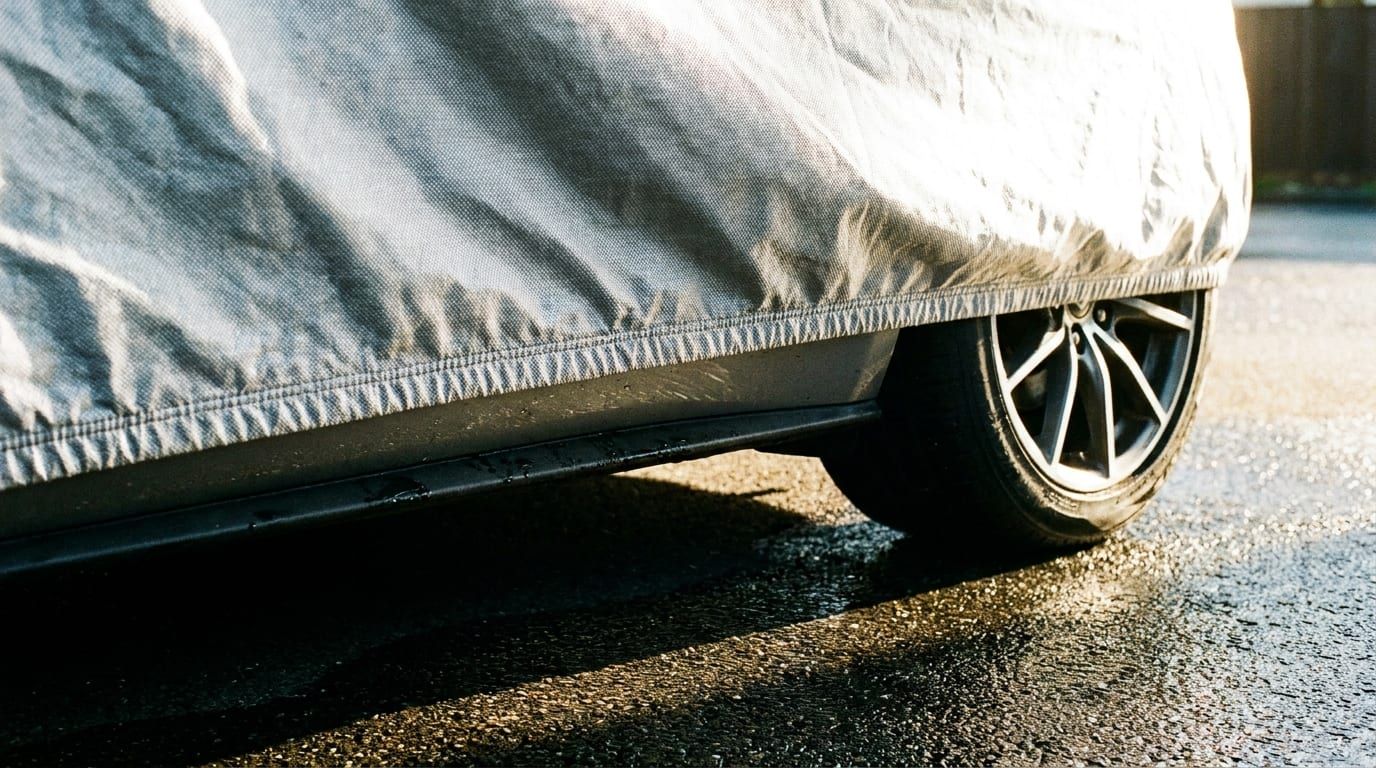
Custom-fit covers are built from the Explorer's actual factory dimensions for a given model year. That means a tighter fit around the mirrors, the antenna, and the rear glass, the spots where a semi-custom cover tends to leave gaps. If your Explorer lives outside year-round, or you're somewhere that gets serious wind or hail, that tighter fit isn't a luxury. Custom-fit car covers are worth the extra cost specifically because they stay put and don't rub the same spots on the paint every time the wind picks up.
For owners who keep the Explorer in a garage most of the time and only cover it occasionally, semi-custom is a reasonable middle ground. You're not paying for precision you don't need.
How to Measure Your Explorer Before Buying a Cover
Don't just trust the "fits Ford Explorer" label on a product page. Measure your own vehicle first. It takes ten minutes.
Step 1: Measure bumper-to-bumper length with the Explorer parked on level ground. Run a tape measure along the side, not diagonally, and note the total in inches.
Step 2: Measure the widest point, which is usually mirror-to-mirror or across the rear fenders on wider trims like the ST.
Step 3: Measure from the ground to the roofline, including a factory roof rack if your Explorer has one. This affects how much slack the cover needs up top.
Step 4: Check for anything aftermarket, a roof box, a bike rack, running boards, that could mean you need a size up or a cover with accessory grommets built in.
Once you've got these four numbers, check them against the actual size chart on the cover's product page rather than assuming the model name alone guarantees fit. Charts list length, width, and height ranges for a reason. If you'd rather skip the guesswork entirely, CarCovers' cover finder matches your specific year and trim to the right product without you having to cross-reference charts yourself.
Does One Cover Size Fit All Ford Explorer Model Years?
No. The Explorer's length and shape changed enough between the 2011-2019 unibody generation and the 2020+ RWD-based generation that a cover bought for one won't sit right on the other.
A cover sized for a 2015 Explorer, for instance, may fit loosely or catch wrong on a 2022 Explorer. The difference is roughly four inches in both length and width, which sounds small until you're trying to stretch fabric over a mirror pocket that's now in a slightly different spot. Loose fabric there catches wind, and wind catching fabric is how covers end up torn or blown off entirely.
The safer move is picking a cover by model year, or at minimum a semi-custom large-SUV size that you've verified against your Explorer's current measurements. Don't assume any cover labeled "Explorer" is interchangeable across two decades of redesigns, because it isn't.
Will a Universal SUV Cover Fit My Ford Explorer Properly?
It'll physically fit. A universal cover sized for large SUVs will go over an Explorer without issue. What you lose is precision: looser coverage at the mirrors, the bumpers, and the rear glass compared to a semi-custom or custom-fit cover.
That looseness isn't just a cosmetic issue. A cover that shifts and flaps against the body in wind will, over time, cause fine scratching in the clear coat, the kind of paint swirling that shows up under direct sunlight and is a pain to buff out. If the Explorer sits outside daily, that repeated rubbing adds up.
Universal covers are fine for short-term use or for a vehicle that's mostly garaged and only covered occasionally, say for indoor car cover use during a dusty renovation. For daily outdoor exposure, a semi-custom or custom-fit cover holds up better and protects the paint more reliably. If you're dealing with regular rain or humidity rather than just dust, it's also worth looking at waterproof car covers built for that specific job rather than a general-purpose universal cover.
Getting the Right Fit for Your Explorer
The short version: a Ford Explorer needs a large/full-size SUV cover, but the exact fit depends on your model year, so measure before you buy rather than shopping off the vehicle class alone.
If you park outside regularly, check out CarCovers' outdoor car covers built to handle sun, rain, and wind without the flapping and rubbing that comes from an ill-fitting cover, and browse the Ford SUV cover lineup to find options matched to your specific Explorer year. Measure once, buy for the long haul, and you won't be back here next season wondering why the cover you bought doesn't sit right. If you found this useful, stick around the CarCovers articles section for more sizing and fit guides as you gear up for whatever the weather throws at your Explorer next.
Updated