


What Size Car Cover Fits a Mazda3? A Sizing Guide by Generation and Body Style
What Size Car Cover Fits a Mazda3?
Short answer: a Mazda3, whether it's a sedan or a hatchback, falls into the compact-to-midsize sedan size class that most cover makers use, roughly the bracket built for vehicles between 175 and 186 inches long. That's the size class. It's not the whole answer.
What size car cover fits a Mazda3 really depends on which Mazda3 you're talking about. The BK (2004-2009), BL (2010-2013), BM/BN (2014-2018), and BP (2019-present) generations all measure a little differently from each other, and sedan and hatchback body styles within the same generation aren't the same length either. Grab a cover labeled "compact sedan" without checking your specific year and you might end up with something loose at the trunk or short at the bumper.
Guessing off a size letter is how people end up with a cover that flaps in the wind or lets water pool where it shouldn't. Matching your exact year, trim, and body style through a fit finder beats relying on a generic size class alone. Below, we'll walk through how sedan and hatchback differ, how the four generations changed dimensions over time, how to measure your own car, and how to decide between universal, semi-custom, and custom-fit covers.
Does the Mazda3 Sedan Need a Different Size Than the Hatchback?
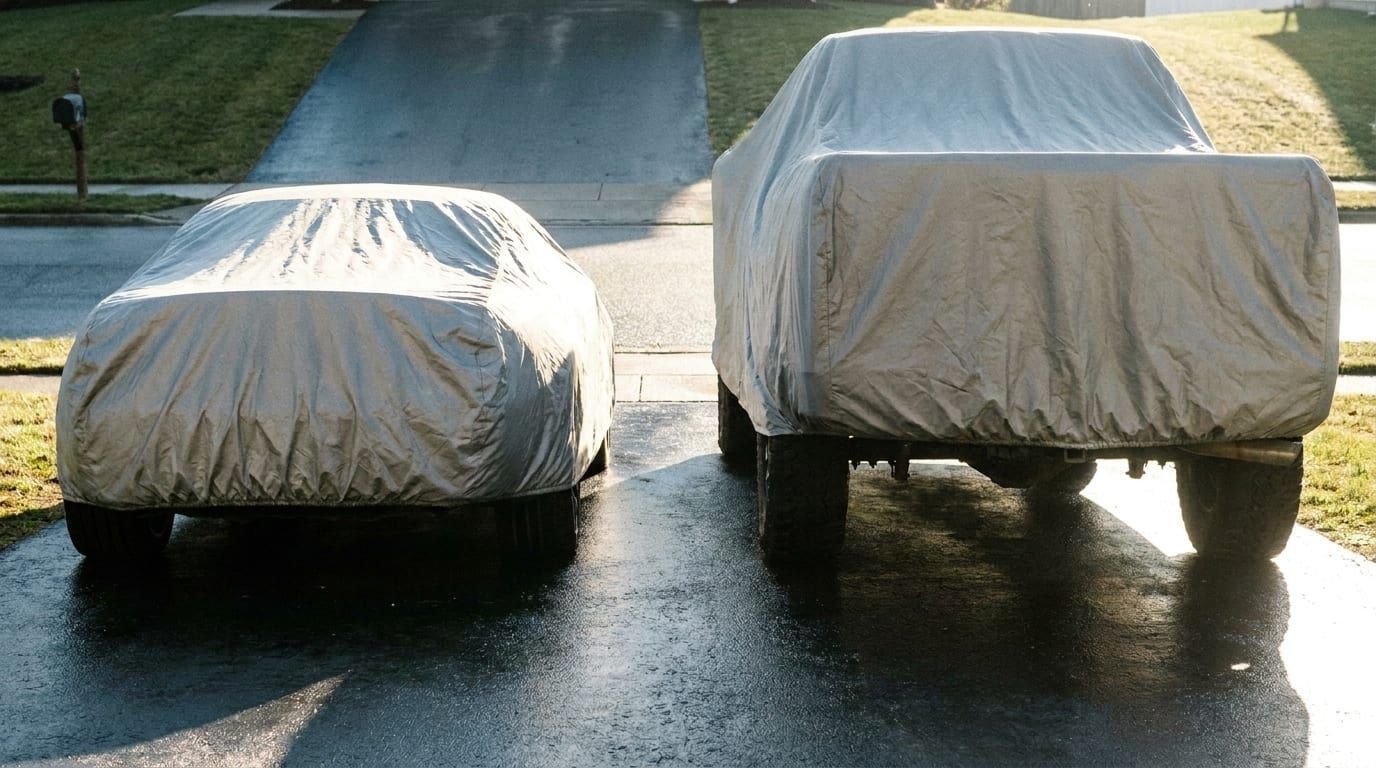
Yes, and the gap is bigger than most people expect. The Mazda3 sedan runs about 183 to 184 inches long. The hatchback comes in shorter, around 175 to 176 inches. That's roughly eight inches of difference, which is plenty to throw off how a cover sits.
Here's why it matters beyond just the tape measure. The hatchback has a shorter rear overhang and a steeper, more upright roofline where the sedan tapers into a trunk. Put a sedan-sized cover on a hatchback and you'll get excess fabric bunching at the back, or worse, pooling water right at the base of the rear glass. A cover cut for the wrong body style doesn't just look sloppy. It fails at the one job it has, which is keeping water and debris off the car.
Sportier hatchback trims add another wrinkle. Turbo models with rear spoilers need a cover with a spoiler cutout or extra clearance back there, something a straight sedan-cut cover typically won't include. If you're shopping for one of these, check the Mazda cover options built specifically for your body style rather than assuming one size covers both.
How Model Year Changes the Right Cover Size (2004-Present)
The Mazda3 has been through four distinct generations, and each one changed the car's footprint:
- BK (2004-2009): the original Mazda3, sedan and hatchback both offered, on the smaller end of the size range.
- BL (2010-2013): a redesign that kept similar overall dimensions but reshaped the nose and rear.
- BM/BN (2014-2018): a noticeably more grown-up car, wider and longer than the first two generations.
- BP (2019-present): the current generation, the widest and longest yet, with a more aggressive stance front to back.
Line up a 2005 Mazda3 next to a 2023 model and the difference is obvious in person, not just on a spec sheet. A cover bought for a BK-generation Mazda3 almost certainly won't fit a BP-generation car properly. The BP is wider through the hips and longer overall, so an older cover will feel tight in the wrong spots and still leave gaps elsewhere.
This is really the whole point of this article: "Mazda3" by itself isn't a precise enough label to size a cover. You need the model year and the body style nailed down before you order anything. If you're not sure which generation your car falls into, cross-reference the year against the ranges above, then confirm with a proper cover finder tool before checking out.
How to Measure Your Mazda3 Before Buying a Cover
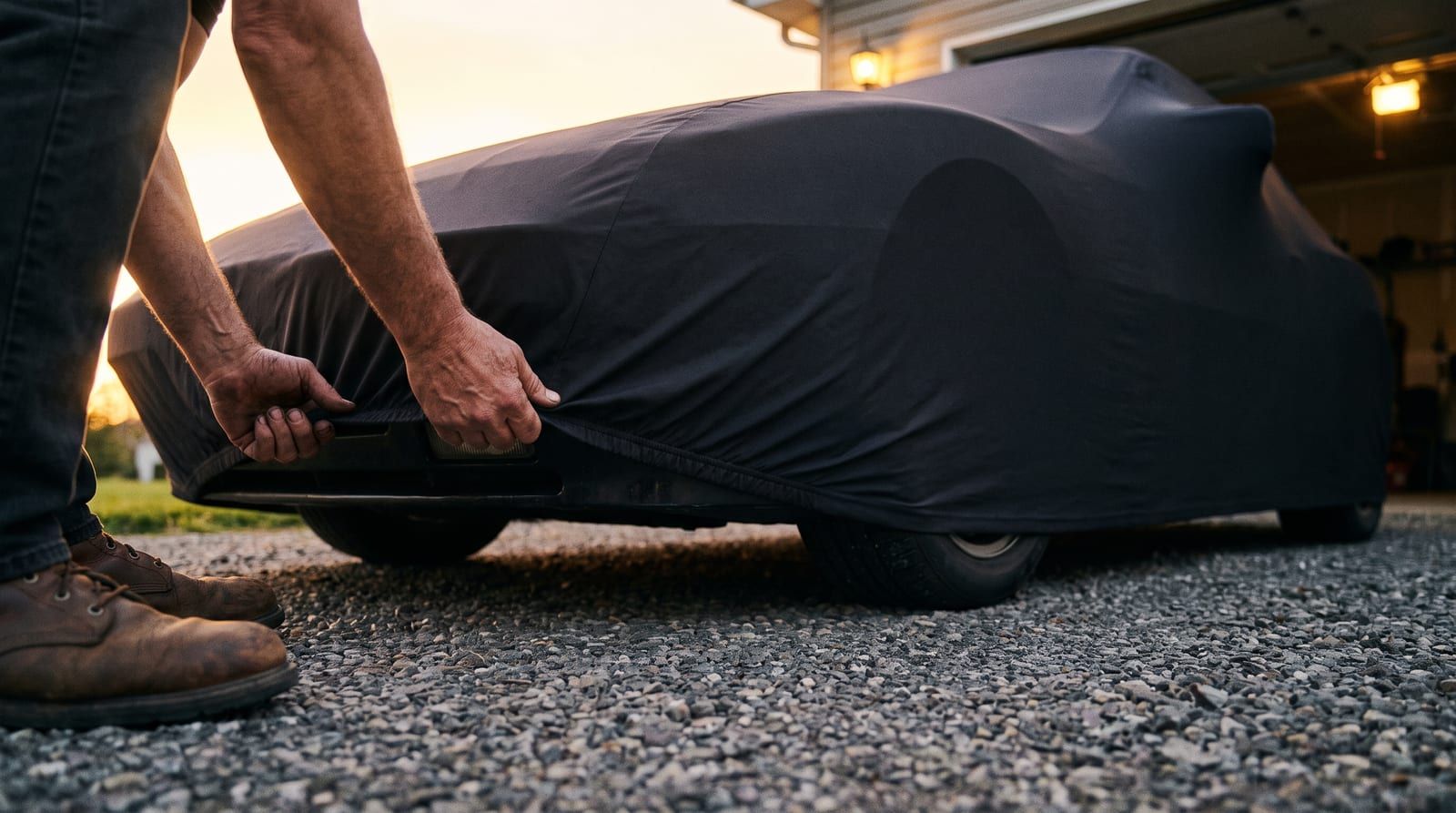
If you'd rather verify than trust a chart, measuring your own car takes about ten minutes.
Length. Measure bumper to bumper, front to back, along the ground or as close to it as you can get a straight line. Don't eyeball this from the side. Get down and pull a real tape measure.
Width. Measure at the widest point of the body, mirrors folded in. Mirrors extended will throw the number off and make the car seem wider than the cover actually needs to account for.
Height. Measure at the roofline, from the ground to the highest point of the car. If you've got a roof rack or antenna, note that separately rather than folding it into the roofline number.
Aftermarket additions change the math here more than people expect. A roof rack, a spoiler, a bike rack, even a tall aftermarket antenna, all of these alter the car's profile and may mean you need a cover with extra cutouts or clearance built in. A cover that fits the factory shape perfectly can still snag or gap around an add-on that wasn't part of the original design.
Once you've got your three numbers, compare them against a vehicle-specific size chart rather than trusting a "midsize" label to be exact. Something like the guide to outdoor car covers is worth a look here too, since outdoor storage tends to expose a poor-fitting cover's flaws faster than a garage ever would. If you're dealing with rain or humidity where you park, pairing the right size with a genuinely waterproof car cover matters more than people think, because a loose fit undermines even good waterproofing by leaving entry points at the hems.
Custom-Fit vs Universal Covers: Which Sizing Approach Fits Best?
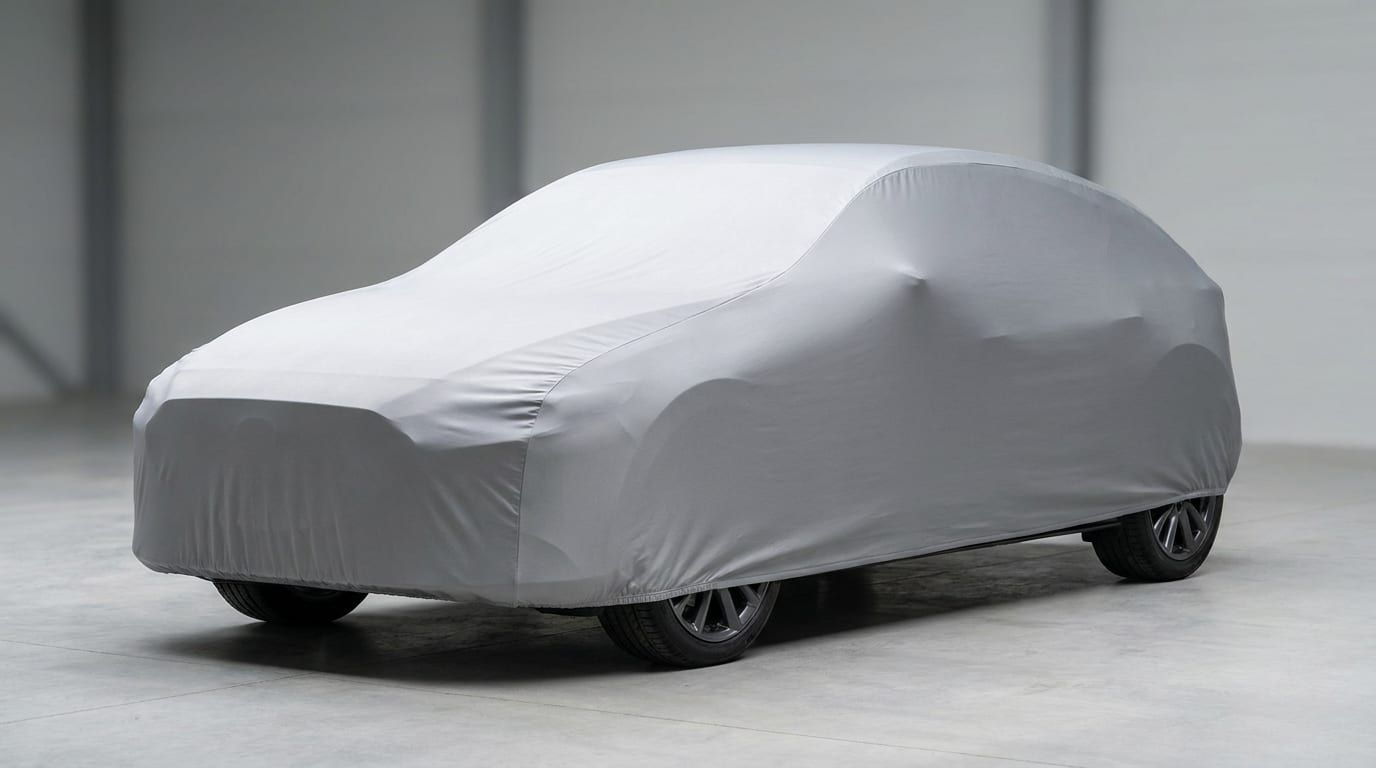
Once you know your measurements, you've still got a choice to make about how precisely the cover needs to match.
Universal covers
- What they are: one-size-fits-a-size-class covers using stretch panels and elastic hems
- Where they work: short-term coverage, budget situations, occasional use
- Where they fall short: prone to gaps at the front and rear, loose fabric that can flap in wind
Semi-custom covers
- What they are: sized to a vehicle's category (compact or midsize sedan) plus a length bracket
- Where they work: a step up in fit accuracy without the cost of a fully custom pattern
- Where they fall short: still not shaped to your exact trim's mirror pockets or body lines
Custom-fit covers
- What they are: cut to the Mazda3's exact year and trim pattern
- Where they work: matches mirror pockets, antenna position, and body creases precisely
- Where they fall short: costs more, and only worth it if you actually need that precision
Honestly, if your Mazda3 lives outside full-time, a custom-fit car cover is the one that earns its keep. It sits tighter, sheds wind better, and doesn't leave the gaps that let rain sneak under a universal cover's hem. If the car spends most of its life in a garage and only sees a cover occasionally, semi-custom or even universal is fine. You're not fighting the elements every day, so an approximate fit is less of a liability. Browse the full range of car covers to see how the three tiers are priced against each other before deciding.
Frequently Asked Questions About Mazda3 Car Cover Sizing
What size cover fits a 2019 or newer Mazda3?
It falls in the compact-to-midsize sedan or hatchback bracket, but confirm which body style you have and your exact trim before ordering. The BP generation is the largest Mazda3 built so far, so don't reuse a cover from an older model.
Is a Mazda3 sedan cover the same size as a Mazda3 hatchback cover?
No. The hatchback is shorter with a different rear profile, so a cover cut for one body style won't sit right on the other. Expect gapping or pooling if you mix them up.
Can I use a generic "midsize sedan" universal cover on a Mazda3?
It can work as a short-term stopgap. But a semi-custom or custom-fit cover matched to the Mazda3 sits tighter and sheds water more reliably over time.
How do I find the exact cover size for my Mazda3 model year?
Use a vehicle-specific cover finder with your year, trim, and body style entered. That beats measuring by eye or trusting a size label alone.
Getting the Right Fit for Your Mazda3
The Mazda3 sits in the compact-to-midsize sedan and hatchback size class, but that's just the starting point. What size car cover fits a Mazda3 really comes down to confirming your generation, your body style, and any add-ons before you buy.
Measure the car if you've got ten minutes, or pull up its exact year and trim if you'd rather skip the tape measure. Either way, don't lean on a size label alone and hope for the best.
If you want to browse options built around your exact Mazda3 rather than guess your way there, it's worth subscribing to updates or poking around the site's other fit guides while you're at it.
Updated