


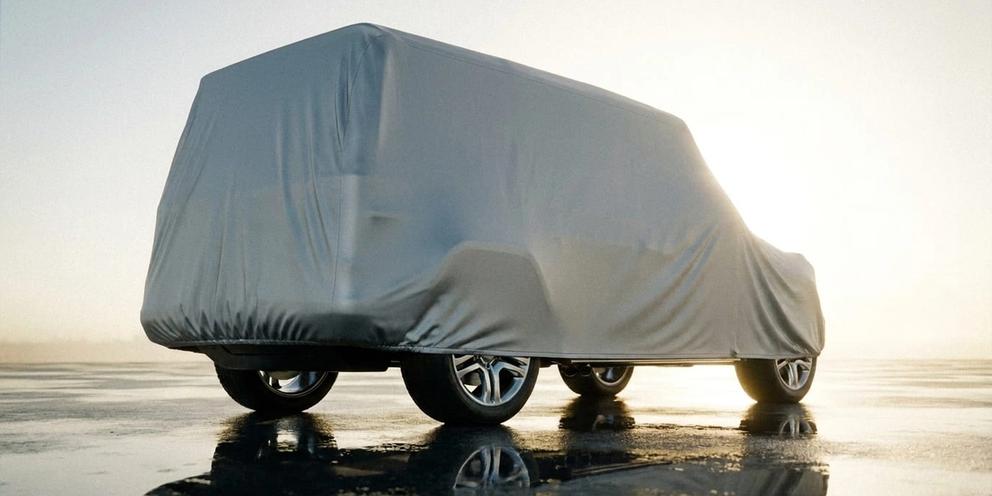
Best Waterproof Car Cover for Ford Bronco: Climate-Specific Protection Guide
A Bronco isn't a garage queen, and most owners bought it precisely because it isn't one. That's exactly why picking a waterproof car cover for Ford Bronco owners matters more than it does for, say, a Camry that sleeps in a garage every night. Between the removable doors, the panel gaps, and the soft-top seams, there are a lot more places for water to find its way in than on a typical sedan. This guide walks through how to match cover protection to the climate your Bronco actually lives in, instead of grabbing the first "universal fit" option you see.
Why Your Ford Bronco Needs a Truly Waterproof Cover
The Bronco's whole design works against a sloppy cover job. Boxy panel gaps, a removable roof, doors that come off in ten minutes flat, these are selling points for weekend trail runs, but they're also seams and gaps that water loves to exploit. Rain doesn't need much of an opening.
Add in how people actually use these rigs. Bronco owners tend to park near trailheads, at campsites, in gravel driveways, not tucked into a climate-controlled garage. That means real exposure to rain, sun, snow, and road grit on a near-daily basis for a lot of owners.
Here's a distinction worth understanding before you buy anything: "water-resistant" and "waterproof" are not the same claim. Water-resistant fabric sheds a light drizzle for a while then wets through. Waterproof fabric is built with a sealed barrier that keeps water out under sustained exposure. For a vehicle that's built for outdoor use and often stored outdoors too, that difference isn't marketing fluff, it's the whole point.
So the rest of this guide breaks things down by climate. Rain, snow, sun, salt air, they each stress a cover differently, and the right choice for a Bronco owner in Seattle looks different from the right choice for one in Phoenix or one parked two blocks from the Atlantic.
Rain and Humidity: Protecting Against Constant Moisture
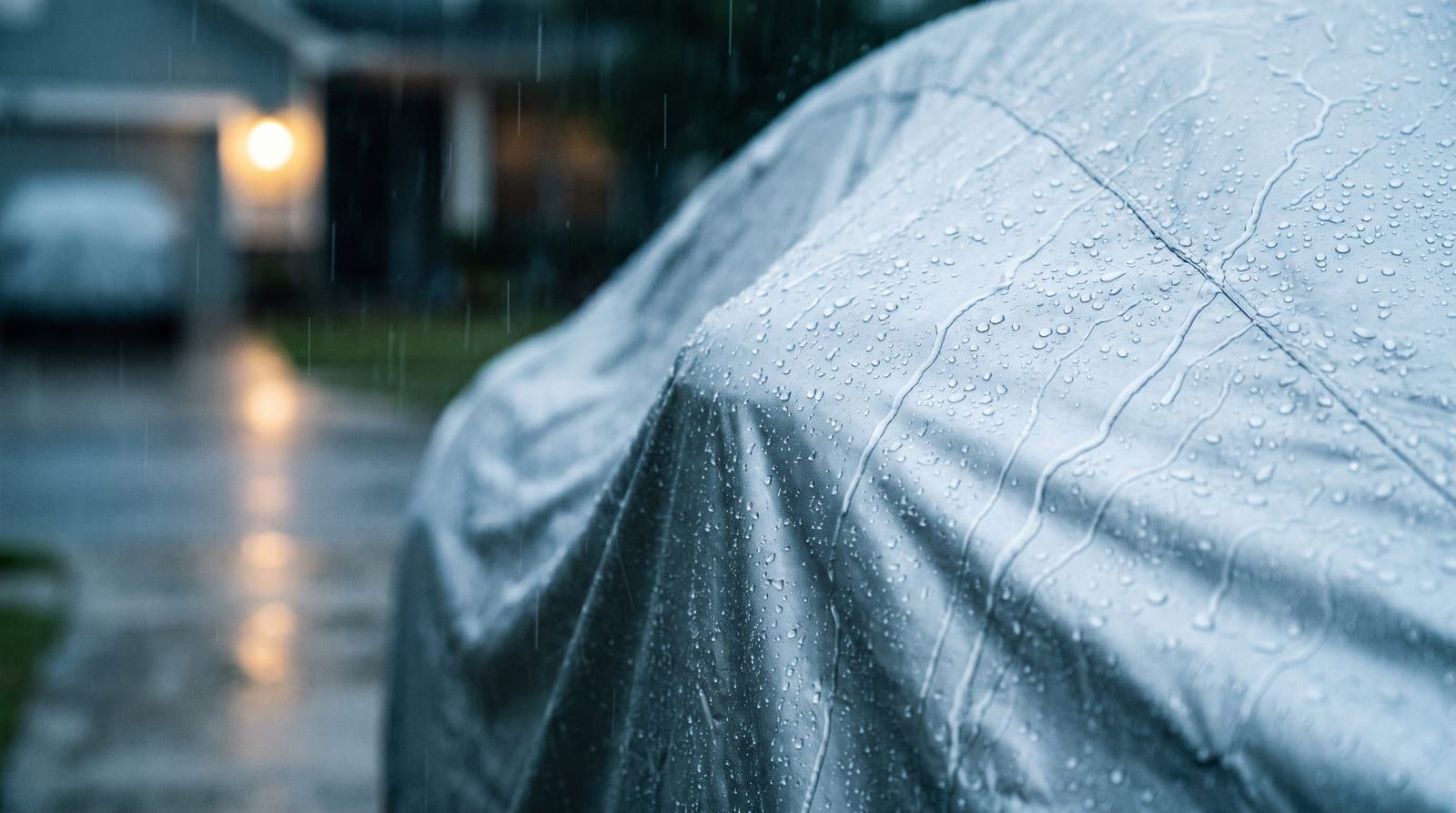
Constant damp is quietly rougher on a paint job than one big storm. Prolonged rain and high humidity invite mildew, leave water spotting behind, and slowly eat into clear coat if moisture just sits there day after day.
What you want in a cover for this kind of climate: a fully seam-sealed waterproof shell, storm flaps at the hem so water doesn't creep in along the bottom edge, and an inner layer that still breathes. That last part trips people up. A cover that blocks water perfectly but traps condensation underneath just creates a greenhouse for mold on your own paint.
Soft-top Bronco owners in wet regions have an extra thing to watch: fit around the roof itself. A loose cover over a soft top creates low spots where water pools instead of running off, and that pooled weight stresses the seams over time. You want a snug fit there, not just generous coverage.
Breathability and waterproofing aren't opposing goals, they're both required. If you're unclear on what "breathable waterproof" actually means in fabric terms, this waterproof fabrics breakdown is worth a few minutes, and CarCovers' own waterproof car cover guide covers the material tiers in more depth.
Snow, Ice, and Freezing Temperatures
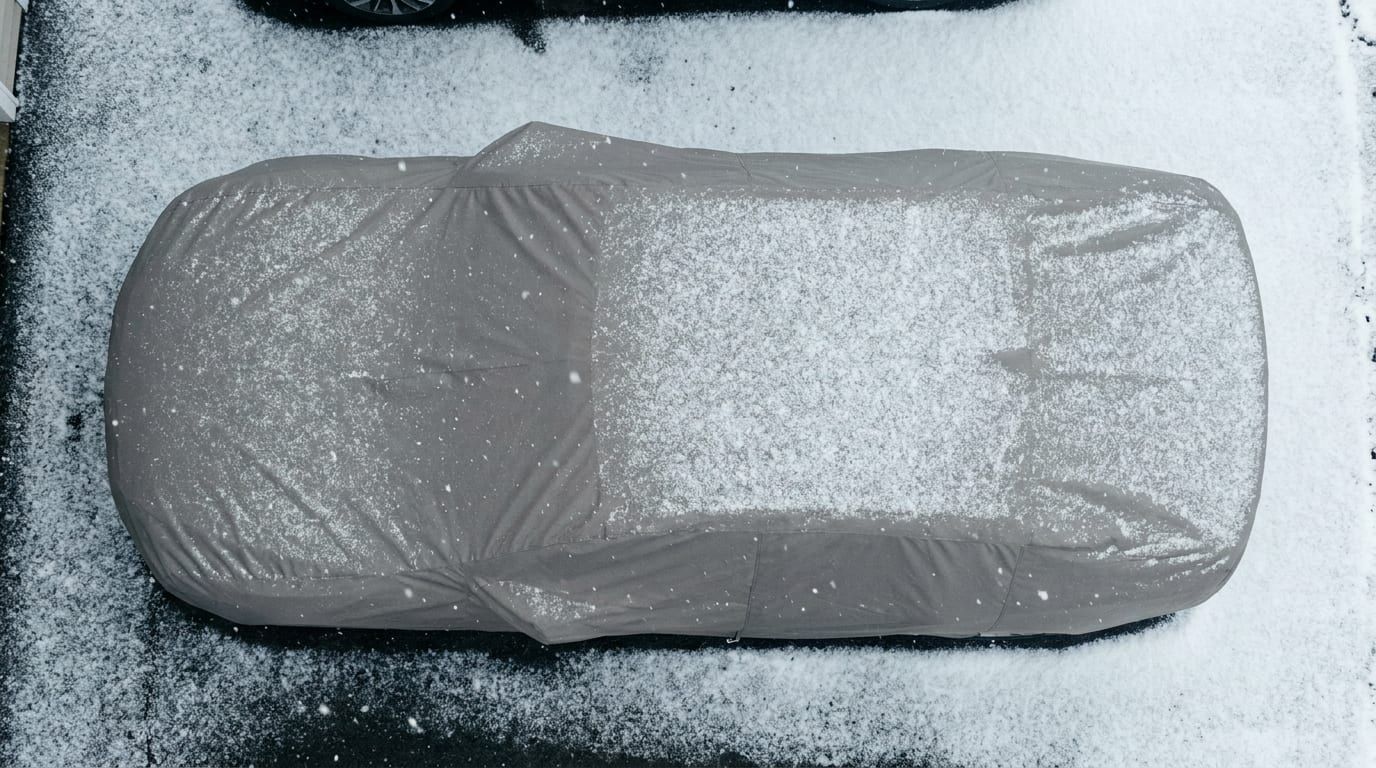
Snow sitting on a parked Bronco overnight does two things: it loads weight onto the roof and seams, and it turns to ice that bonds directly to paint and trim once temperatures drop. Soft-top seams take the brunt of that load, and ice doesn't care what it's sticking to.
Owners in snowbelt regions parking outdoors all winter should look at heavier-weight waterproof covers, ideally with some insulating quality built in. A lightweight summer cover just isn't built for that kind of load.
Wind-driven snow is its own problem. It gets under a loose cover and lifts it, which is why reinforced grommets and solid tie-downs matter as much as the fabric weight itself. A cover that shifts overnight exposes exactly the panels you were trying to protect. Pairing a snug cover with gust strap wind tie-downs keeps things anchored through a real winter storm, not just a light flurry.
Get the fit and the tie-down right and you skip one of the worst parts of winter ownership: chipping ice straight off paint or trim with a scraper because there was nothing between the ice and the finish.
Sun, Heat, and UV Exposure
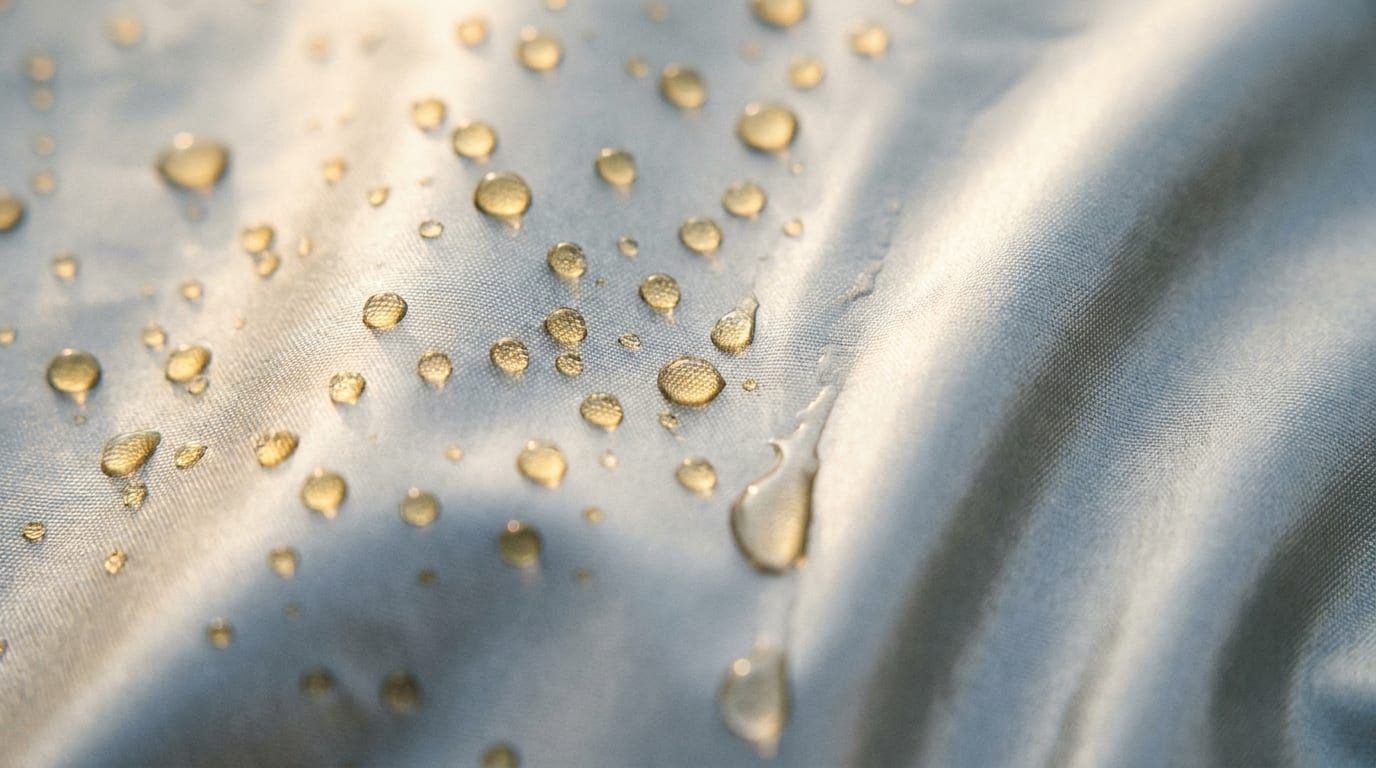
Desert and off-road-heavy regions bring a different fight entirely. UV exposure fades paint and can bake exposed interior trim right through the glass, especially on a vehicle that's parked outside all day at a trailhead.
The trick here is finding a cover that does both jobs at once: UV-blocking on the outer layer, waterproof underneath, because desert climates aren't dry all the time. A sudden monsoon downpour after months of nothing but sun is exactly the kind of climate where a cover needs to handle both extremes without you swapping covers seasonally.
Color matters more than people expect. Lighter or reflective waterproof covers cut down heat buildup underneath in a way dark covers just don't, which matters if you're trying to keep interior temps down before you even open the door.
Dust is the other quiet problem. In arid climates, dust plus the occasional rain turns into grime that bakes onto the surface if you let it sit. A wipeable waterproof shell means that grime comes off the cover, not your clear coat. For general best practices on outdoor exposure across seasons, the guide to using a car cover outdoors covers UV, wind, and rain together in more detail.
Coastal and Salt-Air Climates
Salt air is corrosive in ways that sneak up on people. It works on exposed hardware, hinges, and trim, and a Bronco with removable doors has more of that exposed hardware than most vehicles on the road.
For coastal owners, the material of the cover itself matters less than the hardware attached to it. Look for waterproof covers with corrosion-resistant grommets and hardware specifically, because standard metal fittings will pit and rust faster near salt water than most people expect.
A cinched, properly waterproof fit also does double duty here: it keeps salt spray and blowing sand off the finish between washes, which stretches out how often you need a full detail. Humidity swings near the coast, warm and damp one day, cool and wet the next, make that breathable-yet-waterproof balance especially important again. Trapped moisture under a cover in a coastal climate is a fast track to corrosion starting underneath the cover instead of being stopped by it.
Getting the Right Fit for 2-Door and 4-Door Bronco Models
None of the above matters if the cover doesn't actually fit. Waterproof fabric on a cover that's too big or too small still lets water wick in at every gap, seam, and loose edge. Fit is what makes waterproofing actually work, not just a nice-to-have.
The 2-door and 4-door Bronco have different body lengths, different mirror placements, and different rear overhangs, so a cover cut for one won't sit right on the other. Mirror pockets in particular need to line up, or you'll get a gap right where wind-driven rain hits hardest. If you're not sure which size you need, this sizing guide walks through how to measure your specific configuration before you buy.
A loose or oversized cover doesn't just look sloppy, it flaps in wind, which wears at the fabric and works water in at every gap over time. That undermines even a genuinely waterproof material. And soft-top versus hardtop Bronco configurations can call for slightly different cover profiles, since the roofline height and shape aren't identical between the two. Checking the Ford-specific SUV cover options is the fastest way to see what's actually built for your configuration rather than guessing at a universal fit.
Installing and Maintaining Your Waterproof Bronco Cover
A great cover installed carelessly still lets weather in. In high wind, use straps or cable locks to keep the cover from shifting, especially at the front and rear where lift happens first. A cover that migrates six inches overnight can expose a whole panel by morning.
Cleaning matters too, and it's simpler than people assume. Avoid harsh detergents, they strip the waterproof coating faster than normal wear would. A mild soap, a soft brush, and a full air dry before you fold it up is really the whole routine. This cover cleaning guide has the specifics if you want a step-by-step.
One thing people skip: how you store the cover when it's not on the Bronco. Balling it up damp in the corner of a garage breaks down the waterproof coating faster than the weather it's protecting against. Fold it dry, store it somewhere it can breathe, and it'll hold its waterproofing a lot longer.
Choosing the Right Cover for Your Climate
Boiled down, it's pretty simple. Rain and humidity call for breathable waterproofing so moisture doesn't get trapped underneath. Snow calls for heavier, reinforced material that can handle load and ice without stressing seams. Sun and desert conditions call for UV-blocking layers on top of the waterproofing, not instead of it. Coastal climates call for corrosion-resistant hardware as much as they call for waterproof fabric.
Before you buy, think honestly about where your Bronco actually sits most nights. Driveway in a rainy state, trailhead parking in the desert, a carport two miles from the ocean, each of those points to a different tier of cover, not just a different size.
If you want to browse options built around this kind of climate-specific protection, it's worth exploring SUV-specific cover options or subscribing for more guides like this one as you narrow down what actually fits your Bronco and where it lives.
Updated