


Car Cover for Porsche 911: Custom-Fit Sizing Guide by Generation
A stock cover from the auto parts store will go on a Porsche 911. It just won't fit right, and on a car this low, that's the whole game. The 911's nose sits inches off the ground, its haunches flare out wider than the doors, and a cover cut for "sports cars in general" is going to gap, sag, or drag the second wind gets under it. If you're shopping for a car cover for Porsche 911 ownership actually demands, generic isn't it.
Why a Generic Cover Doesn't Work on a 911
Universal covers are built to a rough average. They're sized for a broad range of coupes, which means they're sized for none of them precisely. On a 911, that shows up fast: the fabric gaps at the low nose and again at the rear haunches, and those gaps are exactly where water, pollen, and road grit get in. Worse, loose fabric flaps in wind, and if you're storing near a driveway or a street with any real traffic speed nearby, that flapping wears through the cover's coating over time.
Then there's ground clearance. Some GT-model 911s sit as low as 4 inches off the pavement. A cover with too much material bunches up at the front lip or drags on the ground when you walk around the car to secure it. Neither is a small annoyance. Dragging fabric picks up grit and turns into a sanding pad against your paint.
The fix is straightforward: a custom-fit car cover built to the 911's actual profile, or at minimum a semi-custom option sized to the generation and body style you own. This guide is set up to help you get there, working alongside CarCovers' Porsche cover lineup so you can match your specific 911 to the right fit before you buy.
911 Generations and Body Styles That Affect Fit
Not every 911 is the same shape, even though they all look unmistakably like a 911 from thirty feet away. For cover fit, four generations matter most: the 996 (1998 to 2004), the 997 (2005 to 2012), the 991 (2012 to 2019), and the 992 (2019 to present). Each one shifted body dimensions slightly, and those small shifts add up when a cover needs to hug the car rather than just drape over it.
Body style matters just as much as generation. A Coupe is the simplest shape to cover. A Cabriolet needs clearance for the folded top whether it's up or down, so the cover has to account for that extra height at the rear deck. A Targa brings its own complication: the roll bar hump behind the seats interrupts an otherwise smooth roofline, and a cover without room for it will pull tight and stress the seams right where the hump sits.
Then there's the wide-body question. Turbo, GT3, and GT2 variants carry rear fenders that can run 2 inches or more wider than a standard Carrera, and a cover sized for the base car will stretch across those fenders instead of fitting them.
Rear wings complicate things further. A fixed wing, like you'll find on many GT3s, needs either a built-in cutout or enough slack in the cover to clear it without straining. A retractable wing on a Turbo adds another variable, since the cover has to work whether the wing is up or stowed. And mirror shape has changed generation to generation, which is why some covers need dedicated mirror pockets and others don't. Skip that detail and you'll be wrestling with excess fabric bunched around the mirrors every time you cover the car.
Fit-and-Size Table: Matching Your 911 to the Right Cover
Here's how the major 911 variants break down for cover sizing purposes.
996 Coupe (1998 to 2004)
- Body style: Coupe
- Approx. length: 174.5 in
- Wide-body clearance needed: No
- Mirror pocket required: Yes
996 Cabriolet (1998 to 2004)
- Body style: Cabriolet
- Approx. length: 174.5 in
- Wide-body clearance needed: No
- Mirror pocket required: Yes
997 Coupe (2005 to 2012)
- Body style: Coupe
- Approx. length: 175.6 in
- Wide-body clearance needed: No
- Mirror pocket required: Yes
997 Cabriolet (2005 to 2012)
- Body style: Cabriolet
- Approx. length: 175.6 in
- Wide-body clearance needed: No
- Mirror pocket required: Yes
997 Turbo (2005 to 2012)
- Body style: Coupe/Cabriolet, wide-body
- Approx. length: 175.6 in
- Wide-body clearance needed: Yes
- Mirror pocket required: Yes
991 Coupe (2012 to 2019)
- Body style: Coupe
- Approx. length: 177.1 in
- Wide-body clearance needed: No
- Mirror pocket required: Yes
991 Cabriolet (2012 to 2019)
- Body style: Cabriolet
- Approx. length: 177.1 in
- Wide-body clearance needed: No
- Mirror pocket required: Yes
991 Targa (2012 to 2019)
- Body style: Targa, roll bar hump
- Approx. length: 177.1 in
- Wide-body clearance needed: No
- Mirror pocket required: Yes
991 Turbo (2012 to 2019)
- Body style: Coupe/Cabriolet, wide-body
- Approx. length: 177.4 in
- Wide-body clearance needed: Yes
- Mirror pocket required: Yes
991 GT3 (2012 to 2019)
- Body style: Coupe, wide-body, fixed wing
- Approx. length: 178.9 in
- Wide-body clearance needed: Yes
- Mirror pocket required: Yes
992 Coupe (2019 to present)
- Body style: Coupe
- Approx. length: 177.9 in
- Wide-body clearance needed: No
- Mirror pocket required: Yes
992 Cabriolet (2019 to present)
- Body style: Cabriolet
- Approx. length: 177.9 in
- Wide-body clearance needed: No
- Mirror pocket required: Yes
992 Targa (2019 to present)
- Body style: Targa, roll bar hump
- Approx. length: 177.9 in
- Wide-body clearance needed: No
- Mirror pocket required: Yes
992 Turbo (2019 to present)
- Body style: Coupe/Cabriolet, wide-body
- Approx. length: 179.4 in
- Wide-body clearance needed: Yes
- Mirror pocket required: Yes
992 GT3 (2019 to present)
- Body style: Coupe, wide-body, fixed wing
- Approx. length: 179.6 in
- Wide-body clearance needed: Yes
- Mirror pocket required: Yes
Note the pattern: within the same generation, Turbo and GT3/GT2 variants need the widest-fit option even though the overall length barely changes. Fender width, not length, is what trips up a lot of buyers here.
If your exact trim isn't listed by name, don't guess. CarCovers explains how vehicles get measured and matched to a cover size in the car cover sizing guide, and it's worth five minutes before you buy.
Choosing the Right Weatherproofing Tier for Your 911
Fit is half the equation. The other half is what the cover's made of, and that depends entirely on where the car lives.
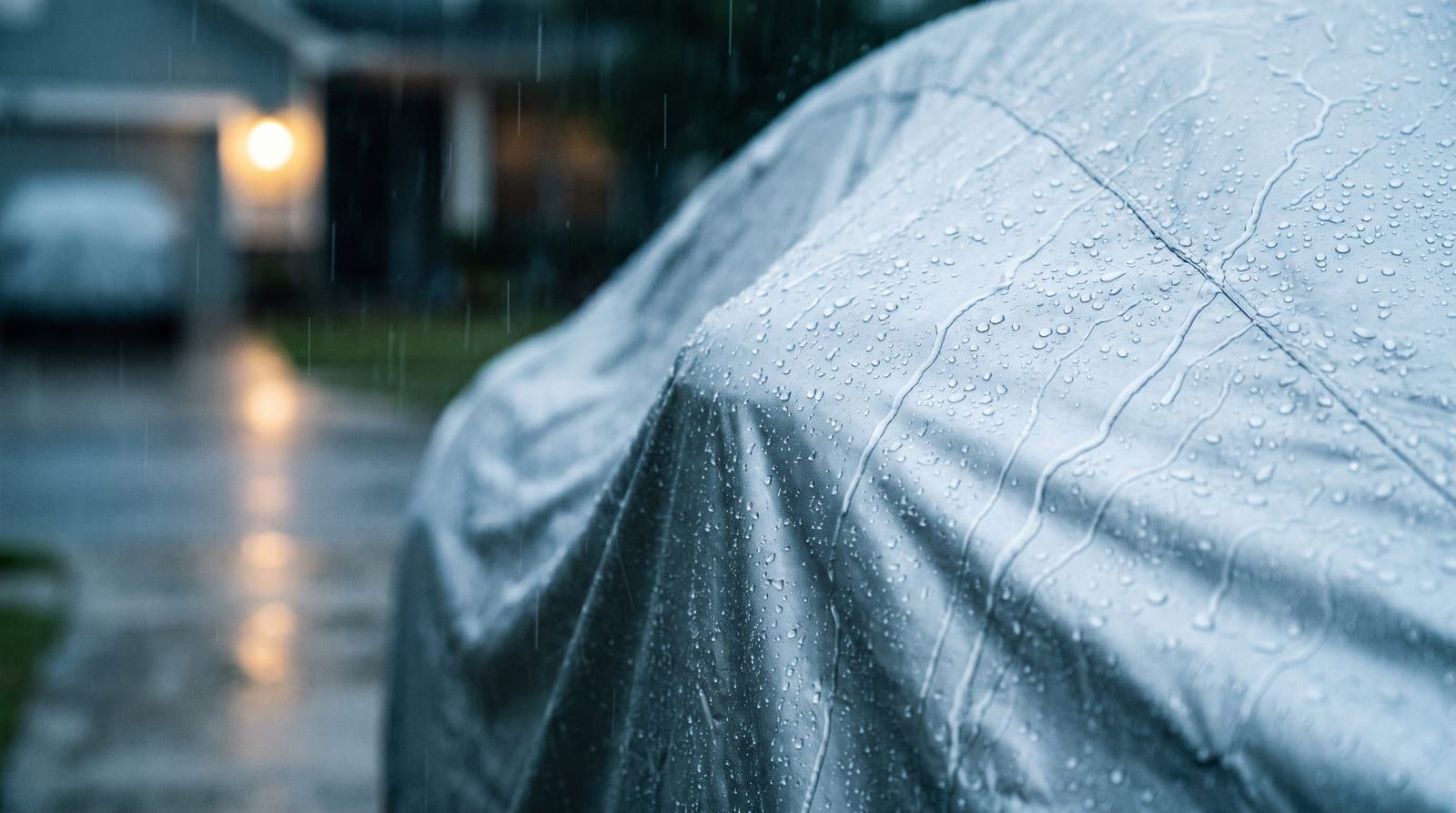
Indoor-only covers are soft, breathable, and built for dust and light scratch protection, not weather. They're the right call for a garage-kept 911 that never sees rain or direct sun. Outdoor covers are a different animal: waterproof, UV-resistant, and rated to handle wind without shredding. If your 911 sits in a carport, under a tree, or gets driven regularly and parked outside between drives, you need that outdoor-rated protection.
Here's the decision rule I'd use: daily-driven or carport-stored cars need a waterproof outdoor cover. Garage queens and collector cars that never see weather are better off with a soft indoor cover, because a heavy outdoor cover in a dry garage traps moisture against the paint instead of protecting it.
One more factor, if you're in the Midwest or the Plains: hail. A thin cover won't do much against a spring hailstorm, and if that's a real risk where you park, look at a thicker, hail-rated layer instead of the standard outdoor tier. Not every 911 owner needs to think about this, but if you do, it's worth the upgrade.
For a fuller breakdown of what separates the tiers, the outdoor car cover guide walks through the specifics.
Must-Have Features for a Porsche 911 Cover
Fit and weatherproofing get you most of the way there. A few features separate a good car cover for Porsche 911 owners from one that just barely works.
Check for contoured mirror pockets first. Without them, the fabric bunches around the mirrors and eventually stretches out of shape. Look for an elastic hem or a grommet-and-cable-lock system too, so the cover pulls snug under the low rocker panels instead of billowing at the sides. And if your 911 wears Turbo or GT-spec aero pieces, a soft fleece lining matters, since those add-ons are exactly the surfaces most likely to get scuffed by a rough cover interior.
Wide-body compatibility deserves its own callout. If you own a Turbo or GT3, a standard-width cover will stretch tight across the flared rear fenders, and fabric under constant tension wears out faster and can pull the seams. Confirm the cover you're buying is cut for the wide-body dimensions, not just the generation.
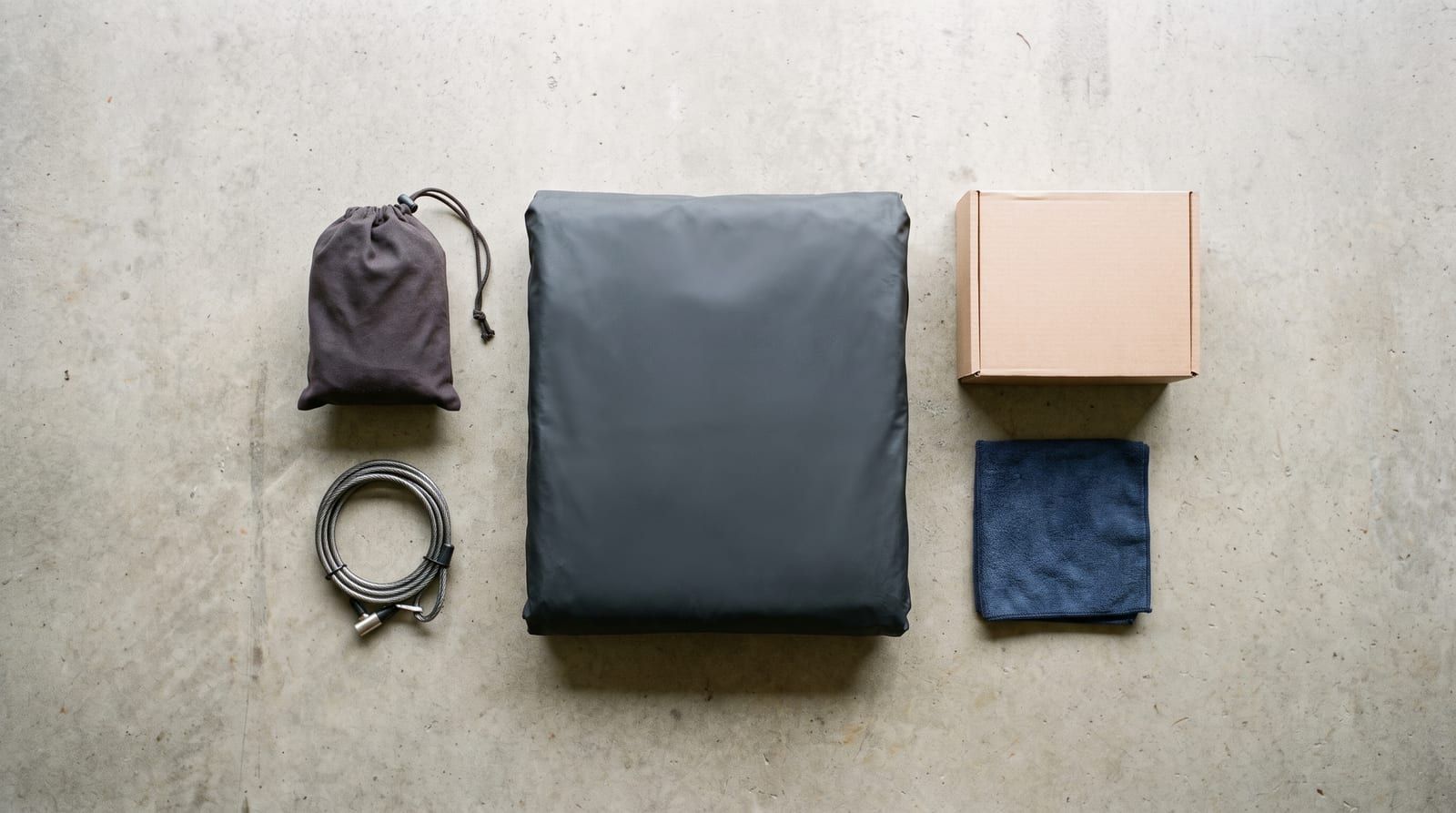
A couple of smaller things worth checking: antenna patch compatibility if your 911 has a roof-mounted antenna (there's a dedicated antenna patch option for exactly this), and whether the cover ships with a storage bag and cable lock. Those two extras sound minor until you're the one putting the cover on and off every day for a street-parked car. They make the daily routine faster, and a bag keeps the cover from getting tossed loose in the trunk or garage.
Installing and Caring for Your 911 Cover
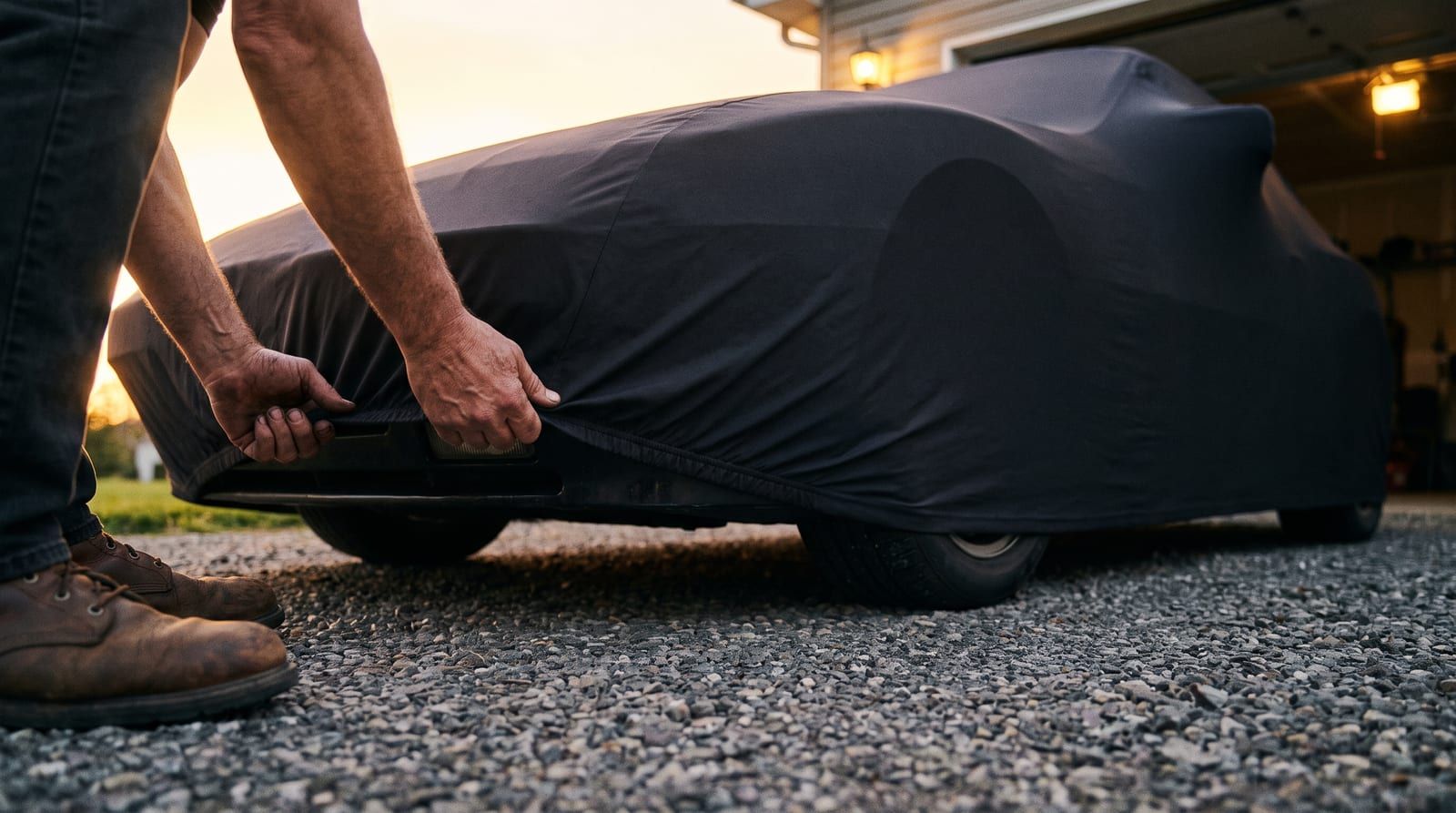
Getting the cover on right isn't complicated, but the order matters. Start at the front and work back. Secure the elastic hem underneath the rocker panels as you go, then finish by cinching any cable lock through the wheels to keep the whole thing anchored in wind.
Care is just as simple, if you don't skip it. Shake off loose debris before you fold the cover, and wash it according to the instructions for your specific fabric tier. Ignore that and you'll degrade the water repellency faster than the cover's rated for.
One Porsche-specific mistake I see a lot: cinching a cable lock or a strap too tight over a rear wing or spoiler. Do that repeatedly and you'll bend the wing's mounting clips over time. It's a small habit to fix, but it's an expensive one to ignore.
For the full walkthrough, CarCovers has a step-by-step cover cleaning guide and a general installation guide that cover the details beyond what fits here.
Get the Right Cover for Your 911
The path here isn't complicated. Identify your generation and body style, decide whether your storage situation calls for indoor or outdoor protection, and if you're driving a Turbo or GT3, confirm the cover is cut for the wide-body fenders before you check out.
If you're still unsure which size or tier is right, that's a reasonable place to be. Porsche's lineup has enough variation across 25-plus years that getting it wrong is easy. That's what the lifetime warranty and no-hassle return policy are there for. If a cover doesn't fit the way it should, you're not stuck with it.
Browse the full range by year and trim, and if you're still weighing your options, our other guides on fit and weatherproofing are worth a look before you commit.
Updated