


Car Cover Size Chart for GMC Acadia: Find Your Exact Fit
GMC Acadia Car Cover Size: The Quick Answer
Short version: the GMC Acadia is a large SUV, and it needs a cover built for that class. Depending on the model year, length runs from about 191 inches to just over 204 inches, which puts it solidly outside compact and midsize crossover territory. If you've been browsing covers sized for something like a RAV4 or CR-V, stop there. Those won't fit.
Here's the part people miss: cover sizing isn't about trim name or "SUV" as a category, it's about three actual measurements, length, width, and height. A Denali and an SLE share a body, but a cover that fits one Acadia model year might not fit another at all.
That's because the Acadia itself has changed shape more than once. The 2007-2016 first generation was built big, close to full-size territory. The 2017-2022 second generation got downsized noticeably, shedding both length and bulk. Then the 2024+ redesign swung back the other way, growing past where the first generation started. So "I have an Acadia" tells you almost nothing about what cover to buy. The model year is what matters.
The fastest way to sort this out is a car cover size chart for GMC Acadia broken out by generation, which is exactly what's below.
GMC Acadia Car Cover Size Chart by Model Year
| Model Years | Generation | Approximate Length | Approximate Width | Size Classification | Recommended Cover Type |
| 2007-2016 | 1st Gen | ~200.8 in | ~78.5 in | Large SUV | Semi-custom/universal large SUV cover |
| 2017-2023 | 2nd Gen (downsized) | ~190.9-193.6 in | ~78.6 in | Midsize-to-large SUV | Semi-custom midsize/large SUV cover, verify length before ordering |
| 2024-present | 3rd Gen (redesigned, larger) | ~204.3 in | ~79.9 in | Large SUV | Semi-custom/universal large SUV cover, upper end of the size range |
A few inches don't sound like much until a cover is bunching up at the bumper or leaving six inches of slack flapping at the mirrors. These numbers are approximate manufacturer specs, and they can shift slightly depending on trim and whether a roof rack is installed. If you want the fit to actually hold up outdoors, a custom-fit car cover built to the exact model year is the safer bet over a generic "fits most SUVs" cover.
How to Measure Your GMC Acadia for the Right Fit
A spec sheet gets you close. Your own tape measure gets you exact. Three numbers matter here: bumper-to-bumper length, width at the widest point (usually the mirrors or the fenders, whichever sticks out further), and overall height.
Height is where people shortcut and regret it. If there's a roof rack, roof rails, or an antenna sticking up, measure over them, not just the body. A cover sized correctly for the sheet metal but too short for the rack will sit stretched and strained across the roof, which wears out seams fast and leaves gaps at the corners.
Trim level matters more than most owners expect, too. A Denali with larger wheels and extra body cladding isn't the same shape as a base SLE, even in the same model year. The difference is usually small, an inch here or there, but it's exactly the kind of small difference that decides whether a semi-custom cover sits flush or sits loose. If you're measuring anything other than an Acadia, or you want the full step-by-step on doing this right, the site's guide to sizing a car cover for your vehicle walks through it in more detail.
Custom-Fit vs. Universal-Fit Covers for the Acadia
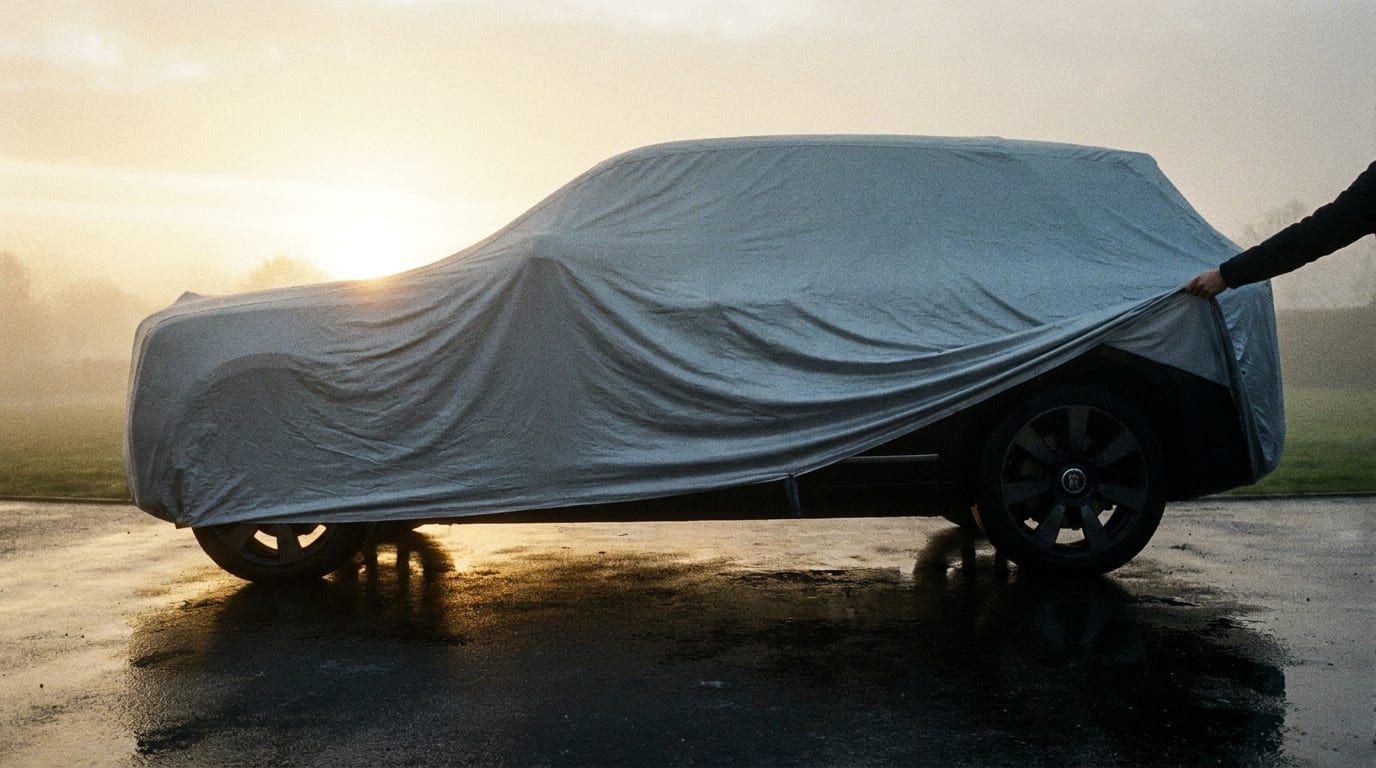
Custom-fit means the cover is cut to the Acadia's actual body lines, mirror pockets and all. That snug fit does two things: it resists wind better (less fabric flapping means less wear, and less noise against the paint), and it looks like it belongs on the vehicle instead of draped over it.
Universal and semi-custom covers work differently. They're sized to a length range, something like "fits SUVs 187 to 206 inches," which is wide enough to cover multiple Acadia generations and a handful of competitor models too. Cheaper, yes. But the trade-off is looser fit everywhere it counts: mirrors, antenna, spoiler, the works. Extra fabric bunches up and becomes exactly the thing that catches wind.
The decision rule is simple. If the Acadia lives outside full-time, or you're dealing with coastal wind or exposed parking, go custom-fit. The tighter fit is doing real work there, not just looking better. If it's mostly a garage or carport situation with occasional outdoor use, a universal cover will probably hold up fine and save some money. Either way, start from the GMC-specific cover options built for this platform rather than a generic SUV category page, since that's where you'll actually see Acadia-relevant choices.
What to Check Beyond Size: Material and Weatherproofing

Getting the length and width right is step one. It's not the whole job. A perfectly sized cover made from thin, non-breathable fabric will still trap moisture underneath and do more harm than good.
Look for UV-resistant fabric if the Acadia sits in direct sun for long stretches, since UV exposure is what fades paint and dries out trim over time. Look for a waterproof or water-resistant layer that's also breathable, not just a plastic sheet, because trapped humidity under a cover causes its own problems: mildew, musty smell, paint damage. If the vehicle's garaged and the cover's job is mainly dust and incidental scratches, a soft-lined indoor option matters more than waterproofing.
Snow and hail change the math again. A light layer isn't going to do much against ice buildup or hail impact, so owners in those regions need to pair the right size with a genuinely heavy-duty outdoor car cover, not a general all-weather label. And it's worth saying plainly: none of this matters if the size is wrong first. A high-end waterproof car cover that doesn't fit the Acadia's length will still let water in at the gaps. Size is the foundation everything else sits on.
Installing and Caring for Your Acadia's Cover

Putting a cover this size on correctly isn't complicated, but it's easy to rush. Drape front to back, not side to side, so the fabric settles into the body lines naturally. Get the mirror pockets seated before you start cinching anything down. Then secure the straps and grommets at the bottom, usually near the wheel wells, to keep wind from getting underneath and lifting the whole thing.
Here's your real-world check that the size chart actually worked: once it's on, the cover should sit flush, no excess fabric billowing at the hood or trunk, no corners flapping loose in a breeze. If you're seeing that, something's off, either the model year doesn't match what you measured or the cover's at the wrong end of its size range.
Care after that is straightforward. Shake off leaves and debris before folding it up, never store it away wet (that's how mildew starts), and spot-clean according to whatever the fabric calls for instead of tossing it in a washing machine blind. For the full walkthrough on strapping, securing, and storage, the step-by-step installation guide covers it in more depth than we can here.
Find the Right Cover for Your Acadia
Start with the model-year chart above, confirm it with an actual tape measure on your Acadia, then decide custom-fit or universal based on where and how often it's parked outside. That order matters: skip the measuring step and even a cover marketed for your generation might not account for a roof rack or trim-specific body cladding.
If you'd rather not cross-reference specs by hand, browsing GMC-specific options directly or running your details through a cover finder tool will get you to the right match faster. Either way, getting the size right the first time is what saves you a return shipment, and more importantly, it's what actually lets the cover do its job once it's on.
Updated