



Car Cover Size Chart for Subaru WRX: Find the Right Fit
Subaru WRX Size Class: Midsize Sedan
Short answer: the Subaru WRX sits in the midsize sedan class for cover-sizing purposes, across both generations sold since 2015. That's true whether you're shopping a 2016 WRX or a brand-new one off the lot.
The WRX runs about 180 to 183 inches long depending on the model year, and that length is what bumps it out of the compact bracket and into midsize. It's a common mix-up. The car looks tight and low next to an Outback or a CR-V, so people assume it's compact. It isn't, not by cover-sizing standards.
"Midsize sedan" is a category universal and semi-custom cover makers use to group vehicles of similar overall dimensions. A car cover size chart for Subaru WRX shopping trip usually starts here, with this class name, before narrowing down to year and trim. Custom-fit covers skip the category altogether and get patterned straight to the WRX's actual body lines, so the class name matters less once you're buying custom.
One more thing worth knowing up front: trim level doesn't change which size class you shop. WRX, WRX Premium, WRX Limited, and the WRX STI/TR all share the same core dimensions for cover-fitting purposes. The STI and TR add a rear wing, which matters for fit later on, but it doesn't move the car into a different size bracket.
Subaru WRX Dimensions by Model Year
Here's where the numbers actually live. Two generations, two sets of specs, both landing in the same bracket.
| Model Years | Length (in) | Width (in) | Height (in) | Size Class |
| 2015-2021 WRX/WRX STI (VA-generation) | 180.9 | 70.7 | 57.9 | Midsize Sedan |
| 2022-present WRX (VB-generation) | 183.8 | 71.9 | 57.8 | Midsize Sedan |
These are manufacturer specs, so treat them as a starting point, not gospel. A rear wing, roof rack, or widebody kit will add inches your cover still needs to clear, and none of that shows up in the factory numbers.
The good news: both generations fall in the same bracket on any car cover size chart for Subaru WRX you'll come across. Trading in a 2019 for a 2023 doesn't mean relearning your size category. The VB-generation redesign is a bit longer and wider, about three inches in length and over an inch in width, but it's not enough of a jump to push the car into a different class. You'll want year-specific measurements for a precise fit, though, especially if you're leaning toward custom.
Universal, Semi-Custom, or Custom-Fit: Which Matters More Than the Size Class?
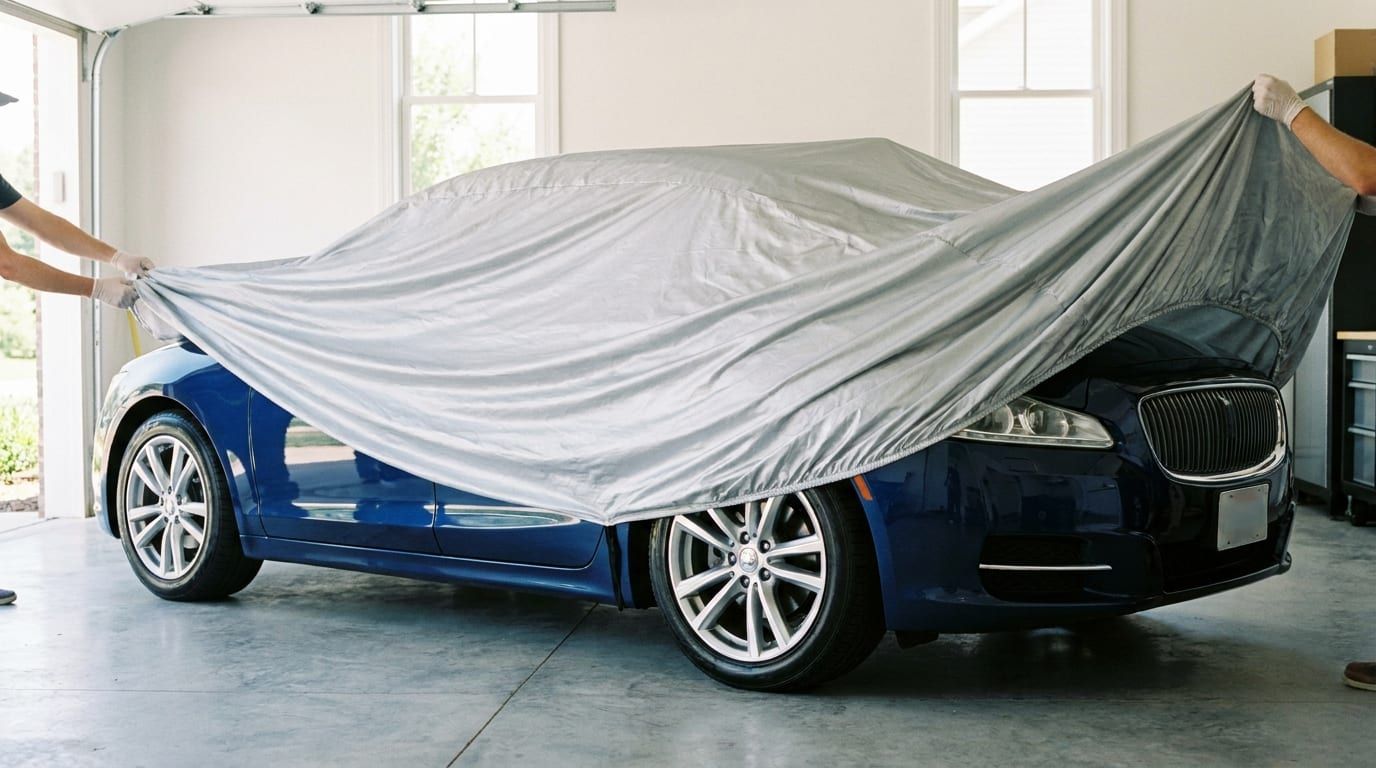
Knowing your size class gets you in the right aisle. It doesn't guarantee a good fit.
A universal cover labeled "midsize sedan" is built to a dimension range wide enough to fit dozens of different cars. That's the whole point of universal. It also means slack. Extra fabric bunches around the WRX's front bumper, its mirrors, and especially around a rear wing if you've got an STI or TR. Wind gets under that slack and flaps the cover around, which over time wears at the paint and the material both.
Semi-custom car covers tighten that range by narrowing it to body style, sedan versus hatchback versus coupe, rather than just overall size class. Better fit than universal, still not shaped to your exact car.
Custom-fit covers are patterned to the WRX's specific year and trim. That includes cutouts for the rear wing on STI and TR models, so the cover drapes clean instead of catching on the mount. If you're storing the car outdoors daily, custom-fit is the one that actually holds up against wind and debris over a season. If the car's going into a garage overnight and only needs occasional dust protection, universal or semi-custom will get the job done without the extra cost.
How to Measure Your WRX to Confirm the Right Size
Don't skip this step just because you know the size class. Measure your actual car.
Step 1. Park on level ground and measure bumper to bumper. Include any spoiler or wing extension in that number, don't stop at the body panel.
Step 2. Measure width at the widest point. On most WRX trims that's the mirrors. On a widebody variant, check the rear fender flares too, they can stick out further than the mirrors do.
Step 3. Measure height from the ground to the highest point of the roofline. If there's a roof rack or antenna, note it separately since most cover patterns don't account for either.
Once you've got all three numbers, hold them up against the size chart range for whatever cover you're considering, whether that's a listed universal size or the stated dimensions on a custom-fit product page. The cover finder tool is a faster way to do this comparison if you'd rather skip the manual math.
Here's the thing that trips people up most: aftermarket mods. A big STI wing, a roof box, a set of coilovers that drop the car an inch. None of that shows up in a factory spec sheet, but all of it changes whether a cover actually fits. Measure your car as it sits today, not as Subaru built it.
Common Sizing Mistakes WRX Owners Make
A few patterns show up again and again with this car specifically.
The biggest one: buying a "compact car" cover because the WRX looks small parked next to an SUV. It isn't compact. A compact-sized cover runs short at the bumpers, leaving the nose or tail exposed to rain and sun.
Second: ignoring the rear wing. STI and TR owners especially need to check whether a cover is built to clear the wing mount. A cover that isn't just sits on top of it, which chafes the paint around the mount points over time and never drapes right.
Third: assuming every WRX year uses the same pattern. The 2022-and-up redesign has noticeably different body contours than the 2015-2021 cars, different fender shape, different rear end. A custom-fit cover built for one generation won't sit right on the other, even though both are technically "WRX."
Fourth: shopping by the word "sedan" alone. Sedan tells you the body style, not the size. Always check the actual length and width numbers against the chart rather than assuming the label covers you.
Choosing the Right Cover Features for Your WRX

Fit is half the equation. Material matters just as much.
Parking outdoors full-time? Prioritize a waterproof, UV-resistant cover. Sun fades paint and dries out plastic trim faster than most owners expect, and the WRX's hood scoop and lower bumper trim both take a beating from constant UV exposure.
Garage storage is a different problem. You don't need weatherproofing indoors, you need something breathable that keeps dust off without trapping moisture. An indoor car cover built for that purpose is lighter and easier to pull on and off daily, too.
Daily driver in mixed weather, on and off the car constantly? Look for a soft inner lining. Rough fabric against paint, repeated every day, adds up to fine scratching over a year or two that you won't notice until it's done.
One more consideration, if you're in a hail-prone region: the WRX's hood and roof panels are flat, unbroken expanses that take direct hits hard. A padded, hail-rated cover is worth the extra cost there over a standard outdoor option.
Get the Exact Fit for Your Subaru WRX

Knowing the WRX sits in the midsize sedan class is a fine starting point, but it's only that. A size chart tells you the bracket, not the exact fit, and the difference between the two is what keeps a cover snug through a windy night instead of flapping loose by morning.
If you want to skip the guesswork entirely, run your WRX's exact year and trim through a cover finder tool rather than shopping by size class alone. Subaru-specific cover options for the WRX and other Subaru models are worth a browse too, alongside the general sizing guide if you've got other vehicles in the driveway that need covering.
And once the right cover shows up, how you put it on matters almost as much as the fit itself. Worth a quick read on installation before you use it the first time. If you found this guide useful, stick around the blog, there's more sizing and care advice where this came from.
Updated