



Chevrolet Colorado Car Cover Size Chart: Find Your Correct Fit
Chevrolet Colorado Size Class: Midsize Pickup Truck
If you're shopping for a cover, here's the short answer: the Chevrolet Colorado sits in the "Midsize Pickup Truck" size classification that most semi-custom and universal cover makers use to sort fitment. That's the starting point for any car cover size chart for Chevrolet Colorado, but it's not the whole story.
Within that midsize class, your exact cover size still comes down to two things: cab style and bed length. An Extended Cab Colorado with a regular bed is a noticeably different shape than a Crew Cab with a long bed, even though both get filed under the same "midsize pickup" label. A cover sized for one will fit the other poorly.
A properly fitted cover needs to account for three dimensions, not just one: overall length bumper to bumper, width at the mirrors, and height at the cab roofline. Size-class systems approximate all three, but they're built around averages across several truck models, not your specific Colorado.
That's exactly why custom-fit car covers exist. They're cut to the Colorado's actual factory dimensions by generation and trim, so you're not relying on a size range that's "close enough." If you want a tighter fit with less guesswork, that's the route to take.
Chevrolet Colorado Size Chart by Generation and Configuration
Length is the variable that moves the most between Colorado configurations. Here's how the three generations break down, with approximate overall length ranges and the size class each one typically falls under.
| Generation | Cab/Bed Configuration | Approx. Overall Length | Recommended Cover Size Class |
| 1st Gen (2004-2012) | Extended Cab / Regular Bed | 207-212 in | Midsize Pickup, short wheelbase |
| 1st Gen (2004-2012) | Crew Cab / Long Bed | 221-225 in | Midsize Pickup, long wheelbase |
| 2nd Gen (2015-2022) | Extended Cab | ~212 in | Midsize Pickup, short wheelbase |
| 2nd Gen (2015-2022) | Crew Cab / Short Bed | 212-213 in | Midsize Pickup, short wheelbase |
| 2nd Gen (2015-2022) | Crew Cab / Long Bed | 224-225 in | Midsize Pickup, long wheelbase |
| 3rd Gen (2023-present) | Extended Cab | ~212 in | Midsize Pickup, short wheelbase |
| 3rd Gen (2023-present) | Crew Cab / Short Bed | 212-213 in | Midsize Pickup, short wheelbase |
| 3rd Gen (2023-present) | Crew Cab / Long Bed | 224-225 in | Midsize Pickup, long wheelbase |
These are approximate ranges, not exact VIN-level specs, so treat them as a starting point rather than gospel.
One thing worth flagging: ZR2 and other trail/off-road trims often run longer or taller than the numbers above suggest. Bigger bumpers, rock rails, and roof racks all add to the footprint, so if you're covering a ZR2 or a Colorado with aftermarket off-road gear, double-check actual measurements before you order instead of trusting the trim name alone.
Why Cab and Bed Length Change the Fit
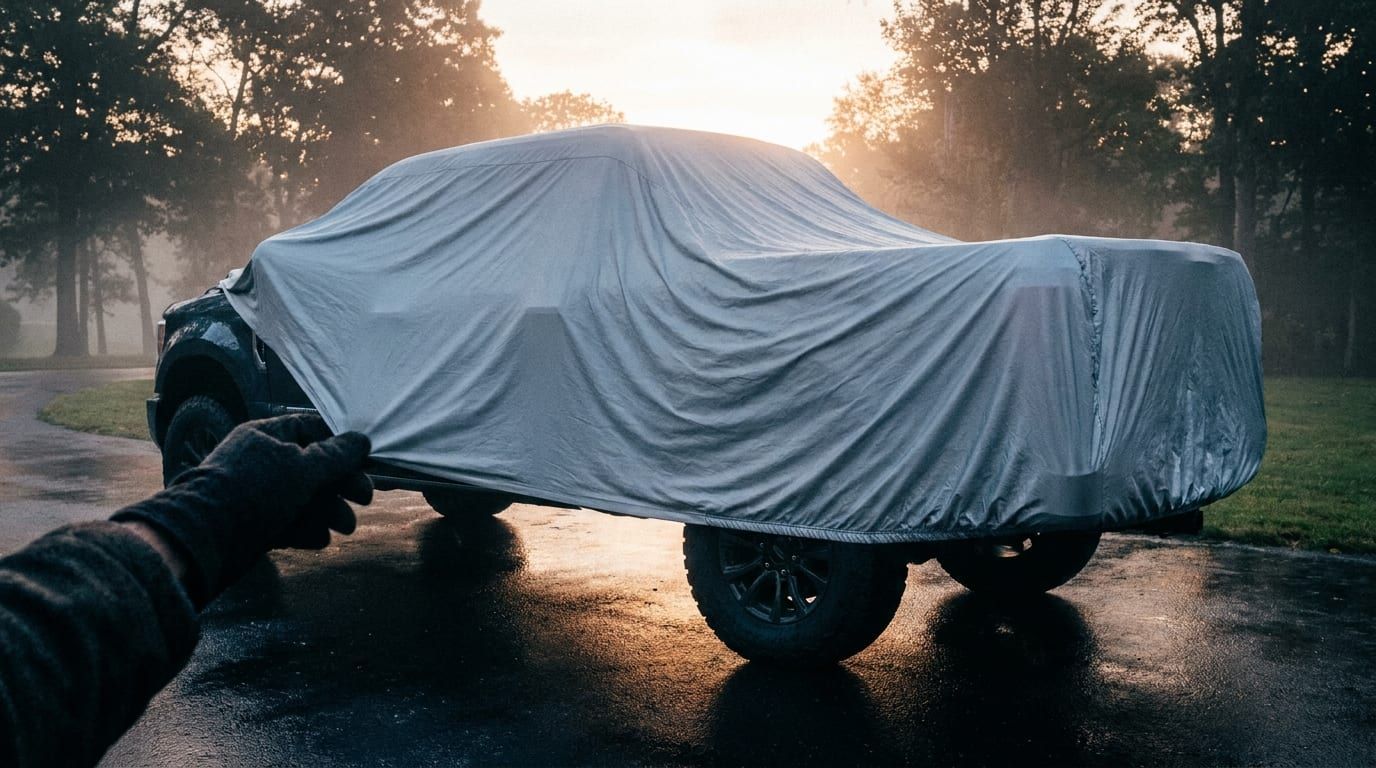
Truck covers are sized primarily off one number: total bumper-to-bumper length. That's why a short-bed and long-bed Colorado from the same model year can need two completely different cover sizes, even though they share an engine, frame, and most interior parts.
Get it wrong and you'll notice fast. An undersized cover rides up short, leaving the tailgate or front bumper exposed to rain, road grime, and UV rays it was supposed to block. An oversized cover does the opposite problem: it flaps around in wind, and all that extra slack material pools water in low spots instead of shedding it. Neither keeps the truck as dry or as protected as it should be.
Cab style factors in too. Crew cab models carry a longer wheelbase and a stretched-out roofline compared to extended cab trucks, and that changes where mirror pockets and tie-down straps need to sit on the cover. A cover built around an extended cab's proportions will have its strap points in the wrong place on a crew cab, even if the overall length happens to land close.
How to Measure Your Colorado Before Ordering
Skip the guesswork and take three measurements yourself:
- Total length: front bumper to the back of the tailgate (not including any aftermarket hitch or tonneau overhang)
- Width: mirror to mirror, measured at the widest point
- Height: ground to the roof peak
If you're not 100% sure which cab and bed combo you've got, check the door-jamb sticker or the original window sticker. Chevy's build sheets list cab style and bed length explicitly, and it's a lot more reliable than eyeballing it from across the driveway.
Here's the thing: if measuring and cross-referencing a chart sounds like more work than you want to deal with, custom-fit covers skip that step entirely. They're cut to the Colorado's VIN-specific body style, so there's no tape measure involved on your end.
Semi-Custom vs. Custom-Fit Covers for the Colorado
Semi-custom covers are built around that size-class system we started with. They use elastic hems and some give in the material to stretch across a range of trucks within the midsize category. That looseness is the tradeoff: easier to get on and off, less precise against the body.
Custom-fit covers are cut to the exact panel shape of a specific generation and configuration. Tighter fit, less flapping, better resistance to wind and pooling water because there's no slack for water to collect in.
For basic driveway storage where the truck's getting covered overnight or for a few days at a time, a semi-custom midsize truck cover is going to do the job fine. But if the Colorado lives outdoors full-time, or it's wearing a bed cap or tonneau that changes its profile, custom-fit is the safer call. It's also the better option if you've added a bed rack, running boards, or a snow plow mount, since any of those can push the truck's actual dimensions outside what a standard size class assumes. Browse Chevrolet truck cover options to see what's built for your configuration, or start from the truck covers category if you're still comparing.
Other Fit Factors: Bed Accessories and Weather Exposure

Size isn't the only variable. What's sitting in or on the bed matters just as much.
A tonneau cover, a bed liner with raised edges, or a hard truck cap all change the height profile of the truck. A cover sized correctly for a bare bed might sit too tight over a cap or a raised tonneau, straining seams it shouldn't have to deal with. If you've got any of these installed, factor that extra clearance in before ordering, whether you're going semi-custom or custom-fit.
Where the truck lives matters too. An indoor car cover just needs to handle dust and light scuffs in a garage. An outdoor car cover is a different job entirely: it needs waterproofing and UV-resistant fabric to survive sun, rain, and temperature swings day after day. Getting the size right doesn't help much if the material itself isn't rated for where the truck actually sits.
Once size and material are sorted, check the straps and grommets. A correctly sized cover that isn't cinched down will still shift in wind, so make sure the tie-downs are snug against the undercarriage. If you need a refresher on getting it on straight the first time, this installation guide walks through it step by step.
Get the Right Size Cover for Your Colorado
Confirm your cab and bed configuration first. Then match it against the midsize pickup size chart above, or skip straight to custom-fit if you want to remove any doubt. That order of operations is what prevents the fit mistakes most Colorado owners run into: buying based on "midsize truck" alone without checking which Colorado they actually have.
If you want to confirm the exact size by year, make, and model instead of relying on the size class alone, the cover finder tool or a quick vehicle lookup will get you there faster than measuring tape and guesswork.
Dialing in a car cover size chart for Chevrolet Colorado is really a five-minute job once you know the cab and bed length. Take the measurements, check the chart, and go from there. If you're ready to browse, there's a full lineup of Colorado-ready covers waiting, sized for exactly this kind of truck.
Updated