


Custom-Fit vs. Universal Car Cover for the Nissan Altima: Which One Actually Fits?
Your Altima's sitting in the driveway right now with a cover that's either too loose or you're still deciding which one to buy. Either way, the decision matters more than it seems. A custom fit car cover for Nissan Altima owners isn't just a nicer-sounding option, it's a different product built to a different standard than the generic cover sitting next to it on the shelf. Here's what actually separates the two, and which one is worth your money.
Why Cover Choice Matters More on a Sedan Like the Altima
Sedans get punished by bad-fitting covers in a way trucks and SUVs don't. The Altima's low profile, its sharply sloped rear glass, and those low, wide side mirrors all create gaps a generic cover wasn't built to handle. On a boxy SUV, a loose cover mostly just looks baggy. On an Altima, it shifts, it gaps at the mirrors, and it catches wind under the rear glass like a sail.
Add in the fact that the Altima has gone through several distinct body generations, the L33, the L34 from 2013 to 2018, and the current L34 redesigned in 2019, and you've got a second problem. A cover labeled "fits Altima" doesn't automatically fit your Altima. The mirror placement and roofline changed enough between generations that a cover cut for one won't sit right on another.
So the real question at this stage isn't "should I use a cover." It's whether you pay more for something cut to your Altima's actual dimensions, or save money upfront on a universal cover and live with the tradeoffs. That's what this article is here to sort out, a direct comparison, not another pitch for why covers matter in general.
What 'Custom-Fit' Actually Means for the Nissan Altima
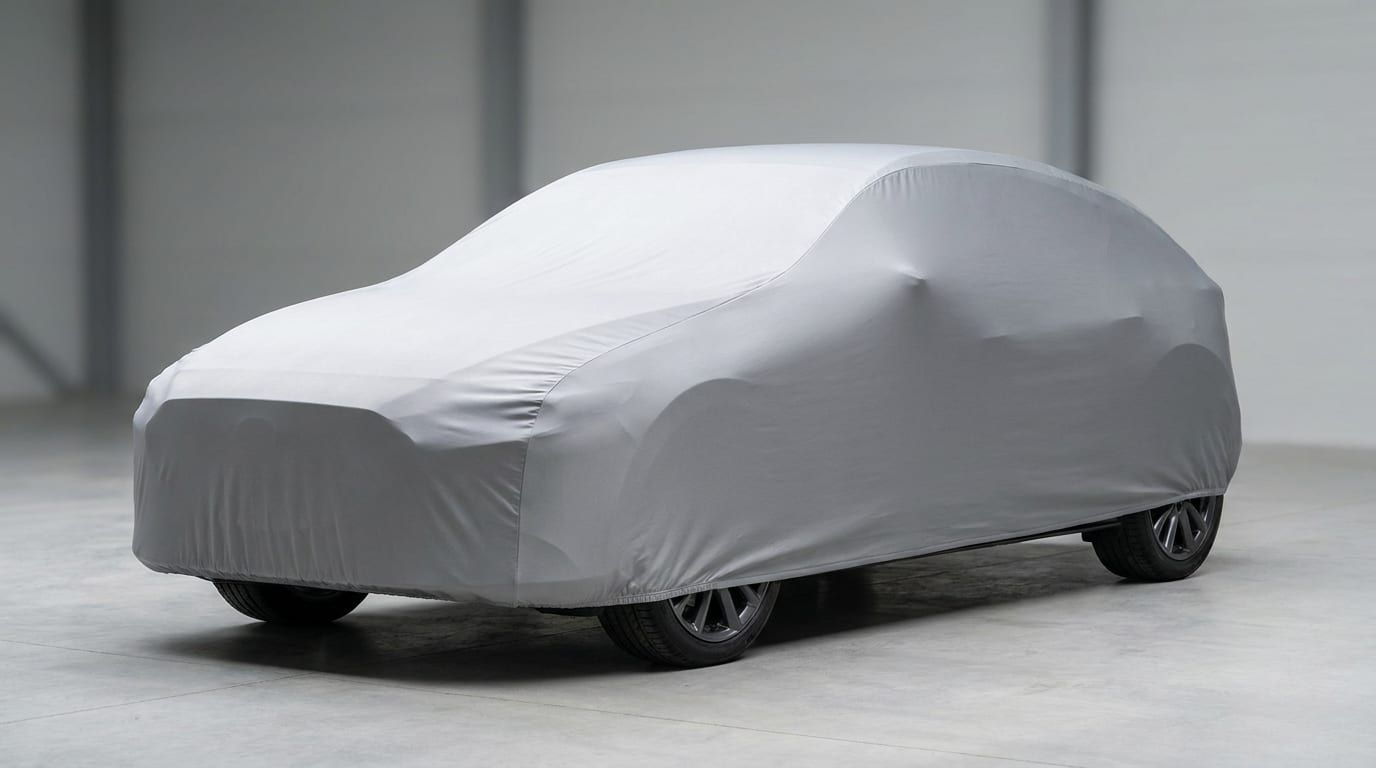
"Custom-fit" gets thrown around loosely, so let's be precise. For the Altima, it means a pattern cut to match the car's length, its mirror pocket placement, antenna location, and roofline, matched specifically to a model year range. It's not a guess based on general sedan dimensions. It's built around the actual shape of your generation of Altima.
What that usually includes: contoured pockets that slip over the side mirrors instead of stretching over them, an elastic or corded hem that cinches snug along the rocker panels, and cutouts positioned exactly where the Altima's antenna or badging sit. None of that is decorative. It's what keeps the cover anchored in wind and keeps water from finding its way in through a gap.
One honest clarification: "custom-fit" here almost always means semi-custom, matched to a range of model years and trims rather than a one-off pattern made for your VIN alone. That distinction matters because it's why you still need to enter your exact model year when ordering; a cover built for the 2019+ redesign won't drape right on a 2016. Get the year wrong and you're basically back to universal-cover problems, just with a custom-fit price tag. A custom-fit car cover built correctly for your Altima's year range is really the whole point of paying more in the first place.
Where Universal Covers Fall Short on an Altima
Universal covers are sized by broad length brackets, something like "fits sedans 15 to 16 feet." That range has to accommodate a lot of different car shapes, so on any single car, there's excess fabric somewhere. On the Altima, that excess tends to pool at the hood and bunch up around the trunk, since the universal pattern doesn't know where the Altima's actual body lines fall.
That slack causes a real problem: flapping. Loose fabric moving in the wind rubs against the clear coat, over and over, and over months that friction shows up as fine scratches or swirl marks in the paint. It's not dramatic damage in one sitting, it's slow, and it's the kind of thing you notice a year later and can't quite place.
Mirrors are another weak point. Universal covers typically skip the shaped mirror pockets entirely, so you're stuck choosing between a cover that doesn't fully clear the mirrors, or one that leaves them poking out and exposed to rain. Either way, you're compromising.
And because a universal cover doesn't sit tight against the body, low spots form where it sags, exactly where rain and snow settle instead of running off. Pooling water sitting against paint for hours is the opposite of what a cover is supposed to do.
Custom-Fit vs. Universal: Head-to-Head for the Altima
Fit Accuracy
- Custom-fit: Follows the Altima's actual body lines and mirror shape for the specific model year
- Universal: Sized by generic length range, leaving slack at the hood, trunk, and mirrors
Wind and Flapping Resistance
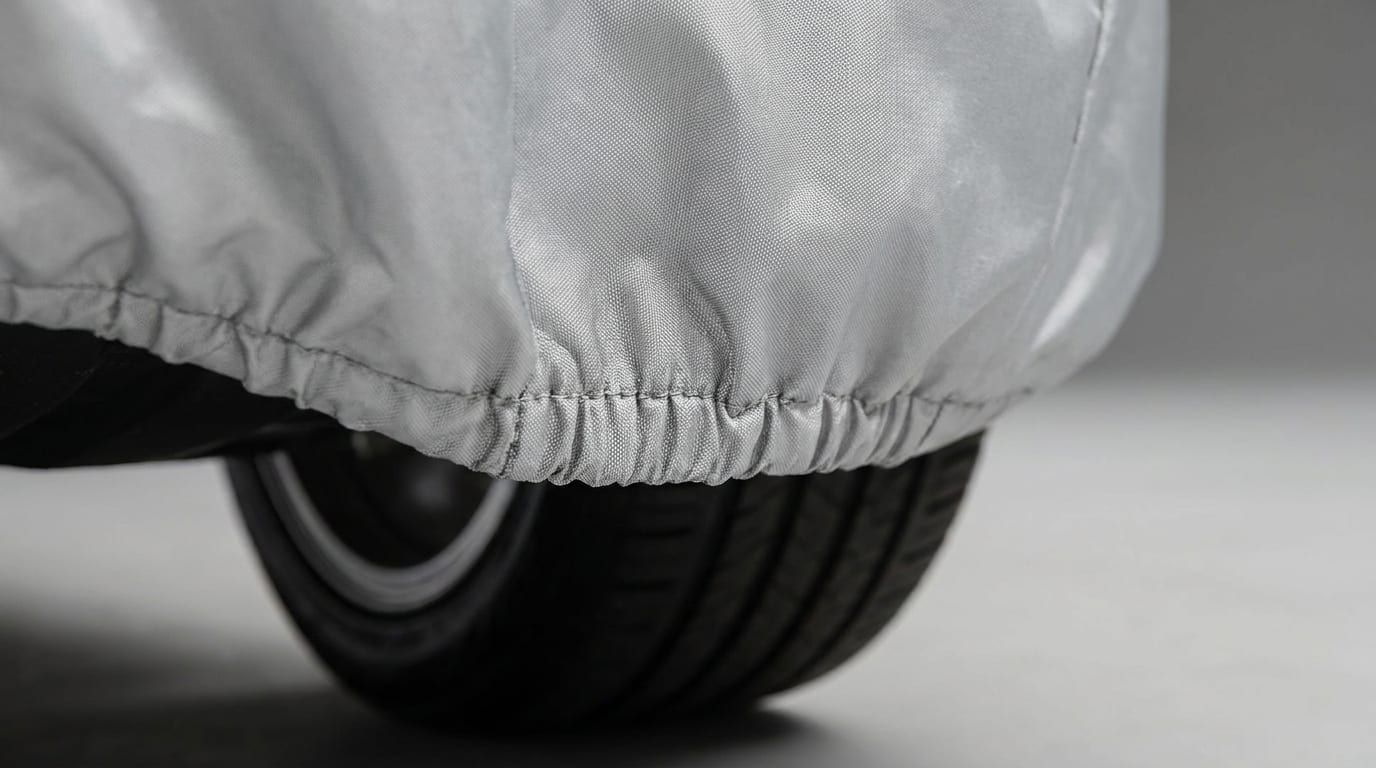
- Custom-fit: Snug hem with elastic or cording holds firm against gusts
- Universal: Looser fit lets fabric flap and rub against the clear coat
Weatherproofing Performance
- Custom-fit: Seams and cutouts positioned to shed water and snow off the Altima's specific contours
- Universal: Ill-fitting gaps let water pool instead of running off
Installation Time
- Custom-fit: Goes on in one motion since it's shaped to the car
- Universal: Often needs extra tucking, strapping, or adjusting to sit right
Upfront Cost
- Custom-fit: Higher price for the tailored pattern
- Universal: Typically cheaper to buy
Cost Over Time
- Custom-fit: Tighter fit means less flapping-related wear, so the cover lasts longer
- Universal: Abrasion and stretching often mean replacing it sooner
Paint Protection Risk
- Custom-fit: Stable fit minimizes friction points against the clear coat
- Universal: Loose fabric is a known cause of micro-scratching in wind
Everyday Usability
- Custom-fit: Built-in antenna and mirror cutouts prevent snagging on install
- Universal: Lacking those cutouts, often requires working around the mirrors and antenna by hand
Look at that list and the pattern's obvious: universal wins exactly one category, price at checkout. Everything about how the cover actually performs on the car favors custom-fit. If you're weighing waterproof car covers for regular outdoor use, the fit issue compounds the weatherproofing issue, a loose cover defeats even a genuinely waterproof fabric because water finds the gaps instead of the fabric.
When a Universal Cover Might Still Make Sense
There are a few situations where a universal cover is the right call, not just the cheap one. Storing the Altima for a few days while you're out of town. Covering a rental or a borrowed Altima you won't own long enough to justify a tailored purchase. Prepping the car for a sale and just wanting some dust protection while it sits on the lot.
If you're strictly budget-limited and you know you're accepting the tradeoffs, a universal cover will still block dust, bird droppings, and UV exposure at a baseline level. That's real protection, just not the same tier.
Where it stops making sense is regular outdoor use. If you're parking outside through wind, rain, or months of storage, a universal cover's wear pattern catches up fast. You'll likely replace it, maybe more than once, before you'd have worn out a custom-fit cover bought the first time. The short-term savings has a way of disappearing.
Choosing the Right Custom-Fit Cover for Your Altima Year and Use Case
Start with the generation. The L33, the 2013-2018 L34, and the 2019-present L34 all have different mirror shapes and rooflines, so get your model year right before you order. This isn't a minor detail, it's the whole reason custom-fit exists. If you're not sure which bracket your Altima falls into, checking sizing by vehicle before you buy saves a return down the line.
Next, think about where the car actually lives. A garaged Altima that only needs protection from dust and minor scratches does fine with a lighter indoor car cover. A car parked outside year-round needs an outdoor car cover built for UV exposure, rain, and temperature swings, heavier material, more reinforcement.
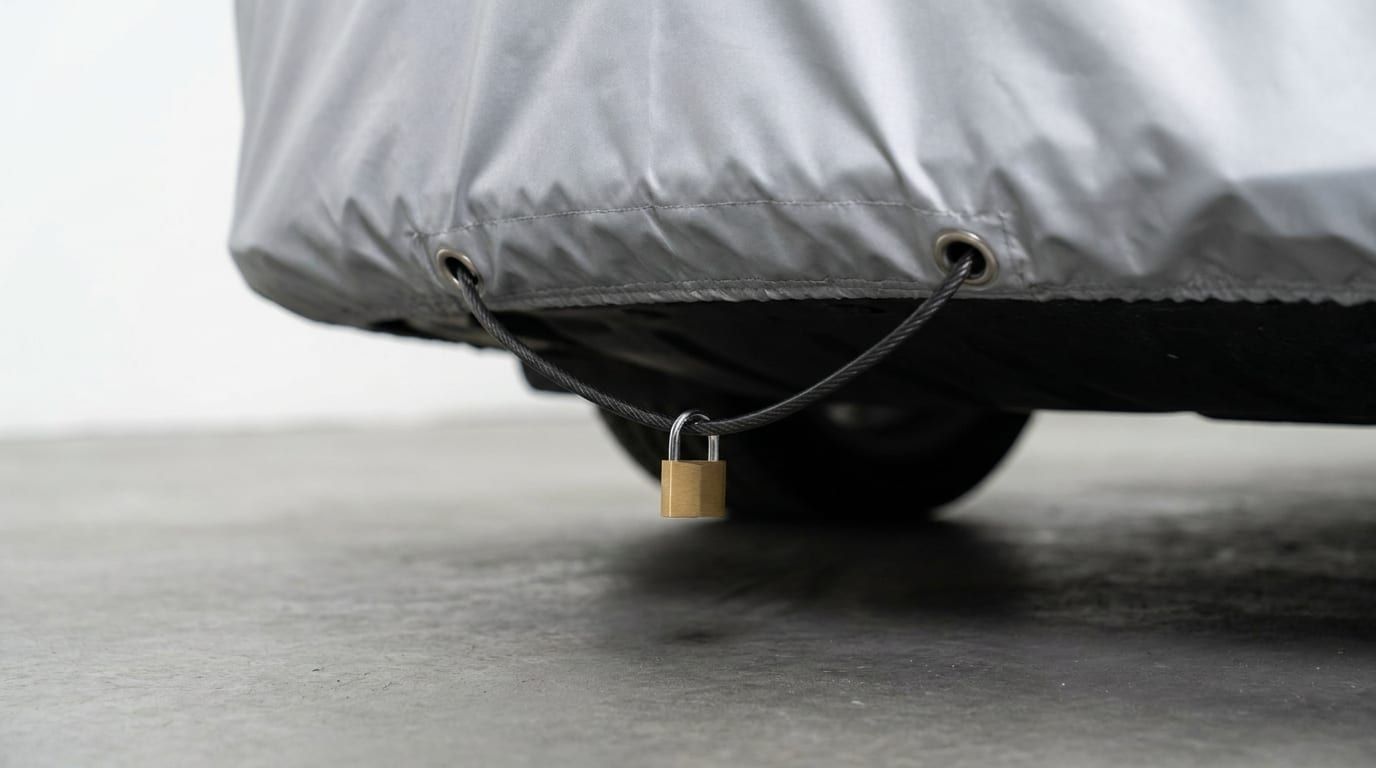
A couple of add-ons are worth it specifically for an Altima parked outside. A cable and lock combo if the car's on the street or in a shared lot. Gust straps if you're in a windy region, since even a well-fitted cover benefits from that extra anchor point in a real storm.
And match waterproofing to your actual climate. Light mist and occasional dew is a different problem than regular rain or snow. Don't buy full waterproofing you don't need, but don't underbuy it either if you're somewhere that actually gets weather.
Bottom Line: Get the Right Cover for Your Altima
Custom-fit wins on protection, on longevity, and on keeping your paint free of the fine scratches a loose cover causes over time. Universal wins on one thing: what you pay right now. For short-term or occasional use, that tradeoff might be fine.
But if you're covering your Altima regularly outdoors, the math tends to favor custom-fit once you factor in how often a universal cover needs replacing. Buy once, fit right, skip the repeat purchases.
Before you buy, confirm your exact Altima model year and check what's covered under the warranty so you know what you're getting. Want more on keeping your cover in shape once it's on the car? Stick around the blog, there's more on care and maintenance worth a read.
Ready to stop guessing and get a cover that actually fits? Shop custom-fit Nissan covers built for your Altima's exact year and generation.
Updated