Articles Automotive Care and Maintenance
Dash Covers and Dash Mats: Protecting Your Dashboard from Sun and Cracking
Published
What Is a Dash Mat (and Why Your Dashboard Needs One)
A dash mat is a form-fitted panel that lays over or wraps your dashboard to block direct sunlight from hitting the material underneath. Some people call it a dash cover, same idea either way: a layer of protection between the sun and whatever your dash is made of, usually dark plastic or vinyl.
Dashboards take more abuse than almost any other interior surface. They sit directly under the windshield, catching unobstructed sun for hours at a time, and that dark material soaks up heat like a skillet. There's no shade, no airflow to speak of, nothing standing between the glass and the plastic.
The damage shows up on a timeline you can almost set a calendar to. Fading and a dull, washed-out look within a few months. Then, if you're in a hot or sunny climate, actual cracking and warping within one to three years. Once you see hairline cracks near the vents, there's no undoing it.
That's the part that makes a dash mat worth the money. A decent one runs $20 to $60. Repairing or replacing a cracked dashboard, on the other hand, can run several hundred dollars, sometimes more depending on the vehicle. It's one of the cheapest insurance policies you can put on a car.
How UV Rays and Heat Actually Crack a Dashboard
Here's what's actually happening at the material level. UV radiation breaks down the polymer bonds in plastic and vinyl, and once those bonds degrade, the material loses its flexibility. It gets brittle. Brittle plastic sitting in a car that heats up and cools down every day doesn't stay intact for long.
Heat makes it worse. On a sunny day, interior temperatures can climb past 150 to 180°F, turning your dashboard into something closer to an oven rack than a car part. That kind of heat accelerates the breakdown UV radiation already started. The two feed off each other.
You can usually track the damage in stages. First the color fades, a slow fade from black to gray or from a rich tone to something washed out. Then the surface turns chalky, losing its original texture. After that, hairline cracks start forming, usually near vents, gauge clusters, and any spot where the plastic is thinner or under more stress. Eventually those cracks turn into visible warping.
A few things speed this process up. Dry climates with low humidity tend to accelerate cracking. High altitude locations get more intense UV exposure, even when the air temperature isn't extreme. And any vehicle parked outdoors without shade, day after day, is going to show wear faster than one that spends most of its time in a garage or carport.
Dash Covers vs. Dash Mats: What's the Difference
People use "dash cover" and "dash mat" interchangeably, and honestly, most of the time that's fine. But there's a real distinction worth knowing before you buy. A dash cover tends to be a thinner, more fitted panel. A dash mat usually has more cushioning or padding built in.
Coverage area varies too. Some products wrap the entire top surface of the dash edge to edge. Others are partial covers, leaving the gauge cluster, vents, or infotainment screen exposed so you don't lose visibility or functionality.
Fastening methods matter more than people expect. You'll see hook-and-loop tabs, friction-fit edges that tuck into the dash's existing contours, and adhesive-backed sections for spots that need to stay put. The fastening method affects how well the cover sits around vents and sensors. A sloppy fit around a vent means airflow gets blocked or the material flaps around at highway speed.
Compatibility is the real sticking point. Some covers are built around a specific make and model, engineered to match factory cutouts for sensors and vents. Others are universal, trim-to-fit designs you cut down yourself. The vehicle-specific option fits tighter and looks cleaner, but the universal option covers more vehicles at a lower cost. Neither is wrong, it depends on what you're driving and how particular you are about appearance.
Comparing Dash Mat Materials
Material choice changes almost everything about how a dash mat performs day to day.
| Material | Best for | Trade-off |
|---|---|---|
| Carpet-style | UV resistance, soft texture | Traps dust, harder to wipe clean |
| Suede-style | Low glare, reduces windshield reflection | Moderate heat resistance |
| Neoprene/rubber-backed | Grip, water and spill resistance | Less common for fading-focused protection |
| Reflective/foil-backed | Extreme heat climates, bouncing UV | Limited glare reduction |
Carpet-style mats hold up well against UV rays and feel soft under your hand, but they're magnets for dust and crumbs. Wiping them clean isn't really an option, you're vacuuming instead.
Suede-style mats earn their keep by cutting glare off the windshield, which matters more than people think if you drive west at sunset regularly. Heat resistance is decent, not exceptional.
Neoprene or rubber-backed mats grip the dash surface better than fabric options, and they shrug off spills and moisture. You'll see these more often in work trucks and fleet vehicles where durability matters more than looks.
Reflective or foil-backed mats are built for one job: bouncing heat and UV away from the surface rather than just absorbing it like fabric does. If you're in Phoenix or anywhere else the dashboard regularly hits oven temperatures, this is the category to look at first.
Match the material to what you actually care about. Chasing glare reduction, heat reflection, easy cleanup, and grip all at once usually means compromising on at least one.
How to Choose the Right Dash Cover for Your Vehicle
Fit comes first, full stop. Dash shapes differ wildly between vehicles, so confirm your make, model, and year match before buying anything. A mat built for a sedan won't sit right on a truck with a flatter, wider dash. If you're unsure where to start, finding the right cover for your specific vehicle applies to dash protection the same way it applies to exterior covers: fit is the first filter, not an afterthought.
Color is a trade-off, not a free choice. Lighter colors reflect more heat, which helps the material underneath stay cooler. But they show dirt and stains faster. Darker colors hide wear better and look cleaner longer, at the cost of absorbing more heat themselves, which can partially cancel out the benefit you're trying to get.
Check clearance before you commit to a cutout pattern. The cover needs to leave defrost vents open, avoid blocking airbag sensors, and not creep over the infotainment display. A mat that looks great in photos but blocks your defrost vent in January is a mat you'll stop using by February.
Adhesive-backed covers give you a cleaner, more permanent look, no shifting, no lifting at the edges. Friction-fit covers trade that polish for flexibility: you can pull them off easily to clean underneath or swap seasons. Neither is better across the board, it's a question of how often you want to be messing with it.
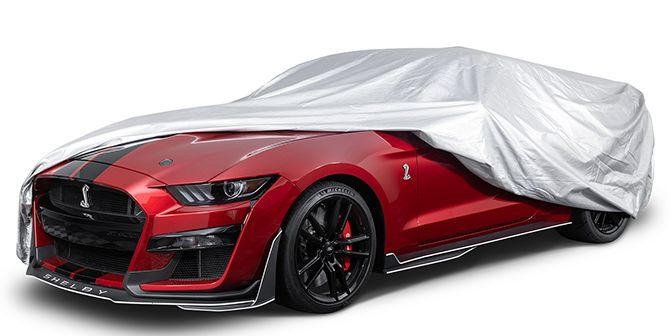
If your vehicle spends real time parked outside, pair dash protection with something bigger. UV exposure through the windshield is only half the story, the same sun is working on your paint, trim, and tires from the outside. A properly fitted outdoor car cover handles that half, and together the two cut down on sun damage across the whole vehicle instead of just the interior.
Installing and Maintaining a Dash Mat
Clean the dashboard surface before you put anything on it. Dust, grease, and old cleaning product residue keep adhesive backing from seating properly, and friction-fit edges won't hold tight against a dirty surface either.
Installation isn't complicated, but order matters. Start by aligning the mat with your vents and gauge cluster first, since those are fixed points you can't adjust later. Once that's lined up, work the edges down and outward from the center. Rushing this step is how you end up with bubbles or gaps along the edges.
Cleaning depends entirely on material. Carpet-style mats need a vacuum, not a wipe. Suede-style responds well to a damp microfiber cloth, nothing harsher. Reflective or foil-backed mats are the one category where you want to be careful, skip harsh solvents since they can strip the reflective coating and kill the whole point of the product.
Pull the mat off every so often, even if it's not dirty on top. Trapped moisture and dust build up underneath where you can't see it, and that's exactly the environment that speeds up the degradation you bought the mat to prevent in the first place.
Protect the Whole Vehicle, Not Just the Dash
A dash mat solves one problem well, but it's one piece of a bigger picture. Sun and heat don't stop at the dashboard. The same UV exposure fades paint, cracks vinyl seats, and dries out rubber trim over months and years, whether the vehicle sits in a driveway or a gravel lot.
If you're serious about protecting the whole car, think about where it actually spends its time. A vehicle in a garage most of the week has different needs than one parked outside year-round. For the outdoor case, using a car cover outdoors covers the waterproofing and UV questions in more depth, and for vehicles kept inside, an indoor car cover still helps with dust and incidental sun through garage windows.
The buying takeaway is simple: match your dash mat's material and fit to your climate and where you actually park. Hot and sunny means reflective material matters more. Garage-kept means you can prioritize looks over heat resistance. Either way, pairing dash protection with the right custom-fit car cover gets you closer to covering the whole vehicle instead of just the one surface you can see every time you get in.
If you want to keep learning about protecting your car from the inside out, browse CarCovers' accessories collection and have a look around while you're there. There's no rush, just worth knowing what's out there before the next heat wave rolls through.