



How Much Is a Car Cover for a Volkswagen Golf? Price Guide by Type and Fit
A car cover sized for a Volkswagen Golf generally runs $30 to $250, and most owners end up spending somewhere between $70 and $150 for something that actually holds up outdoors. Where you land in that range comes down to fit, material, and how hard the cover has to work. If you've been wondering how much is a car cover for a Volkswagen Golf before you buy one, the short answer is: less than you'd pay for most sedans or SUVs, but the final number still depends heavily on what you need it to do.
How Much Is a Car Cover for a Volkswagen Golf?
Three things move the price more than anything else: fit type, material quality, and how the car is actually stored. A universal cover stretched over a Golf costs less than a cover cut specifically for its body shape. A thin cotton-blend dust sheet costs less than a multi-layer waterproof fabric built for sun and snow. And a cover meant for an occasional garage-kept car costs less than one meant to survive daily exposure outside.
The Golf works in your favor here. It's a compact hatchback, smaller than most sedans and nowhere near the surface area of an SUV or truck, so sizing costs stay on the lower end of the spectrum. You won't pay truck-cover prices for a Golf, full stop.
This guide walks through what you're actually getting at each price point, the real difference between a $40 cover and a $200 one, and how to match your spend to how and where your Golf actually sits when you're not driving it. If you haven't looked yet, the Volkswagen cover lineup is a decent place to see the range in person before reading further.
What Affects the Price of a VW Golf Car Cover

Fit precision is the biggest lever. A universal or semi-custom cover is built to loosely fit a range of hatchbacks, so it's cheaper to produce and cheaper to buy, but it leaves slack around the mirrors, the rear hatch, and the wheel wells. A custom-fit car cover built for the Golf's actual body lines costs more, but it tracks the shape instead of billowing around it.
Material layering is next. Single-layer polyester or cotton blends sit at the cheap end and do fine for light dust protection. Multi-layer woven fabrics with UV inhibitors and water resistance built into the weave cost more to manufacture, and that shows up in the price tag.
Weatherproofing level matters too, and it's not binary. Some covers are water-resistant, meaning they'll shrug off light rain for a while. Fewer are genuinely waterproof and breathable at the same time, which is a harder material problem to solve and costs more to get right.
Then there's hardware. Grommets for a cable lock, elastic hems that cinch around the bumpers, an antenna patch, a storage bag. None of these cost much individually, but they add up, and a cover with all of them will run noticeably more than one without.
Last factor: indoor versus outdoor rating. A soft indoor cover just needs to stop dust and the occasional scuff. An outdoor-rated one has to handle wind, direct sun, and precipitation without degrading, and that's a different (and pricier) product category entirely.
Price by Cover Tier: Basic, Mid-Range, and Premium Options

Basic tier, roughly $30-$60. Lightweight indoor dust covers or the most minimal outdoor options. Thin fabric, little to no real waterproofing, fine for a garage or a car that only sits uncovered for a day or two at a time. Don't expect this tier to survive a season of rain.
Mid-range tier, roughly $70-$150. This is where most Golf owners actually shop. Multi-layer construction, real waterproofing, UV protection that won't fade the paint underneath, and stitching that holds up to being pulled on and off daily. If your Golf lives outside, this is the realistic starting point.
Premium tier, roughly $150-$250. Custom-fit, reinforced seams, heavier-duty weatherproofing, and usually a longer warranty behind it. Built for harsh climates or for cars that sit uncovered for weeks or months at a stretch rather than overnight.
Here's the practical jump between tiers: going from basic to mid-range usually buys you wind straps and better grommets, the stuff that keeps the cover from flapping itself apart in a storm. Going from mid-range to premium adds reinforced panels in high-wear spots (roofline, mirrors) and extends how long the manufacturer will stand behind the thing. A quick table makes the difference easier to see at a glance.
| Tier | Price range | Best suited for |
| Basic | $30-$60 | Garage storage, short-term, indoor dust protection |
| Mid-range | $70-$150 | Daily outdoor parking, general weather exposure |
| Premium | $150-$250 | Harsh climates, long-term outdoor storage |
If you park outdoors most days, it's worth reading through what actually separates an outdoor car cover from an indoor car cover before picking a tier, since the labels matter more than they might look at first glance.
Custom-Fit vs. Universal Covers for the Golf: Price Difference
Universal covers are the cheapest way to cover a Golf, and that's really their main selling point. The tradeoff is fit. The Golf's hatchback rear end and side mirrors don't match a generic sedan silhouette, so a universal cover tends to bunch up or leave gaps there. Loose fabric flaps in wind. Flapping fabric rubs against paint. Over months, that's scuffing you didn't need to deal with.
Custom-fit covers cost more at checkout, but they're cut to the Golf's actual body lines, mirrors and hatch included. Tighter fit means less flapping, which means less abrasion over time. Think of it less as an upfront cost and more as a trade: pay a bit more now, spend less later replacing a cover that wore through in a year because it never fit right to begin with.
One more thing worth flagging: "universal" doesn't mean one-size-fits-all in any meaningful sense. Covers in that category still come in different length and width bands. Checking a cover's listed dimensions against your Golf's specific model year and trim, rather than assuming a generic "compact car" label covers you, is the difference between getting it right the first time and sizing your cover twice.
Where to Buy a VW Golf Cover and What's Included
A purchase worth making should include a few basics without you having to ask: clear sizing tied to your Golf's make, model, and year, a stated warranty period, and a return window that doesn't require an argument. If a listing is vague on any of those three, that's worth noticing before you buy, not after.
Shipping terms and warranty coverage matter close to as much as the sticker price. A $40 cover with no warranty that tears after four months has cost you more than a $90 cover backed by a real guarantee. It's worth checking what a lifetime warranty on a car cover actually covers before assuming the cheaper option saved you money. Same goes for free shipping policies, since shipping costs on a bulky item can quietly erase whatever you saved on the cover itself.
Before buying anything, run your Golf's dimensions through a proper fit guide rather than eyeballing a generic size chart. It takes two minutes and avoids the return-and-reorder cycle entirely.
And if you know you'll want a cable lock or a support pole down the line, buying them bundled with the cover is usually cheaper than ordering them separately later. Worth checking at checkout rather than as an afterthought.
Choosing the Right Cover for Your Golf's Climate and Storage
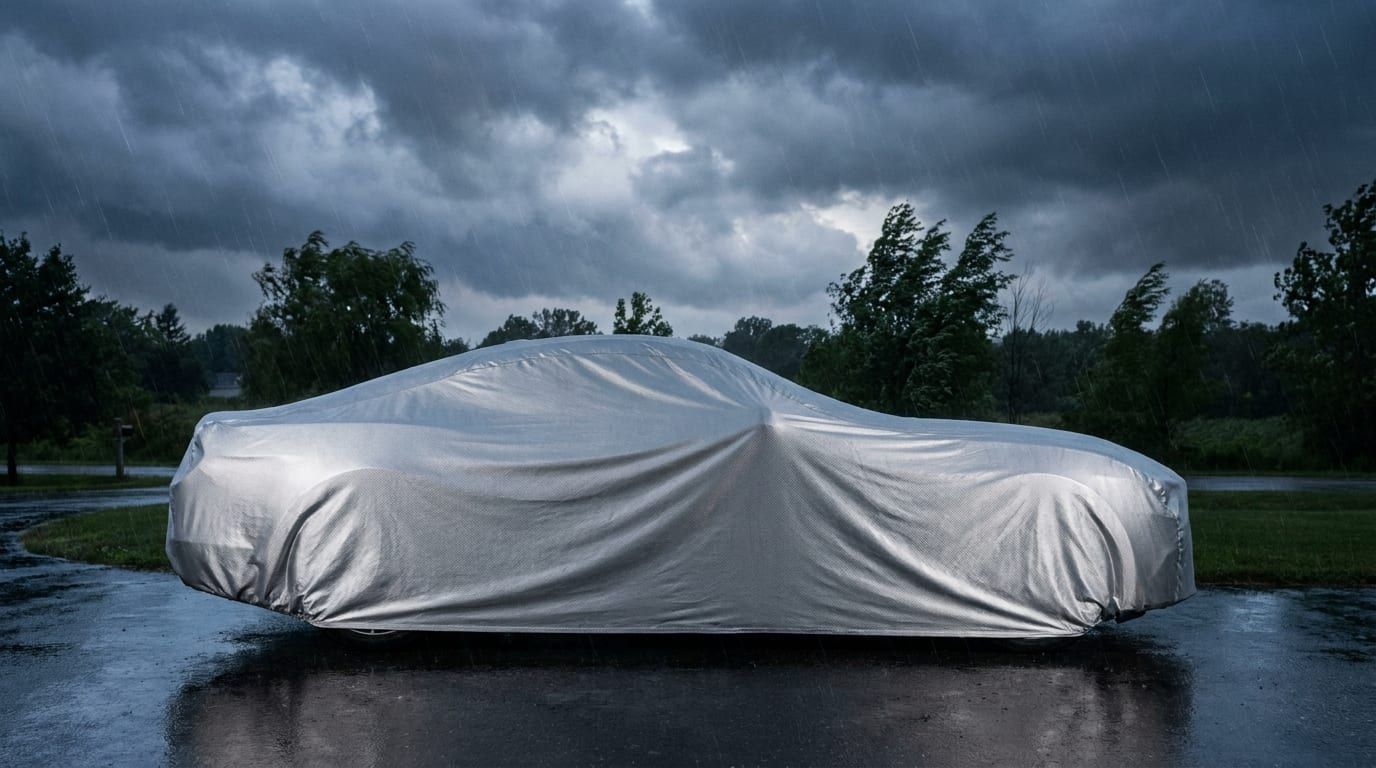
If your Golf parks outside daily in a climate that sees real sun or rain, spend toward the mid-to-premium range. Thin, basic covers just don't hold up to repeated UV exposure and standing water, and you'll be replacing one within a year.
If it's garage-kept and only occasionally uncovered, you can save real money with a lighter indoor-rated cover. It won't need to fight wind or rain, just dust and the odd scratch from something brushing against it.
Snow and hail regions are their own case. This isn't where you want the cheapest basic option. Look for thicker, reinforced material built to take impact, and read up on what hail-resistant covers actually offer before assuming any outdoor cover will do the job.
The honest advice here: match the cover to your actual parking situation, not to whatever the most expensive option on the page happens to be. Overspending on weatherproofing you don't need is just as wasteful as underspending on protection you do.
Get the Right Cover for Your Golf's Budget and Conditions
So, how much is a car cover for a Volkswagen Golf, in plain terms? Thirty dollars gets you something basic, two hundred-plus gets you a heavy-duty custom fit, and most people end up somewhere in the middle once they're honest about where the car actually parks. That's the real first question to answer, before you even look at price: how and where does your Golf spend its downtime?
Worth spending a few minutes browsing Volkswagen-specific options and comparing fit and pricing side by side instead of guessing off a generic chart. And if you're the type who likes to have this stuff sorted before you need it, it's worth bookmarking or subscribing to keep an eye on future guides like this one.
Spending a little more upfront on the right fit and material almost always costs less than replacing a cover that failed early, or buffing out damage a cheap one caused in the first place.
Updated