


Toyota Tundra Car Cover Size Chart: Find Your Exact Fit by Generation, Cab, and Bed Length
The Size Class Your Toyota Tundra Needs
Short answer: most Toyota Tundras fall into the large or XL pickup truck size class, somewhere in the 210 to 250 inch overall length range depending on cab and bed setup. If you just need a number to shop with, that's it. But if you want the actual car cover size chart for Toyota Tundra owners, broken down so you can match your specific truck, keep reading.
"Size class" is the shorthand universal and semi-custom covers use. Manufacturers bucket vehicles into lettered or length-based ranges (compact, mid-size, large, XL) so one cover can stretch to fit a range of trucks. Custom-fit covers skip this entirely. They're cut to your exact year and trim, no bucketing involved.
Two things push a Tundra into a different bracket: cab style and bed length. A Regular Cab with an 8.1' bed is a different animal than a CrewMax with a 5.5' bed, even though both are "Tundras." Toyota has offered Regular Cab, Double Cab, and CrewMax configurations across three generations, paired with three bed lengths. That's a lot of combinations to guess at.
The chart below sorts it out by generation, so you can find your configuration instead of eyeballing it.
Toyota Tundra Car Cover Size Chart by Generation, Cab, and Bed Length
Here's how the numbers break down across Tundra's production history:
| Generation | Model Years | Cab Type | Bed Length | Approx. Overall Length | Typical Cover Size Class |
| 1st Gen | 2000 to 2006 | Regular Cab / Access Cab | 6.5' or 8.1' | 217" to 238" | Mid to Large Truck |
| 2nd Gen | 2007 to 2021 | Double Cab | 6.5' | ~228" | Large Truck |
| 2nd Gen | 2007 to 2021 | CrewMax | 5.5' | ~228" | Large Truck |
| 2nd Gen | 2007 to 2021 | Double Cab | 8.1' | ~247" | XL Truck |
| 3rd Gen | 2022 to present | Double Cab | 6.5' | ~233" | Large Truck |
| 3rd Gen | 2022 to present | CrewMax | 5.5' | ~233" | Large Truck |
A quick note on that middle row and the one below it: a CrewMax with a short bed and a Double Cab with a long bed can land at almost the same overall length, but that doesn't mean they need the identical cover cut. More on that in the next section.
Treat this table as a starting point, not gospel. Trim packages, model-year running changes, and factory options can shift actual dimensions by an inch or two in either direction. If you're on the fence between two size classes, measure your own truck or go with a custom-fit car cover built to your exact configuration instead of guessing off a range.
Why Cab Configuration and Bed Length Change the Fit
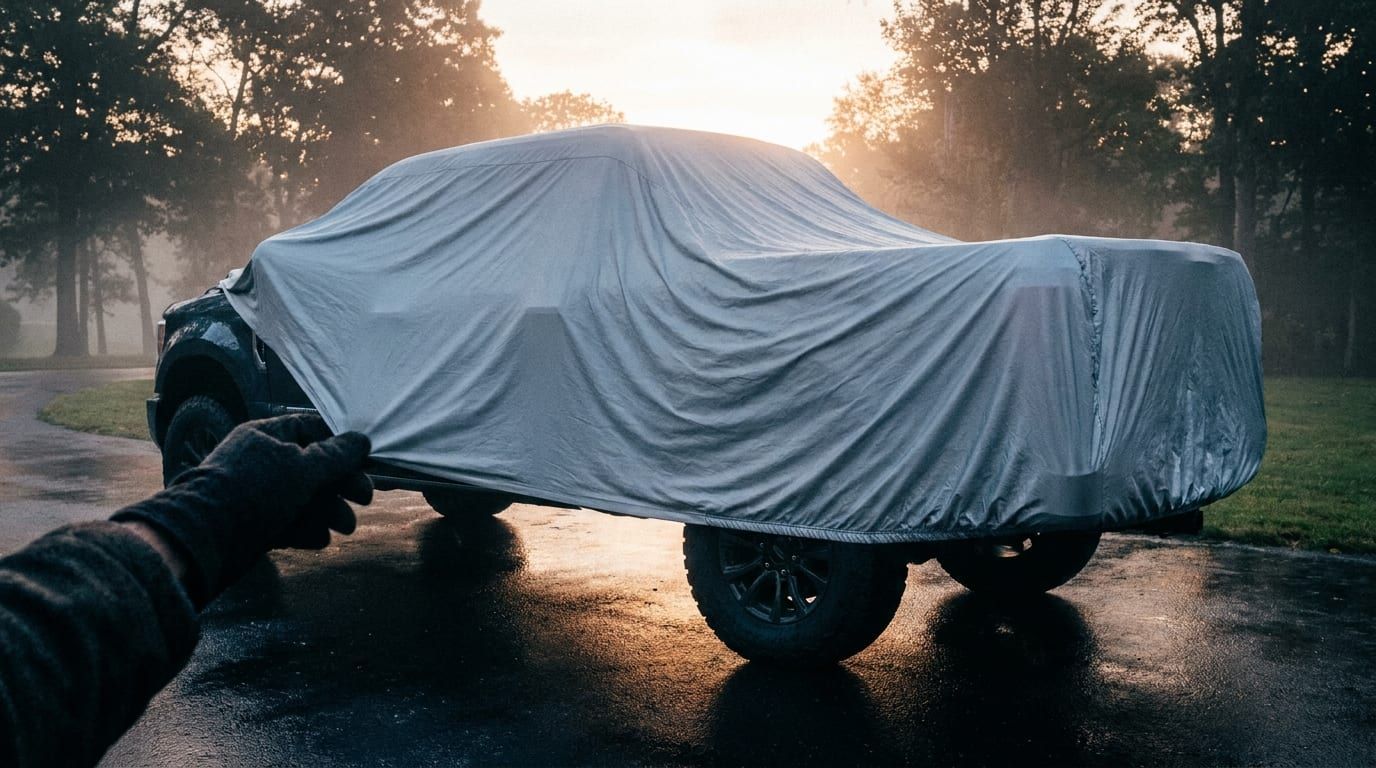
This is the part people skip and then wonder why their cover bunches weird at the tailgate or leaves the mirrors exposed.
Two Tundras with nearly identical bumper-to-bumper length can still need different cover geometry. A CrewMax with a short bed puts more of the vehicle's length into the cab, meaning a taller roofline and different window angles for a bigger chunk of the truck. A Double Cab with a long bed does the opposite, stretching more of the total length into flat bed space. Same number on paper, different shape in practice.
Then there's the hardware. Later Tundra trims added running boards, larger tow mirrors, and taller bed rails, all of which affect how a cover drapes and where it needs slack to cinch properly without pulling tight against a mirror bracket or catching on a step rail.
Aftermarket additions complicate things further. A tonneau cover, a bed rack, or a topper adds height or width that the base measurements in a size chart never account for. If you've added any of that, don't assume your Tundra still fits the size class its bare specs suggest.
Not sure which bed length your Tundra actually has? Toyota's naming isn't always intuitive across model years. The pickup truck bed size guide walks through how to identify it without crawling under the truck with a tape measure.
How to Measure Your Tundra Before You Buy
Skip the chart guesswork and just measure. It takes ten minutes.
Park on level ground first, ideally with the wheels straight. Measure bumper to bumper for overall length, then mirror to mirror (extended, if they fold) for width. Write both numbers down. That's the baseline any cover, universal or custom, gets compared against.
Can't measure, or don't trust your tape measure skills? Factory specs are printed on the driver's door jamb sticker for some trims, and they're always in the owner's manual. Toyota's build sheet, if you still have it from purchase, lists exact cab and bed configuration too.
While you're at it, note anything aftermarket. A bed cap, a lift kit, oversized tires, a roof rack. None of these change which size class your Tundra falls into on paper, but they absolutely change ground clearance and covered height, which matters once you're picking a cover that needs to drape over all of it without stretching thin or catching on an edge.
Last thing: confirm cab type and bed length together, not separately. A chart like the one above only works if you've got both pieces right. Get one wrong and you'll end up with a cover that's too short at the tailgate or too loose around the cab.
Universal Size Classes vs. Custom-Fit Covers for the Tundra
Here's the tradeoff, plainly. Universal and semi-custom covers, the kind sized by class, cost less upfront. But they're built to fit a range of trucks, not your truck specifically, which means extra material somewhere. That slack is exactly what flaps in wind, pools water, and rubs paint over time.
Custom-fit covers are cut to your Tundra's exact year and trim. No size class to interpret, no guessing between "large" and "XL" when your truck sits right on the border. They also fit tighter around mirrors and bed rails, the two spots where universal covers tend to gap the most.
If your Tundra lives in a garage most of the time and only sees a cover occasionally, a well-chosen universal cover in the right size class is probably fine. But if it's parked outdoors long-term, especially somewhere windy, the tighter fit of a custom cut earns its price difference. Less flapping means less abrasion, and less abrasion means the cover (and your paint) lasts longer.
Weighing the two options for your Tundra? The custom-fit car covers guide breaks down when the upgrade is worth it and when it isn't.
What to Look for Once You Know Your Size
Size is step one. Once that's locked in, the material and features are what actually determine how well the cover holds up.
For outdoor storage, look for a fabric that's both waterproof and breathable. Waterproof keeps rain out; breathable keeps condensation from getting trapped underneath and doing the same damage from the inside. UV-resistant material matters too, especially for trucks parked in direct sun for long stretches, since UV exposure is what fades paint and degrades weaker cover fabrics over a season or two.
Reinforced grommets are worth checking for if you plan to use tie-downs or a cable lock. A cover with weak or missing grommet points won't hold up to wind the same way.
CrewMax owners specifically should think about roof height. That taller cab roofline can let water pool on top of the cover instead of running off, especially if the cover isn't taut. A set of support poles under the cover fixes this by creating a slope for water to shed.
One more fit check: even a properly sized cover should leave enough room for a cable lock or wind straps to sit underneath without excess bunching elsewhere. If it's pulling tight in one spot to accommodate slack somewhere else, that's usually a sign the size class was wrong to begin with.
For the deeper dive on fabric specs, the waterproof car cover guide and outdoor car cover guide cover the feature-level details this section only touches on.
Get the Right Fit for Your Tundra
Sizing a Tundra cover comes down to two things first: cab type and bed length. Everything else, from size class to fabric choice, follows from getting those two right. The chart above gets you close. Actual measurements get you exact.
If your truck has any aftermarket modifications, a bed cap, a lift, oversized tires, don't lean on the chart alone. Run your specifics through a proper fit-finder tool instead of guessing at a size class that might not account for the extra height or width.
Ready to find the right cover for your specific Tundra? It's worth taking a few minutes to nail down your exact fit rather than ordering something close and hoping it works out.
And if you're curious how Tundra sizing has shifted across its three generations, or how it stacks up against Toyota's broader truck and SUV lineup, Toyota's model history is worth a read.
Updated