


Waterproof Car Cover for Chevrolet Corvette: A Climate-by-Climate Protection Guide
Why Your Corvette Needs More Than a Basic Cover
A Corvette isn't built like the rest of the fleet in your driveway. Low ground clearance, fiberglass and composite body panels, exposed splitters and side skirts, all of it sits closer to the pavement than a sedan or crossover, which means it catches more splash-back, more pooling water, more road grime kicked up during a storm. A generic waterproof car cover for Chevrolet Corvette owners grab off a shelf often isn't cut to account for any of that.
And here's the thing about how most Corvette owners actually use the car: it's rarely tucked in a climate-controlled garage year-round. Plenty are daily drivers. Plenty more are weekend cars that still spend nights outside between drives. That means the cover needs to handle a sudden downpour on Tuesday and a frost warning on Friday, not just months of static storage.
So this isn't another "waterproof covers are good, buy one" pitch. It's a breakdown of what climate you're actually protecting against, because rain protection and desert UV protection are not the same job. And the word "waterproof" printed on a tag doesn't mean much on its own. Fit matters just as much as fabric, and we'll get into both.
Climate-Specific Threats to Your Corvette
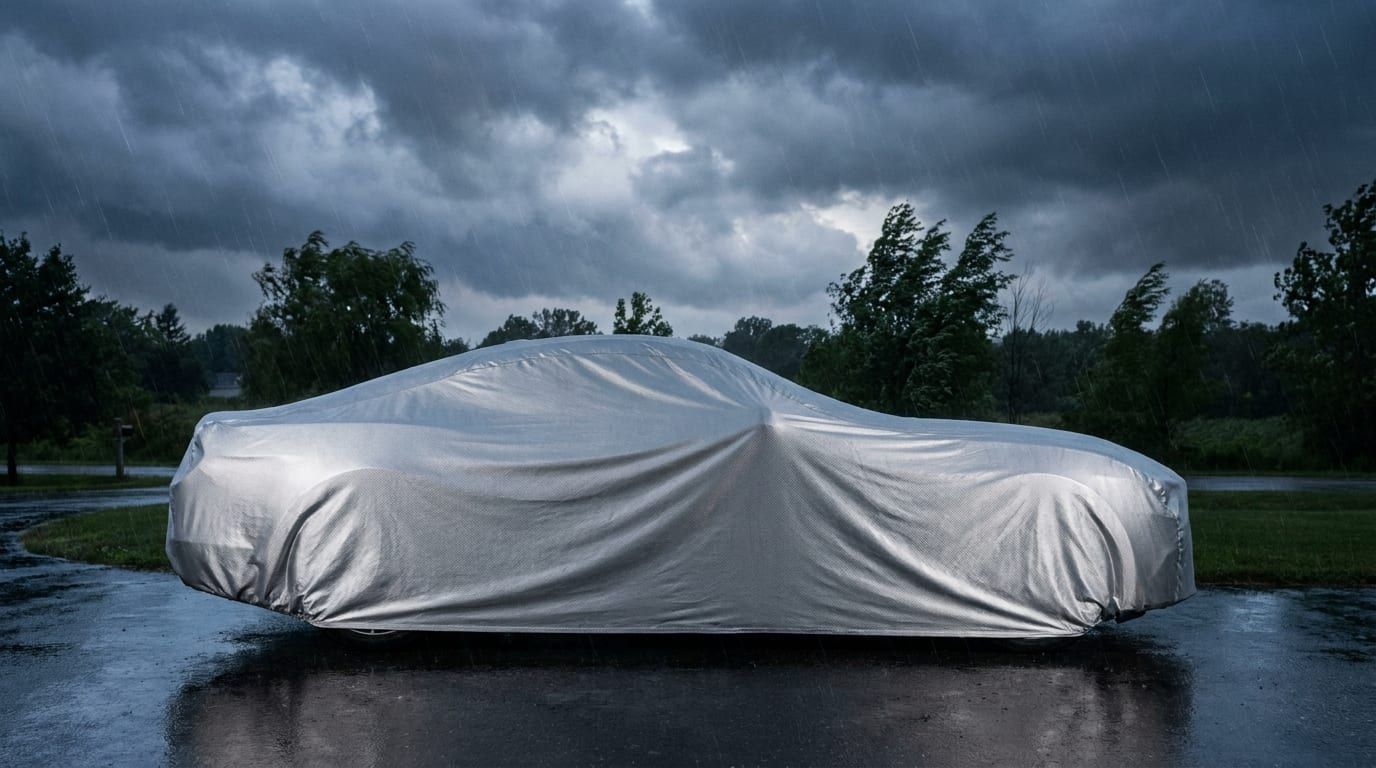
Different climates attack a Corvette differently, and treating "waterproof" as a single fixed standard misses the point.
In the Southeast or Pacific Northwest, the enemy is prolonged dampness. Humidity that doesn't let up for days at a time invites mold and mildew growth on the underside of a poorly ventilated cover, and it leaves water spotting etched into clear coat if moisture sits too long without evaporating.
In the Midwest and Northeast, it's about weight and stress. Snow and ice pile onto the cover, and that accumulated weight pulls at seams and grommets. Freeze-thaw cycles make already-stressed stitching brittle, so a cover that seemed fine in October can start failing by February.
Out in the Southwest, water isn't the primary threat, sun is. UV exposure fades paint and dries out rubber seals and trim even with a cover on, because heat builds up underneath a cover baking in direct desert sun for hours.
Along the coast, salt air turns any trapped moisture corrosive. Wheels and trim take the brunt of it, so a cover here needs to be waterproof on the outside without smothering the car, since a sealed, non-breathable layer traps that salty condensation right against the metal it's supposed to protect.
The point: don't evaluate a cover against the word "waterproof" alone. Evaluate it against the specific threat where you park. A waterproof car cover built for desert UV resistance isn't necessarily solving a coastal salt-air problem, and vice versa.
What Actually Makes a Car Cover Waterproof
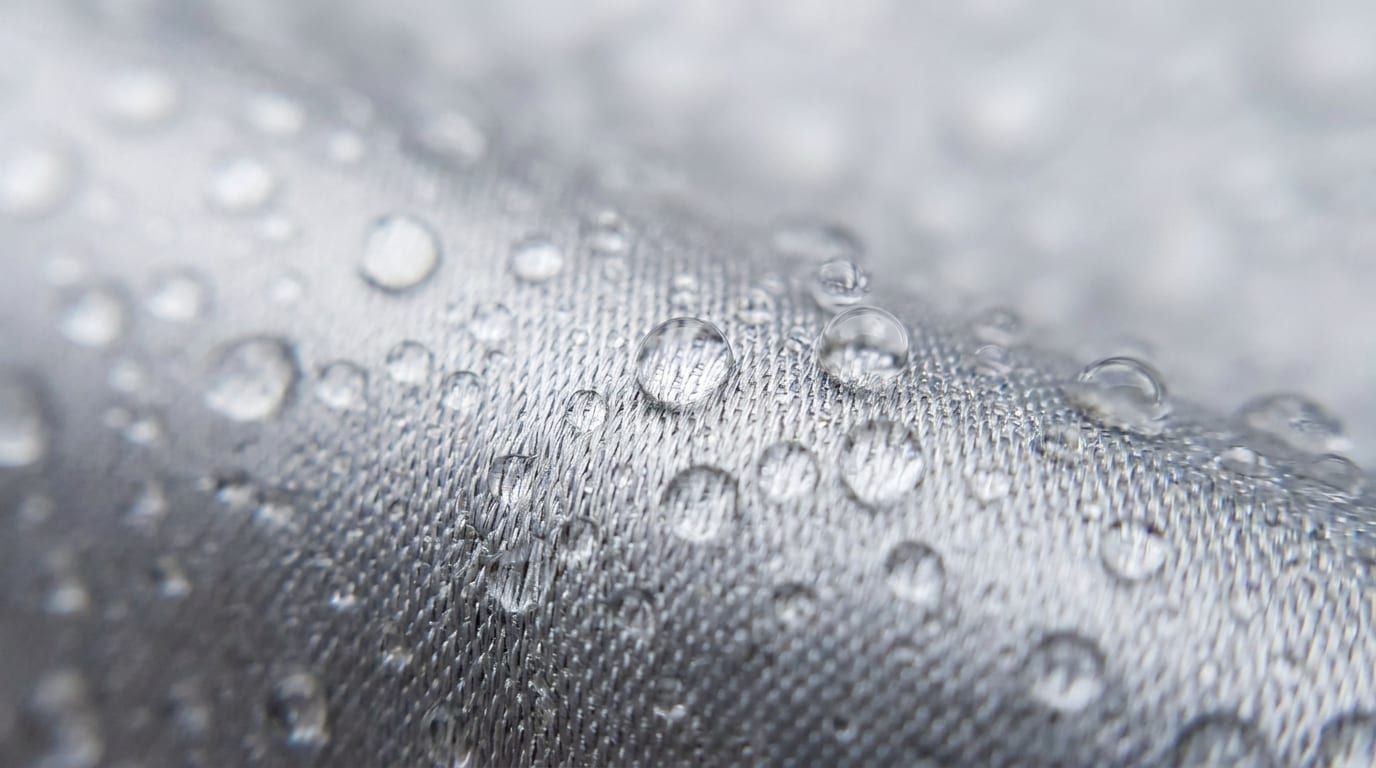
"Water-resistant" and "waterproof" get used interchangeably in marketing copy, but they're not the same thing. Water-resistant fabric slows moisture penetration. It'll handle light drizzle. Fully waterproof fabric uses a sealed layer or coating designed to block water outright, even under sustained rain.
The weak point almost never turns out to be the fabric itself, though. It's the seams. Stitching lines are where water finds its way in, and on a Corvette's low nose and spoiler cutouts, those seams take extra strain every time wind pushes against the panel. A cover with poor seam sealing will leak exactly where the Corvette's shape gets most aggressive, right at the front splitter and around the rear wing.
There's a trade-off worth understanding before you buy: a cover that's fully sealed on every layer doesn't let moisture escape, and trapped condensation against paint can do as much damage as rain would have. The better approach is a waterproof outer shell paired with a breathable inner layer, so water stays out but moisture that's already there can still vent. If you want the deeper material rundown, our guide to waterproof fabrics covers the coating types and weave differences worth knowing before you compare specs side by side.
Getting the Fit Right for Your Corvette Generation
Fit isn't a cosmetic detail here, it's half of what makes a cover waterproof in practice. A universal cover with slack around the mirrors or a loose gap at the rocker panels gives wind-driven rain a direct path underneath. Water doesn't need a big opening. It just needs one.
Corvette generations aren't interchangeable in shape, either. A C5 or C6 has a lower nose and pronounced side skirts that need a closer taper to seal properly. A C7 or C8 sits wider and carries a more aggressive rear spoiler, which changes where the cover needs extra ease built in in order to seal instead of tent. A cover engineered for "sports car" sizing in general won't necessarily account for either.
Before buying, measure the car and check the manufacturer's size chart rather than assuming your trim matches the base model dimensions. Our sizing guide walks through how to measure correctly, and a custom-fit cover built to your exact generation closes the gaps a generic one leaves open. Get the fit wrong, and even premium waterproof fabric won't do its job. The water finds the gap, not the fabric.
Securing the Cover Against Wind, Rain, and Snow Load
A cover that fits well can still fail if it's not secured. Wind-driven rain doesn't fall straight down, it comes in at an angle and works its way up under the hem line the moment a cover isn't cinched tight. That's the most common failure point people never think about until they find water pooled on the seat.
If you're in a windy region, gust straps make a real difference. They hold the cover flush against the body instead of letting it flap, which is exactly what works water in at the edges over time. Installing them is straightforward, and our gust strap installation guide covers the setup step by step.
If the Corvette lives outside daily and shares space with foot or vehicle traffic, like a shared driveway or a lot at work, a cable lock keeps the cover in place and deters anyone from tugging at it. That matters more over a full season of exposure than it might on a one-off use.
And if snow is in the forecast, don't just throw the cover on and walk away. Heavy snowfall left to sit will pool weight in the low spots of a poorly tensioned cover, and that sustained pressure is exactly what stresses seams past their limit. Tension it properly first.
Caring for a Waterproof Cover Through the Seasons
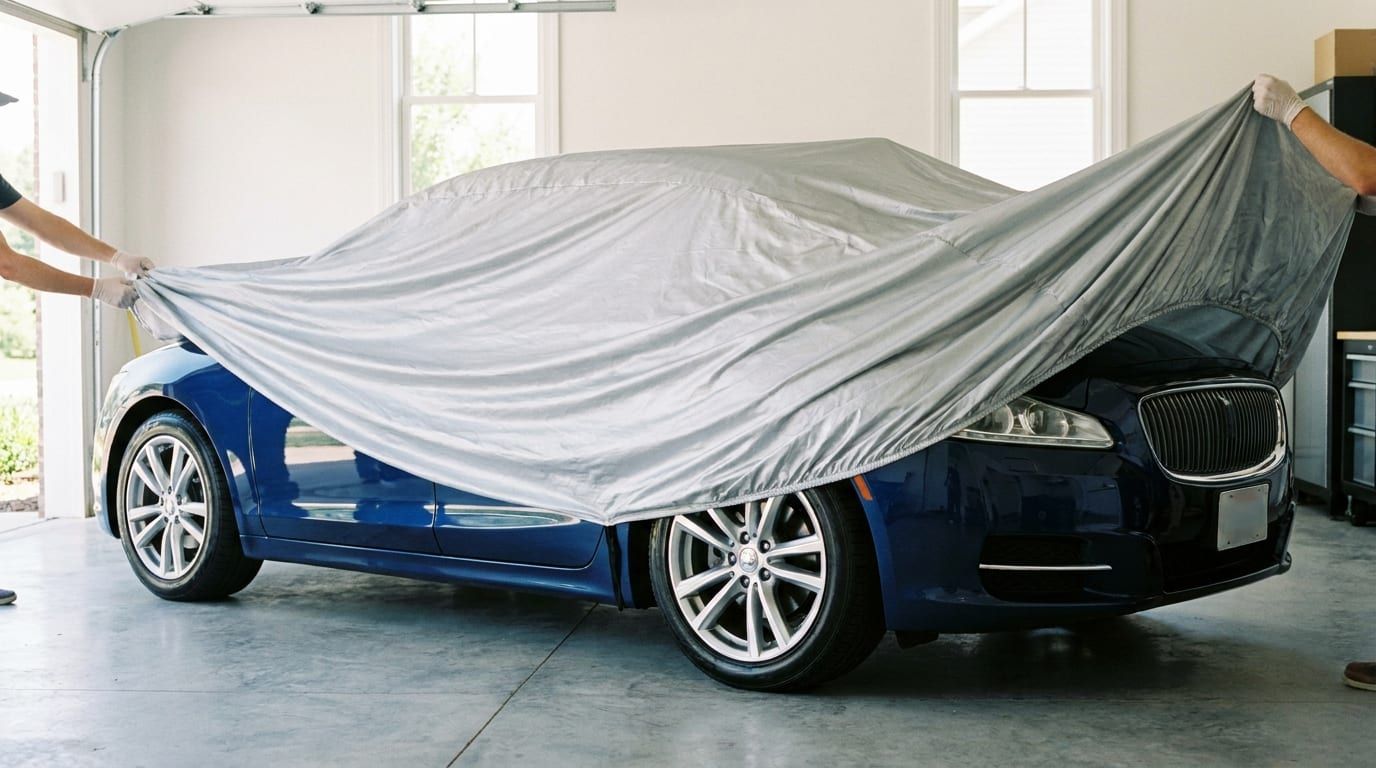
A waterproof cover only stays waterproof if you take care of it, and that starts with drying it out. Pull it off after a rainstorm or a snowmelt, and don't just fold it up wet and toss it in the trunk. Trapped moisture inside folded fabric is exactly how mildew gets started, even on a cover that's technically waterproof.
Cleaning matters too, but the wrong products undo the coating you paid for. Skip harsh detergents and skip high heat when drying. Both degrade waterproof coatings faster than normal wear does. Our step-by-step cleaning guide walks through a process that won't strip the fabric's protection.
Off-season habits matter as much as in-season ones. If the Corvette goes into a heated garage for winter, don't leave the cover balled up in a corner, store it properly so it's ready to go again in spring. Our guide on storing a car cover when it's not in use covers how to do that without inviting mildew or creasing that weakens the fabric over time.
Choosing the Right Waterproof Cover for Your Climate
Match the cover to the climate, not the other way around. Heavy sun states need strong UV resistance layered with the waterproofing, since fading and dried-out seals happen even under a cover. Wind and snow states need reinforced seams and a real strap system, not an afterthought grommet. Humid and coastal states need that breathable-inner, waterproof-outer combination so moisture doesn't just get trapped instead of kept out.
Before you buy, check what the warranty actually covers when it comes to waterproofing performance specifically. Fabric failure, not fit issues, is the most common reason covers get returned, and a lifetime warranty worth the name should back that up. If you're shopping specifically for your Corvette, the Chevrolet cover lineup is a reasonable place to start narrowing by generation and trim.
Getting the right waterproof car cover for your Chevrolet Corvette is a one-time decision that keeps paying off, every season, in paint that doesn't fade, an interior that doesn't smell like mildew, and a resale value that doesn't take a hit from weather damage nobody saw happen. Worth taking the time to get it right the first time. If you want more guides like this one as you figure out the rest of your car care routine, it's worth subscribing to the CarCovers articles page for what comes next.
Updated