


What Size Car Cover Fits a Jeep Wrangler?
A Jeep Wrangler's cover size depends heavily on which generation you're driving and whether it's a 2-door or 4-door Unlimited. So what size car cover fits a Jeep Wrangler? Short answer: 2-door models fall into the compact SUV category, while 4-door Unlimited models need a midsize or standard SUV size. Get that distinction wrong and you'll end up with a cover that either bunches up at the bumpers or leaves gaps a stiff wind can get under.
The Short Answer: Jeep Wrangler Covers Fall Into the Compact-to-Midsize SUV Range
Here's the quick version. Two-door Wranglers, the classic short-wheelbase body, typically run somewhere in the 152 to 167 inch range depending on generation. That puts them squarely in compact SUV territory. Four-door Unlimited models stretch out to roughly 184 to 188 inches overall, which bumps them up into midsize or standard SUV sizing.
Sounds simple enough. But Jeep has reshaped the Wrangler's body more than once across the YJ, TJ, JK, and JL generations, and even within a single generation, trim details shift dimensions by an inch or two here and there. A cover sized off a generic "SUV" length chart might be close, or it might leave three inches of slack flapping at the tailgate. If you want a real answer for your specific rig, skip the eyeballing and run your year and trim through a year and model-specific fit tool instead of guessing off a length label on a box.
Jeep Wrangler Sizing Depends on Generation and Doors
Break it down by generation and the picture gets clearer. The YJ and TJ 2-door Wranglers, the older square-headlight and round-headlight models built through the mid-2000s, measure around 152 to 155 inches long. Move to the JK and JL 2-door generations (2007 onward) and length grows to about 165 to 167 inches, a noticeable jump from the earlier trucks. The 4-door Unlimited versions of the JK and JL, meanwhile, land in that 184 to 188 inch range.
None of that accounts for the spare tire. Wranglers mount their spare on the tailgate, not tucked under the rear floor like most SUVs, and that tire juts out several inches past where a "normal" SUV's rear bumper would end. A cover that doesn't account for it just won't close, or it'll stretch tight over the tire and strain at the seams every time you take it on and off.
Roofline matters too. Soft-top Wranglers have a different silhouette than hard-top ones, and that changes where mirror pockets and antenna cutouts need to fall on the cover. A cover cut for a hard-top's squared-off roof can sit wrong on a soft-top's more rounded canvas profile, even if the length is technically correct.
All of which is to say: a box that just says "Jeep" or "fits SUVs" isn't giving you enough information. Generation and door count change the fit more than most buyers expect. If you're shopping specifically for this vehicle, the Jeep SUV cover lineup is built around these generation differences rather than a single blanket size.
How to Measure Your Wrangler Before Buying a Cover
Grab a tape measure before you buy anything. Measure bumper to bumper, front to back, and include any aftermarket tire carrier, winch, or brush guard that sticks out past the factory bumper line. A lot of Wrangler owners add these, and they're exactly the kind of add-on that a stock-dimension cover won't account for.
Width matters next. Measure at the widest point, and do it twice: once with mirrors extended, once folded in. Height should include anything on the roof, a light bar, a roof rack, a tall CB antenna, whatever's up there. These aren't decorative details. They're the difference between a cover that clears everything and one that tents awkwardly over a light bar.
Write down the exact year, trim, and whether it's a 2-door or 4-door body style. That information, fed into a proper fit lookup tool or the CoverFinder tool, gets you a far more reliable size match than a tape measure alone ever will. A tape measure tells you the number. Year and trim data tells the tool which contour to match that number against.
One more thing worth flagging: lift kits and oversized tires. Plenty of Wrangler owners run a 2 or 4 inch lift with 35s or bigger, and that pushes the vehicle outside its factory height and width specs. If yours is lifted, don't just measure stock and hope. Measure your actual truck as it sits in the driveway.
Universal, Semi-Custom, or Custom-Fit: Which Sizing Approach Works Best
Universal SUV covers
- Cheapest option on the shelf
- Sized by a broad length range rather than an actual body shape
- Fit loosely, which means flapping in wind and dust working its way in at the gaps
Semi-custom covers
- Shaped closer to general SUV body contours
- Better than universal, but not tuned to Wrangler-specific quirks like the rear tire carrier or the boxy fender flares
- Can still leave slack around the tailgate bulge
Custom-fit covers
- Built to the exact year and generation's contours
- Tightest fit of the three, and the only one that handles the spare tire cutout, mirror pockets, and antenna without extra material bunching up
- Best choice if you're storing the Jeep outdoors regularly
Here's the thing about Wranglers specifically: their boxy, flat-panel shape makes a bad fit far more obvious than it would be on a car with curves. A loose cover on a sedan settles into the body lines somewhat. A loose cover on a Wrangler has flat surfaces and square corners to catch wind, so it billows, flaps, and wears against the paint. If you're going to spend money on any cover, custom-fit car covers are worth the upcharge on this particular vehicle more than most.
Cover Features That Matter for an Open-Air SUV
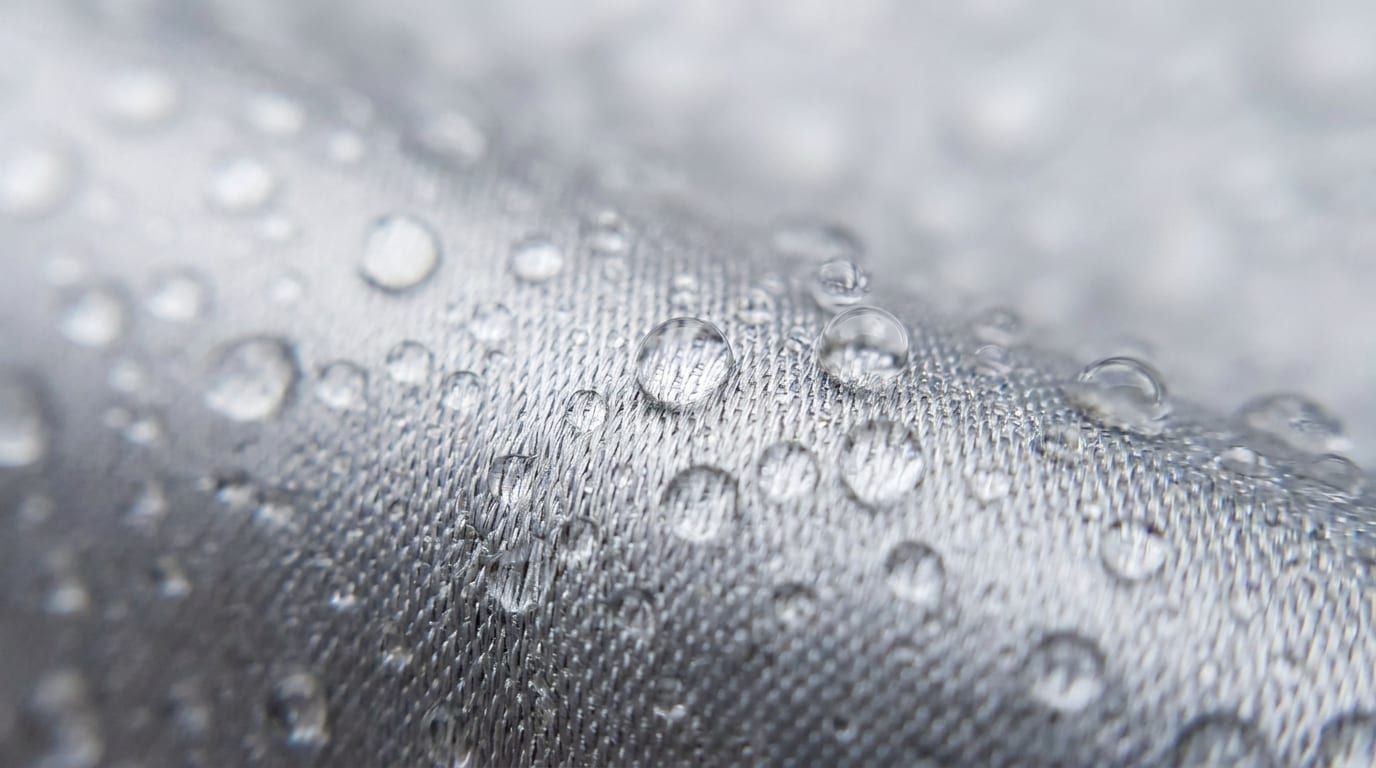
Soft-top Wranglers need to think about water differently than most SUVs. The fabric top itself isn't fully sealed the way a hard-top roof is, so a cover that traps moisture against it does more harm than good. Look for something genuinely waterproof but still breathable, not a plastic tarp that sweats condensation onto the canvas overnight.
UV exposure deserves more attention on a Wrangler than on a typical SUV, too. Owners who regularly drive with the top off, or the doors off, expose paint and interior trim to a lot more sun than a Wrangler that's sealed up in transit. A cover with real UV-resistant fabric isn't a nice-to-have here, it's protecting surfaces that already got extra sun during the driving season.
Then there's the wind lift problem. That boxy shape catches gusts, so an elastic hem alone often isn't enough. Tie-down straps or a cable lock keep the cover anchored instead of ballooning off the hood in a storm. If you're new to securing a cover properly, this installation guide walks through strap placement so it doesn't shift overnight.
And if the Jeep lives outside long-term, prioritize weatherproofing over a lightweight indoor-style cover. An indoor cover built for garage dust just won't hold up to real weather, and a Wrangler parked outside sees a lot more of it than most vehicles.
Does a Wrangler Unlimited Need a Different Size Cover Than a 2-Door Wrangler?
Yes. The 4-door Unlimited runs more than 20 inches longer than the 2-door, which means it needs a midsize or standard SUV size rather than the compact class that fits a 2-door.
Put a 2-door cover on a 4-door and it simply won't reach, leaving gaps at one or both bumpers. Go the other way, a 4-door cover on a 2-door, and you get excess fabric bunching up and catching wind at the ends. Neither situation is a "close enough" scenario. Checking door count alongside the exact year is the fastest way to sidestep this mismatch entirely, and it takes about ten seconds when you already know your trim.
Will a Universal SUV Cover Fit a Jeep Wrangler With a Spare Tire Mount on the Back?
Not well. Most universal covers are cut assuming a smooth rear hatch, the way a typical crossover or SUV is shaped. A Wrangler's rear-mounted spare breaks that assumption completely.
The usual result is a gap around the tailgate where the fabric can't drape naturally over the tire, or the opposite problem: the tire pushes hard against the material and strains the seams every time you put the cover on. Over time that stress point is where covers tend to tear first.
If your Wrangler has that rear-mounted spare, and most of them do, look for a cover specifically cut to accommodate the tire carrier, or go custom-fit for your exact trim. It's the one feature on this vehicle where "universal" reliably falls short.
Find the Right Fit for Your Wrangler
Size comes down to generation, door count, and whatever you've bolted onto the bumpers, not just "it's an SUV." A 2007 TJ, a 2015 JK Unlimited, and a lifted 2022 JL with a tire carrier are three different fit problems wearing the same badge.
Skip the guesswork and run your specifics through a year and model-based fit tool rather than picking a size off a length chart and hoping. And if you're curious what else affects sizing across other vehicles, it's worth a look at how car cover sizing works in general, then come back and browse the Jeep-specific options once you know your exact generation and body style.
FAQ
What size car cover fits a Jeep Wrangler 2-door?
Most 2-door Wranglers fall into the compact SUV size class, roughly 152 to 167 inches long depending on generation (YJ/TJ vs JK/JL).
What size car cover fits a Jeep Wrangler Unlimited?
The 4-door Unlimited needs a midsize or standard SUV size, generally in the 184 to 188 inch range, about 20+ inches longer than the 2-door.
Do I need a special cover for a Wrangler's rear-mounted spare tire?
Yes. A cover cut for a smooth rear hatch typically won't drape properly over a rear tire carrier, leaving gaps or strain at the tailgate. Look for a cover designed around that tire mount.
Does a lift kit change what size cover I need?
It can. A lift kit and larger tires push a Wrangler's height and width past factory specs, so measure your actual vehicle rather than relying on stock dimensions.
Updated