


What Size Car Cover Fits a Mercedes-Benz E-Class?
The direct answer: a Mercedes-Benz E-Class sedan fits in the full-size or large sedan cover class, roughly 191 to 194 inches long depending on generation. That's the number to start from if you're shopping off a generic size chart. But the E-Class isn't just a sedan anymore, Mercedes builds it as a wagon, a coupe, and a convertible too, and each of those shifts the footprint enough to matter. So when someone asks what size car cover fits a Mercedes-Benz E-Class, the honest answer is "it depends which E-Class you actually own."
A universal or semi-custom cover labeled for full-size sedans will get you in the ballpark. It'll drape over the car and keep most of the weather off. What it won't do is hug the E-Class's actual body lines, the sloped trunk, the mirror housings, the antenna. For that you need a cover patterned to the car itself.
Below we'll walk through the real dimensions by generation and body style, why generic size brackets fall short, how to measure your own car before buying, and what actually goes wrong when the size is off.
Mercedes-Benz E-Class Dimensions by Generation and Body Style
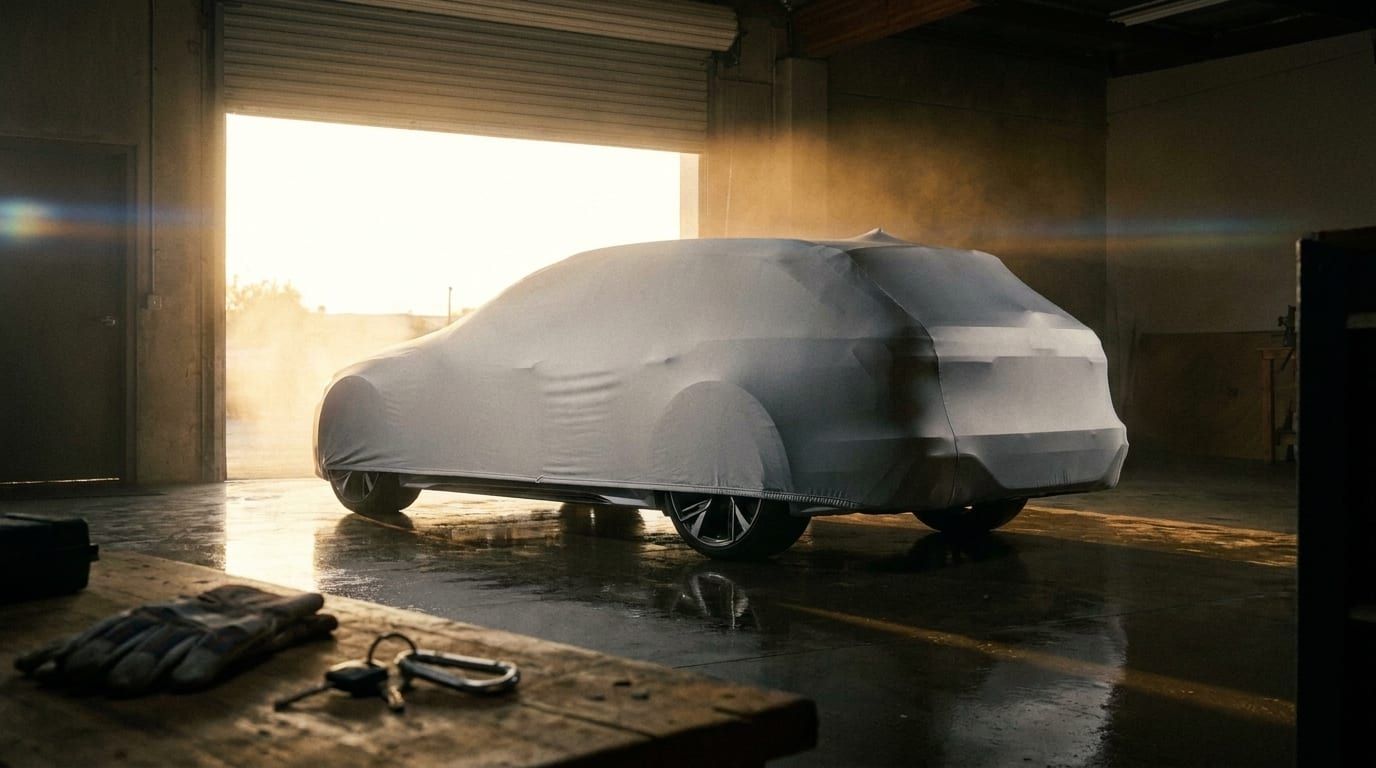
Start with the current sedan, the W213 and its W214 successor. These run about 194.3 inches long, 73.7 inches wide, and 57.7 inches tall. That puts it at the upper edge of the full-size sedan bracket, longer than a Camry or Accord, closer to a 5 Series or A6.
Go back a generation or two and the numbers shrink a bit. The W211 and W212 sedans measure closer to 191 to 192 inches long and run slightly narrower across the body. If you're covering an older or used E-Class, that few inches of difference is exactly why a cover sized for the newest model can end up baggy on yours.
The wagon changes the math more. The E-Class Estate (S213, and now S214) stretches about 2 to 3 inches longer than the sedan thanks to the extended cargo area out back. That's often enough to push it out of "standard sedan" sizing and into large wagon territory, where the cover needs extra material along the roofline and rear hatch to actually seat right.
Then there's the Coupe and Cabriolet (C238, A238), which run shorter overall, around 189 inches, with a noticeably lower roofline. Drop a sedan-length cover on one of these and you'll get pooling fabric at the trunk, since the coupe's rear end sits differently than the sedan's. You can browse what's actually built for this platform on the Mercedes-Benz cover page before assuming one size covers the whole lineup.
Semi-Custom vs. Custom-Fit Covers for the E-Class
Semi-custom covers are sized to a length and body-style range, something like "large sedan, 191 to 201 inches." They're cheaper, they ship faster, and they'll physically fit over the car. What they won't do is follow the E-Class's specific curves, the sloped rear glass on the sedan, the wagon's squared-off roofline, the coupe's shorter deck. You get coverage, not a tailored fit.
Custom-fit covers are patterned to the exact year, generation, and body style. Mirror pockets land where the mirrors actually are. Antenna cutouts line up. The hem falls where the body panel ends instead of six inches past it. If you've ever seen a cover flapping in a parking lot on a windy day, that's usually a semi-custom cover on a car it wasn't quite built for.
Here's the rule of thumb: if the car lives outside and faces real wind and rain, get custom-fit car covers built for your generation and body style. If it's an occasional dust cover for a garage-kept car, a well-chosen semi-custom size can do the job fine. The difference matters more the harsher the storage conditions get.
How to Measure Your E-Class Before Buying a Cover
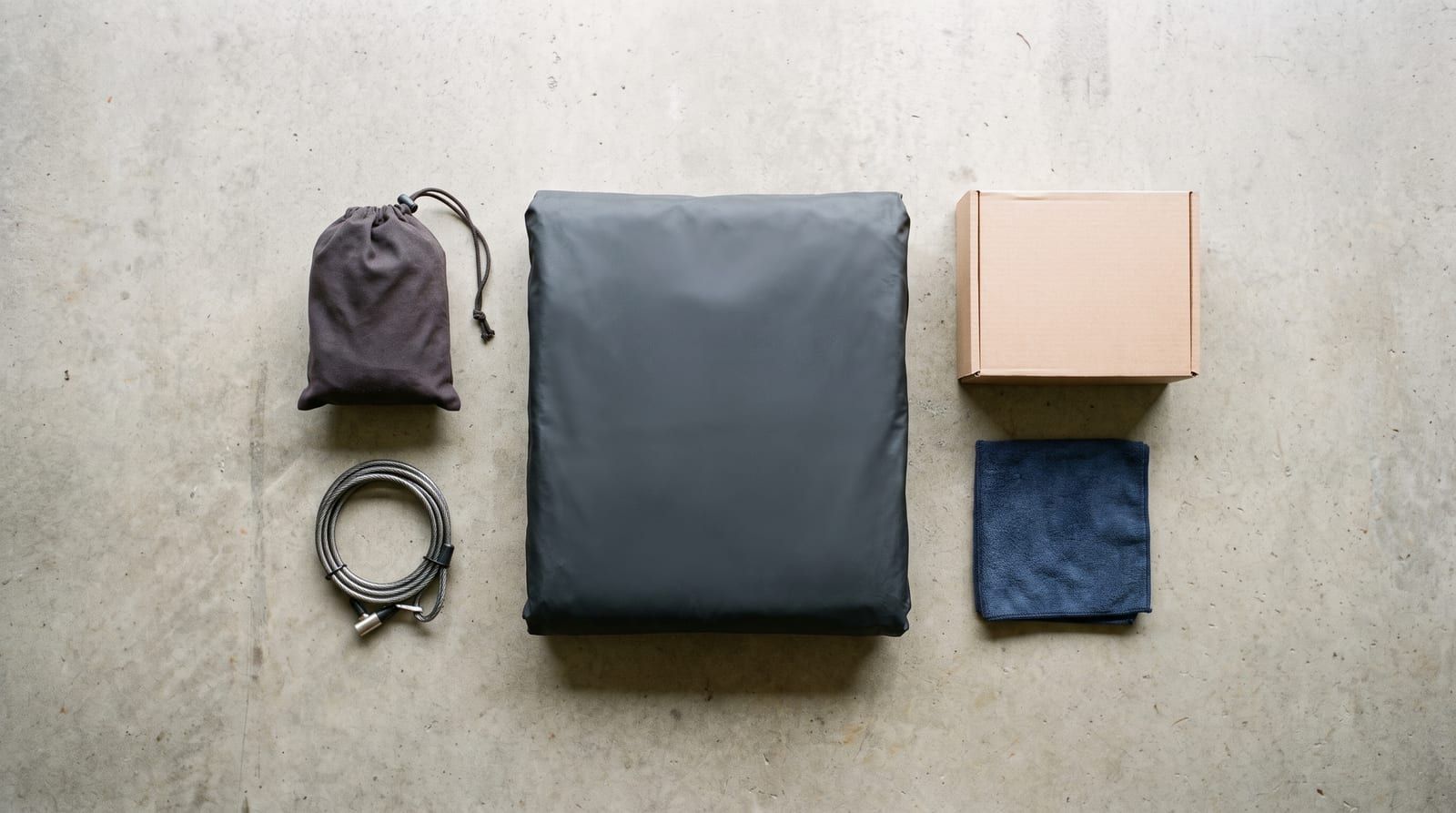
Don't skip this step just because you know the trim name. Measure bumper to bumper for total length, then the widest point of the car, usually mirror to mirror or fender to fender, and finally the height at the roofline.
Confirm the generation and body style while you're at it. Mercedes sells four different shapes under the E-Class name right now, sedan, wagon, coupe, cabriolet, and each has its own footprint. "E-Class" alone isn't a specific enough answer to the question of what size car cover fits a Mercedes-Benz E-Class.
Check for factory add-ons too. Roof rails on the wagon, a rear spoiler on an AMG trim, a shark-fin antenna on the newer sedans, all of these change what the cover needs to clear. Then run your numbers against the size chart tool before you order, especially if your car's length sits right on the edge between size brackets. A car that measures 191.5 inches can go either way depending on how a brand draws its cutoffs.
Do Mirrors, Antennas, or Roof Racks Change the Cover Size You Need?
No, not the size class itself. These features don't add inches to the length bracket you're shopping in. What they change is which cover style actually fits clean. Mirror pockets and antenna grommets show up on most custom-fit covers and are often just missing from generic universal ones, which is where you get that stretched, lumpy look over the mirrors.
Wagons with factory roof rails need a cover cut to clear that hardware. Skip that and the fabric rubs against the rail mounts every time the wind moves it, and over months that wears through. AMG sedans with a rear spoiler have a similar issue in miniature: a cover pulled tight over a sharp spoiler edge will fray there first. A slightly looser rear hem solves it.
Is a Sedan Cover the Same Size as a Wagon or Coupe Cover?
No. Even inside one nameplate, the E-Class sedan, wagon, coupe, and cabriolet have different lengths, rooflines, and rear-end shapes. They typically land in different size brackets, and for custom-fit covers, they're simply different patterns.
Buying "a Mercedes E-Class cover" without specifying body style is probably the single most common mistake owners make here. The listing says E-Class, the car is an E-Class, so it feels like it should just work. It doesn't, not reliably. Confirm body style and generation before you check out, and you skip the whole return-and-reorder cycle.
What Happens If You Buy the Wrong Size Cover?
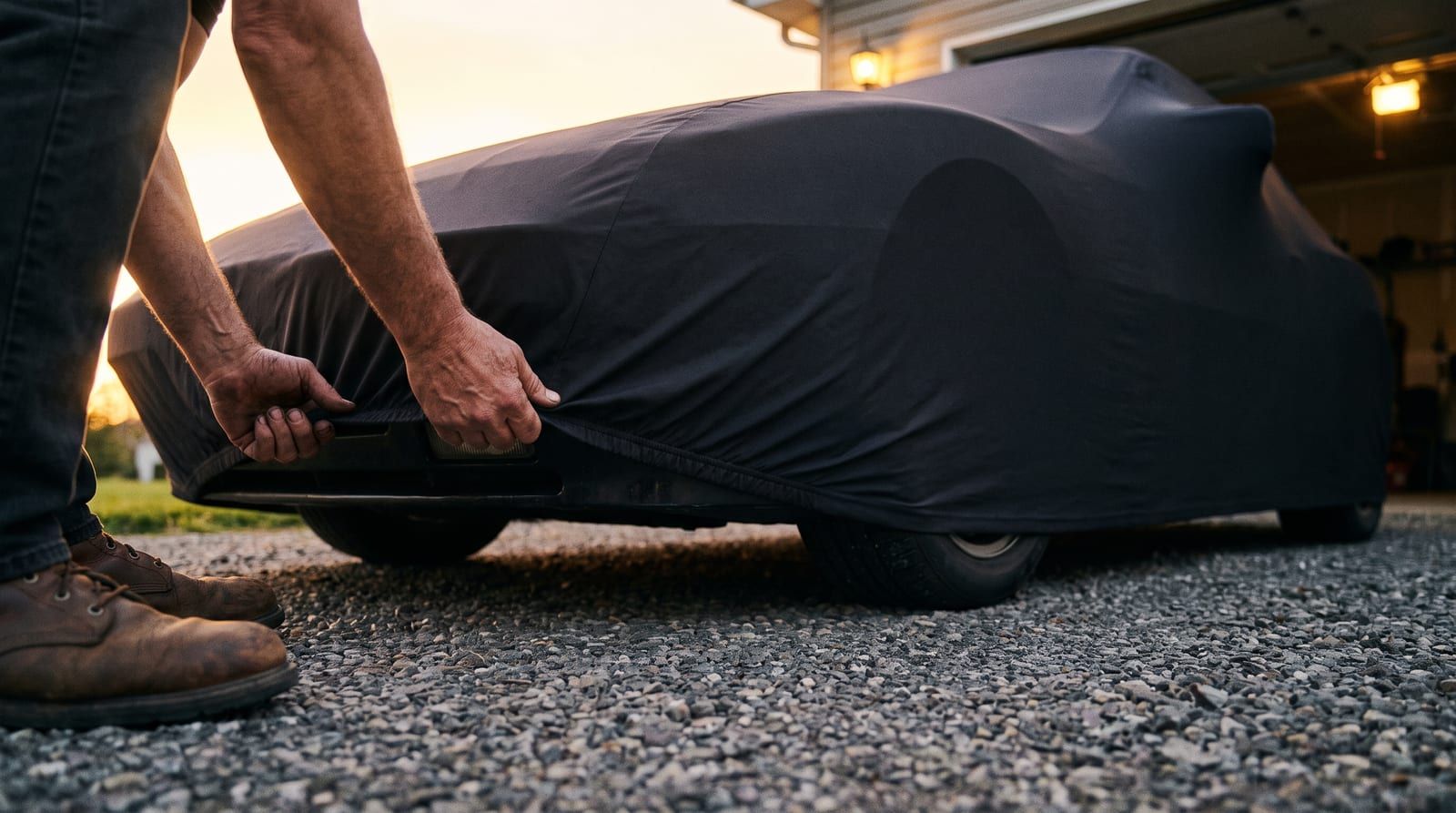
Too big, and the cover flaps in the wind. That flapping isn't just noise, it's the fabric moving against your paint over and over, which can leave fine scratches over time. Loose folds also pool water instead of shedding it.
Too small, and the cover can't fully seat over the front or rear fascia. That leaves those panels sitting exposed to rain, sun, and road grit, which defeats the entire point of covering the car.
Either way, features like elastic hems or cable locks stop working the way they're supposed to. An elastic hem cinches to a body line, it doesn't do much bunched up on a shell that's the wrong shape. A cable lock through the bottom edge can't sit snug if there's several extra inches of slack fabric hanging around it.
If you're not sure whether a car right on a size cutoff will fit, that's a real risk. Between the lifetime warranty coverage and CarCovers' return policy, sizing wrong isn't the end of the world, but it's still worth getting right the first time rather than treating the purchase as a guess.
Get the Right Fit for Your Mercedes-Benz E-Class
The sedan sits in the full-size sedan class, the wagon runs a bit longer, and the coupe and cabriolet run shorter with a lower roofline. Confirm which one you actually have, plus the generation, before you buy anything.
Skip the guesswork and run your measurements through a proper cover finder tool rather than eyeballing it off a length number alone. It takes a couple of minutes and saves you a return.
If you want to browse what's built specifically for this car, take a look at the current lineup of car covers and see what's available for your exact year and body style. And if you're still deciding between fit types or storage conditions, our other vehicle cover guides are worth a read before you commit.
Updated