


Affordable Car Cover for Honda Pilot: A Budget Buyer's Guide (Without Skimping on Protection)
Why Honda Pilot Owners Are Shopping on a Budget
A Honda Pilot isn't a compact sedan. It's a three-row SUV with real square footage, and that means any cover you buy has to handle a lot more fabric, more seams, and more surface area exposed to sun and rain. So when you start searching for an affordable car cover for Honda Pilot owners actually need, price matters more than it would if you were covering a Civic. More material usually means more cost, full stop.
Here's the trap, though. "Affordable" and "disposable" get treated like the same thing, and they're not. A cheap cover that rips in year one, lets water through at the seams, or scratches your clear coat because the lining is garbage isn't saving you money. It's costing you a second purchase, plus whatever damage it did on the way out. Real savings come from buying something priced fairly for what it actually does, not from buying the lowest number on the page.
This guide walks through what actually drives the price of a Pilot-sized cover, the quality floor you shouldn't drop below no matter your budget, realistic price tiers, and a few ways to shave real dollars off without gambling on protection.
What Actually Drives the Price of a Pilot Cover
A few variables do almost all the work in determining what you pay.
Fit type is the biggest one. Universal and semi-custom covers are cut to fit a size range of SUVs, not your Pilot specifically, and that keeps costs down. The trade-off is slack fabric, less precise coverage around mirrors and wheel wells, and a cover that's more prone to catching wind. A custom-fit car cover built to the Pilot's actual dimensions costs more up front but sits tighter and holds up better over time.
Material layering matters almost as much. A single-layer polyester or tarp-style cover is the cheapest option you'll find, and it'll keep dust off in a garage just fine. It won't do much against sustained rain or months of UV exposure. Multi-layer woven fabrics with built-in water resistance and UV blocking cost more because they're doing more.
Included hardware adds to the sticker price too. Grommets for a lock, a cable loop, gust straps, a storage bag. All of that costs the manufacturer money, which gets passed to you. But buying those separately later usually costs more than if they'd been bundled in.
And then there's indoor versus outdoor rating. A soft indoor cover like a satin or fleece liner is cheap because it's only built to prevent dust and minor scuffs in a garage. A true outdoor-rated weatherproof cover costs more because it has to survive rain, sun, and wind on its own.
The Minimum Quality Bar: What Not to Cut Corners On

Budget doesn't mean you get to skip the basics. A few things should be non-negotiable no matter what you're spending.
Water resistance is the first one. Look past marketing words like "water repellent," which usually just means light moisture beads off for a while. You want a breathable, water-resistant fabric that actually sheds rain, not one that just slows it down. Check the waterproof car cover category if you park outside at all, even occasionally.
UV protection is the second. A cover with no UV-blocking layer is basically a tarp. It'll keep leaves off your hood, but the sun still bakes the clear coat and the interior heats up underneath it just like it would uncovered.
Third: a secure fit. On a vehicle the size of a Pilot, a loose cover catches wind like a sail. Elastic hems, underbody straps, or buckle closures keep it anchored instead of flapping against your paint every time a gust comes through.
Last, warranty backing. A company that stands behind a cover with a real warranty is telling you something: they expect it to survive actual use, not just look good in a product photo. Before you buy anything marketed as "budget," it's worth checking what a lifetime warranty on a car cover typically covers, so you know what you're giving up if you go with a no-warranty option instead.
Budget Price Tiers for a Honda Pilot Cover
Pricing for a Pilot-sized cover roughly breaks into three bands.
Entry tier, about $30 to $60. Basic single-layer universal SUV covers. Fine for short-term indoor storage or a dry climate where rain and sun aren't daily problems. UV and water protection are limited, so don't expect much if the cover lives outside year-round.
Mid tier, about $70 to $150. This is where semi-custom and custom-fit covers start showing up, usually with multi-layer woven fabric, real UV and water resistance, and straps included. For most Pilot owners parking outside regularly, this is the realistic floor.
Upper-budget tier, about $150 to $250. Full custom-fit Pilot covers with reinforced panels, a lined underside to protect the paint, cable lock loops built in, and stronger warranty terms. Still budget-conscious compared to premium specialty covers, but built for daily outdoor use without compromise.
Match the tier to how you'll actually use it. Garage storage, entry tier is probably enough. Daily outdoor parking, you want at least mid-tier or you'll be buying a second cover within a year or two.
How Pilot Generation and Trim Affect Sizing and Cost
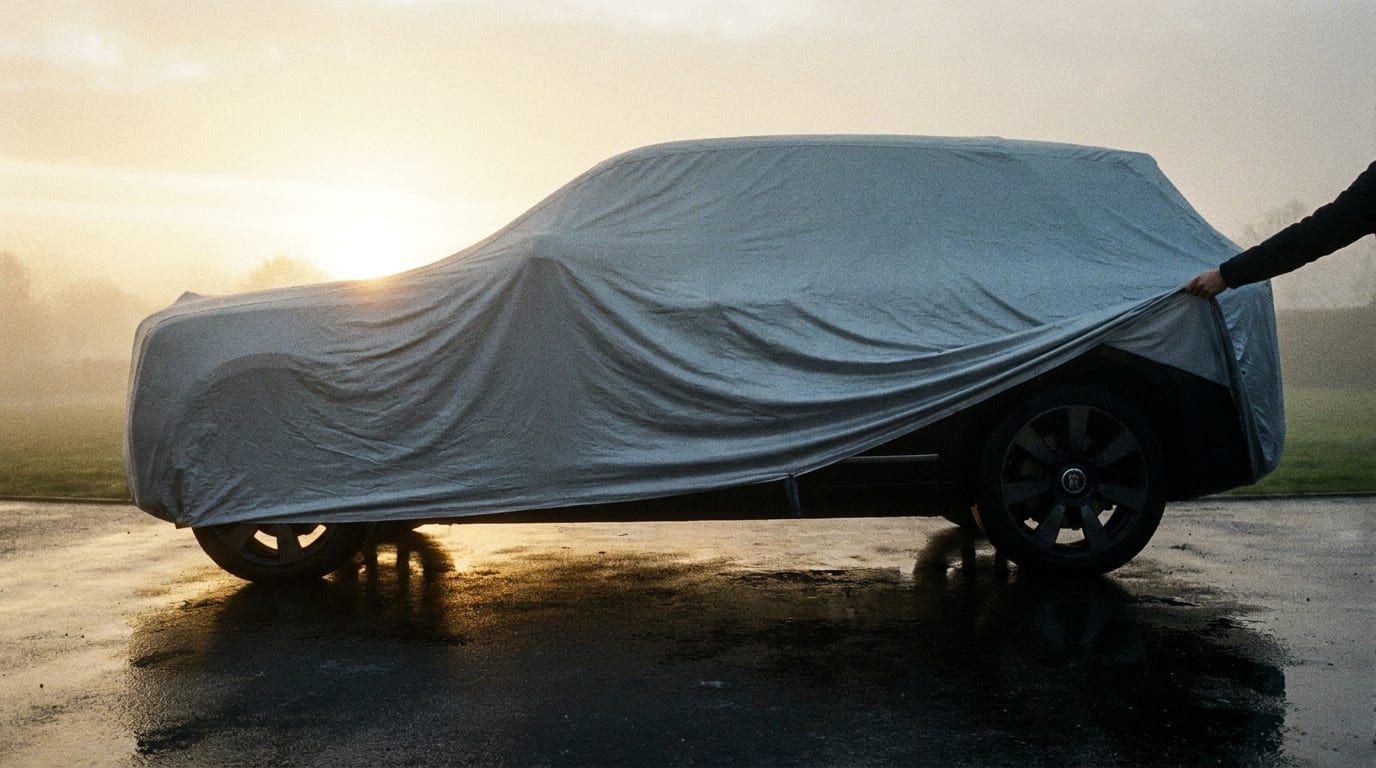
The Pilot has changed shape across its generations. Roofline, roof rail setup, overall length, it's all shifted enough that a cover sized for one generation won't sit right on another. That sizing accuracy isn't just a fit issue, it's a cost issue too.
A properly sized cover is cheaper over its lifetime than a universal one that flaps in the wind, chafes against the paint at the edges, or blows off in a storm and ends up in your neighbor's yard. Before buying anything labeled affordable, run your Pilot's year and trim through a vehicle cover sizing guide so you know exactly what you're ordering.
Roof rails, running boards, and a trailer hitch all change the equation slightly too. These add-ons can need extra venting or higher cover points so the fabric doesn't bunch up or wear through against hard edges. Worth checking the fit notes on any listing before you assume "SUV cover" means it'll clear your specific setup.
Smart Ways to Save Without Sacrificing Protection
Buying custom-fit when you can afford it is the single best money move here. It lasts longer, it fits better, and you won't be replacing it as often as a cheaper universal cover that wears out fast from flapping and chafing.
Shipping is another place real savings hide. A Pilot-sized cover is bulky, and bulky items sometimes carry higher shipping fees. Watch for a free shipping offer before you check out. It can meaningfully change the effective price you're paying, especially on a cover that's already pushing into the mid or upper-budget tier.
Don't take the first listed price at face value either. Check for an active coupon or promo code before you commit. These change regularly, and skipping that step means potentially leaving money on the table for no reason.
Last, weigh warranty-backed options against no-warranty budget covers honestly. If a cheaper cover fails in a year and you're stuck paying full price again, you didn't save anything. Worth knowing a seller's return policy too, in case a sizing mismatch shows up after the cover arrives.
Where to Find a Genuinely Affordable Honda Pilot Cover
If you're shopping specifically for a Pilot, start with the Honda SUV cover lineup, which spans multiple price points rather than locking you into one tier. If you park outside regularly, it's worth looking at outdoor car cover options specifically, since that category is built for the upper end of the budget range where UV and water resistance actually hold up.
The real test of "affordable" isn't the number on the price tag. It's total cost of ownership: how often you'll need to replace it, whether a warranty backs it up, and whether shipping quietly adds $20 you didn't account for. A $40 cover you replace twice a year isn't cheaper than a $120 cover that lasts three.
Before deciding, it's worth comparing a few actual listings side by side rather than going with the first one you click. Tools like find your car cover or a car cover comparison page make that easier than scrolling through search results guessing.
Bottom Line: Budget Smart, Not Cheap
The floor doesn't move just because your budget is tight. Water resistance, UV protection, a secure fit, and a real warranty are the four things an affordable car cover for a Honda Pilot still needs to deliver, regardless of price tier. Skip any of those and you're not saving money, you're postponing a bigger expense.
If you're parking outside with any regularity, mid-tier custom-fit covers are usually where the value actually lands, enough protection to matter, without paying for extras you don't need.
Before you buy, take a few minutes to check current Pilot-compatible options and see if there's an active discount running. It's a small step that tends to pay for itself.
Updated