


Best Outdoor Car Cover for a Toyota 4Runner: Waterproofing & UV Protection Guide
Toyota's 4Runner has one of the most recognizable silhouettes on the road, boxy, upright, with a roof rack that basically invites rain and debris to sit on it. If yours lives outside, whether in a driveway or on the street, a flimsy tarp isn't going to cut it for long. Finding the right outdoor car cover for Toyota 4Runner owners isn't about picking whatever's cheapest at the auto parts store. It's about matching fabric and fit to what your climate actually throws at the truck, year-round.
Why an Outdoor-Parked 4Runner Needs More Than a Tarp
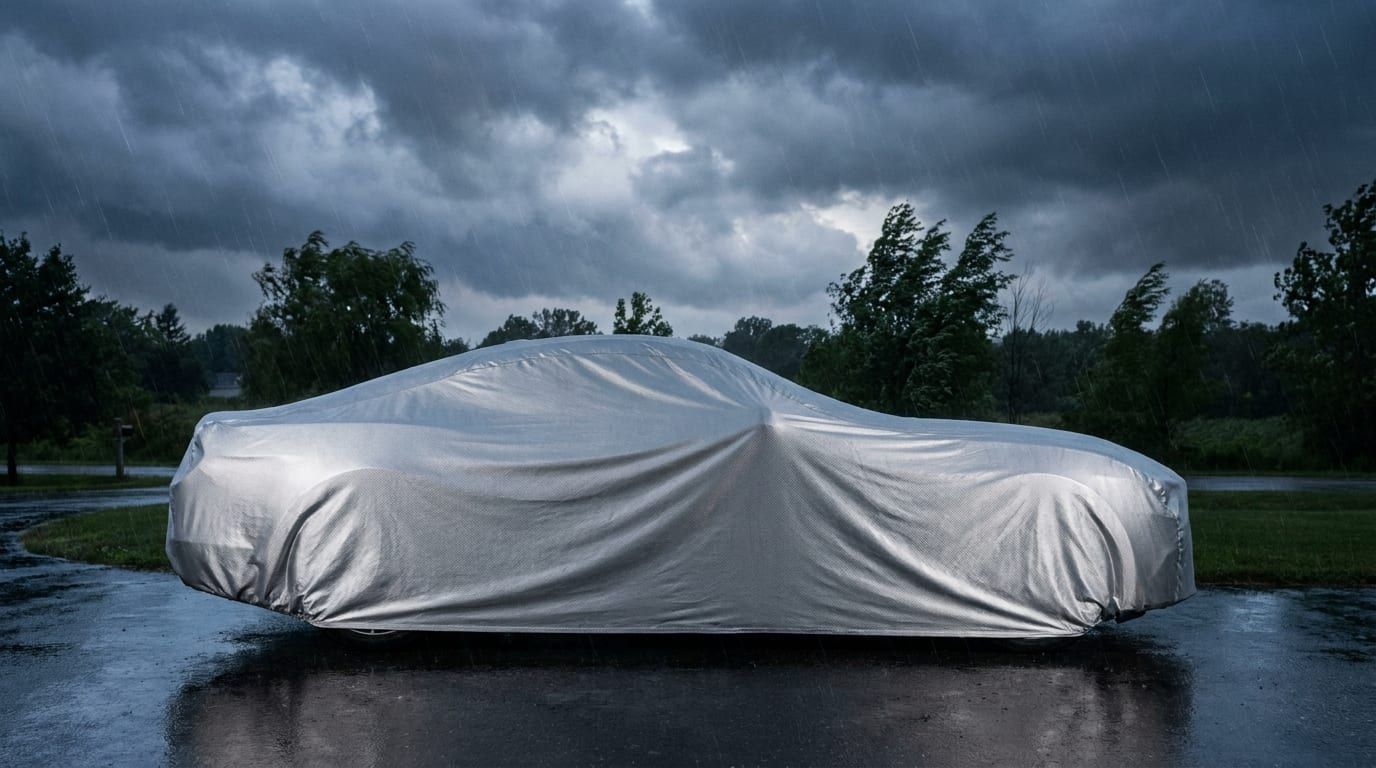
The 4Runner's body isn't shaped like a sedan's. Squared-off panels, a flat hood, and that roof rack all create spots where water pools instead of running off. Snow does the same thing, piling up on the rack and rear glass instead of sliding away. A cover that isn't cut for this shape leaves those low points exposed.
And it's not just rain and snow. Parked outside, your 4Runner picks up tree sap, bird droppings, and pollen pretty much every day of the year, storm or no storm. Sap etches into clear coat if it sits long enough. Bird droppings are acidic enough to do the same.
This is where a tarp falls apart as a solution. Tarps trap moisture underneath, they don't breathe, and the plastic edges rub against paint every time the wind moves them. A cover built for outdoor use is a different animal: ventilated construction, UV-stable fabric, and a design meant to shed water instead of hold it. If you're reading this, you already know you need a cover. The real question is which fabric and fit will actually hold up out there, season after season. Our guide to using a car cover outdoors goes deeper into the mechanics if you want the full breakdown.
What 'Waterproof' Actually Means for a 4Runner Cover

"Waterproof" gets thrown around loosely on product pages, and it's worth slowing down here. Water-resistant fabric usually has a DWR (durable water repellent) coating that beads up light rain and dew. Fine for a mild drizzle. It's not built for a sustained downpour, and it'll eventually soak through.
Fully waterproof means something more specific: sealed seams, taped construction, and a fabric layer rated to keep water out during hours of steady rain, not just a passing shower.
On a 4Runner, seam placement actually matters more than on a lot of other vehicles. The roof rack cutouts and the rear liftgate seam are common leak points if a cover's seams aren't sealed properly around them. Water finds the gap, and once it starts tracking under the rack mounts, it just sits there against the paint.
Here's the trade-off nobody tells you upfront: a cover that's 100% waterproof but doesn't breathe traps condensation underneath it. That moisture has nowhere to go, and over weeks it can lead to mold spots on your 4Runner's paint, which is arguably worse than just getting rained on. The better waterproof car covers balance both, keeping rain out while still letting trapped moisture escape.
UV Protection: Stopping Sun Damage Before It Starts
Rain gets the attention, but sun does slower, quieter damage. UV exposure fades paint over time, and darker colors like Midnight Black or Army Green show it faster than lighter shades. It also dries out and cracks plastic trim and roof rack rails, the kind of thing that's easy to ignore until it's brittle.
Even with a cover on, a 4Runner parked in direct sun builds up interior heat through the glass. A reflective, UV-blocking outer layer cuts that down, which protects the dash and seats from the slow bake that cracks vinyl and fades upholstery.
Here's a concrete buying signal: look for language about UV-stabilized fabric coatings on the product page, not vague "sun protection" marketing copy. Those are different claims. One tells you what's actually in the fabric. The other tells you nothing.
Most outdoor-rated covers don't treat waterproofing and UV resistance as separate features anyway. They're usually built into the same laminated fabric layer, so you're not choosing one over the other, you're choosing how well both are executed.
Custom-Fit vs Universal Covers for the 4Runner
Fit precision changes by generation. A 5th gen 4Runner has a different roofline height than a 4th gen, and spare tire placement on the rear affects how a cover drapes back there. A universal cover splits the difference across dozens of SUVs and fits none of them particularly well.
That looseness isn't just cosmetic. A loose cover flaps in wind, and every flap is friction against the fabric's waterproof coating. Over months, that friction wears through the coating at contact points, exactly where you need it most. A custom-fit cover sits close to the body, so there's less material to catch wind in the first place.
Before you buy, check three practical things: antenna clearance, side mirror pockets, and roof rack cutout compatibility. These sound minor, but they're the difference between a cover that goes on in thirty seconds and one you're wrestling with every time it rains. If you're not sure which size or year matches your 4Runner, run through our sizing guide or go straight to custom-fit cover options built around your exact year and trim, including the dedicated Toyota SUV lineup.
Comparing Protection Tiers for Outdoor Storage

Not every 4Runner owner needs the same cover. Someone parking outside in coastal Oregon has different problems than someone parking in Phoenix. Climate should drive the tier you pick, not just price.
| Tier | Climate Fit | Waterproofing | UV Durability | Typical Lifespan |
| Entry-level | Mild, dry regions with occasional light rain | Single-layer coated fabric, water-resistant | Standard UV inhibitors | 1 to 2 seasons |
| Mid-tier | Moderate rain, mixed sun exposure | Multi-layer fabric, partially sealed seams | Improved UV-stable outer layer | 2 to 3 seasons |
| Premium | Storm-prone, snowy, or high-UV desert climates | Multi-layer laminated fabric, fully taped seams | Reinforced UV-stable shell for constant exposure | Multi-year outdoor use |
If you're in a rainy coastal climate, the fully taped seams on a premium-tier cover earn their price fast. Water finds every gap eventually, and a coastal 4Runner deals with it daily. If you're in a hot, high-UV desert climate, the reinforced UV-stable shell matters more than seam sealing since rain isn't the daily threat, sun degradation is. Either way, cheaper entry-level covers tend to need replacing within a season or two of daily outdoor exposure, so the price-per-year math often favors the higher tier once you account for how often you'd be rebuying. Browse the full range of SUV covers to see how these tiers are priced out, or use the cover finder tool to match your climate and trim to the right fabric automatically.
Installation and Maintenance to Protect the Waterproofing and UV Coating
A great cover installed loosely will still wear out fast. Strap and grommet tension matters. Too loose, and wind creates friction points that grind through the waterproof coating over time. Too tight, and you're stressing seams that weren't designed for it.
If you're in a windy area, gust straps are worth the extra step. They keep the cover from shifting off the roof or hood mid-storm, which is exactly when you need it in place most.
Cleaning matters too, and this is where people go wrong. Harsh detergents strip UV coatings right off the fabric, which defeats the whole point of buying a UV-rated cover in the first place. Stick to the manufacturer-recommended cleaning method instead of whatever's under the kitchen sink. Regular cleaning also keeps dirt and grit from grinding into the fabric every time the wind moves it, which is a slower but just as real cause of wear.
Warranty and Buying Confidence
A lifetime warranty typically covers material defects, stitching failures, things that shouldn't happen under normal use. It's not a blanket promise against every bit of wear from years of UV and weather exposure, and no honest warranty claims that.
Return policies matter here too, especially if you're not 100% sure the fit is right before you commit to a custom-fit purchase. Read the return window and condition requirements before buying, not after.
For a purchase like this, where you're paying more for a higher waterproofing and UV tier, warranty terms are a legitimate way to de-risk that decision. Check the lifetime warranty details before you buy, so you know exactly what's backed and what isn't.
Choosing Your 4Runner's Outdoor Cover: Next Steps
Before you buy, run through this short checklist: confirm your fit by generation and year, pick a waterproofing tier that matches your local climate, verify the fabric is actually UV-stabilized (not just marketed that way), and check that strap and lock points work with how you park.
Get those four things right and you'll spend a lot less time fighting fabric wear, mold spots, or fading paint over the next few years.
If you've made it this far, you're clearly serious about keeping your 4Runner in shape. Stick around and check out more of our car care guides while you finalize your decision, they're worth the few extra minutes before you check out.
Updated