


Best Outdoor Car Cover for Cadillac Escalade: Waterproofing & UV Protection Guide
Why Your Escalade Needs a Dedicated Outdoor Cover
An Escalade is a lot of truck to leave exposed. We're talking over 200 inches of painted sheet metal, most of it flat and facing straight up at the sky. Park one in a driveway without a garage and it's taking the full hit from sun, rain, pollen, sap, bird droppings, whatever the season throws at it.
Owners who don't garage their Escalade tend to run into the same two complaints: clear-coat fading from UV exposure, and water spotting that etches into the paint after enough hard rain or sprinkler cycles. Neither is dramatic on day one. Both get expensive over a few years.
This guide sticks to the two things that actually matter for an outdoor car cover for Cadillac Escalade: keeping water out and blocking UV. Not bells and whistles, just the core job.
Here's the catch most people miss. A generic, ill-fitting cover often fails at exactly these two jobs. Loose fabric lets water pool in the low spots along the hood and roof seams. Gaps at the mirrors or rear quarter panels leave bare paint sitting in direct sun for hours. Fit and material work together, not separately, and a cover that nails one but botches the other isn't doing its job.
What Actually Makes a Car Cover Waterproof

Most of the confusion starts here: water-resistant and waterproof are not the same thing, even though a lot of product listings use them interchangeably. Water-resistant fabric handles dew, light drizzle, the occasional splash. Sustained rain, sprinklers hitting the same panel every morning, snowmelt sitting on the roof for hours? That needs a fabric actually rated waterproof, with a tested barrier layer, not just a water-repellent coating that wears off.
Breathability is the part people forget. A cover can be fully waterproof and still be a bad idea if it doesn't breathe, because moisture that gets trapped underneath (condensation, residual humidity, whatever seeps in through a zipper) has nowhere to go. It just sits against the clear coat. Over weeks that turns into mildew spots or a cloudy haze in the paint that's a pain to buff out. The best outdoor fabrics let vapor escape while still blocking liquid water from getting in. That's the whole engineering challenge in one sentence.
Seam construction matters more than people expect too. Wind-driven rain doesn't fall straight down, it comes in sideways and finds every poorly sealed seam or loose hem. Elastic hems and strap placement at the front and rear keep the cover snug against the body instead of flapping and wicking water underneath during a storm.
Quick gut check: if a cover is marketed as waterproof but says nothing about breathability, treat that as a red flag. It's probably trapping moisture, not managing it. For a deeper look at how these fabrics are actually built and tested, the waterproof car cover buying guide breaks down the material science in more detail than we need here.
UV Protection: Why It Matters More for a Vehicle This Size
The Escalade's hood, roof, and tailgate are enormous, flat, and pointed almost straight at the sun for most of the day. Those are the first panels to show fading or a chalky oxidized look, long before the sides or bumpers do. Size works against you here.
A cover with real UV-blocking treatment, sometimes labeled with a UPF-style rating or described as having a UV inhibitor woven into the fabric, keeps that fading from happening in the first place. It's not just about the paint either. UV coming through the windshield and side glass bakes the dash, cracks leather over time, and fades trim. A cover with strong UV protection takes that light off the equation entirely rather than relying on tinted glass to do all the work.
There's a secondary win here too: a UV-reflective outer layer keeps cabin temperatures down significantly on a hot, direct-sun day. Lower cabin temps mean less stress on leather seats, less off-gassing from interior plastics, and electronics that aren't baking at 150+ degrees every afternoon.
Here's where cheap covers fall apart. A thin, untreated poly cover might look fine in the store, but UV exposure breaks down that plastic over months, not years. It gets brittle, starts cracking at the fold lines, and once the fabric's integrity is compromised, its water resistance goes with it. You end up buying the same cover twice in eighteen months instead of once properly.
Material & Tier Comparison for Outdoor Escalade Covers

Not every outdoor cover is built for the same conditions, and tier really does track with what you're paying. Here's roughly how the three common tiers break down for a vehicle the size of an Escalade:
| Tier | Waterproofing | UV Protection | Best For |
| Entry-level | Light water resistance, not built for sustained rain | Basic, minimal UV inhibitor | Mild climates, short-term outdoor parking |
| Mid-tier | Fully waterproof, layered construction | Stronger UV-blocking treatment | Most outdoor-parked Escalades year-round |
| Premium / all-weather | Heaviest layering, best seam sealing | Maximum UV inhibitor strength | Harsh climates, coastal or desert, year-round storage |
Climate should be the deciding factor, not just budget. If you're in a high-UV region (think Arizona, Nevada, inland California), prioritize UV-inhibitor strength above everything else, since fading and oxidation will outpace any water damage concern. If you're coastal or somewhere with heavy seasonal rain, full waterproofing paired with real breathability matters more than squeezing out another UPF point.
One more thing worth checking: higher tiers usually reinforce the panels that take the most friction, like around the mirrors and roof rack mounts. That's relevant for Escalade trims with roof rails, since that hardware is exactly where a lesser cover starts wearing thin and letting water sneak through. For the full tradeoff breakdown between waterproofing priority and UV priority by tier, the outdoor car cover guide is worth a read before you commit to a tier.
Getting the Fit Right for a Full-Size SUV
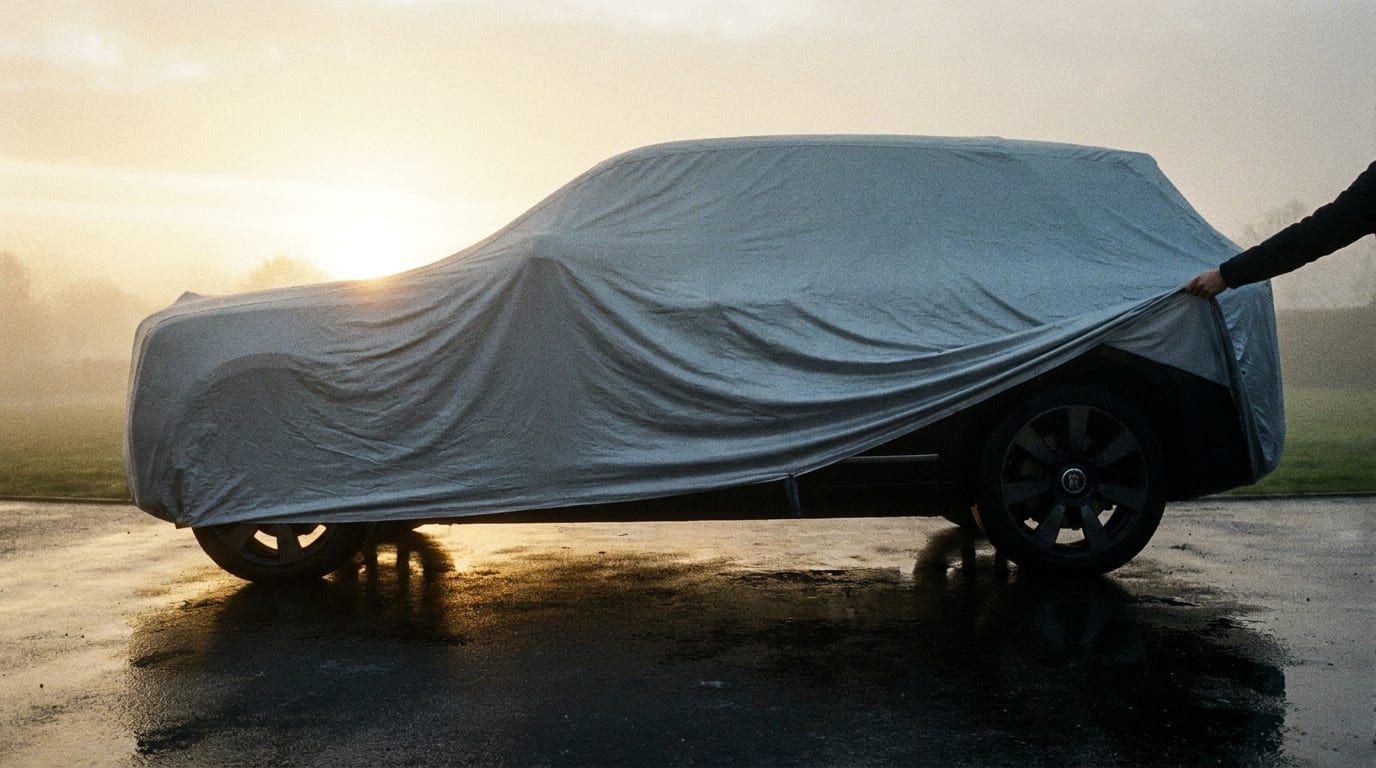
Fabric quality only matters if the cover actually sits on the vehicle the way it's supposed to. A generic "fits full-size SUV" cover is a guess dressed up as a spec. On an Escalade, that guess usually shows up as loose fabric flapping in the wind, water pooling in sagging low spots instead of running off, and gaps at the edges where UV-unprotected paint peeks through.
The Escalade has a few fit points that trip up universal covers specifically: roof rails, running boards, and a ride height that's noticeably taller than a standard sedan or crossover cover is cut for. A cover designed for a generic "XL SUV" often doesn't account for any of these, which means a mirror pocket that's in the wrong spot or a hem that rides a few inches too high and leaves the rocker panels exposed.
Before buying, check the length, height, and mirror-pocket specs against your Escalade's exact trim. The ESV's longer wheelbase needs a different cut than the standard Escalade, and treating them as interchangeable is how people end up with a cover that's almost right but not quite. If you're unsure which option actually matches your model year, the sizing guide walks through how to measure correctly, and the custom-fit car covers guide covers the case for going custom instead of universal on a vehicle this size.
Features Worth Paying For: Straps, Grommets & Warranty
Once fabric and fit are sorted, a handful of smaller features decide whether the cover actually survives outdoor use long-term.
Grommets built into the cover for a cable lock aren't just a security feature against theft, they also help on windy days by giving you a way to anchor the cover down tighter than straps alone. On a vehicle this size, wind lift is a real issue, not a theoretical one.
Built-in gust straps matter for the same reason. They keep the cover pinned against the Escalade's body in high wind instead of letting it billow and rub against the clear coat, which over time causes fine scratching, especially on a vehicle that's getting direct sun exposure already weakening the paint's top layer.
A real warranty tells you something too. If a manufacturer backs the waterproof and UV treatment with a lifetime warranty, that's a signal they expect the fabric to hold up for years outdoors, not fade or degrade after one brutal summer. Worth checking before you buy, not after.
Last thing: check the return policy and shipping timelines before ordering. Fit issues are more likely on a large SUV than a compact sedan, simply because there's more surface area and more trim variation (ESV vs. standard) to get wrong. Knowing you can exchange it without a hassle takes the risk out of ordering online in the first place. And once it arrives, a quick look at how to clean a car cover will help the waterproof coating last as long as it's supposed to.
Final Pick & Next Step
Two things actually matter for an Escalade parked outside: the cover has to be fully waterproof while still breathing, and it has to carry a strong UV-inhibitor treatment on the hood, roof, and tailgate where the sun hits hardest. Everything else is secondary.
But none of that works if the cover doesn't fit right. A loose, universal cover lets water pool and leaves gaps in UV coverage no matter how good the fabric is underneath it. Fit and fabric have to be solved together, not one at the expense of the other.
If you want to skip the guesswork, use the cover finder tool to pull up outdoor cover options matched to your Escalade's exact trim and year. Or go straight to the Cadillac SUV cover lineup to see what's in stock right now. And if you're still weighing options, stick around the blog for more on keeping a full-size SUV protected through every season.
Updated