


Best Outdoor Car Cover for Mercedes-Benz C-Class: Waterproofing & UV Protection Guide
Why Your C-Class Needs More Than a Basic Cover
Park a Mercedes-Benz C-Class outdoors every day and the clock starts ticking on the clearcoat. UV breakdown and oxidation happen faster under daily sun exposure than they do in a garage, and nobody mentions that part when they're admiring a fresh Selenite Grey paint job at the dealership. It just fades, dulls, chalks over time.
The body style makes this trickier, too. Whether you've got the sedan, the coupe, or the wagon, the C-Class has curves that work against a bad cover: a sloped trunk line, a low front fascia, mirror housings that stick out at odd angles. A sheet that isn't shaped to fit pools water right where you don't want it, around seams, near badges, along the rear glass.
Here's the actual math worth doing. A quality outdoor car cover runs you a few hundred dollars. A repaint runs thousands. Fixing sun-faded leather or a cracked dash costs more than most people expect, and a detailing bill to strip baked-on sap and bird droppings off clearcoat isn't cheap either. The cover is the cheap option here, not the add-on.
So this guide sets up two non-negotiables for anyone shopping an outdoor car cover for Mercedes-Benz C-Class models: real waterproofing and real UV resistance. Not "weatherproof" as a vague marketing word slapped on a product listing. Actual specs you can check before you buy.
How Waterproof Does a C-Class Outdoor Cover Actually Need to Be?

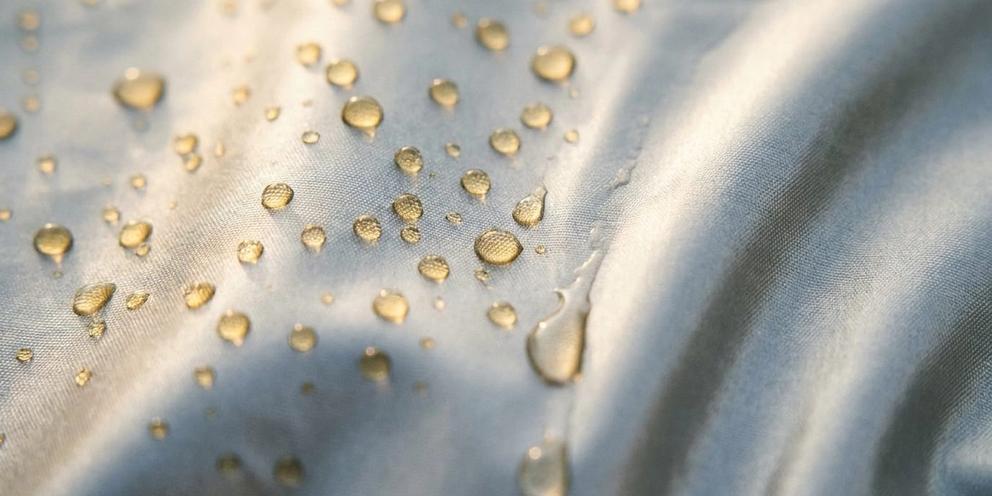
Water-resistant and waterproof are not the same thing, and a lot of cover listings blur that line on purpose. Water-resistant usually means a DWR coating, something that beads light rain for a while and then wets through. Waterproof means sealed seams, taped construction, a multi-layer laminate that actually stops water from getting to your paint. If your C-Class sits outside through storms, sprinklers, or just morning dew every single day, you need the second one. A cover that handles "light drizzle" isn't built for that job.
There's a trade-off hiding in here, too: breathability. A cover needs to block rain and snow on the way in while still letting trapped moisture and condensation escape. Skip that and you get a sealed little greenhouse sitting on your hood, which leads to mold, mildew, and water spotting on the paint underneath. That's worse than no cover at all in some cases.
The hem and strap system matters just as much as the fabric. Elastic hems, grommets, and tie-down straps keep wind-driven rain from wicking up underneath the edges, which is exactly how water sneaks in during a sideways storm even on a cover rated "waterproof." Check this part of the product description. It's often the difference between a cover that performs and one that just sounds like it does.
This is really the line between a $60 universal cover and something built for actual outdoor duty: seam taping and an underside coating. Those two details rarely show up on cheap covers, and they're the reason a genuinely waterproof car cover costs more than the one folded up in a gas station impulse rack. If you want the deeper technical breakdown on fabric construction, it's worth reading through how waterproof fabrics are actually built before you compare products.
UV Protection: Stopping Fade on Dark and Metallic C-Class Finishes
Dark colors take sun damage harder. Obsidian Black and Selenite Grey show UV fade faster than lighter finishes because the pigment absorbs more heat and light instead of reflecting it. A UV-stabilized, multi-layer fabric blocks that exposure before it ever reaches the clearcoat, and it does the same job for your interior, since sunlight coming through the glass is what dries and cracks leather and vinyl over time.
There's a heat angle most people don't think about, too. A reflective outer layer drops interior cabin temperature, which protects dash plastics and the infotainment screen from the kind of heat-cracking that shows up after a few summers of unprotected sun exposure.
One thing worth clearing up: UV protection and waterproofing aren't separate features bolted onto different products. They come from the same multi-layer shell. So when you're comparing an outdoor car cover for Mercedes-Benz C-Class models, check both specs on one listing, not two different products from two different price tiers. A cover that's great at blocking rain but says nothing about UV rating is only solving half the problem.
And here's the part that catches people off guard: a cover without UV-rated fabric degrades in the sun just like your paint does. Buy the cheap one, and you might be replacing it again next season, not because it ripped, but because the fabric itself broke down and stopped doing its job.
Custom-Fit vs. Universal Covers for the C-Class
A universal cover is built to vaguely fit a size range, not your car. That slack is the whole problem. Extra fabric flaps in wind, which abrades the clearcoat over months of friction you never see happening. And loose material around the mirrors and rear deck gives water somewhere to pool instead of sliding off.
A custom-fit car cover is cut to the C-Class's actual body lines: mirror pockets, antenna placement, the slope of that trunk. No slack means no flapping, no pooling, no gaps for water to find.
And that ties directly back to waterproofing. You can have the most technically waterproof fabric on the market, taped seams and all, but if the cover doesn't fit, water finds the edges anyway. Fit precision isn't a nice-to-have on top of waterproofing. It's part of the waterproofing. Before buying, confirm your exact year and body style against sizing guidance for your C-Class so you're not guessing.
Matching the Cover to Your Climate
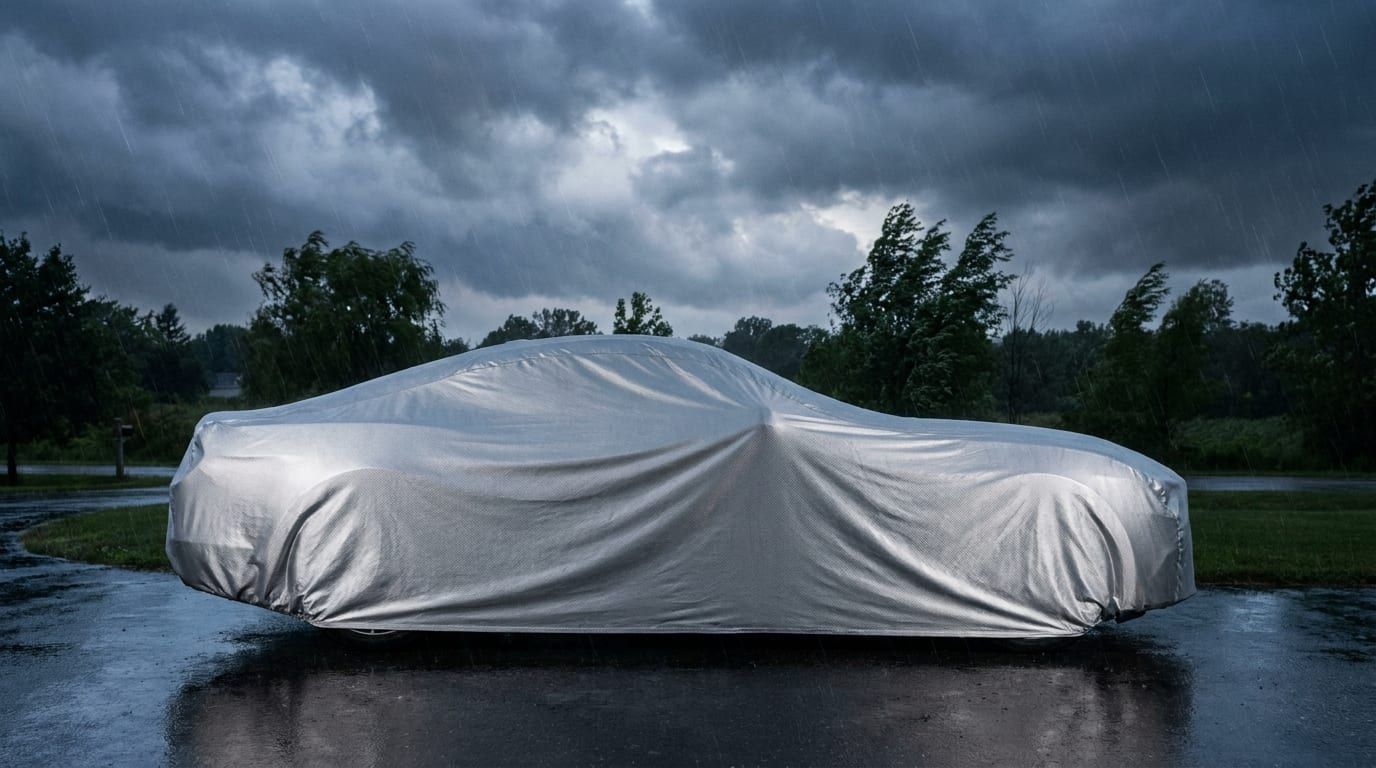
Not every outdoor cover needs to do the same job, because not every climate throws the same problems at your car.
| Climate | Priority | Why |
| Coastal / humid | Mold-resistant, breathable waterproof layer | Trapped moisture causes mildew faster than rain damage does |
| Desert / high sun | Maximum UV-rated outer shell | Fade and heat damage outweigh rain concerns |
| Snow / freeze | Snow-load rated, non-saturating fabric | A soaked cover freezes stiff overnight and stops protecting anything |
If you're near the coast, breathability and mold resistance should outrank a heavier, insulated fabric. If you're in a desert climate, rain protection matters less than raw UV resistance, since your bigger enemy is the sun baking the paint day after day. And in snow country, you want a cover rated to shed snow load without soaking through and freezing solid by morning, because a frozen cover is basically a frozen tarp glued to your car.
Match these factors against the outdoor car cover options before settling on a specific tier. The right pick depends more on your zip code than on your trim level.
Installing and Maintaining Your Cover to Preserve Performance

Installation order matters more than people assume. Front to back, securing straps and the cable lock last, keeps the cover aligned so the waterproof seal actually sits where it's supposed to. A misaligned cover bunches at the seams, and that's exactly where leaks start. For a full walkthrough, the step-by-step installation guide covers the order that actually works.
Dirt left sitting on the fabric isn't just unsightly. Grit trapped between the cover and your paint acts like sandpaper every time wind moves the fabric, which scratches clearcoat you were trying to protect in the first place.
Clean the cover on a regular cadence using manufacturer-safe methods; it keeps the waterproof coating and UV treatment from breaking down early. There's a detailed step-by-step guide to cleaning a car cover worth following rather than just hosing it off and calling it done.
One more signal worth checking before you buy: does the cover carry a lifetime warranty? That's not just a sales line. It tells you the manufacturer trusts the waterproofing and UV materials to actually hold up outdoors, year after year, not just through one warranty-friendly season.
Choosing and Buying the Right Cover for Your C-Class
Run through the checklist before you buy: waterproof multi-layer construction, a UV-rated outer shell, a fit that matches your C-Class generation and body style, and a material suited to your actual climate, not just whatever's on sale. Skip any one of those and you're back to a cover that looks fine in the listing photo and underperforms in your driveway.
Start with the Mercedes-Benz vehicle page to find cover options sorted by model year, since fit is specific enough that "C-Class" alone isn't quite enough to go on.
Yes, an outdoor-rated cover costs more than the universal one at the auto parts store. But stack that against a repaint, interior restoration, or a detailing bill from months of bird droppings and sap sitting on your clearcoat, and the math isn't close.
If you're still narrowing down options, browse the full range of car covers and confirm your sizing before checkout. And if you want more guides like this one on protecting a daily driver parked outdoors, the articles section is worth bookmarking for whenever the next question comes up.
Updated