


Best Outdoor Car Cover for Tesla Model 3: Waterproofing & UV Protection Guide
A Tesla Model 3 parked outdoors every day takes a different kind of beating than a sedan tucked in a garage. No roof overhang, no shade, just sun, rain, and whatever's falling from the trees above it. If you're shopping for an outdoor car cover for Tesla Model 3 ownership that's actually going to hold up, you need to know what separates a real waterproof, UV-rated cover from a cover-shaped tarp. Here's what to check before you buy.
Why a Tesla Model 3 Needs More Than a Basic Cover Outdoors
The Model 3's body is mostly painted aluminum and steel, and its glass roof runs nearly the full length of the car. That's a lot of surface area with no metal roof to deflect heat the way older sedans do. Sit in direct sun for a few hours and that glass roof turns the cabin into an oven, and the paint underneath a thin cover starts taking UV damage faster than you'd expect.
If you don't have garage access, your car is getting hit with sun, rain, pollen, tree sap, and bird droppings on a daily basis. Each one of those does something to your clear coat over time. Sap etches it. Bird droppings are acidic. UV rays break down the resin in the clear coat until it starts chalking and fading.
Here's the math that matters: a Tesla paint correction or glass roof repair can run into the thousands. A solid outdoor cover costs somewhere between $150 and $250. That's cheap insurance against damage that's expensive and sometimes impossible to fully undo.
So before you buy anything, judge it against three things: real waterproofing, UV-resistant fabric, and a fit that's actually built for the Model 3's shape. Everything else is secondary.
What 'Waterproof' Actually Means in a Car Cover
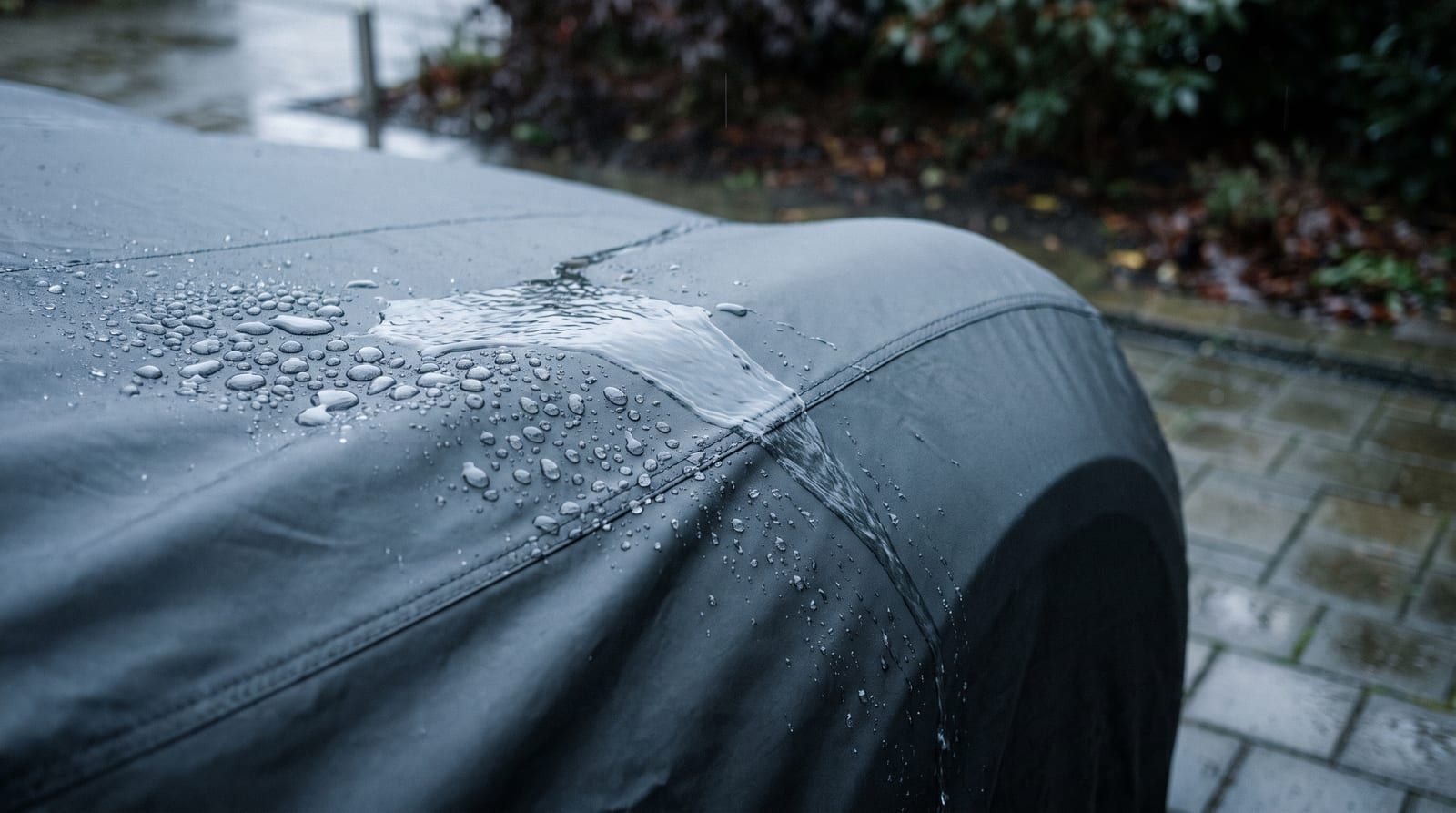
Most covers labeled "waterproof" aren't. They're water-resistant, which means they'll shrug off light rain or morning mist but soak through in a real downpour. A genuinely waterproof cover uses a multi-layer laminate construction with seam-sealed or taped stitching, so water can't wick through the needle holes where panels are joined.
Here's the part people miss: breathability matters just as much as waterproofing. A cover that's fully sealed with no breathability traps condensation underneath it. That moisture sits against your paint overnight, and in some cases that does more damage than leaving the car uncovered. You want a cover that keeps liquid water out from above while still letting vapor escape from below.
When you're reading a spec sheet, look for three things: how many fabric layers it uses, whether the seams are taped or sealed (not just stitched), and whether there's a hem cord or elastic along the bottom edge. That elastic hem is what keeps wind-driven rain from sneaking up under the cover during a storm.
Tesla's design adds its own wrinkles here. The flush door handles and the charge port on the rear quarter panel create extra seams and openings that cheap universal covers weren't designed around. Water finds those gaps. A cover built with the Model 3 in mind accounts for them. For a deeper breakdown of what waterproof actually requires, CarCovers' waterproof car covers guide is worth a read before you buy.
UV Protection: Guarding the Model 3's Paint and Glass Roof
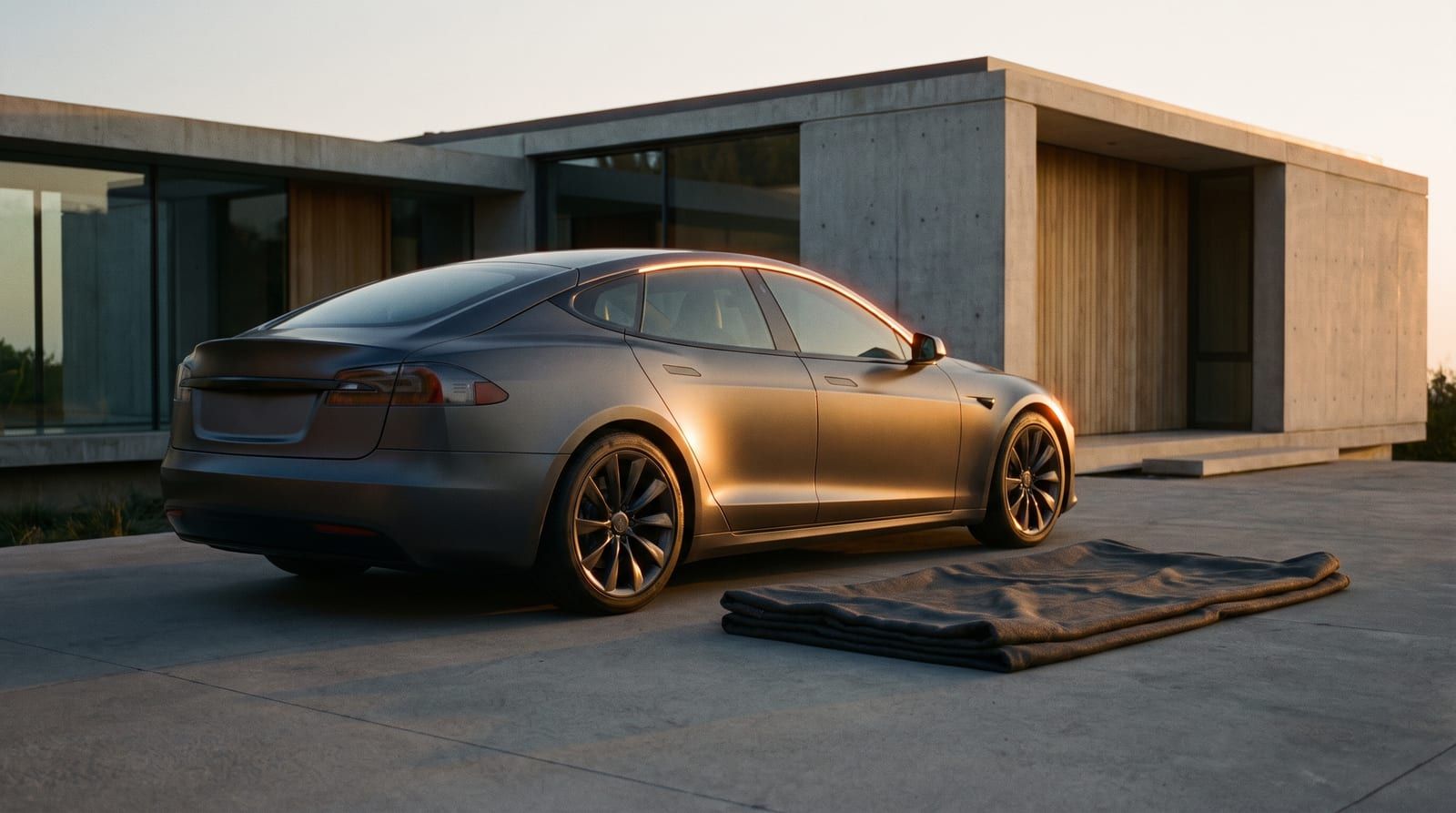
"Sun-resistant" on a product listing doesn't mean much on its own. What you actually want is UV-stabilized fabric, meaning the material has a treatment built in that resists breakdown from ultraviolet exposure over years, not weeks. Without it, fabric and paint both start the same slow decline: fading, chalking, and clear-coat degradation that shows up as a dull, hazy finish.
The glass roof deserves its own mention here. Even with factory tint, prolonged UV and heat exposure can degrade interior trim and the adhesive holding the headliner in place. A cover isn't just protecting your paint, it's protecting what's happening inside the cabin too.
Color matters more than people think. A reflective or light-colored outer shell bounces heat away instead of absorbing it, which keeps interior temperatures lower. That's relevant for a Tesla specifically, since cabin electronics and the battery's thermal management system both work harder when the car's been baking in direct sun all day.
When you're comparing products, don't take "all-weather" at face value. Look for a specific statement about UV-resistant treatment or UV-stabilized fabric in the materials description. If a listing only says "weatherproof" without explaining what that means for sun exposure, assume it's marketing shorthand, not a spec.
Getting the Fit Right for a Model 3 Specifically
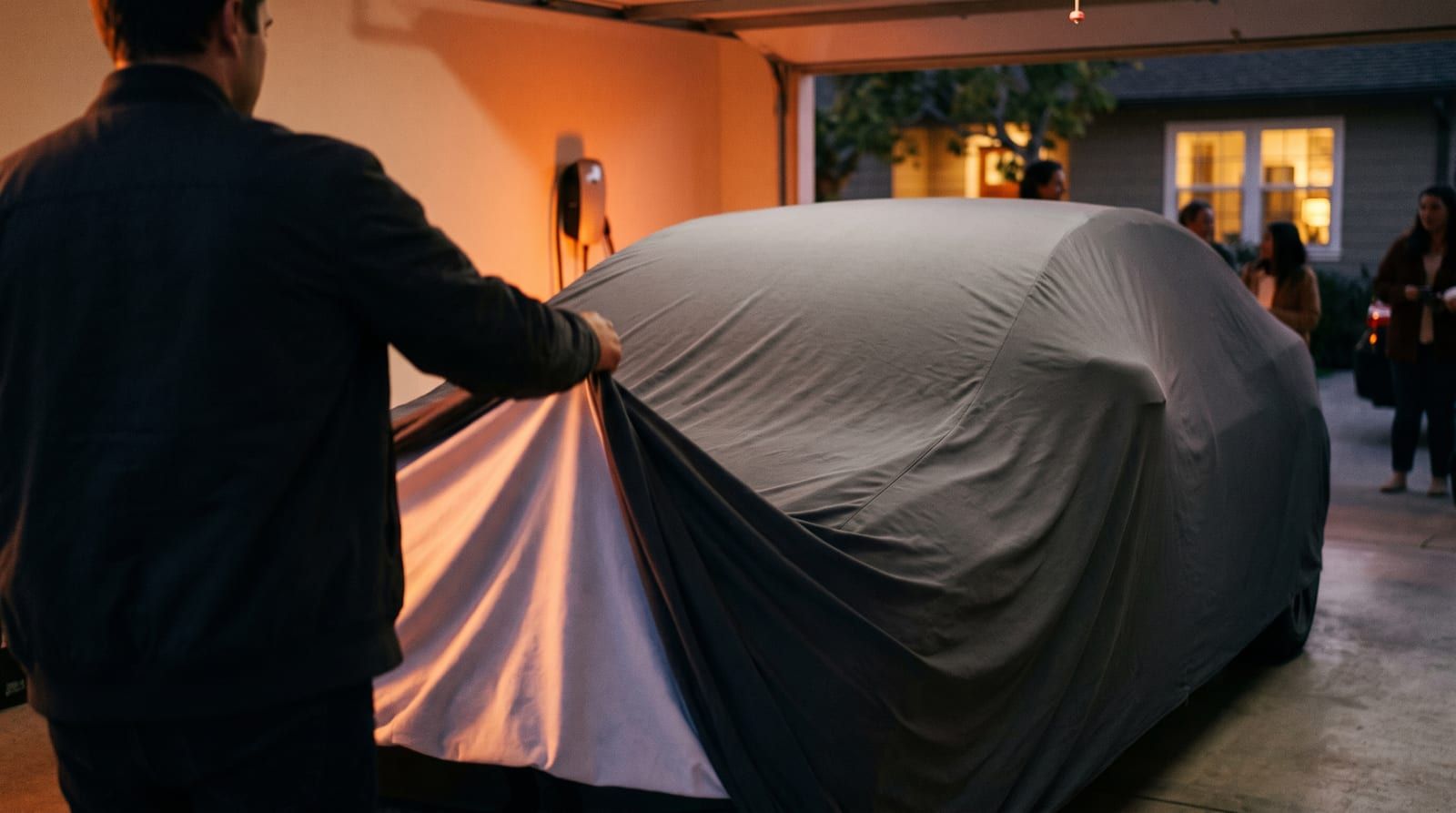
A universal cover is a compromise by design. It's cut to fit "most sedans," which means loose fabric, flapping in the wind, and water pooling in spots that shouldn't exist. The Model 3's low, aerodynamic profile and frameless windows need a semi-custom or model-specific cut to actually sit flush against the body.
A few measuring points matter more than others: overall length (front bumper to rear bumper), mirror cutouts so the cover doesn't bunch up around the side mirrors, and clearance for the shark-fin antenna on the roof. Get any one of those wrong and you'll have a cover that either doesn't reach the ground or gets stretched tight enough to tear at the seams in wind.
Then there's the charge port. If the cover doesn't have a dedicated port cutout or flap access, you're stuck pulling the whole cover off every time you plug in. That's a hassle most owners won't tolerate for long, and it usually ends with the cover sitting in the garage instead of on the car. Before ordering, it's worth running your Model 3's dimensions against CarCovers' vehicle size guide instead of guessing off a generic chart. You can also check the Tesla-specific cover options directly to see what's actually cut for this car.
Outdoor Cover Features Worth Paying For (And What to Skip)
Material is where most of the price difference comes from, and it's worth understanding what you're paying for.
| Feature | Single-layer polypropylene | Multi-layer laminate |
| Waterproofing | Light rain only | Blocks standing water |
| UV resistance | Minimal, degrades faster | Built in, lasts longer |
| Price | Lower | Higher |
| Best for | Occasional outdoor use | Daily outdoor exposure |
For a car parked outside every day, the laminate option is the one that actually earns its keep.
Beyond material, check for built-in grommets that let you run a cable lock through the cover (deters theft and keeps the cover from blowing around) and gust straps that anchor it against wind in open, unsheltered parking. Model 3 owners without a garage or carport deal with more wind exposure than they think, especially if they're parked near open lots or driveways with no windbreak.
Soft lining at contact points, mirrors and the rear spoiler especially, matters more for a Model 3 than you'd guess. Those are painted trim pieces, and a cover that rubs against them in the wind, night after night, will leave fine scratches over time.
One thing to skip entirely for this use case: indoor-only or dust-cover products. They're built for covered garages where there's no rain or sun to worry about. Put one outside and it'll fail fast, both on waterproofing and UV resistance. The full breakdown of outdoor-specific risks like wind, UV, and moisture is covered in CarCovers' guide to using a car cover outdoors, if you want the longer version.
Installing and Maintaining Your Tesla Model 3 Cover
Installation order actually matters, not just for convenience but for the cover's lifespan. Drape it front to back, settle it over the mirrors and antenna, and secure the straps before you add a cable lock. Doing it out of order tends to stretch seams unevenly, which is exactly where waterproofing starts to fail first.
Once it's in regular use, rinse the cover off periodically and let it air-dry fully before folding it away. Dirt and grit left on the surface grinds into the UV coating every time the fabric flexes in the wind, and that wears down the protective treatment faster than sun exposure alone would. CarCovers has a full rundown on cleaning a car cover if you want specifics on products and technique.
When the cover isn't on the car, don't just ball it up in the trunk. Fold it loosely and store it somewhere dry. A damp cover stored tight invites mildew, and mildew breaks down waterproof coatings faster than years of UV ever would. If you're new to this, the step-by-step installation guide walks through the process in more detail.
Final Decision: Picking Your Tesla Model 3 Outdoor Cover
Three things aren't negotiable here: multi-layer waterproofing with sealed seams, UV-stabilized fabric (not just "weather-resistant" marketing copy), and a fit that's actually built around the Model 3's body, mirrors, and charge port. Skip any one of those and you're just delaying the damage, not preventing it.
When two covers look similar on paper, the warranty is a reasonable tiebreaker. A company confident in its materials will back them for the long haul.
If you're ready to stop guessing and compare real options, browse the full lineup of outdoor car covers and see which fits your Model 3 and your budget. And if you just want more on keeping a Tesla in good shape long-term, it's worth a look at how Tesla mileage and longevity plays into the bigger ownership picture, then stick around CarCovers' articles for more outdoor care guides as you dial in your setup.
Updated