


Best Outdoor Car Cover for Your Chevrolet Tahoe: Waterproofing & UV Protection Guide
A Chevrolet Tahoe spends most of its life outside. Driveways, office lots, RV storage yards, wherever you park it, that full-size body is soaking up sun and shedding water every single day. If you're shopping for an outdoor car cover for Chevrolet Tahoe protection, waterproofing and UV resistance are the two things that actually determine whether the cover earns its keep or ends up balled up in the garage after one season. This guide walks through both, plus fit and accessories, so you buy the right one the first time.
Why Your Tahoe Needs a Dedicated Outdoor Cover
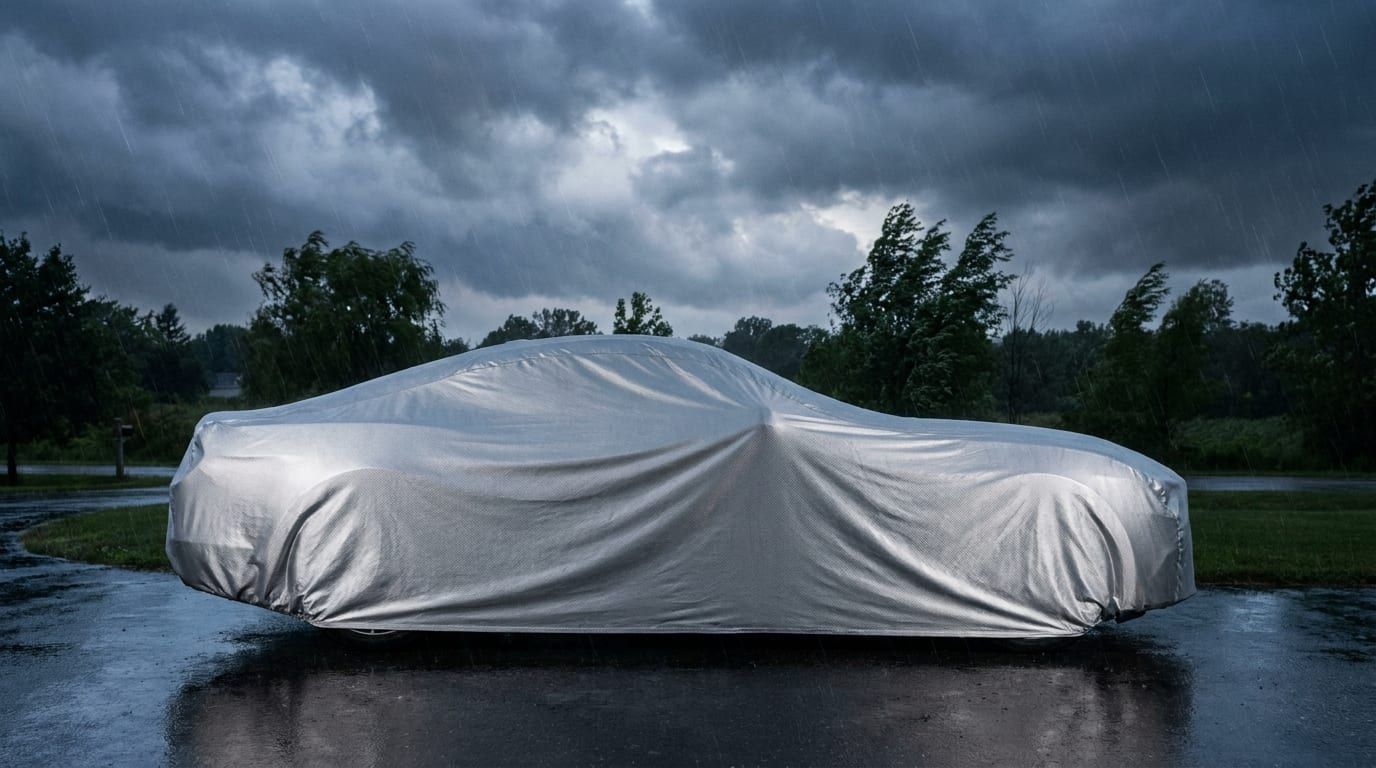
A Tahoe isn't a sedan. It's got a lot more painted real estate: hood, roof, quarter panels, a tall greenhouse of glass. All of it exposed to sun, rain, tree sap, and bird droppings if it's parked outside. That larger surface area means fit and material choice matter more than they would on something smaller, because any gap or weak spot in the fabric has more square footage to fail across.
Most Tahoe owners fall into a few storage patterns: no garage at all, a driveway spot that gets full sun most of the day, or a coastal/humid region where moisture is a constant. Sun Belt owners deal with the opposite problem, brutal UV exposure that bakes paint and interior trim day after day.
Skip a proper cover, or use a thin tarp-style one, and you'll see the damage show up over time: clear-coat oxidation, interior surfaces fading through the glass, water spots baked into the paint, and mildew growing under a cover that trapped moisture instead of releasing it. A dedicated outdoor car cover built for SUVs handles all of that. This guide focuses specifically on the waterproofing and UV protection side of things, since those are the two spots where a real outdoor cover separates from a bargain one.
What "Waterproof" Actually Means on a Car Cover Label

Here's where a lot of buyers get tripped up. Water-resistant and waterproof are not the same thing, even though the labels get used interchangeably. Water-resistant fabric beads water for a while, then eventually saturates through in sustained rain. Truly waterproof fabric is a different animal: multiple laminated layers with taped or sealed seams that keep water from working its way through, even in a downpour.
But sealing everything up tight creates a second problem. A fully non-breathable cover with zero airflow traps condensation underneath it, and that moisture causes mildew just as effectively as rain does. The fix is a fabric that's waterproof from the outside while still letting trapped vapor escape from the inside. That balance is what a proper waterproof car cover is engineered around.
Check the seams before you buy. Most leaks on outdoor covers start at the stitching where fabric panels join, not through the fabric itself. Reinforced, sealed seam construction is worth paying attention to on the spec sheet. And look at how the cover cinches down: elastic hems and grommets for a strap system keep the fabric pulled tight against the Tahoe's rocker panels, which is what actually stops wind-driven rain from finding its way underneath. For a deeper breakdown of how all these elements work together outdoors, this guide to using a car cover outdoors covers waterproofing, wind, and UV in more detail.
UV Protection: Stopping Sun Damage on a Tahoe's Paint and Interior
UV rays break down clear coat over time. You'll see it as fading, chalking, or a dull haze, and it shows up faster on darker paint colors, which happen to be common across Tahoe trims. Black, dark gray, dark blue: all of them absorb more heat and show UV damage sooner than lighter colors.
UV-blocking layers work by reflecting and absorbing radiation before it ever reaches the paint. That's worth calling out because it's a separate fabric treatment from waterproofing, not a feature that just comes bundled in automatically. A cover can be excellent at shedding rain and still offer weak UV protection, so check both specs independently.
The interior matters too. A cover that blocks UV through the windshield and side glass cuts down on dash cracking and seat fading, which is a real issue for Tahoe owners who park nose-out in direct sun for hours at a time. And there's a heat angle here as well: a UV-treated cover reflects heat instead of absorbing it, so the cabin underneath doesn't turn into an oven the way it does under an untreated dark cover baking in July sun.
Getting the Fit Right for Your Tahoe Model Year
None of the waterproofing or UV protection matters if the cover doesn't fit right. A loose cover lets rain sneak in through the gaps, and it flaps around in wind, which abrades the UV coating faster than normal wear would. Semi-custom covers fit a size range and work fine for a lot of owners. Custom-fit covers are built to the exact body lines of a specific model year, which means less flapping and a tighter seal everywhere.
Tahoes have some quirks worth checking before you buy: roof rack cutouts on trims that have them, running boards that need clearance, and rear liftgate-mounted cameras or spare hardware on certain years. A cover that ignores these details either won't sit flush or will need extra room in the wrong places.
Don't guess based on "full-size SUV" as a category. Confirm your exact model year and trim against the manufacturer's size chart, because Tahoe body dimensions have changed across generations. If you're not sure which fit option applies to your Tahoe, this sizing guide walks through how to check, and the Chevrolet SUV cover page lists options built specifically for Tahoe generations.
Comparing Outdoor Cover Options for the Tahoe

Once fit is sorted, the decision comes down to tiers. Here's roughly how outdoor covers break down across waterproofing, UV protection, durability, and price:
| Tier | Waterproofing | UV Protection | Construction | Typical Price Range |
| Entry | Water-resistant, beads up but saturates over time | Basic UV-inhibiting treatment | Single-layer fabric | Budget |
| Mid | Laminated waterproof fabric | UV-blocking outer layer | Multi-layer construction | Moderate |
| Premium | Fully sealed-seam waterproof fabric | Heavy-duty UV-blocking layer rated for high-sun climates | Multi-layer, built for daily outdoor exposure | Higher |
Entry-tier covers are fine for occasional use or mild climates, but they're the ones that fail first under sustained sun or repeated rain. Mid-tier is where most daily-outdoor Tahoes land: laminated waterproof fabric holds up, and the UV layer actually does something. Premium tier is the right call if the Tahoe never sees a garage, especially in a high-UV region or a spot that gets hammered by storms.
Warranty coverage is worth weighing here too. A cover backed by a lifetime warranty signals the manufacturer expects it to hold up under exactly the kind of year-round outdoor exposure a Tahoe deals with. Limited-year coverage isn't necessarily a red flag, but it's a different bet, and it matters more the longer you plan to keep the vehicle outside.
Keeping the Cover Secure: Straps, Locks, and Accessories
A cover can be waterproof and UV-treated and still fail early if it isn't secured properly. Wind works fabric loose over time, and once it starts flapping, abrasion wears through the coating faster than sun or rain ever would.
Gust straps, sometimes called wind straps, cinch the cover snug against the Tahoe's underbody so storms and gusty driveways don't lift the edges. They're a simple add-on, and the install guide for wind straps covers the setup in a few steps.
If the Tahoe sits in a driveway or shared lot, a cable lock threaded through the cover's grommets deters tampering and theft, which is a real concern for anything left outside overnight. Here's how to install a cable lock on a fitted cover. And if your Tahoe has a roof-mounted antenna, check that the cover includes or supports an antenna patch cutout, otherwise you're either forcing a hole where one shouldn't be or leaving a gap that lets water in right at the roofline.
Maintaining Waterproofing and UV Performance Over Time
The coatings that make a cover waterproof and UV-resistant wear down eventually, but how you clean it speeds that up or slows it down. Mild soap and a soft brush, rinse thoroughly, air dry. Skip high-heat dryers and skip harsh degreasers, both strip the treatments right off the fabric.
Check the seams every few months for fraying or separation, since that's usually the first place waterproofing gives out. If you're noticing water soaking through instead of beading, that's your sign the coating has worn past its useful life and it's time to re-treat or replace.
When the cover's not in use, store it folded in a dry spot, not balled up damp in the trunk. For the full step-by-step routine, this cover care and cleaning guide covers it in detail.
Choosing and Buying the Right Cover for Your Tahoe
Before you buy, run through a quick checklist: what's your climate (rain-heavy, high-UV, or both), where does the Tahoe actually park, what's your budget tier, and do you want a lifetime warranty backing the purchase. Those four answers narrow the field fast.
From there, use a cover finder tool to match your exact Tahoe model year to the correct fit rather than guessing off the general SUV category. Getting the size right is what makes the waterproofing and UV protection actually do their job.
If you're still weighing options, it's worth browsing a few Tahoe-specific covers side by side and comparing the waterproofing tier against your actual parking situation. And if you found this rundown useful, stick around the blog for more outdoor storage and car care guides. Your Tahoe will thank you either way.
Updated