


Can a Cheap Car Cover Actually Damage My Paint Over Time?
Yes, a cheap car cover can absolutely damage your paint over time. Low-grade fabric usually skips the soft interior lining that protects your clear coat, traps moisture against the surface, and shifts around every time the wind picks up. All three of those combine to create fine scratches, swirl marks, and dull, hazy patches that build up slowly and quietly.
Can a Cheap Car Cover Actually Damage Your Paint?
Here's the direct answer: yes, and it happens more often than people expect. A cheap car cover damages paint mainly because it lacks the things a real protective cover has: a lined interior, breathable fabric, and a fit that actually stays put. Skip all three, and you've basically built a slow-motion sanding tool that lives on your hood.
To be fair, this isn't a knock on every cover out there. It's specifically the thin, unlined, non-breathable budget covers, especially when they're used outdoors or anywhere with real wind or humidity. A well-made indoor cover in a closed garage is a different story entirely.
And the damage rarely shows up overnight. It's gradual. Swirl marks, light hazing, a spot that just looks a little duller than the rest of the panel. Because it creeps in slowly, most owners don't put it together that the cover is the culprit until they're months in and wondering why their paint looks tired.
How Does a Cheap Car Cover Damage Paint Over Time?
It comes down to friction and moisture, mostly. Stiff, low-thread-count fabric doesn't just sit still on your car. Wind moves it, even a light breeze, and every time that fabric rubs against the clear coat, it leaves behind a micro-scratch you can't see on its own. String enough of those together over weeks and months, and you get the classic spiderweb of swirl marks under direct sunlight.
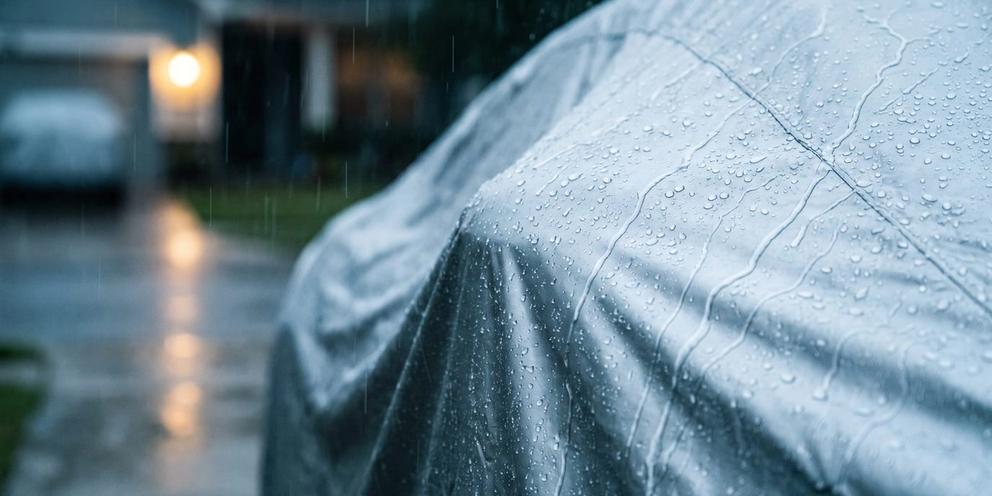
Moisture is the other half of the problem. Cheap covers are often made from thin vinyl or plastic-backed fabric that doesn't breathe. Rain gets in, condensation forms overnight, and none of it can evaporate because the material seals it in instead of letting it out. That trapped moisture sits against your paint and can lead to water spotting, staining, or oxidation over time. If you want the deeper mechanics of how weather interacts with a cover, our guide on using a car cover outdoors walks through it.
Then there's the construction itself. Budget covers often have raw seams, cheap grommets, or elastic hems that aren't finished well. Instead of distributing contact evenly across the body, they concentrate rubbing right on the hood edges, mirrors, and roofline, exactly the panels you'd least want scuffed up.
Add dust and grit into the mix, and things get worse fast. An ill-fitting cover leaves gaps where debris settles between the fabric and the paint. Once that happens, every gust of wind turns the cover into a sheet of sandpaper. This is a big part of why the honest answer to "can a cheap car cover actually damage my paint over time" is yes, particularly if you're parking outside in anything other than dead-calm, dry weather.
What Materials Are Most Likely to Cause Paint Damage?
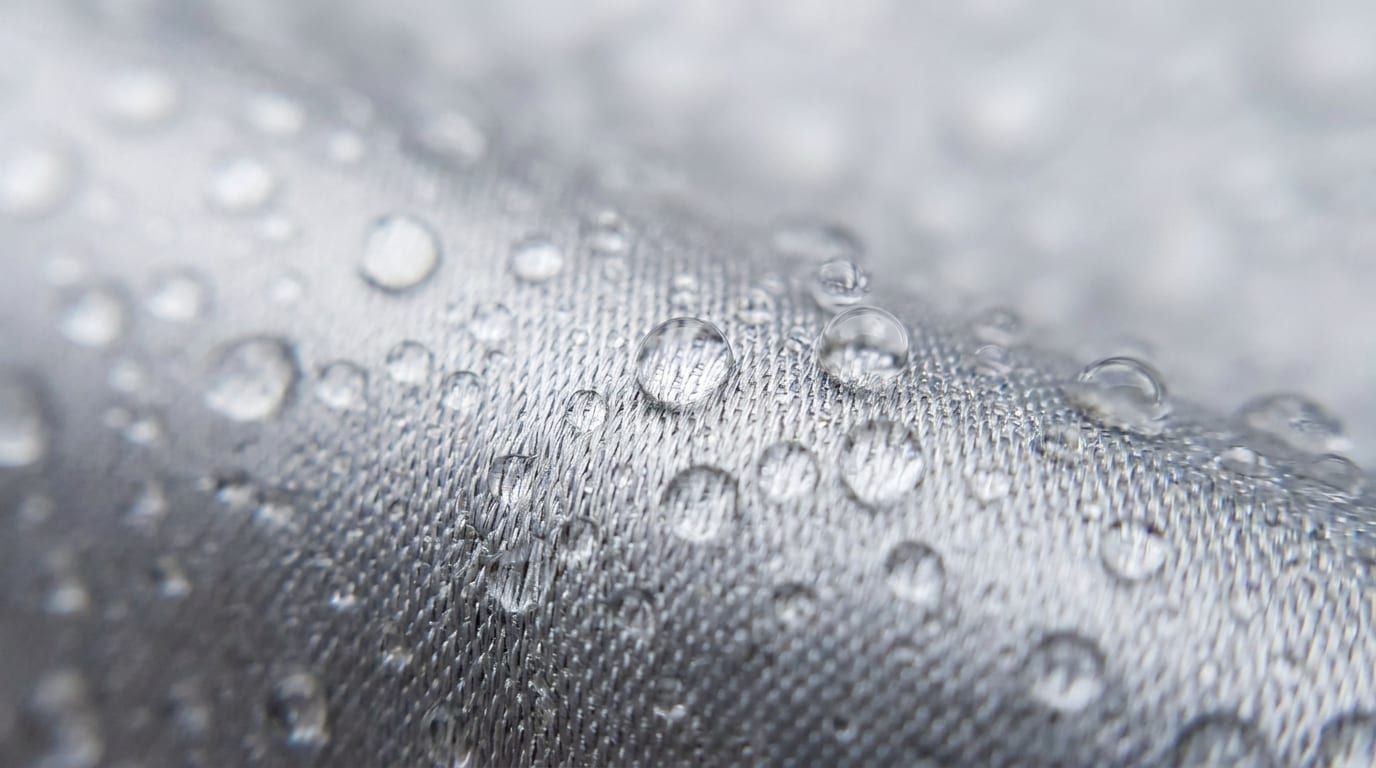
Not all cheap materials fail the same way, but a few show up again and again as the worst offenders.
Single-layer, unlined polyester or polypropylene is probably the most common culprit. Without a soft inner face, it's just rough fabric sitting directly against clear coat, and that's the recipe for swirl marks almost every time.
Non-breathable vinyl or plastic-coated fabric is the other big one. It looks waterproof, and technically it is, but that's the problem. It traps humidity and heat underneath instead of letting vapor escape, which sets the stage for moisture damage and even mildew that can etch into the clear coat if it sits long enough.
Covers with no UV-stabilizing treatment degrade faster than people expect, too. The fabric itself gets brittle and rougher with sun exposure, so a cover that started out reasonably soft can turn scratchier after a summer outside.
And loose, one-size-fits-most covers made from stiff material are their own category of problem. Extra fabric means extra flapping, and extra flapping means way more friction than a properly fitted cover would ever generate.
Cheap vs. Quality Car Covers: Side-by-Side Comparison
Interior Lining
- Cheap cover: None, or a rough unfinished interior surface
- Quality cover: Soft fleece or brushed lining that sits gently against paint
Breathability
- Cheap cover: Traps moisture and heat underneath
- Quality cover: Lets vapor escape so the surface stays dry
Fit
- Cheap cover: Universal, loose, prone to shifting
- Quality cover: Semi-custom or custom fit that hugs the body
UV Resistance
- Cheap cover: Fabric degrades and roughens with sun exposure
- Quality cover: UV-stabilized material that holds up over seasons
Wind Movement
- Cheap cover: Flaps frequently, especially at the hood and roofline
- Quality cover: Stays secured with straps or an elastic hem
Typical Paint Outcome
- Cheap cover: Swirl marks, water spotting, dulling over time
- Quality cover: Minimal surface contact, little to no cosmetic damage
If you're shopping with this in mind, it's worth looking at custom-fit car covers built specifically to eliminate the loose-fabric problem.
How Can You Tell If Your Cover Is Already Damaging Your Paint?
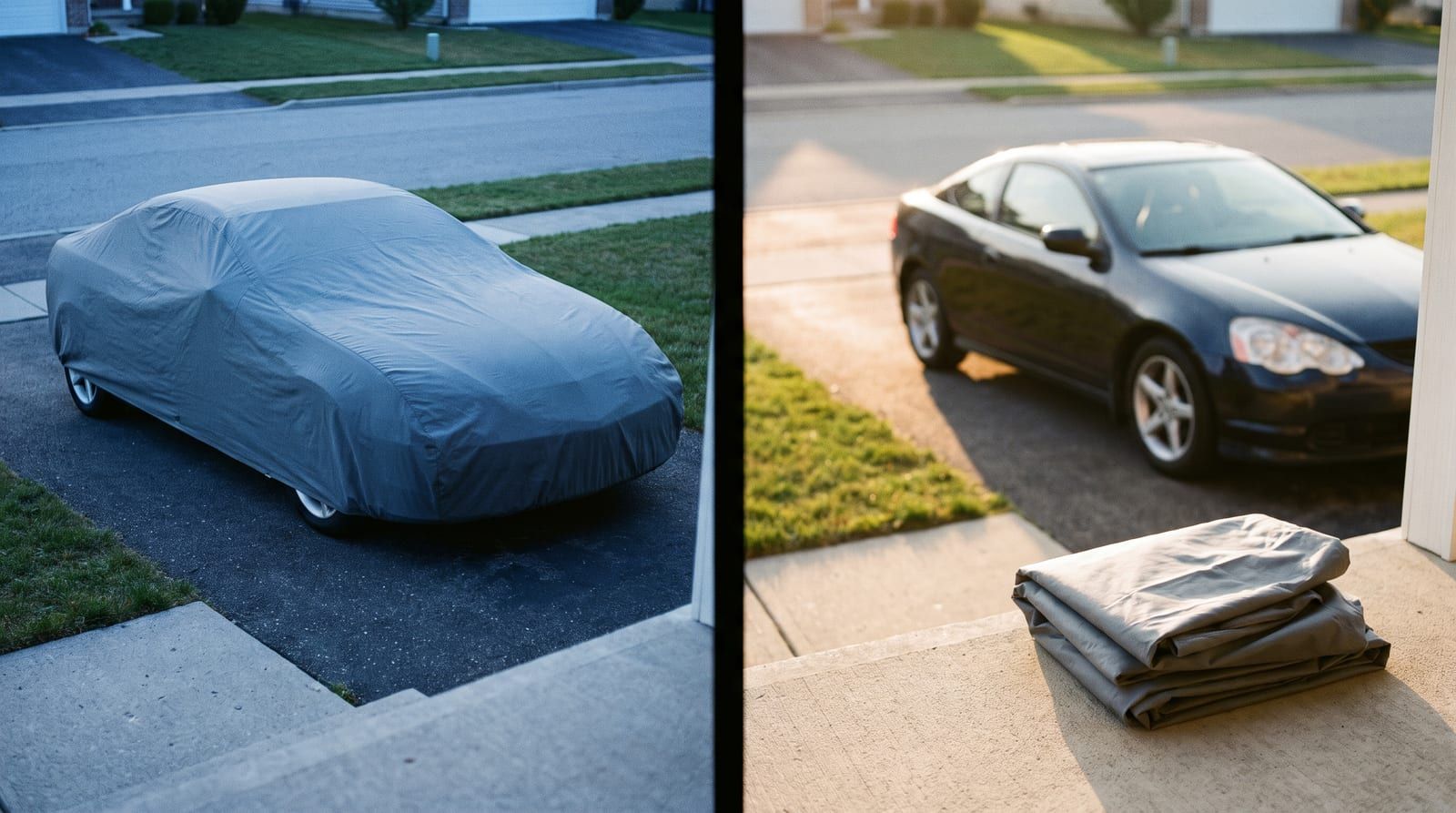
A few tells give it away pretty quickly once you know what to look for.
Start with the hood, roof, and trunk. Those panels take the most wind exposure, so they're where fine circular scratches or a light haze tend to show up first. Stand at an angle in direct sunlight and look for a web-like pattern in the clear coat.
Next, pull the cover off and check for dull or cloudy patches that weren't there before. That kind of clouding can point to trapped moisture or early oxidation starting just under the surface, not just surface dirt.
Also check the cover itself. Run your hand across the interior. If it feels rough, pilled, or the seams are fraying, that texture is transferring to your paint every time the wind moves it. A cover that feels abrasive to your skin is abrasive to your clear coat too.
One more sign: water stains or mineral spotting on a car that hasn't even been driven. If moisture is pooling under a cover that's supposed to be protecting the car, that's the fabric telling you it isn't breathing the way it should. For more on the cleaning side of this, this step-by-step guide to cleaning a car cover covers what to do once you spot buildup.
How Do You Prevent Cover-Related Paint Damage?
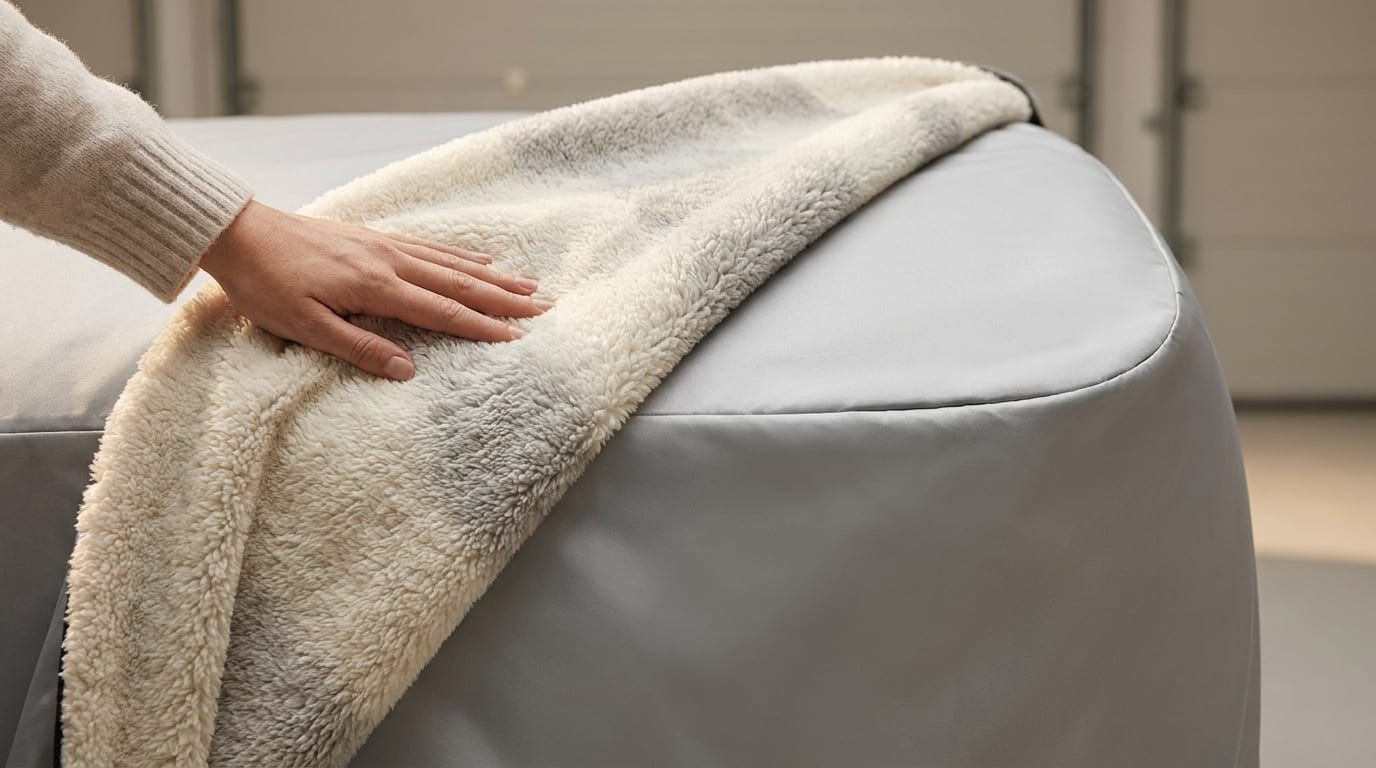
Most of the fix here is prevention, not cure.
Wash and fully dry your car before you cover it. Every time. Dirt and grit left underneath a cover will scratch the paint regardless of how nice the cover itself is. Our car paint care guide goes deeper into keeping the surface itself in good shape between washes.
Pick a cover with a soft inner lining and breathable, water-resistant fabric, not something fully sealed. Sealed materials trap condensation; breathable ones let it escape. If you're parking outside regularly, outdoor car covers built for that exposure are worth the upgrade over a generic universal one, and if rain is a bigger concern than sun, look at waterproof car covers designed to shed water without sealing it in against the paint.
Fit matters more than people think. A properly sized or custom cover has far less loose fabric to flap around, which cuts down on friction dramatically compared to a baggy universal fit.
Finally, secure it. A strap or cable/lock system keeps the cover from shifting against the paint overnight or during a storm. Our guide to installing gust straps is a quick read if you've never set one up. And when you're not using the cover, store it properly instead of balling it up, which our guide to storing a car cover covers in more detail.
FAQ: Cheap Car Covers and Paint Damage
Will any car cover scratch my paint?
Only if it lacks a soft lining or fits loosely enough to move around in the wind. A properly fitted, lined cover is built to sit still against the paint, not grind on it.
How quickly can a cheap cover cause visible damage?
Faster than most people assume. Swirl marks can start showing up within a few months of regular outdoor use if the cover flaps in the wind or traps grit underneath.
Is a tarp a cheaper alternative to a car cover?
No. Tarps are typically non-breathable and abrasive, and they tend to cause paint damage faster than even a low-end car cover. We break this down further in why a tarp isn't a substitute for a car cover.
Can a cheap cover cause rust, not just cosmetic damage?
It can contribute to it. Trapped moisture from a non-breathable cover promotes oxidation, and over long enough periods, that can lead to rust wherever the paint's already compromised.
Does washing my car before covering it really matter?
Yes, more than people expect. Dirt and grit left on the surface act like sandpaper between the paint and the cover the moment there's any movement.
Protect Your Paint With a Cover That's Actually Built For It
So, can a cheap car cover actually damage your paint over time? Yes, and usually it's the material, the lining, and the fit that decide whether a cover protects your car or slowly wears it down. A cover's whole job is to be a barrier, not another source of wear.
If you're shopping around, it's worth spending a few extra minutes comparing lining and fit instead of grabbing the first cheap option you see. And if you're already noticing swirl marks or water spotting, pair a better cover with a look at your regular washing and drying habits, since the two problems usually show up together. Feel free to explore more car care guides on the blog while you're at it.
Updated