


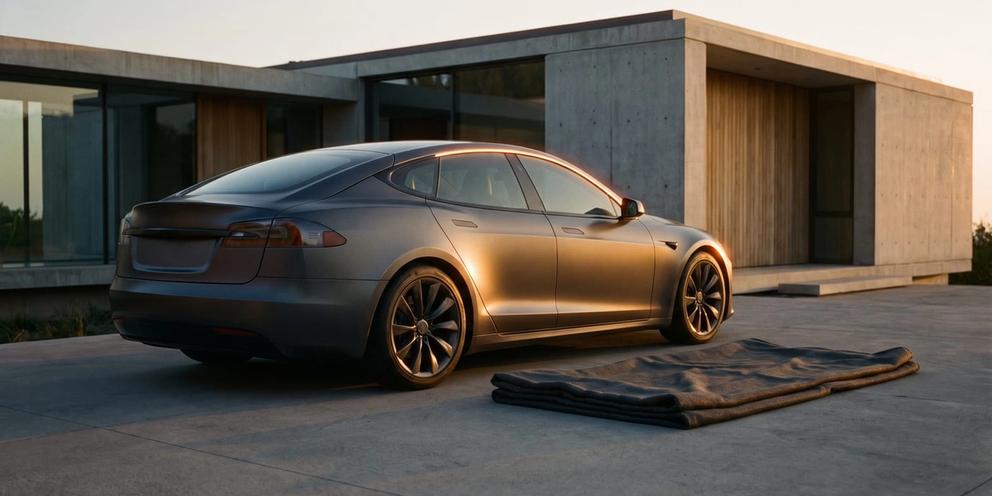
Car Cover Size Chart for Tesla Model 3: Find Your Exact Fit
The Right Size Class for a Tesla Model 3
Short answer: the Tesla Model 3 sits in the Large Sedan class, often labeled Group 3 or Size 3 on sizing charts, which covers vehicles running roughly 180 to 190 inches long. If you're shopping for a cover and just need the category, that's it. That's the whole chart most people are looking for.
This holds across Standard Range, Long Range, and Performance trims. The battery pack and motor layout change, the body panels don't, so the exterior footprint barely moves between trims. A cover sized for one Model 3 trim will fit the others in the same model year.
Here's where it gets slightly more nuanced. A size-class cover (what the industry calls semi-custom) is sold by bracket, meaning it's built to fit any sedan that falls inside a length and width range, not the Model 3 specifically. A custom-fit cover is patterned to one exact year and model. Both will technically "fit" a Model 3, but they fit differently, and the custom-fit car covers option tracks the body lines far more closely. More on that trade-off below.
One more wrinkle: the 2024+ "Highland" refresh changed the front fascia, taillights, and interior, but the overall length, width, and height barely budged. It stays in the same Large Sedan size class. If you want an exact match rather than a close one, though, the custom pattern for the refresh isn't interchangeable with the older body style.
Tesla Model 3 Car Cover Size Chart
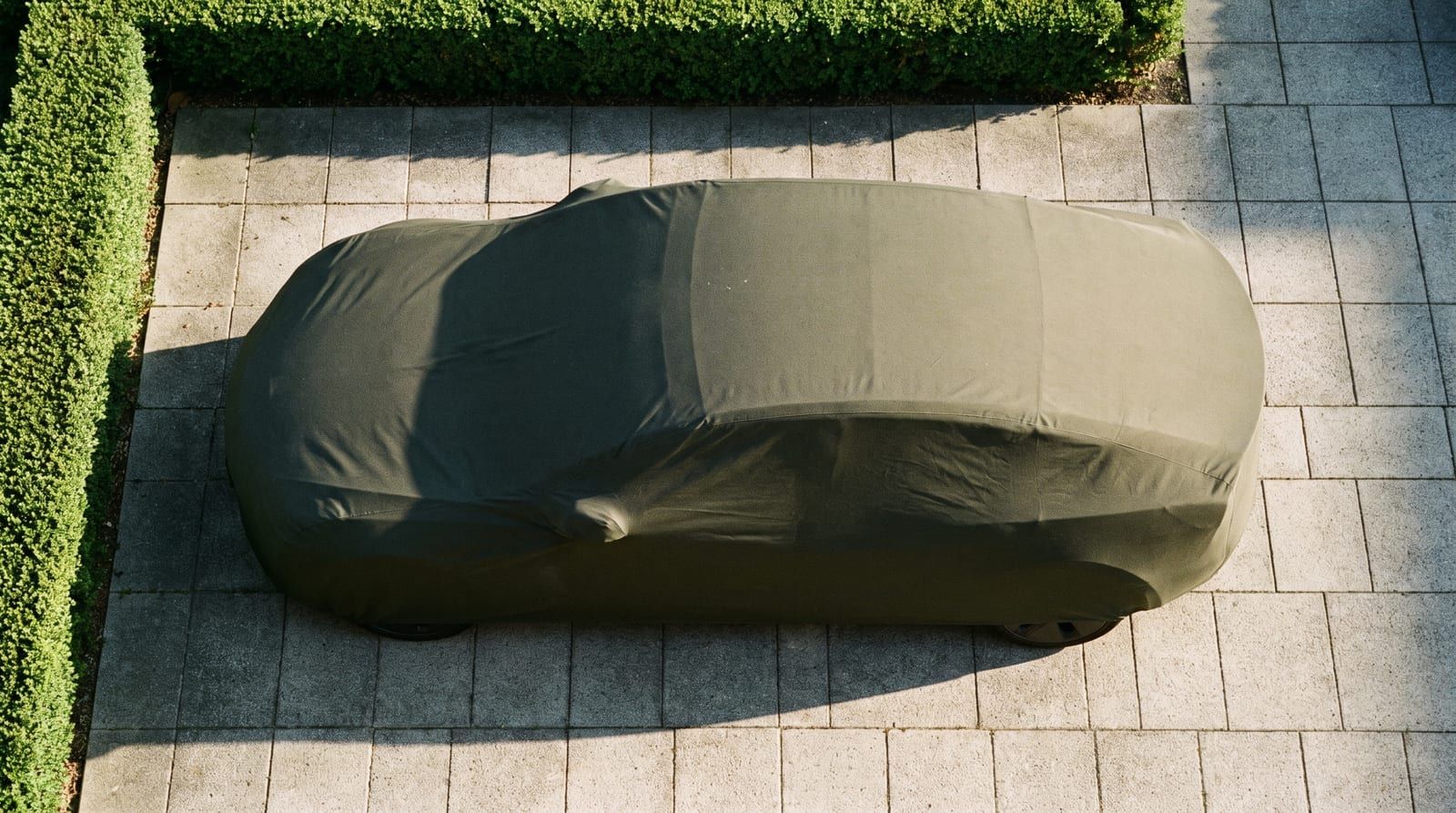
Here's the full car cover size chart for Tesla Model 3, broken out by the two body generations currently on the road.
| Model Year Range | Trim(s) | Length | Width | Height | Recommended Cover Size Class |
| 2017-2023 | Standard Range, Long Range, Performance | 184.8 in | 72.8 in | 56.8 in | Large Sedan / Group 3 |
| 2024+ (Highland refresh) | Standard Range, Long Range, Performance | 185.7 in | 72.8 in | 57.1 in | Large Sedan / Group 3 |
Both generations land in the same bracket, which is why a Group 3 semi-custom cover works across the lineup. But the numbers in that table are factory specs, and real-world fit shifts a little depending on how your mirrors fold and what wheels are on the car. A half inch here or there doesn't sound like much until it's the difference between a snug cover and one that's flapping at 60 mph on the highway.
If you already know your size class and just want to see what fits, the Tesla brand page has the exact Model 3 options laid out.
How to Measure Your Tesla Model 3 to Confirm Fit
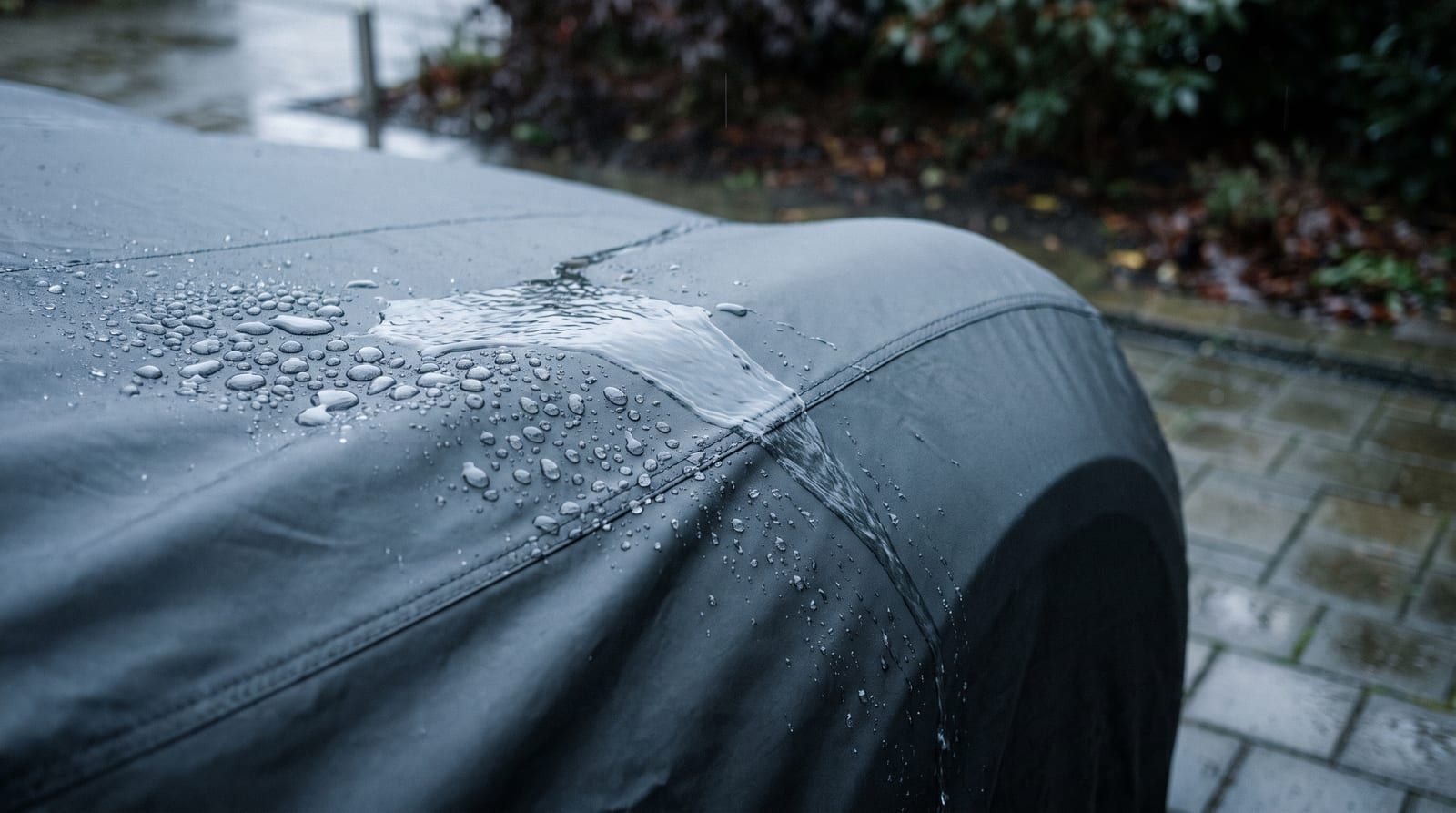
Charts get you close. Measuring your own car gets you exact. Three numbers matter here, and all three take about five minutes with a tape measure.
Length. Run the tape along the centerline of the car, bumper to bumper. Not diagonally, not along a fender curve, straight down the middle. Diagonal measurements read longer than the car actually is and will push you toward the wrong size.
Width. Fold the mirrors in first. Most covers, including semi-custom ones, are patterned assuming folded mirrors, so measuring with them extended will give you a number that doesn't match anything on the chart.
Height. Measure from the ground to the highest point of the roof. On a Model 3, that's usually the shark-fin antenna, not the roofline itself. If you've added a roof rack, measure to the top of that instead.
Once you've got your three numbers, hold them up against the chart above and the general sizing guide to confirm you're still inside the Large Sedan bracket. And take note of anything you've bolted on since the car left the factory, a spoiler, a roof box, bigger wheels. Any of those can nudge a stock Model 3 outside its default size class without you realizing it.
Custom-Fit vs. Semi-Custom Covers for the Model 3
This is the decision that actually matters once you know your size class.
A custom-fit cover is patterned to the Model 3's exact body, down to the low front fascia and the charge port location on the rear quarter panel. It hugs the car. No slack at the mirrors, no bunching over the rear glass taper, and you're not stuck guessing whether the "sedan" bracket on a generic chart accounts for Tesla's particularly low nose.
A semi-custom cover, by contrast, is built to the size-class bracket from the table above. It'll fit, but "fit" here means it's sized for a range of sedans, not sculpted around the Model 3's specific creases. Expect some give at the mirror pockets and a bit of extra material pooling near the rear glass, where the Model 3's fastback-style taper is sharper than a lot of other sedans in the same bracket.
Universal, one-size-fits-all covers are the loosest option of the three, and honestly the one I'd avoid for a Model 3 specifically. That low, curved roofline and minimal body creases give a loose cover nothing to grip, so it's more prone to wind flap and water pooling in the panel gaps than on a boxier sedan.
If you know your car falls in the Large Sedan class, comparing custom-fit options against semi-custom ones on the Tesla brand page is the fastest way to see what's actually built for this body shape.
Features That Matter for a Tesla Model 3 Cover
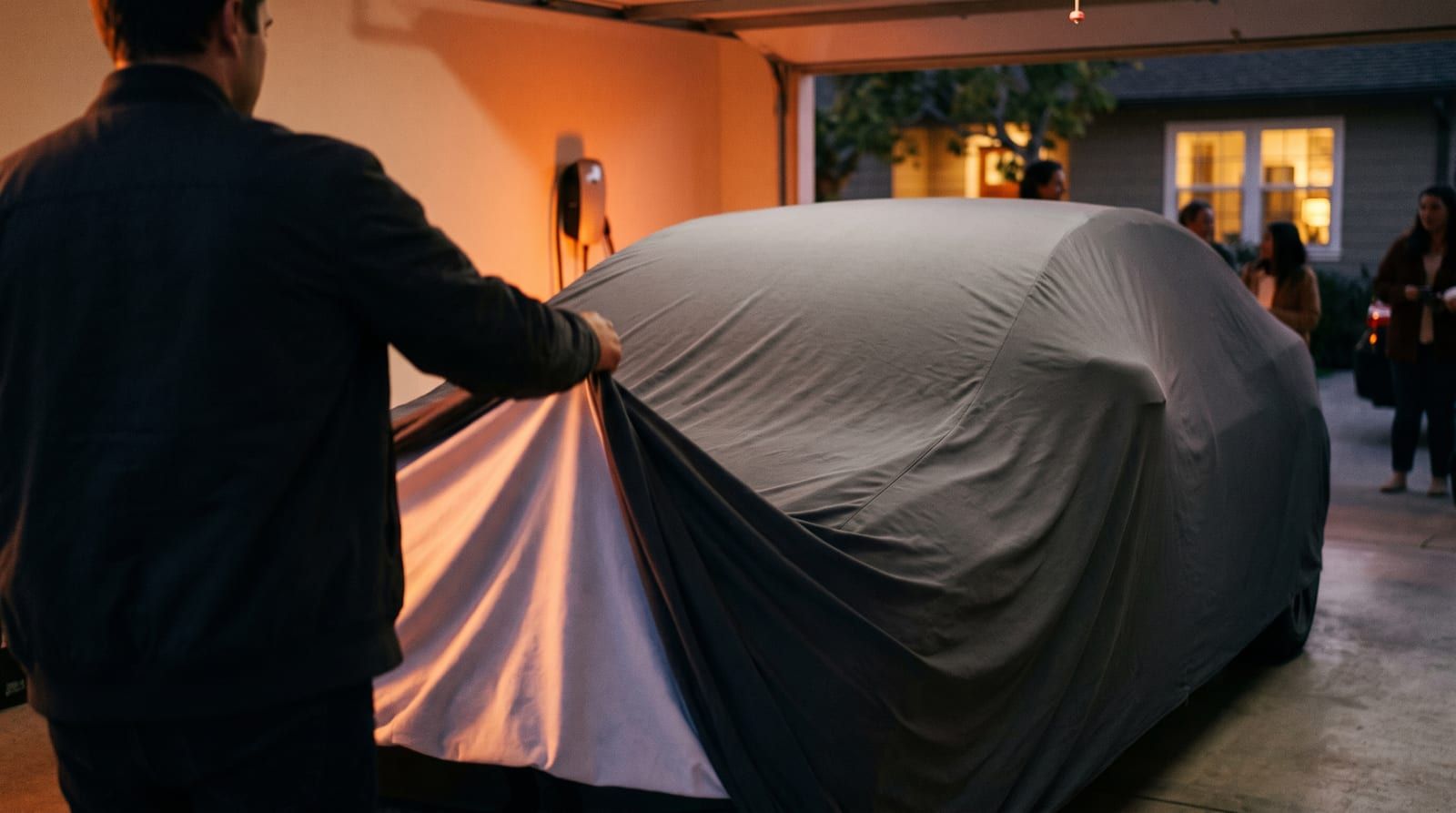
Size gets the cover on the car. These features determine whether it's actually worth having.
- Charging port access. Look for a flap or integrated cutout near the rear quarter panel so you're not pulling the whole cover off every time you plug in overnight.
- Antenna patch compatibility. The Model 3's shark-fin antenna sits right where a tight-fitting cover wants to sit flush, so check that the cover either clears it or supports an antenna patch add-on.
- Mirror pockets. Pockets cut for the Model 3's mirror housings keep the cover anchored at one of the main points where wind gets underneath and starts the flapping that eventually wears through fabric.
- Fabric type. Garage-kept car? A breathable indoor car cover is lighter and easier to handle. Parked outside? You want something from the waterproof car cover end of the lineup instead.
- Grommets and cable lock channels. If you're in a windy area, a built-in channel for a cable lock keeps the cover from working itself loose overnight. Here's how to install a cable lock if your cover supports one.
Common Sizing Mistakes to Avoid
A few patterns show up again and again when people get the wrong size:
- Buying anything labeled just "sedan" without checking the actual length range against a real chart. "Sedan" covers everything from a compact to a full-size, and the Model 3 sits toward the longer end.
- Forgetting that a roof rack, rear spoiler, or oversized wheel package can push a stock Model 3 outside its default size class, even though the factory specs say otherwise.
- Assuming a chart built for the Model S or Model Y applies here. They don't. Different body, different length, different roofline. A Model S cover will be too long; a Model Y cover is cut for an SUV's height, not a sedan's.
- Buying a cover sized for an older Model 3 and expecting it to match the 2024+ Highland refresh exactly. The size class is the same, but the custom pattern isn't, since the front fascia and taillight shapes changed.
Get the Right Cover for Your Model 3
Large Sedan, Group 3, is your starting point for just about any Model 3 on the road. But "starting point" is the key phrase. Exact fit still comes down to your specific year, trim, and anything you've added since it left the factory.
Grab a tape measure, run through the three measurements above, and cross-check them against the chart before you buy. If you want to browse what's actually built for this car, the Tesla cover page is a good next stop, and the broader sizing guide is there if you're cross-shopping another vehicle at the same time.
Once you've got the right cover, a little upkeep goes a long way. Proper installation and regular cleaning are what actually stretch its working life, size notwithstanding.
Updated