


Custom Fit Car Cover for Chevrolet Bolt: Custom vs. Universal Compared
The Chevrolet Bolt doesn't look like much else on the road, and that's exactly why a generic cover so often lets it down. Short overhangs, a steep hatchback rear, compact mirrors mounted low: it's a shape that "universal fit" sizing charts weren't built for. If you're shopping for a custom fit car cover for Chevrolet Bolt ownership actually demands, the difference between custom and universal isn't just marketing language. It changes how well your car stays dry, how the paint holds up, and whether you can charge in your driveway without wrestling the cover off every time.
As an EV, the Bolt also skips the heat cycling a gas engine gives off after a drive, the kind that helps dry out condensation trapped under a cover. Add a driver-side front charging port that needs regular access, and you've got a car where cover choice actually matters more than it would on, say, a Camry parked in the same driveway. This piece walks through what custom-fit and universal covers actually deliver for a Bolt EV or EUV, and helps you figure out which one is worth your money.
Why Cover Choice Matters More on a Bolt Than You'd Think
Most "compact car" covers are patterned off a rough average of sedans and small hatchbacks from a decade of production runs. The Bolt doesn't fit that average cleanly. Its short front and rear overhangs, steep rear glass, and low mirror placement mean a lot of universal covers either bunch up at the ends or pull tight across the roofline in a way that leaves gaps elsewhere.
Then there's the EV factor. A gas car's engine bay runs hot after driving and helps push moisture out from under a cover as it cools. The Bolt doesn't do that. Moisture that gets trapped under a loose or ill-fitting cover just sits there, against paint and trim, for longer. Over months of daily parking, that's the kind of thing that shows up later as water spots or clouded clear coat.
And if you charge at home, the port on the driver-side front fender needs to stay reachable. Pulling a whole cover off and back on every night to plug in gets old fast. This article isn't here to just define the terms "custom-fit" and "universal." It's here to help you decide which one actually makes sense for how you park and charge your Bolt.
What 'Custom Fit' Actually Means for a Chevrolet Bolt
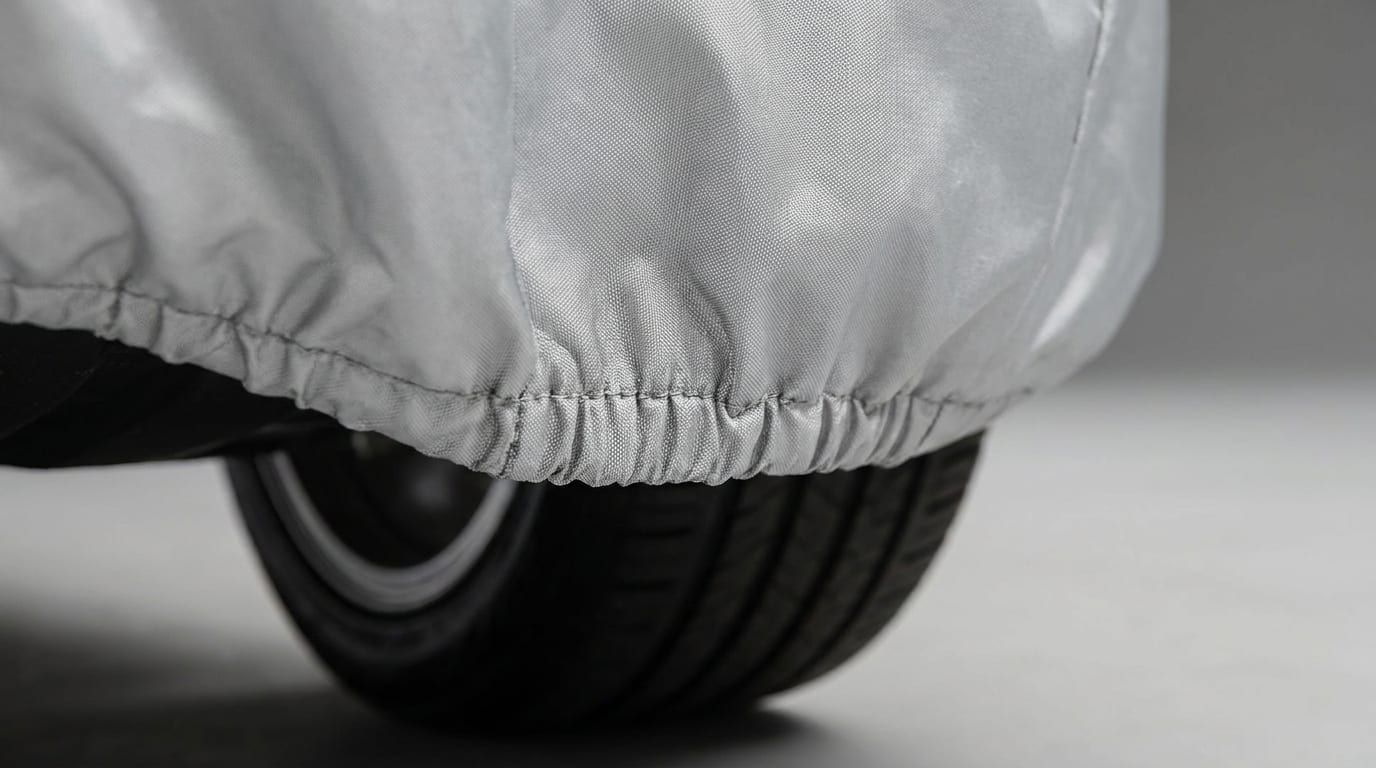
A true custom-fit cover is patterned to the Bolt's actual body lines, not a size bracket. That means mirror pockets sewn to sit exactly where the Bolt's mirrors are, a roofline curve that matches the hatchback's profile, and a hem length that follows the rocker panels instead of stopping short or dragging on the ground.
Here's the part that trips a lot of buyers up: the Bolt EV and Bolt EUV are not the same car. The EUV, introduced for the 2022 model year, rides on a longer wheelbase and has a stretched body compared to the standard EV. A cover patterned for one won't sit right on the other. Any listing you're considering needs to ask which one you drive, and if it doesn't, that's a sign it's not a real custom pattern.
Good custom-fit covers also come with elastic hems or grommets that let you cinch the bottom edge under the rocker panels. That matters more on a car like the Bolt than on something heavier. It's a light vehicle with a fairly upright profile, and a loose-hemmed cover catches wind more easily than it would on a longer, lower sedan. If you're comparing options, look at custom-fit car covers built specifically around your Chevrolet's dimensions rather than a generic hatchback template, and check the Chevrolet cover lineup to confirm your trim and year are listed.
What You Actually Get With a Universal Cover
Universal covers are sized by a rough bracket like "compact hatchback" or "small SUV," not by the Bolt's actual length, height, and width. That bracket has to accommodate a range of vehicles, so there's almost always extra material somewhere.
On a Bolt, that excess tends to pool at the front and rear overhangs since the car is shorter than a lot of the vehicles the bracket was designed around. That slack doesn't just sit there quietly. It flaps in wind, and repeated flapping against the same spots on the hood or hatch can wear through clear coat over time. It's slow damage, not dramatic, but it adds up.
Mirror pockets on universal covers are often an afterthought, loose or missing entirely. And there's no accommodation for a charging port. If you charge at home, that means peeling the whole cover back or off just to plug in, every single time. For a car you charge daily, that gets old.
The upside is price. Universal covers cost less upfront, and for someone who just wants light dust protection in a garage they rarely open, that tradeoff might be fine. But it's worth being honest about what you're giving up before treating it as the default choice for daily outdoor use.
Custom-Fit vs. Universal: Chevrolet Bolt Comparison

Fit precision
- Custom-fit: Pattern-matched to the Bolt EV or EUV's actual body lines, mirror placement, and rocker panel height
- Universal: Sized to a generic "compact hatchback" bracket, with slack built in to fit a range of vehicles
Wind performance
- Custom-fit: Cinched hems and fitted mirror pockets resist lifting in open driveways or exposed parking
- Universal: Loose fabric at the overhangs is prone to flapping, which can abrade paint over months of use
Weather sealing
- Custom-fit: Tailored seams close off the gaps where rain and snow tend to work their way in
- Universal: Looser overhangs leave openings where moisture can pool, especially around the hatch and front fascia
Charging port access
- Custom-fit: Some designs include a cutout or flap positioned near the Bolt's driver-side front charging port
- Universal: No accommodation at all, so the whole cover has to come off to plug in
Price
- Custom-fit: Higher upfront cost, reflecting the tailored pattern
- Universal: Lower price point, the main reason people choose it
Install and removal time
- Custom-fit: Snug fit takes a little more care to put on correctly, especially around mirrors
- Universal: Looser fit goes on and comes off faster, with less precision required
Longevity of protection
- Custom-fit: Less contact and chafing at mirrors, antenna, and rocker panels means less long-term wear
- Universal: Constant micro-movement against paint at contact points raises the risk of surface wear over time
If you're weighing these tradeoffs against other cover types generally, the best car cover comparison guide breaks down more of the material and fit factors that apply across vehicle types, not just the Bolt.
Which One Makes Sense for Your Bolt
If you park outside daily or charge from a driveway, the custom-fit cover earns its higher price. Charging port access alone saves you a daily hassle, and the wind stability matters if your spot isn't sheltered.
Garage storage changes the math some. If your Bolt sits indoors most of the time and the cover's job is really just dust and the occasional scratch from a bike leaning against it, a universal cover might genuinely be enough. Wind and rain aren't in play indoors, so the precision fit matters less.
Long-term storage is a different situation entirely. Seasonal layup, a long road trip, a deployment, anything where the car sits untouched for weeks: that's exactly when trapped moisture under a loose cover does the most damage. A custom fit reduces that risk by keeping the fabric off the paint and closing the gaps where water gets in.
If you're budget-conscious and planning to replace the cover within a year or two anyway, starting with universal is a reasonable call, as long as you go in knowing what you're trading off. Just don't expect it to hold up the same way over years of daily outdoor use.
How to Find and Size a Custom-Fit Cover for Your Bolt
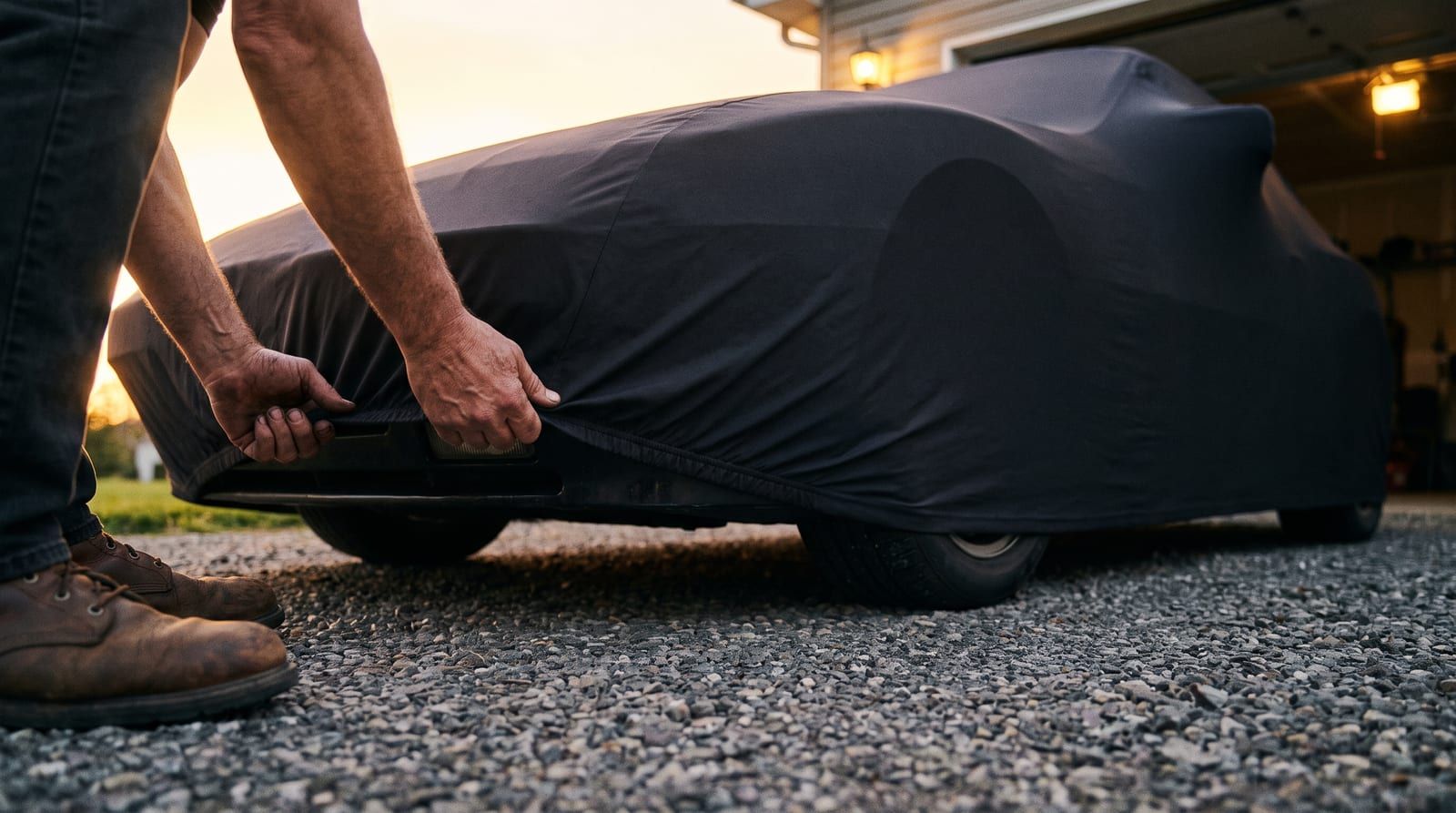
Start by confirming your exact model year and trim, EV or EUV. This isn't a minor detail. The two cars have different lengths and proportions, and a cover patterned for one won't drape correctly on the other. Check your registration or the trim badge if you're not sure.
From there, run your measurements against the cover's listed specs using a sizing guide before you buy. Fit issues are far easier to catch on paper than after the box arrives.
Material matters too, and it should match where the car actually lives. A soft indoor liner is fine for a garage-kept Bolt, but if it's parked outside through rain or snow, you want something built as a waterproof, UV-resistant outdoor cover instead. Using an indoor cover outside is one of the more common mistakes people make, and it shows up fast as mildew or sun-faded fabric.
Warranty coverage is worth checking before you spend more on a custom fit. A cover backed by a real warranty is a stronger bet for the extra cost than one with no coverage at all. If you're not sure what you need yet, running your Bolt through a cover finder tool is a faster way to land on the right listing than scrolling through generic search results.
Bottom Line and Next Step
The tradeoff really comes down to this: a custom-fit cover costs more, but it matches the Bolt's actual shape and keeps the charging port workable day to day. A universal cover costs less upfront, but the loose fit and lack of port access catch up with you over time, especially outdoors.
If you park outside or charge from home regularly, the custom fit is the one that holds up. If your Bolt lives in a garage and just needs light protection, universal might do the job fine for now.
Either way, it's worth taking a few minutes to look through your options before deciding, and if you're new to fitted covers, a quick read through some installation tips makes the first fit a lot less fiddly. Worth bookmarking for whenever you're ready to make the switch.
Updated