


Custom-Fit vs. Universal Car Cover for Ford Mustang: Which One Actually Fits?
Why Mustang Owners Keep Asking This Question
Most Mustang owners don't start out looking for a custom fit car cover for Ford Mustang. They start out buying whatever's cheapest at the auto parts store, and it works fine for about a month. Then a windy night comes through, the cover flaps against the hood all night, and by morning there's a fine web of scratches in the clear coat where the fabric rubbed against the paint. Or water pools on the trunk lid because the cover never actually sealed around the spoiler. That's usually when the search for something better begins.
Here's the thing about a Mustang: it's not shaped like a sedan. The nose sits low, the haunches flare wide over the rear wheels, and depending on the trim, you've got a spoiler, a splitter, or both to work around. A boxier car forgives a loose cover. A Mustang doesn't.
This article lays out the real difference between custom-fit and universal covers for a Mustang, generation by generation, so you're not guessing at the counter or gambling twenty bucks on something that ends up in the garbage in a season.
What 'Custom-Fit' and 'Universal' Actually Mean for a Mustang
Custom-fit means the cover is patterned to the Mustang's actual dimensions, not a rough estimate. That includes mirror pockets shaped for the Mustang's specific mirror housings, antenna cutouts where needed, and enough allowance built into the rear panel for a factory spoiler or wing. It's made for the coupe, the convertible, or the fastback body, not a generic "sports car" shape.
Universal covers, sometimes marketed as semi-custom, work off a length range instead. You'll see something like "fits vehicles 180 to 190 inches." That range might cover a Mustang, sure, but it also covers a Camry, a Civic hatchback, and a dozen other cars with completely different proportions. None of those account for the Mustang's low front fascia or the sharp character lines running down a GT's body.
And Mustangs aren't one shape across the board. An S197 (2005 to 2014), an S550 (2015 to 2023), and an S650 (2024 and up) each have different lengths, different spoiler designs, and different mirror shapes. A universal cover sized to span all three generations of Mustang, plus a bunch of unrelated cars, is going to fit exactly none of them well. If you want a cover that actually respects those differences, start from the Ford covers page and work down to your specific model year instead of guessing off a size chart.
Custom-Fit vs. Universal: Mustang-Specific Comparison
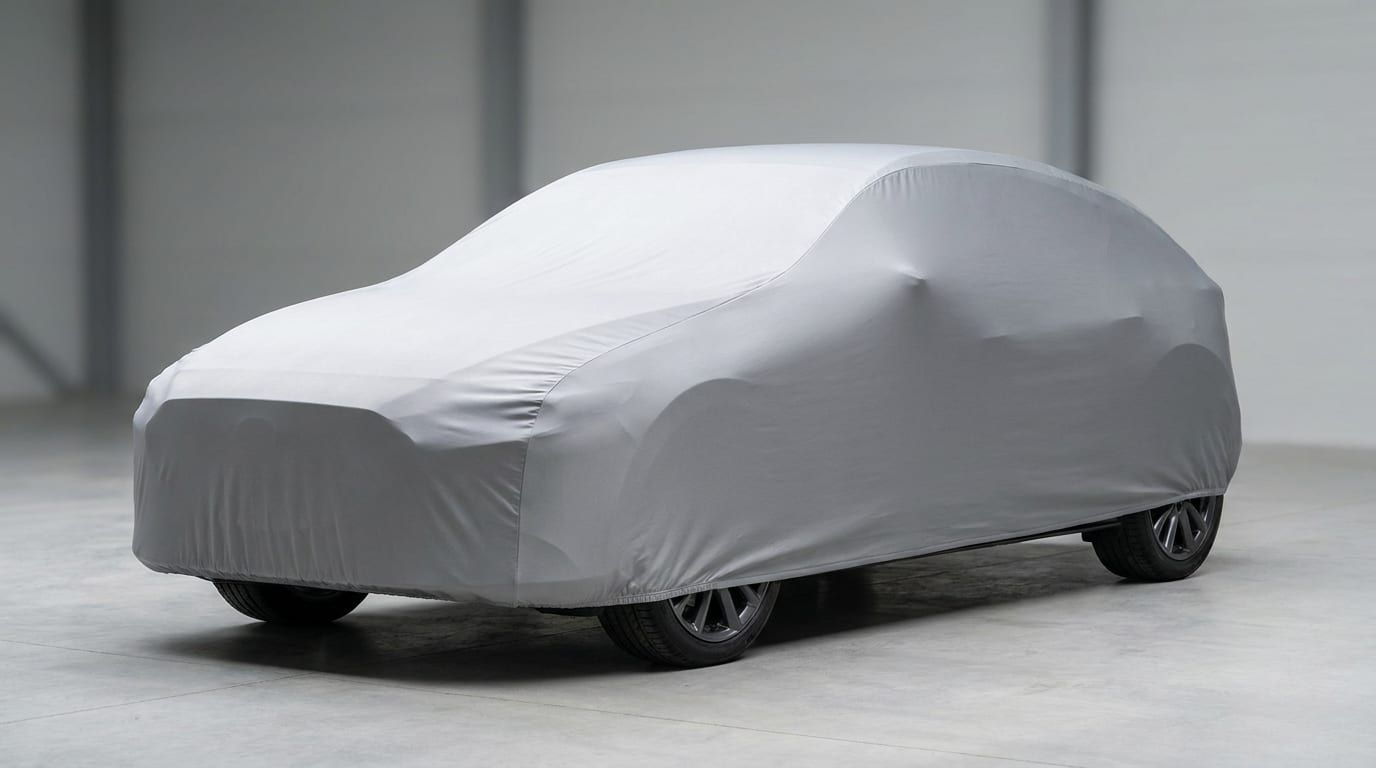
Line these up side by side and the gap isn't subtle.
Fit precision
- Custom-fit: Follows the Mustang's body lines panel by panel, hugging the hood, roofline, and rear fascia the way the car was designed
- Universal: Drapes like a tent, with slack pooling at the hood and trunk where the car's curves don't match the generic pattern
Coupe vs. convertible handling
- Custom-fit: Built with the convertible's raised soft-top profile and roll hoops in mind, so it seats correctly whether the top is up or down
- Universal: Either gaps over the raised top, leaving room for wind and rain to get underneath, or stretches too tight and strains at the seams
Mirror and antenna cutouts
- Custom-fit: Comes with molded mirror pockets sized for the Mustang's actual mirrors, plus antenna allowance where the trim calls for it
- Universal: Usually requires cutting a hole yourself or just working around the mirrors, which leaves gaps for water and dirt
Wind and storm security
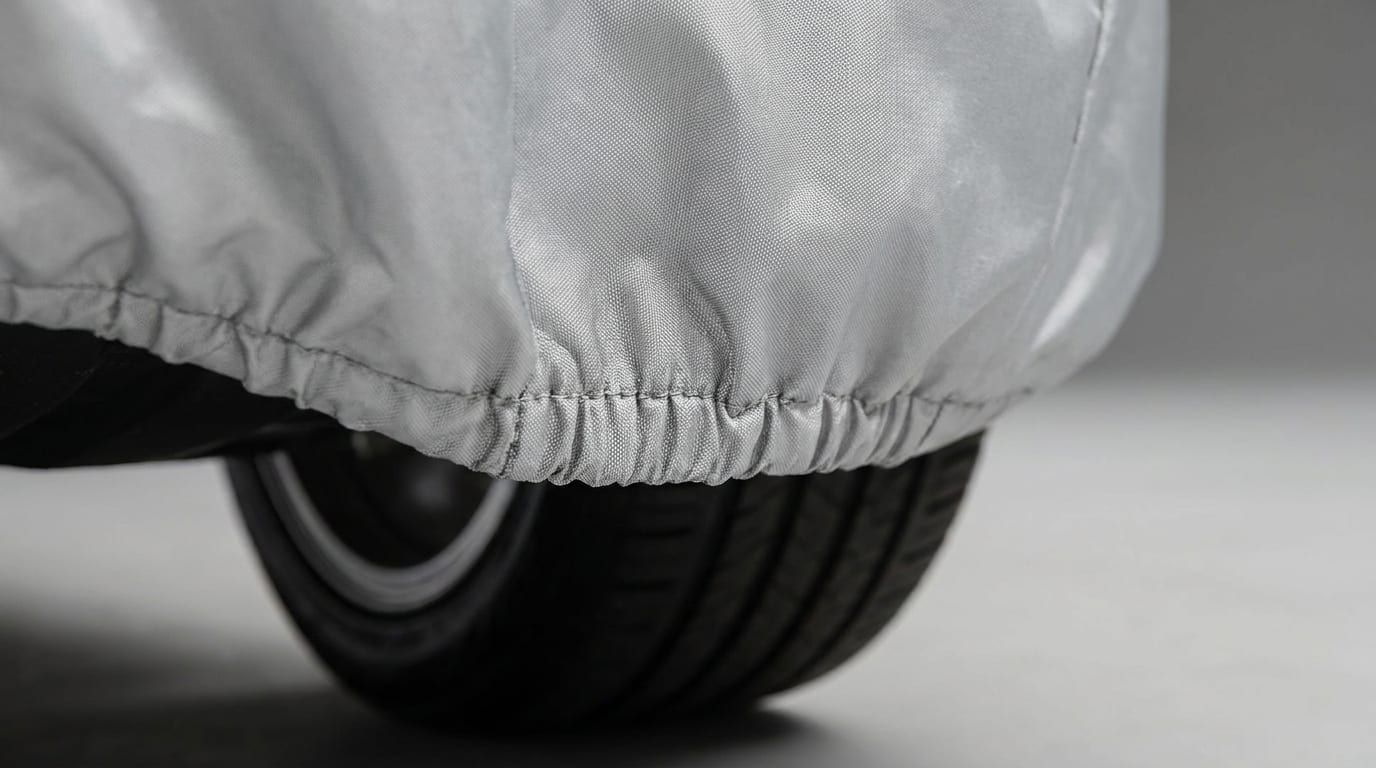
- Custom-fit: A snug hem means less flapping and a lower chance the cover tears loose or blows off in a storm
- Universal: The looser drape catches wind like a sail, and a strong gust can peel it right off the car
Paint-safe material tension
- Custom-fit: Fabric sits close to the body with minimal excess, so there's nothing loose to rub against the clear coat
- Universal: Excess fabric shifts with the wind and rubs the same spots over and over, and that friction adds up to fine scratching over months of use
Price
- Custom-fit: Costs more upfront, but you're paying for precision, included accessories like mirror pockets and antenna patches, and a cover that doesn't need replacing every season
- Universal: Cheaper at checkout, but the fit compromises tend to shorten its useful life
Installation time
- Custom-fit: Goes on in one motion since it's built to drape correctly from the start
- Universal: Often needs readjusting, tucking, and strap fiddling every single time you put it on
If you're storing the car outdoors for any real stretch of time, a waterproof car cover that's also cut to the Mustang's shape is doing two jobs at once: keeping water out and keeping the fabric from becoming an abrasive.
Which Mustang Owners Should Choose Custom-Fit
Not every Mustang owner needs to spend the extra money. But a few situations make custom-fit the obvious call, not just the nicer option.
If the car lives outside, facing sun, rain, or snow on a regular basis, you need a seal that actually holds. A loose universal cover lets moisture creep in at the edges, and once that happens, you're trapping humidity against the paint instead of protecting it. Check the difference between outdoor car covers and indoor-rated ones before you buy, because the material needs differ a lot depending on where the car sleeps.
GT, Mach 1, and Shelby GT350/GT500 trims add another wrinkle: body kits. A splitter up front and a wing out back mean a universal cover either gaps around those parts or stretches tight enough to strain the seams. If you're not sure what separates a GT from a base Mustang in the first place, this breakdown of what GT means on a Mustang covers it, but the short version for cover shopping is: more body kit, more reason to go custom.
Convertible owners have their own reason. The folded top changes the car's roofline height, and a flat coupe-style drape just doesn't sit right over it. A cover shaped for that profile is doing a job a universal cover was never built for.
And if you're parking the car for the winter, or heading out for a deployment, or just running a seasonal driving schedule, you're going to put that cover on and take it off a lot. A cover that seats correctly every single time, without wrestling it into place, saves real hassle over months of repeated use. Pair it with gust strap wind straps for windy regions, and you've got a setup that stays put.
When a Universal Cover Might Be Good Enough
There's a narrow case for universal covers, and it's worth being straight about it instead of pretending there isn't one.
If you're throwing a cover on for a few hours because rain rolled in unexpectedly, and the car goes back in the garage tomorrow, a universal cover will survive that. It's not being asked to hold a seal against weeks of weather or fend off wind gusts night after night.
Budget matters too. Some buyers know the tradeoff going in, accept the looser fit and the extra five minutes of tucking and adjusting, and decide the lower price is worth it for occasional use.
But let's be direct about it: if your Mustang sits outside on a regular basis, a universal cover is not the better long-term choice. It's a stopgap. It'll get you through a few uses before the flapping, the gapping, and the friction start costing you more in paint damage and replacement covers than a proper custom-fit would have cost in the first place.
What to Check Before Buying a Custom-Fit Mustang Cover
Once you've decided custom-fit is the way to go, a few details separate a good purchase from a frustrating one.
Confirm your exact generation and trim, since patterns are model-year specific. S197, S550, and S650 Mustangs are not interchangeable when it comes to cover fit, and coupe versus convertible changes the pattern too. If you're not sure which bucket your car falls into, the car cover sizing guide walks through how to check.
Match the cover to where it'll actually live. A car kept in a closed garage doesn't need the same heavy-duty waterproofing as one parked on the street. Indoor car covers trade weatherproofing for lighter, dust-focused material, and that's the right call if your Mustang never sees rain.
Look for included accessories that matter specifically for a Mustang, like antenna patch compatibility if your trim has one, and a cable and lock option if the car parks somewhere public or even just in an open driveway. A cover that can be locked down is a cover that's still there in the morning.
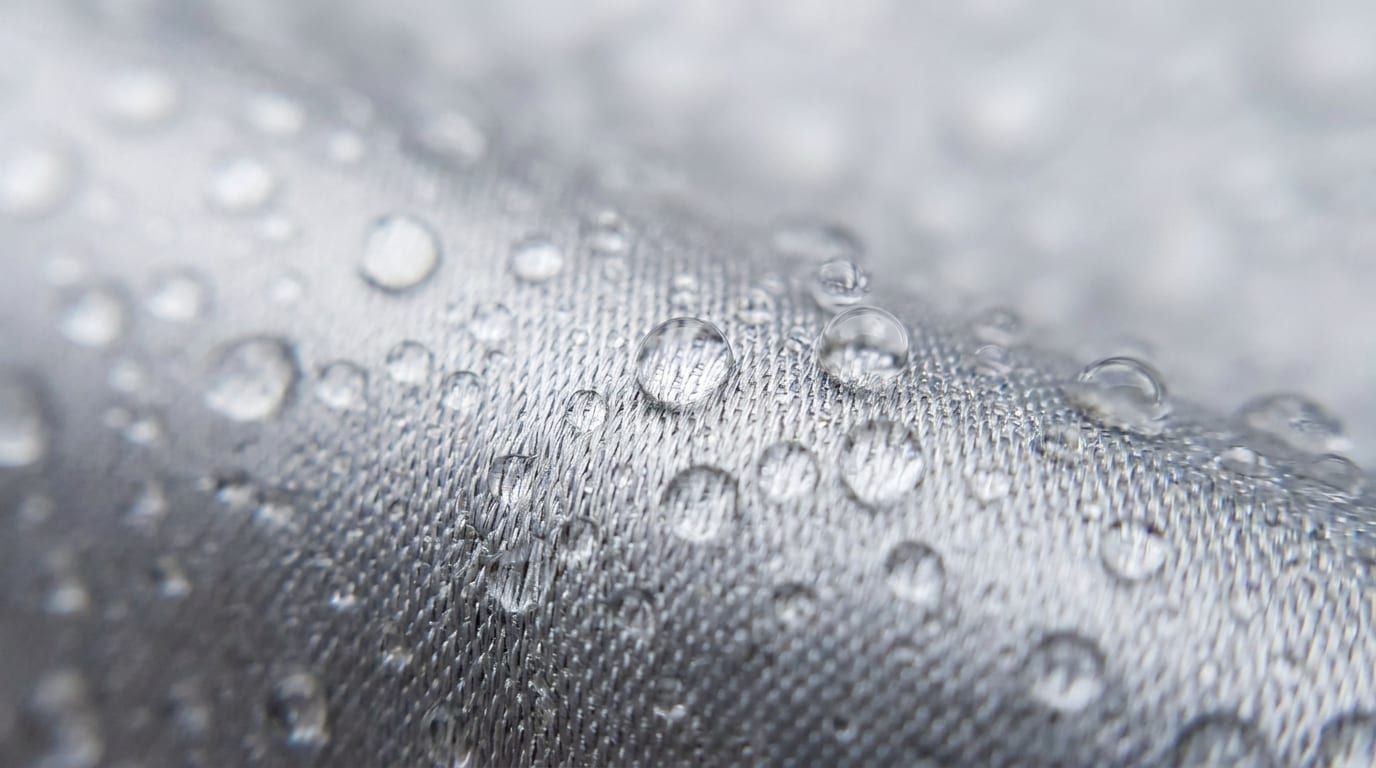
And check the waterproofing level against your actual climate. Coastal or rainy regions need genuinely waterproof material, not something that's just water-resistant and calls it a day. If a cover doesn't fit quite right out of the box, look into fit modifications before assuming you need to return it.
Bottom Line: Custom-Fit Wins for Most Mustang Owners
If your Mustang lives outside, or it's wearing a spoiler or body kit, the decision isn't really close. Custom-fit is the practical choice. Universal is a stopgap you'll likely replace within a season anyway, and by then you've paid for two covers instead of one good one.
The smarter move is skipping the guesswork entirely. Pick your exact Mustang generation and trim and get a cover patterned to fit it, backed by a lifetime warranty on car covers so you're not rolling the dice on quality either. Once it arrives, installation takes minutes, not a wrestling match.
If you're still weighing your options, poke around the rest of our car cover guides or subscribe for more posts like this one. Shop Ford covers by model, not by a generic size chart, and you won't be back here in three months wondering why your last cover already looks worn out.
Updated