


Custom-Fit vs. Universal Car Cover for Your Chevrolet Malibu: Which One Actually Fits?
Custom-Fit or Universal: The Quick Answer for Malibu Owners
If you want your Malibu actually protected from weather, not just draped in something that sheds rain, get a custom fit car cover for Chevrolet Malibu instead of a universal one. That's the short version. The longer version is worth reading if you're about to spend money on either option.
Universal covers are built to loosely fit dozens of unrelated sedan shapes at once. One "mid-size sedan" cover might be sold for a Malibu, a Camry, and a Sonata, none of which share the same length, roofline, or mirror placement. A custom fit car cover for Chevrolet Malibu, on the other hand, is patterned specifically to your car's dimensions. Same trunk lip, same low roofline, same mirror pockets.
The rest of this article breaks the two down side by side so you can confirm which one actually fits your situation, whether that's a daily driver parked on the street, a Malibu tucked away for winter, or a car that lives outdoors year-round.
Custom-Fit vs. Universal Cover for the Chevy Malibu: Side-by-Side Comparison
Here's how the two options stack up on the things that actually matter.
Fit Accuracy
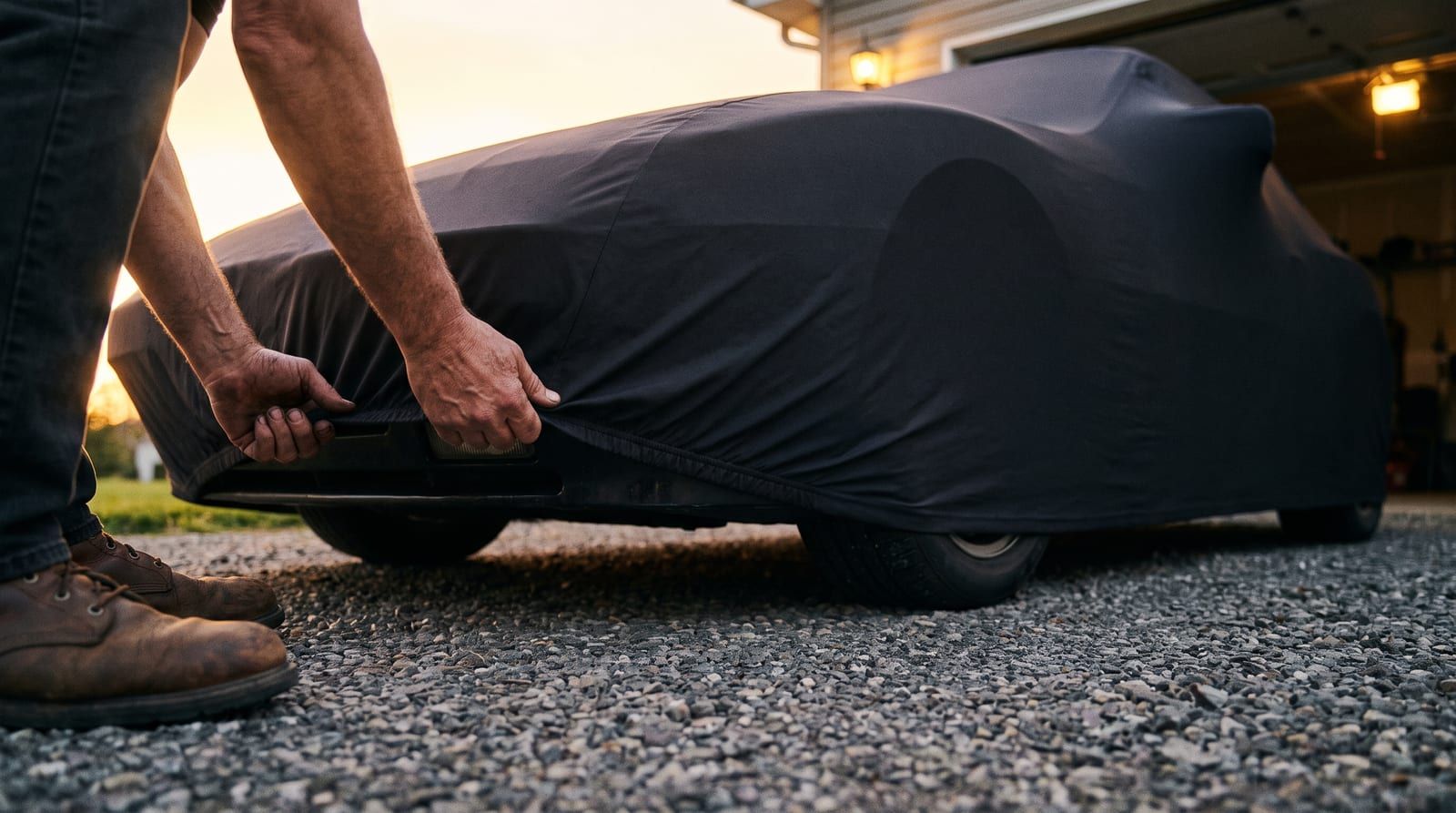
- Custom-fit: Patterned to the Malibu's specific length, low roofline, and trunk lip
- Universal: Sized in broad small/medium/large sedan ranges, leaving slack fabric wherever the Malibu's shape doesn't match the generic pattern
Wind Performance
- Custom-fit: Snug contour resists flapping and stays put in open driveways or lots near traffic
- Universal: Excess material catches wind, works loose over time, and can rub against paint
Mirror and Antenna Cutouts
- Custom-fit: Built-in mirror pockets matched to where the Malibu's mirrors actually sit
- Universal: Often skips cutouts entirely, or places them in the wrong spot for this body style
Coverage of Body Features
- Custom-fit: Accounts for the Malibu's character lines and rear spoiler on trims that have one
- Universal: Generalizes the shape, which usually leaves gaps at the front and rear bumpers
Price
- Custom-fit: Higher upfront cost, but you're not buying extra straps, clips, or a second cover after the first one doesn't work
- Universal: Cheaper at checkout, though the savings shrink fast once you're patching fit problems
Look and Feel
- Custom-fit: Sits close to the body, tailored appearance
- Universal: Visibly bags at the hood and trunk, sometimes enough that it looks like it belongs to a different car
If you're still weighing the two, a best car cover comparison is a decent way to see how fit-specific options stack up against generic ones across more than just the Malibu. And if sizing terminology is confusing you, what size car cover for my vehicle walks through how sizing actually works before you buy.
Why the Malibu's Body Style Makes Fit Especially Important
The Malibu has a low-profile sedan silhouette. Sleek roofline, sloped rear glass, not much room for error. Drop a loose universal cover over that shape and you'll usually see it sag right in the dip between the roofline and the trunk. That sag becomes a water trap. Rain doesn't run off, it pools.
It's also worth remembering that not every Malibu is built the same way. Older, boxier generations have a different roof pitch and trunk profile than the more sculpted body lines Chevy introduced in later redesigns. A universal "mid-size sedan" cover has to average across all of that, plus every competitor's sedan too. It's not really sized for any single car. It's sized for none of them.
There's a lower-body issue too. A cover that rides too high off the ground, which is common with universal fit since it isn't cut to the Malibu's actual proportions, leaves the rocker panels and lower doors exposed. That's exactly where road spray, grime, and winter salt hit hardest. If you're storing outdoors, an outdoor car cover built for full lower-body coverage matters more than most people expect going in.
What You Risk With a Universal Cover on a Malibu
A loose cover isn't just an aesthetic problem. It's a slow-motion way to damage the car it's supposed to protect.
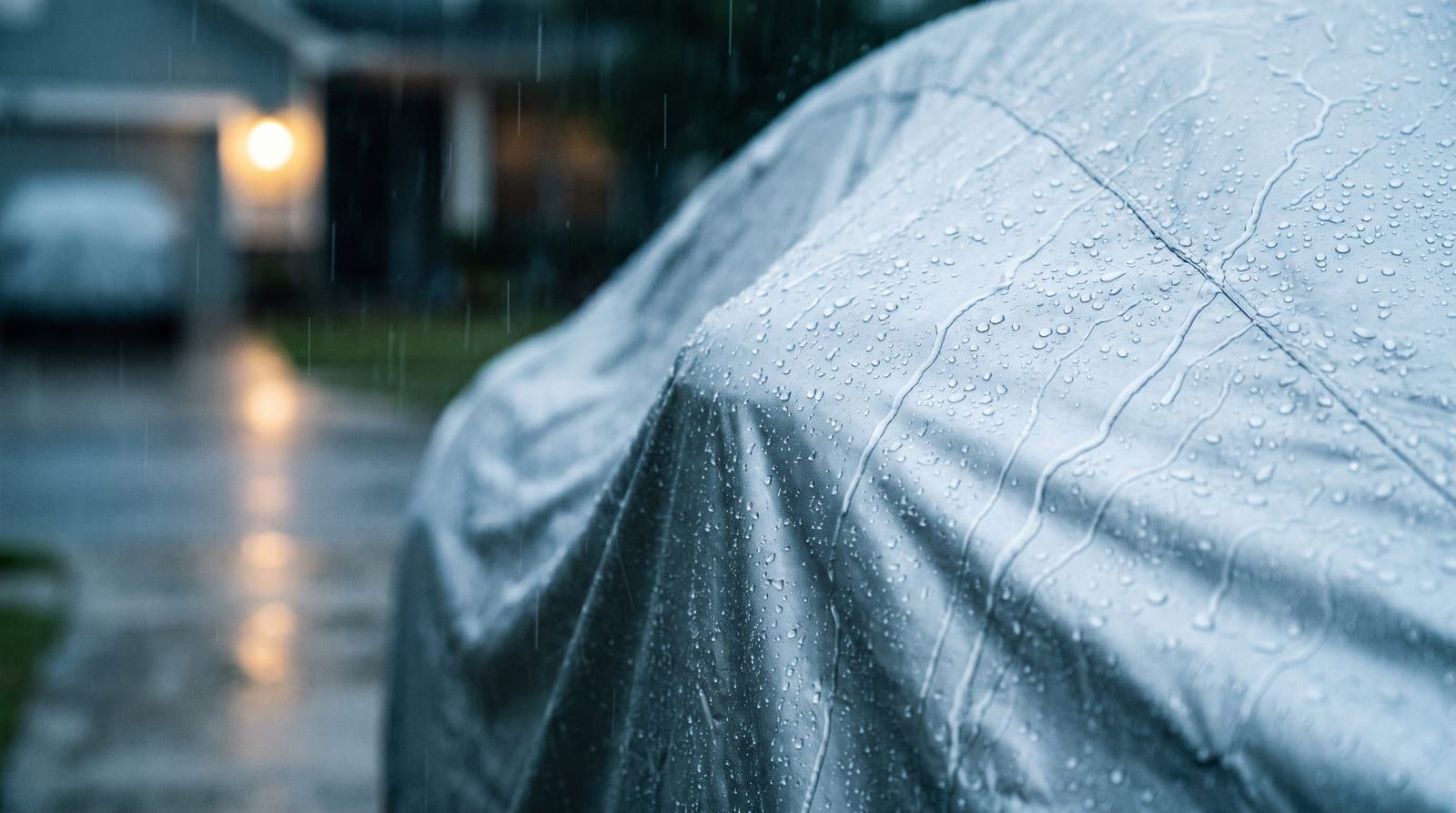
Wind gets under slack fabric and whips it against the hood and trunk. Do that enough times and you'll see fine scratches in the clear coat, especially if there's grit riding along with the wind. Water pooling at that roofline seam doesn't just sit there either. It seeps, and trapped moisture under a cover is a recipe for mildew and watermarks that don't come out easily.
Then there are the gaps. Mirrors, wheel wells, anywhere the universal pattern doesn't quite reach. Rain gets in, dust gets in, UV rays hit unprotected panels right through the openings. None of that shows up on day one. It shows up six months later as faded paint or a musty smell you can't place.
And honestly, the daily hassle adds up. A cover that needs re-tucking every time you park, or extra bungee cords just to keep it from blowing off, turns a 30-second task into a five-minute chore. A properly waterproof car cover built for the Malibu's actual shape skips that entirely, because it's not fighting the car's contours to begin with.
What a True Custom-Fit Malibu Cover Should Include
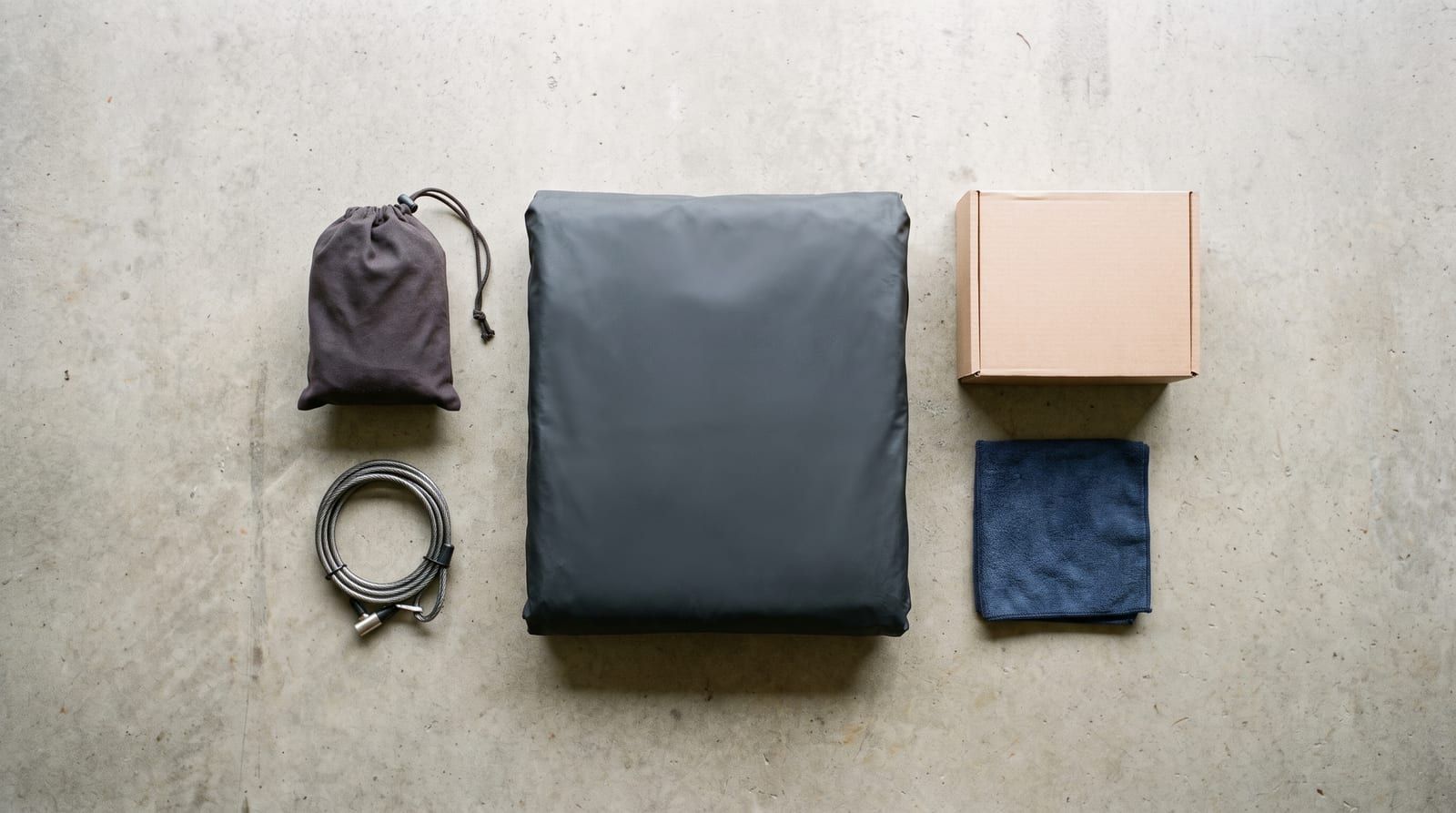
Not every cover labeled "custom fit" earns the title. Here's what should actually be in the box.
First, a Malibu-specific pattern matched to your exact model year. Length, mirror position, roofline, all of it. Second, weatherproofing options based on where the car actually lives. An indoor car cover in a soft, breathable fabric makes sense for a garage. A waterproof, UV-resistant shell makes more sense if the Malibu sits outside. If hailstorms are a regular concern where you live, it's worth looking at hail car cover options built with heavier padding, since a standard cover won't do much against that.
Third, elastic or cinch-hem finishing at the bottom edge. This is the detail that actually keeps a cover snug around the rocker panels instead of flapping loose at the first gust. And fourth, the small stuff that's easy to overlook until you need it: a storage bag so the cover doesn't just get balled up in the trunk, plus grommet points or an antenna patch for a cable lock or tie-down.
How to Pick the Right Custom-Fit Cover for Your Malibu
Start with where the car actually parks. Driveway, street, open lot? Go with a waterproof outdoor cover. Garage most of the time? A lighter indoor option will do the job without overkill.
Next, confirm the listing matches your exact Malibu model year. Sedan body changes across generations are real, and a cover built for a 2016 won't sit right on a 2023. This is where checking the Chevrolet cover lineup or running your Malibu through a find your car cover tool saves you from guessing.
Think about your climate too. Windy area, open parking? Add wind straps so the cover doesn't work itself loose overnight. Storm-prone region? Factor in hail protection. Street parking in a busy neighborhood? A cable lock is cheap insurance against someone lifting the cover off entirely.
Last thing, check the warranty before you buy, not after. A lifetime warranty on car covers means a fit issue or material defect doesn't turn into money you just eat.
Bottom Line: Get the Cover Built for Your Malibu
Universal covers save you a little cash upfront. But that savings gets eaten up fast once you're dealing with paint scuffs, water intrusion, or a cover that never quite sits right no matter how much you tug at it. For a car with the Malibu's specific roofline and proportions, generic sizing just isn't built to keep up.
If you're shopping now, browse Chevrolet-specific cover options and run your exact model year through a sizing guide before you buy. It takes a few minutes and it's the difference between a cover that works and one you're fighting with every time it rains.
And if you're not ready to buy yet, it's worth poking around our other car cover guides while you weigh your options, there's more to know about fit, materials, and storage conditions than most people realize going in.
Updated