


Indoor Car Cover for Hyundai Elantra: Soft-Lining Picks for Garage-Kept Protection
A garage keeps the rain off. It blocks UV, hail, and the kind of sun fade that turns a black Elantra chalky after a few summers. But garages aren't clean rooms. Dust drifts off shelves, pollen rides in through the door whenever someone walks in from the yard, and HVAC vents kick fine grit around all winter. If you're looking at an indoor car cover for your Hyundai Elantra, you're not fighting weather. You're fighting the slow, quiet buildup that settles on paint between washes.
Here's what people miss: an uncovered car in a garage still picks up damage. Not from rain, from contact. A bike leaned against the fender, a tool box corner, a cat that likes to nap on the hood. Add in the fact that dust itself is abrasive, so every "quick wipe down" with a dry rag is basically a light sanding session on your clear coat. This article is for Elantra owners who've decided they want indoor-specific protection and are comparing actual cover options, not general-purpose tarps built for storms they'll never see in the garage.
Why a Garage-Kept Elantra Still Needs an Indoor Cover
A closed garage door feels like enough. It isn't. Dust settles constantly, even in a space that looks clean to the eye, and it collects fastest on horizontal surfaces: the hood, the roof, the trunk lid. Pollen works its way in every spring regardless of how tight the seal is. If the garage connects to the house, foot traffic alone tracks in grit that ends up airborne and then settles right back on the car.
None of that requires rain. It just requires time.
The real risk to a garage-kept Elantra isn't corrosion, it's surface marring. Micro-scratches from a dry wipe-down, a dropped tool, a bike handlebar brushing the quarter panel. None of it is catastrophic on its own, but it adds up over a few years into a dull, swirl-heavy finish that no amount of waxing fully fixes. This is why the calculus for an indoor cover is different from an outdoor one. You don't need heavy waterproofing or UV-blocking layers. You need soft lining and a dust barrier that keeps the car's surface untouched between drives.
What Makes a Cover 'Indoor' Instead of Just Any Cover
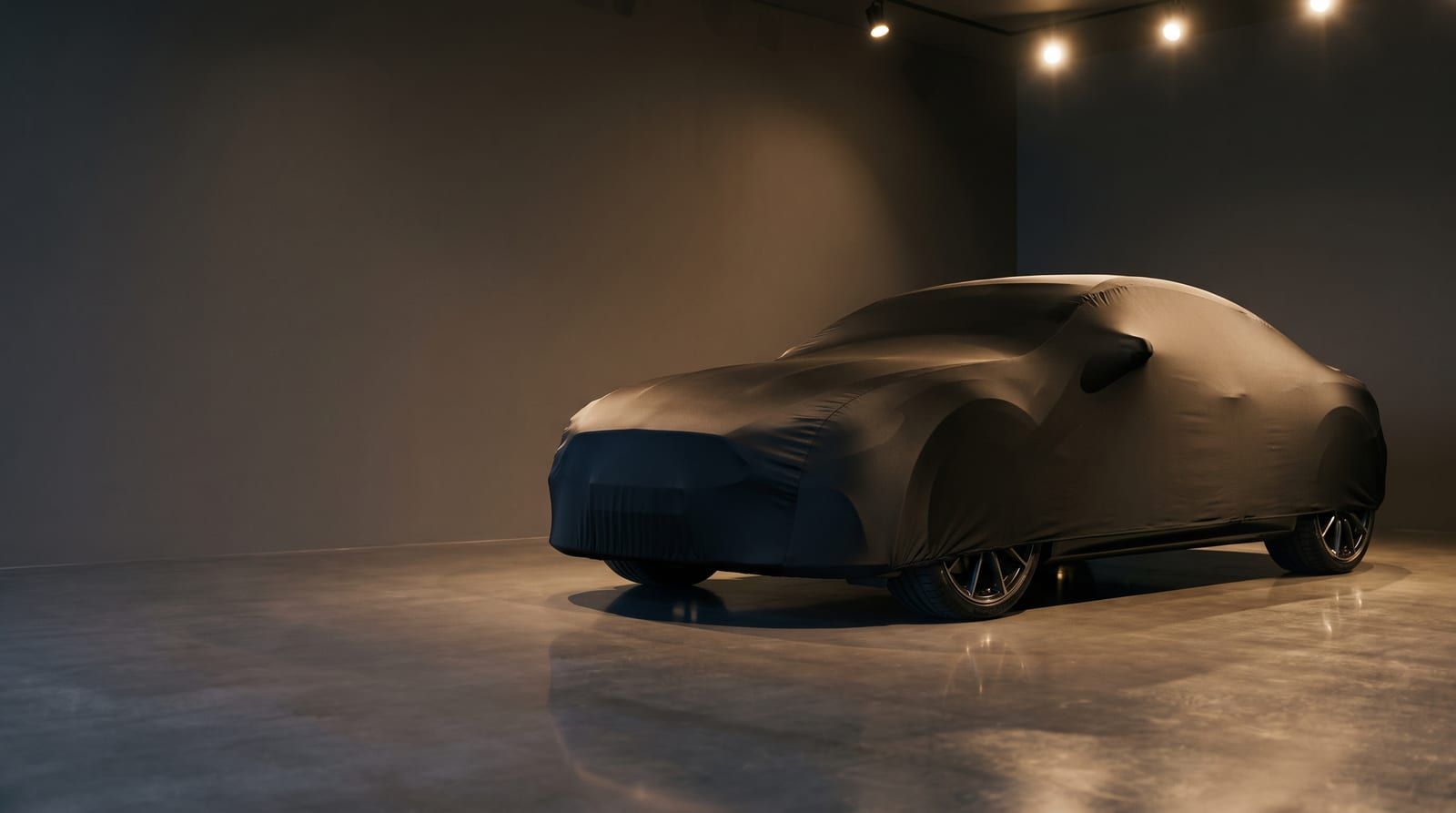
The lining is the whole story. Indoor covers use a soft flannel or fleece interior, the kind of material that won't grind dust into the clear coat if the cover shifts or if you brush against it while loading groceries. A single-layer sheet cover, the kind sold as generic "all-purpose," doesn't have that buffer. Drag that across a dusty hood enough times and you'll start seeing fine swirl marks under direct light.
Outdoors, a cover needs to survive wind, hail, and standing water. Indoors, it just needs to breathe, stay light, and keep dust off. That's why indoor fabrics are thinner and softer than their outdoor counterparts, they're built for a controlled environment, not a storm.
Fit details matter more than people expect. Elastic hems at the wheel wells keep the cover from sliding around every time the garage door opens and stirs the air. Some indoor covers add light straps or grommets for a more locked-in fit, which helps on a sedan like the Elantra where the body has enough curve that a loose cover tends to bunch at the doors. And a soft-shell exterior finish, like what you'll find on CarCovers' Indoor Black Satin line, resists dust accumulation on the surface and wipes clean in seconds instead of needing a full wash cycle.
If you want the fuller rundown on why indoor and outdoor covers aren't interchangeable, the indoor car cover guide breaks down the material differences in more depth.
Getting the Fit Right for a Hyundai Elantra
A cover that's too loose defeats the purpose. Gaps at the mirrors, a loose hood line, a trunk edge that doesn't quite seal, these are exactly where dust gets in and settles on exposed paint. Custom and semi-custom fit covers exist specifically to close those gaps, which is the whole point of buying an indoor-specific cover instead of grabbing a generic one off a shelf.
The Elantra has gone through several body redesigns over the years, and sedan dimensions shift enough between generations that a cover sized for a 2015 Elantra won't sit right on a 2021. Confirm your exact year and trim before you order. It sounds obvious, but it's the single most common reason people end up with a cover that bunches at the doors or leaves the mirrors exposed.
CarCovers' sizing tool exists for exactly this problem, matching cover dimensions to your specific model year instead of forcing a universal fit. Pair that with a genuinely custom-fit cover and you avoid the classic loose-universal-cover issue where the fabric puddles at the bumpers and leaves wind (or in this case, indoor air currents) room to work dust underneath. Small details count too: mirror pockets and antenna cutouts keep the material snug around the two spots most likely to catch dust or get nudged out of place.
Comparing Indoor Cover Options for Your Elantra
Not all indoor covers are built the same, and the differences come down to lining weight, fabric density, and how long the car sits between uses.
| Feature | Basic Indoor Dust Cover | Premium Indoor Satin Cover |
| Lining | Single-layer soft knit | Double-layer, brushed interior |
| Weight | Lightweight, easy on/off | Heavier, better shape retention |
| Best for | Daily garage parking | Long-term storage |
| Relative cost | Lower | Higher, still below weatherproof outdoor covers |
Cost-wise, indoor covers run cheaper than multilayer outdoor or waterproof covers across the board, simply because they skip the UV-resistant coatings and water-sealed layers that drive up material cost outdoors. You're paying for softness and fit, not storm-proofing.
If you drive the Elantra daily and just want it covered between trips, the lighter dust cover makes sense: quick to pull on, quick to fold up, no bulk to wrestle with in a tight garage. If the car is sitting for weeks or months at a time (a second vehicle, a seasonal car, something you're prepping for sale), the thicker double-layer lining is worth the extra cost. It holds its shape better over time and seals tighter against the body, which matters more the longer the cover stays on.
Installing and Living With an Indoor Cover Day to Day
For daily use, keep it simple: cover goes on when you park, comes off when you drive. Takes under a minute once you know the fold pattern. For long-term storage, take the extra step of double-checking the mirror pockets and hem elastic are seated properly before you walk away for a few weeks.
The part people skip: how you fold the cover back up matters almost as much as the cover itself. Shake it out before folding. If you fold a dusty cover straight from the car, you're just packaging grit and putting it right back on the paint next time you use it. A quick shake-out, fold along the factory creases if there are any, and store it somewhere it won't pick up garage dust of its own.
Spot-clean the lining when it starts looking dingy rather than waiting for a full wash. Garage-use covers need washing far less often than outdoor ones since they're not dealing with pollen storms or road grime, but they're not maintenance-free. The cover care guide covers wash frequency and the right detergent to use so you don't strip the soft lining's texture.
Check the elastic and any straps every few months. Elastic loses tension over time, and a cover that used to sit snug will start to sag at the hems, which reopens exactly the dust-gap problem a custom fit was supposed to solve.
Warranty, Returns, and Buying With Confidence
The biggest hesitation with any fitted cover is sizing. You're ordering online, matching it to a year and trim, and hoping it sits right the first time. CarCovers backs applicable cover lines with a lifetime warranty, which matters for something you're treating as a multi-year investment rather than a one-season purchase.
If the fit's off, a no-hassle return process means you're not stuck with a cover that doesn't work for your Elantra. That removes most of the real risk in buying sight unseen.
Weighed against the cost of a full paint correction down the road, an indoor cover is cheap insurance. A few years of dust, dry wipe-downs, and the occasional bump from a bike or tool box adds up to visible wear that affects resale value. A cover that costs a fraction of a detailing bill is an easy trade.
Choose the Right Indoor Cover for Your Elantra
Soft lining, a snug custom fit, and breathable fabric will beat a generic dust sheet every time for a garage-kept car. The sheet might be cheaper up front, but it's not built for this job, and it shows over time.
Start with your exact year and trim, run it through the vehicle cover finder to pull up Elantra-specific indoor options, and go from there. If you want more background on everyday car care beyond covers, the car care hub is worth a browse too.
Ready to stop wiping dust off your Elantra every weekend? Shop the Hyundai-specific covers on CarCovers.com and get one that actually fits.
Updated