


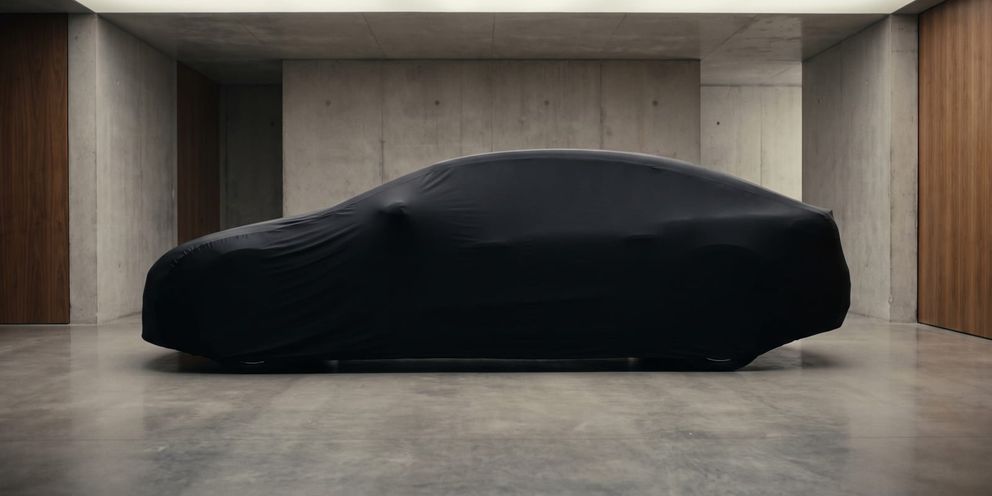
Indoor Car Cover for Tesla Model S: Soft-Lining Protection for Garage-Kept Cars
A Model S parked in a closed garage still picks up a fine film of dust within a day or two. Garages aren't sealed rooms. Air moves through vents, under doors, around cracked windows, and it carries drywall dust, pollen, and whatever grit tracked in on your shoes. If you're shopping for an indoor car cover for Tesla Model S protection, you already know the car doesn't need rain gear in there. It needs something that keeps that dust off the paint without doing any damage of its own.
Why a Garage-Kept Tesla Model S Still Needs an Indoor Cover
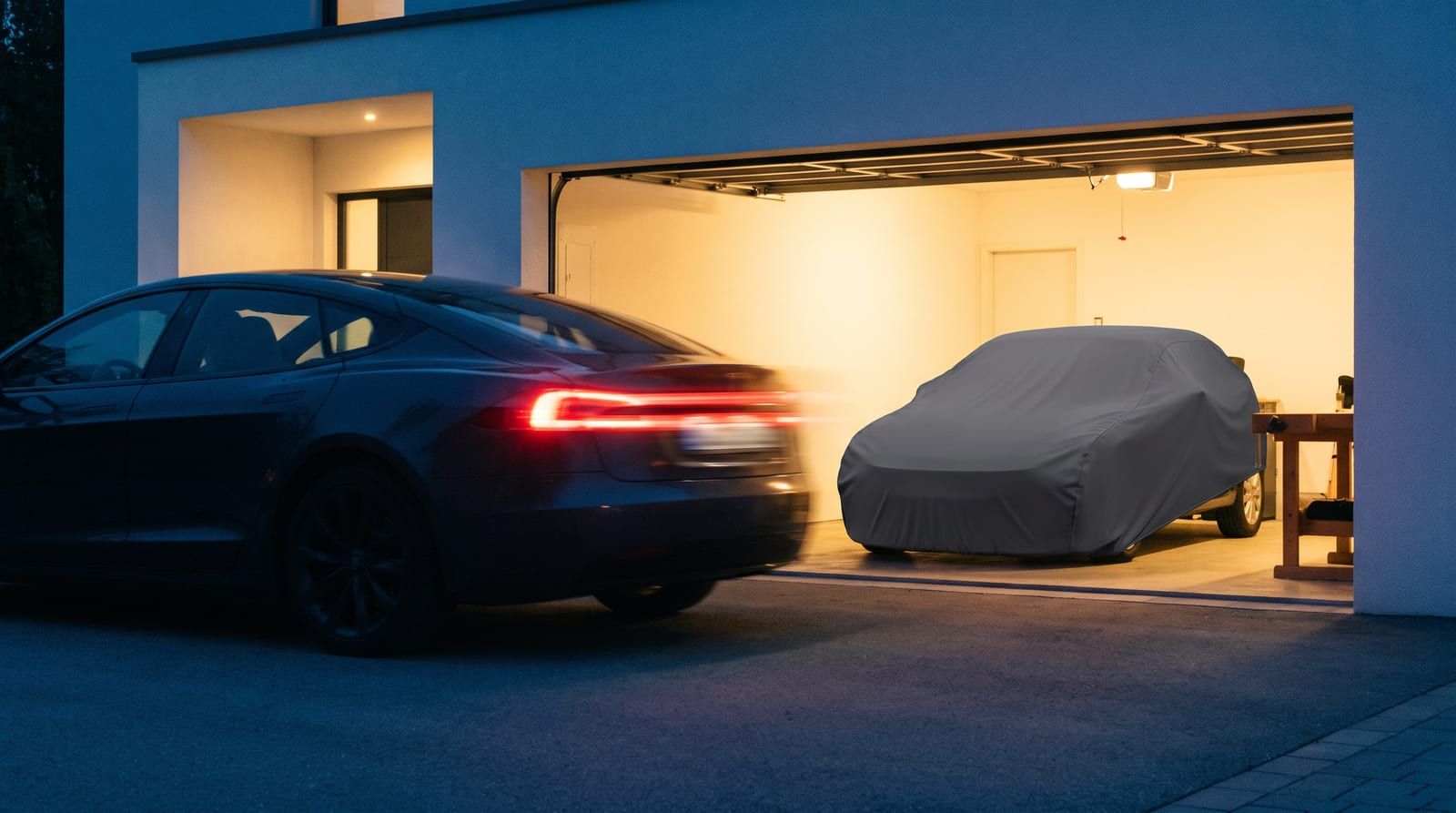
People assume "indoors" means "safe." It doesn't, not entirely. Airborne particles settle on every horizontal surface in a garage, including the hood, the glass roof, and the trunk lid of a Model S parked there overnight. That dust is abrasive. Wipe it off with a rag, or let a cheap cover drag across it, and you're grinding tiny grit particles into clear coat that costs real money to fix.
Then there's the shared-space problem. Bikes leaned against a wall, tool carts rolled past, a kid's scooter left too close, a car door swung open a little too fast. None of these things are rare in a garage that also stores bikes and holiday decorations. An indoor cover acts as a buffer. It won't stop a direct hit from a dropped wrench, but it absorbs the kind of incidental contact that leaves fine scratches you only notice in direct sunlight weeks later.
If you already own a Model S, or you're about to take delivery of one, this isn't a hypothetical. It's a decision you're making now: cover it properly indoors, or leave the paint exposed to a slow accumulation of micro-damage that outdoor-focused covers aren't built to prevent.
What Makes an Indoor Cover Different From an Outdoor Cover
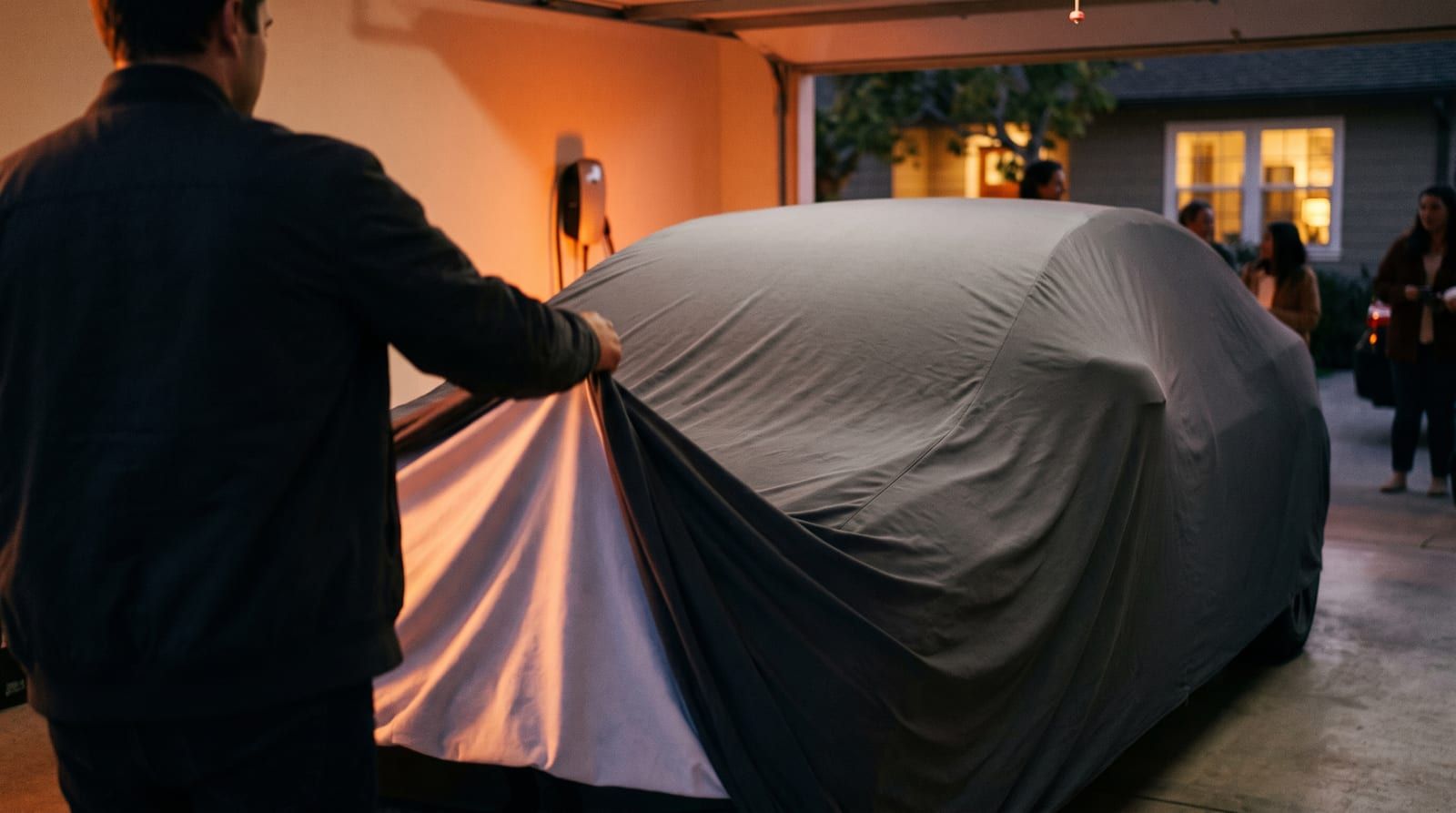
Outdoor covers are built for a fight. They need coated, heavier fabric to shed rain, block UV, and survive wind. All that armor comes at a cost: stiffer material, more weight, and a texture that's fine for a car parked under a tree but unnecessary, even counterproductive, inside a garage.
Indoor covers flip the priority list. Soft lining comes first. UV resistance and waterproofing drop off the list entirely, because there's no sun or rain to manage. What you get instead is a lighter, breathable fabric, usually fleece or a satin-finish weave, that won't trap moisture against the paint and won't hold grit like sandpaper.
This matters for your purchase because an all-weather cover thrown over an indoor car is the wrong tool. Heavier coated fabric indoors can trap humidity against the body overnight, which does nothing good for the paint either. If you're comparing options, the indoor car covers guide breaks down this construction difference in more detail, and it's worth reading before you default to whatever cover you already own for outdoor use.
Features to Check Before Buying an Indoor Cover for a Model S
Not every "indoor cover" on the market is built the same, and the differences actually matter on a car with a panoramic glass roof and tight panel gaps.
- Fit: A custom Model S pattern follows the car's actual lines. Universal or semi-custom covers leave extra fabric pooling at the hood and trunk seams, and that loose fabric rubs against paint every time a draft moves through the garage.
- Lining: Brushed fleece or a satin interior layer keeps grit suspended in the fabric rather than pressed flat against the clear coat. A plain, unlined cover doesn't do this.
- Cutouts and seams: Model S has a glass roof, flush door handles, and a charge port in a specific spot. A cover cut for a generic sedan will crowd these areas or leave gaps right where dust gets in.
- Breathability: A cover that doesn't breathe traps the small amount of condensation that forms overnight, even indoors. That moisture sits against the paint until you pull the cover off.
- Ease of on/off: If you're driving the car daily, you want something you can throw on and off in under a minute. A cover built for long-term storage, with more straps and a tighter fit, is overkill for that routine and will wear you out faster than it protects the car.
Comparing CarCovers' Indoor Options for Your Model S
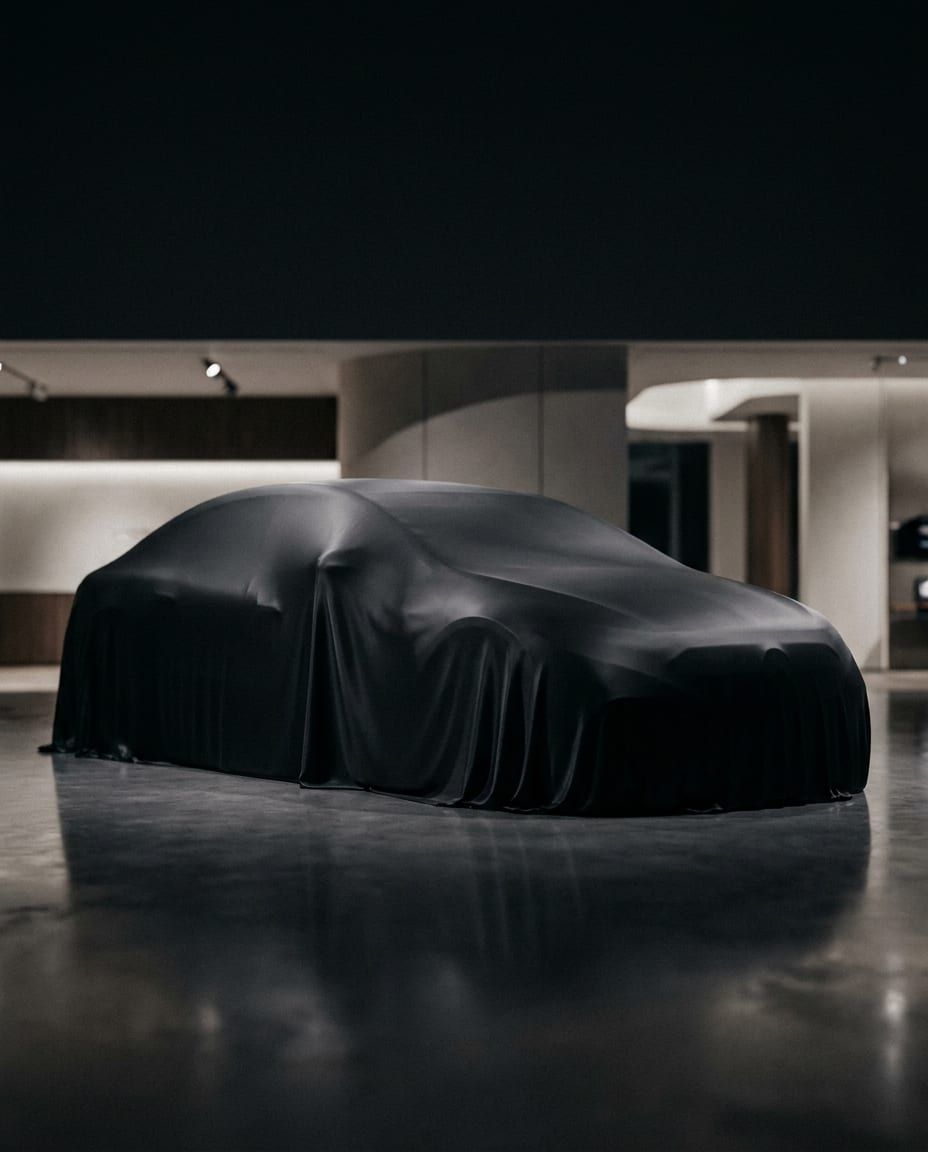
If you're narrowing down which cover to actually buy, it comes down to a handful of tradeoffs. Fit type is the first one: a custom-fit car cover built to Model S dimensions closes the gaps where dust gets in, while semi-custom or universal sedan sizing leaves slack at the bumpers and roofline that a tighter garage environment will still find a way to exploit.
Lining material is the second tradeoff. The Indoor Black Satin cover gives you a smooth, low-friction interior that's gentle on a fresh ceramic coat or wrap, while fleece-lined options lean softer and slightly more forgiving for day-to-day on/off handling. Satin tends to suit a car that's covered for longer stretches without much disturbance; fleece holds up well under frequent use.
Protection level is worth being honest with yourself about. If your garage is just you and the car, dust and light-scuff protection is probably enough. If you're sharing space with bikes, storage bins, or kids, you'll want the option with added scratch resistance built into the lining.
| Factor | Daily Driver Setup | Long-Term Storage Setup |
| Fit type | Custom-fit preferred for quick, snug install | Custom-fit, tighter seal matters more |
| Lining | Fleece, easier on repeated handling | Satin, smooth for extended dormancy |
| On/off ease | High priority | Lower priority |
| Price tier | Mid-range, functional | Often higher for added lining upgrade |
None of this is a hard price quote, it's a way to think about what you're actually paying for before you check out.
Getting the Right Size and Fit for a Model S
Start with your exact model year and trim. Tesla redesigned the Model S in 2021, and the dimensions shifted enough that a cover built for an older body won't sit right on the newer one, and vice versa. Guessing here is how people end up with a cover that bunches at the mirrors or comes up short at the bumper.
Run your specifics through a sizing and fit guide before you order. Too loose, and you've got gaps where dust pours in overnight. Too tight, and you're putting stress on seams every time you stretch the cover over the car, which shortens its life fast.
Custom-fit is the safer call here, specifically because it's cut to Tesla's actual panel lines instead of a generic sedan silhouette. You're not guessing whether it'll clear the charge port or sit flush at the hood seam. It already does.
Keeping a Garage-Kept Model S Dust-Free Long Term
A cover isn't a set-and-forget solution. Dust still collects on the fabric itself, and over months, enough of it builds up on the underside that it can start acting like light sandpaper against the paint every time you put the cover on or take it off. Shake it out or give it a quick vacuum every couple of weeks.
If you're driving the car daily, develop a habit: cover on at night, off in the morning, without dragging the fabric across the hood on the way. That drag is where most of the fine scratching actually happens, not from the cover sitting still.
Wash the cover itself periodically, not just the car. A liner caked in old dust doesn't protect anything, it just relocates the grit instead of stopping it. The cover care and cleaning guide covers wash frequency and the right detergent to use so you're not stripping the soft lining's texture.
And if the garage doubles as space for a dog or cat, a cover adds a layer against pet hair and scratches that you'd otherwise be vacuuming off the seats and finding on the paint.
Installation and Care Tips for Indoor Tesla Covers
Drape from the windshield back, not front to back. Starting at the hood and dragging the cover rearward is how dust already on the fabric gets ground into the clear coat. Let gravity and a light touch do the work instead.
If the cover has straps, keep them snug, not cinched. Over-tightening stresses the seams exactly where the fit is closest to the body panels. Once it's on, you shouldn't need to tug or adjust it much.
When it's off the car, don't just toss it on the garage floor. Store it in its storage bag, away from the floor grit it's supposed to be keeping off your paint in the first place. And circle back to that cover care guide every so often. A clean lining is what makes the soft-touch fabric actually do its job over the life of the cover.
Final Decision: Choosing Your Model S Indoor Cover
Boil it down to three things: fit cut specifically for the Model S, a lining soft enough not to fight the paint, and a protection level that matches how often you're actually driving the car. Daily drivers want something quick on and off with a forgiving fleece lining. A car parked for weeks at a time can lean into a tighter, satin-lined setup.
If you're buying your first cover and want some reassurance before checking out, it's worth knowing the coverage includes a lifetime warranty and a straightforward return policy if the fit isn't right.
Take a look at the Tesla-specific indoor options, measure twice, and give that Model S the kind of protection a garage parking spot actually calls for. And if you want more car care reading like this, the articles section is worth bookmarking for next time.
Updated