


Outdoor Car Cover for Audi A6: Waterproofing & UV Protection Buyer's Guide
An Audi A6 that lives outside needs more than a thrown-on cover from the hardware store. Rain finds the gaps, sun bakes the paint, and a cover built for indoor dust duty just isn't going to hold up. If you're actually shopping right now, here's what matters: an outdoor car cover for Audi A6 owners needs to solve two problems at once, water intrusion and UV fade, and it needs to do both without turning into a loose, flapping mess in your driveway. This guide walks through what to look for before you buy.
Why Your Audi A6 Needs a Dedicated Outdoor Cover
Indoor covers are built for one job: keeping dust off a car that's already protected by four walls. Put one on an A6 parked in a driveway or on the street, and it'll fail fast. Water soaks through. Thin fabric breaks down in the sun. Neither problem is cosmetic, either. Water sitting on the A6's hood seams and rear glass channel leads to streaking and, over time, corrosion at trim edges. UV exposure fades clear coat and can crack interior leather and dash plastic, even on a car that's barely driven.
This is really written for three kinds of A6 owners: the driveway parker, the street parker, and anyone stuck with an uncovered lot at work. If that's you, you're not looking for general education on car covers. You're trying to decide which one to buy. So let's get into the actual spec differences that separate a real outdoor cover from something that just looks like one.
What 'Outdoor-Rated' Actually Means: Waterproofing and UV Fabric Layers
"Outdoor-rated" isn't a marketing phrase you should take at face value. A legitimate outdoor cover is built from multiple layers: a breathable, water-resistant outer shell, a UV-stabilized treatment on top of that shell, and a soft inner lining that keeps the fabric from rubbing against clear coat. Each layer does a specific job. Strip one out and the whole cover underperforms.
There's also a meaningful difference between "water-resistant" and "fully waterproof," and it's worth knowing before you buy. Water-resistant fabric sheds light moisture but can saturate during a long, hard rain. Fully waterproof construction, especially with seam-sealed or tightly woven stitching along the hood and roofline, keeps water out where an A6's panel gaps and sloped roof would otherwise let it creep in.
UV stabilization is the other half of the equation. It's a chemical treatment baked into the outer fabric that blocks UV rays from breaking down the material itself, while also cutting how much heat transfers down to the paint and interior. Without it, a cover degrades in a season or two of direct sun, regardless of how waterproof it was on day one. For the full rundown on how wind, rain, and sun exposure interact outdoors, the outdoor car cover guide covers it in more depth than we can here.
Waterproofing Breakdown: Rain, Snow, and Humidity Protection
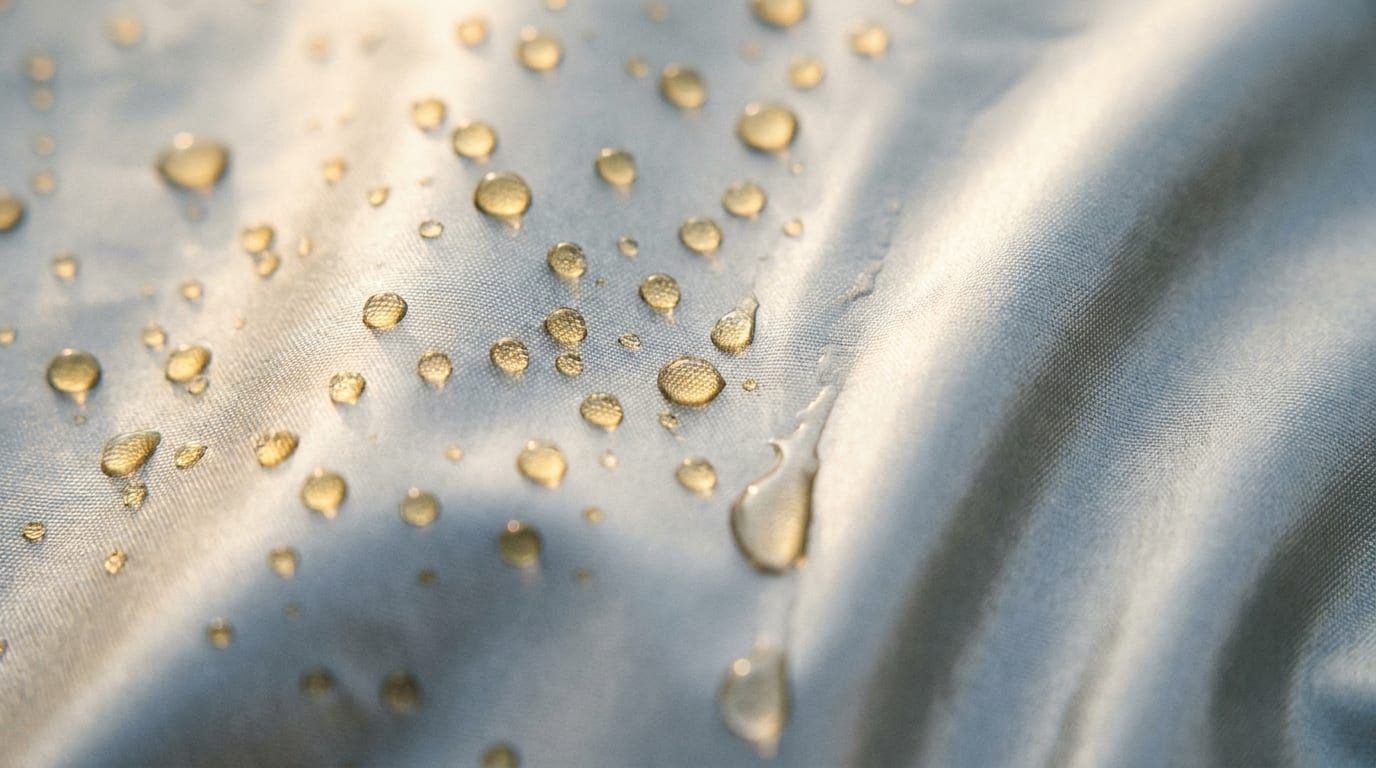
Not all water exposure is the same, and a cover that handles one type poorly handles the next one worse. Standing rain pools on a flat surface and tests how well a fabric resists saturation over time. Driving rain, the kind that comes in sideways, tests the seams and the fit around the A6's sloped rear glass and trunk line, since that's where gaps let water sneak underneath. Snow load is a third problem entirely, adding weight that a thin cover just can't support without sagging into the paint.
Then there's condensation, which catches a lot of owners off guard. A cover made from plastic or vinyl traps moisture underneath it. The car sweats, the cover doesn't breathe, and you end up with mildew and water spotting that's arguably worse than leaving the car uncovered. A genuinely waterproof, breathable fabric lets vapor escape while still blocking rain from getting in. If you want the material science behind how these ratings actually work, the waterproof fabrics article breaks it down.
Before you buy, run through this short checklist:
- Taped or sealed seams, not just tightly woven fabric
- An elastic hem or integrated strap system that keeps the bottom edge snug against the body
- A fabric that's labeled breathable, not just waterproof
That last point matters more than people expect. Breathable waterproof fabric, not plastic, is what separates a cover that protects your A6 from one that slowly damages it.
UV Protection: Guarding the A6's Paint and Interior
Sun damage doesn't need daily driving to do its work. A car that sits in a driveway five days a week is still absorbing UV radiation every one of those days. Clear coat fades first, usually showing up as a dull, chalky look on the hood and roof. Interior damage follows: dash plastic gets brittle, leather starts to crack at the seams, especially on trims where UV exposure is concentrated through the glass.
A UV-treated outdoor cover noticeably lowers surface temperature compared to a car sitting uncovered in direct sun. That's the whole point of the outer layer treatment, it reflects and blocks radiation instead of letting it soak through to the panel underneath. On A6 models with larger glass areas, including trims with panoramic sunroof glass, that matters even more, since glass transmits heat into the cabin faster than painted steel does.
Here's the part worth repeating: waterproofing and UV protection aren't two separate features you shop for individually. They come from the same outer fabric layer. A cover that's great at blocking rain but skips UV treatment will still let your A6's paint fade. Don't split this into two purchase decisions. It's one decision, and the fabric construction is the deciding factor.
Custom-Fit vs. Universal: Getting the Right Fit for Your A6
Fit is where a lot of otherwise decent covers fall apart, literally. A custom-fit cover is built to the A6's actual body lines, with mirror pockets and antenna cutouts placed where they belong. A universal or semi-custom cover is a generic shape stretched (or bunched) to approximately fit a sedan.
The problem with loose fit isn't just appearance. It undermines both things you're buying the cover for. Gaps at the hem let water wick in during rain. Excess fabric flaps in wind, and that flapping wears down the fabric itself over time, which shortens the life of the exact UV and waterproof treatments you paid for. A cover that fits tight stays protective longer, full stop.
Before buying anything, confirm your exact model year and body style using the car cover sizing guide. A6 generations differ enough in dimensions that a cover built for one year might not seat right on another. If you want the tightest possible weatherproof seal, go with a custom-fit car cover built specifically for the A6 rather than a one-size-fits-most option.
Buying Checklist: What to Confirm Before You Purchase
Five things decide whether a cover actually works outdoors long-term. In order of importance:
- Waterproof rating. Confirm it's genuinely waterproof, not just water-resistant, with sealed seams.
- UV treatment. Confirm the outer layer is UV-stabilized, not just UV-resistant in name.
- Fit type. Custom-fit beats universal for an A6, every time, for the reasons above.
- Strap and grommet security. Look for built-in wind straps or grommets that accept a cable lock, so the cover stays put in open parking. The wind strap installation guide shows how these are meant to be set up, and it's worth doing right the first time.
- Warranty coverage. A real lifetime warranty should cover fabric failure, not just stitching defects. Check the lifetime warranty details before you commit so you know exactly what's protected if the fabric lets go early.
One more thing: double-check the Audi brand page to confirm a cover is actually in stock for your exact A6 generation before you get too far into comparing features. No point optimizing for UV ratings on a cover that doesn't fit your year.
Maintenance Tips to Maximize Your Cover's Lifespan
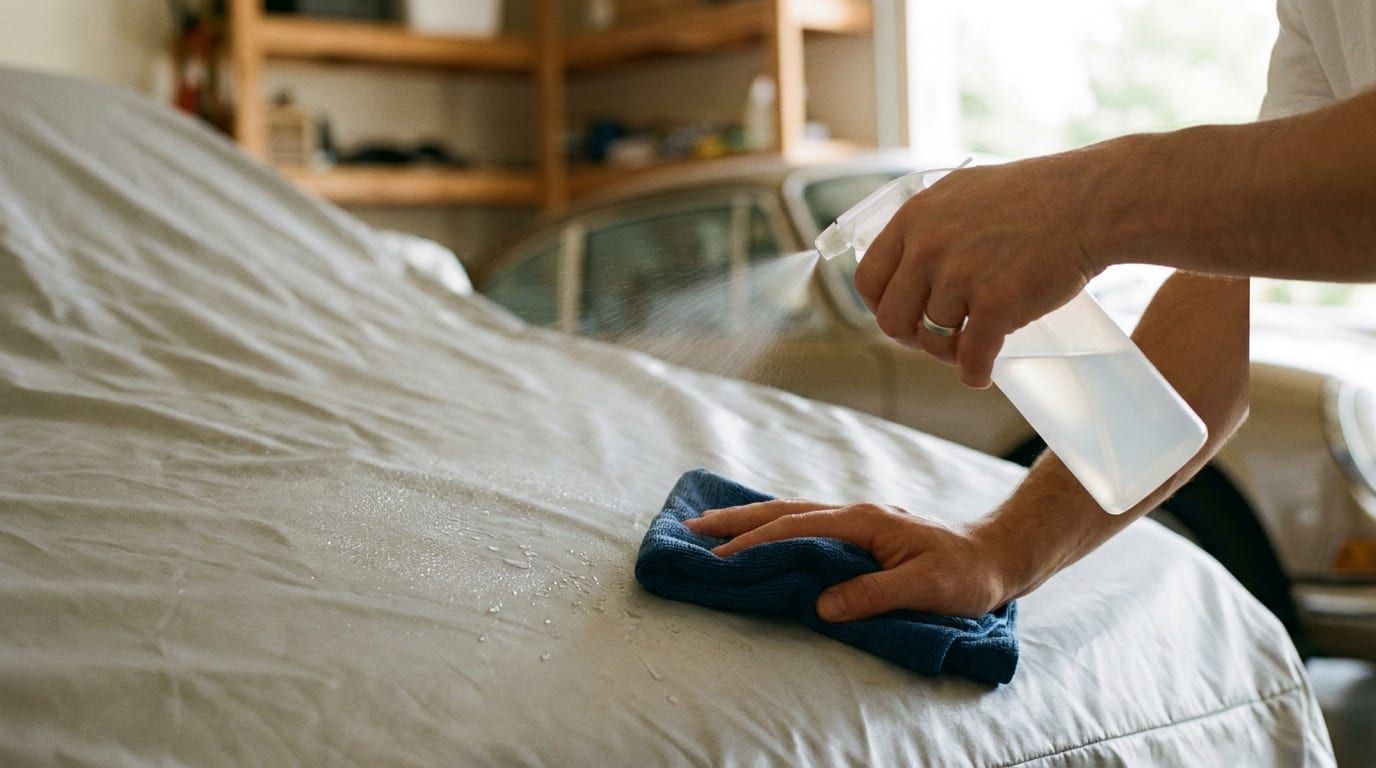
A good outdoor car cover for Audi A6 owners isn't maintenance-free, it just needs less of it than you'd think. Shake off leaves, dirt, and debris before folding it up, and let it air dry completely before storing it. Folding a damp cover is the fastest way to grow mildew inside the fabric, and once that sets in, it doesn't fully come out.
Clean it occasionally using whatever method the manufacturer actually recommends, not a household detergent. Harsh soaps strip the waterproof and UV coatings right off the fibers, which defeats the purpose of buying a treated fabric in the first place. Check straps and seams at each seasonal change too, before the first real storm or snow load of the season hits, not after. For the full process, the cover cleaning guide walks through it step by step.
Get the Right Outdoor Cover for Your Audi A6 Today
The combination that actually works is simple: waterproof, UV-treated, and custom-fit to your A6. Skip any one of those three and you're compromising on something, whether it's water getting in, paint fading, or fabric wearing out early from a loose fit.
If you're ready to narrow it down, use the coverfinder tool to match your exact A6 year and trim to an in-stock cover built for it. And if you're not sure yet, buying is low-risk: a no-hassle guarantee and straightforward return policy mean you're not stuck if the fit or fabric isn't right. Go ahead and shop outdoor covers for your Audi A6 now, your paint and interior will thank you by next summer.
Updated