


The Best Outdoor Car Cover for Honda Civic: Waterproofing, UV Protection & Fit Guide
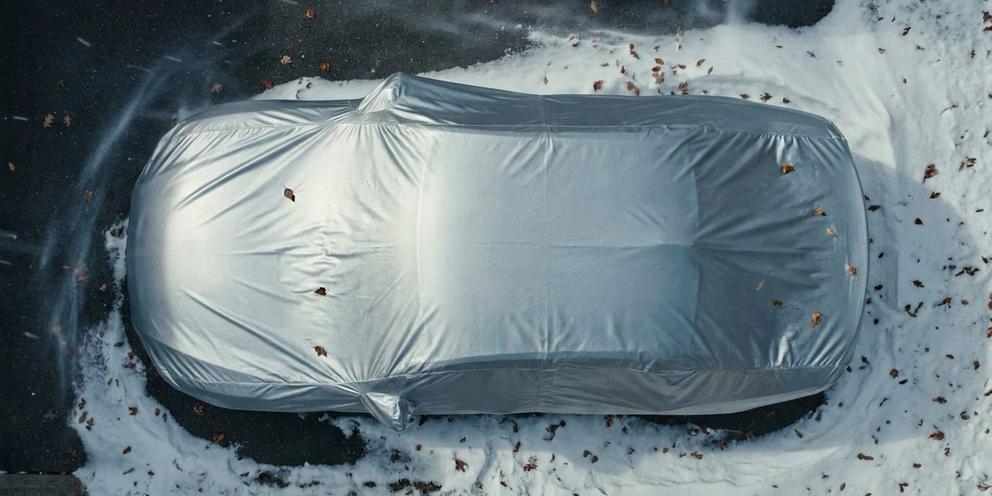
A Honda Civic parked in a driveway or on the street takes a beating that most owners underestimate. Sun bakes the clear coat every afternoon, rain sneaks under loose-fitting tarps, and tree sap turns into a permanent stain if it sits long enough. If your Civic doesn't have a garage to retreat to, the right outdoor car cover for Honda Civic ownership isn't optional gear, it's the thing standing between your paint and years of slow damage. This guide walks through what actually matters when you're shopping for one: waterproofing, UV protection, fit, and the accessories that keep a cover doing its job through wind and weather.
Why Your Civic Needs a Dedicated Outdoor Cover
Leave a Civic uncovered outside for a few months and you'll start seeing it in the clear coat first. UV rays break down the resin in factory paint, leaving a dull, chalky finish that no amount of waxing fixes. Add in bird droppings (acidic enough to etch paint if left too long) and tree sap that hardens into a bond you practically need a razor blade to remove, and you've got a car that ages faster than it should.
Then there's the tarp problem. A lot of owners reach for a generic tarp thinking it'll do the job, but tarps trap moisture underneath instead of letting it escape. That trapped humidity sits against your paint and interior surfaces, which is worse in some ways than leaving the car exposed entirely.
If your Civic lives in a driveway or on the street, daily sun and intermittent rain are just the reality. That's exactly the scenario a purpose-built outdoor car cover is designed to handle. The rest of this guide covers what separates a cover that actually protects your Civic from one that just sits there looking like protection.
What Actually Makes a Car Cover Waterproof
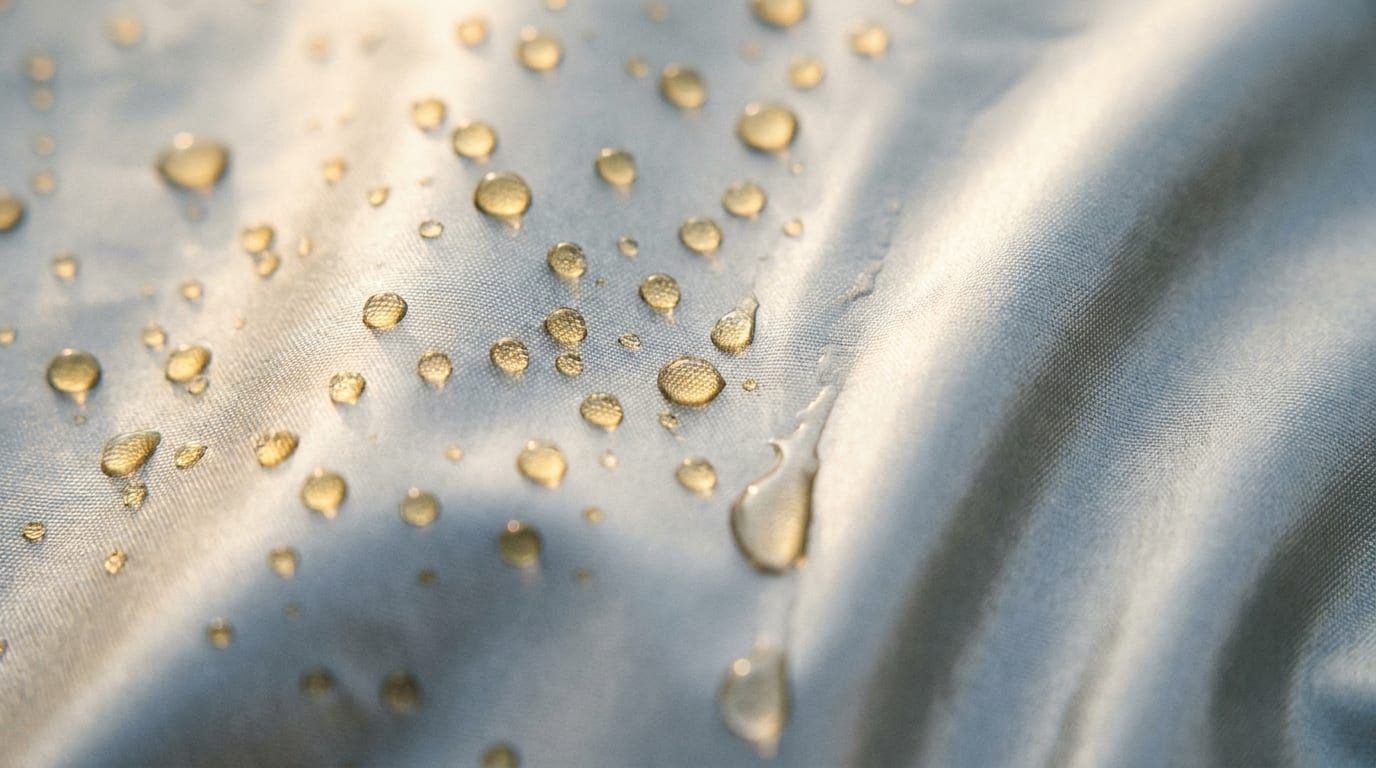
"Water-resistant" and "waterproof" get used interchangeably in marketing copy, but they're not the same thing. Water-resistant fabric slows water down. Waterproof fabric stops it. The difference usually comes down to construction: taped or sealed seams, multi-layer laminated fabric, and an elastic hem or grommet system that keeps wind-driven rain from sneaking in underneath.
Here's the part people skip: breathability matters just as much as waterproofing. A cover that seals out 100% of moisture but can't vent condensation just traps humidity against your Civic's paint instead of keeping it away. You end up with the same problem a bad tarp causes, just with a nicer-looking cover. The fabrics that actually perform outdoors are engineered to block liquid water while still letting vapor escape.
When you're comparing spec sheets, look past words like "weatherproof" or "protective" and look for something concrete: a water column rating, or a manufacturer stating outright that the cover is tested waterproof, not just resistant. If a product page won't commit to a number or a clear claim, that's worth noting. For a full breakdown of how these materials are actually built, this explainer on waterproof fabric construction is worth reading before you buy. You can also browse waterproof car cover options directly if you already know that's the category you need.
UV Protection: Stopping Sun Damage to Your Civic's Paint and Interior
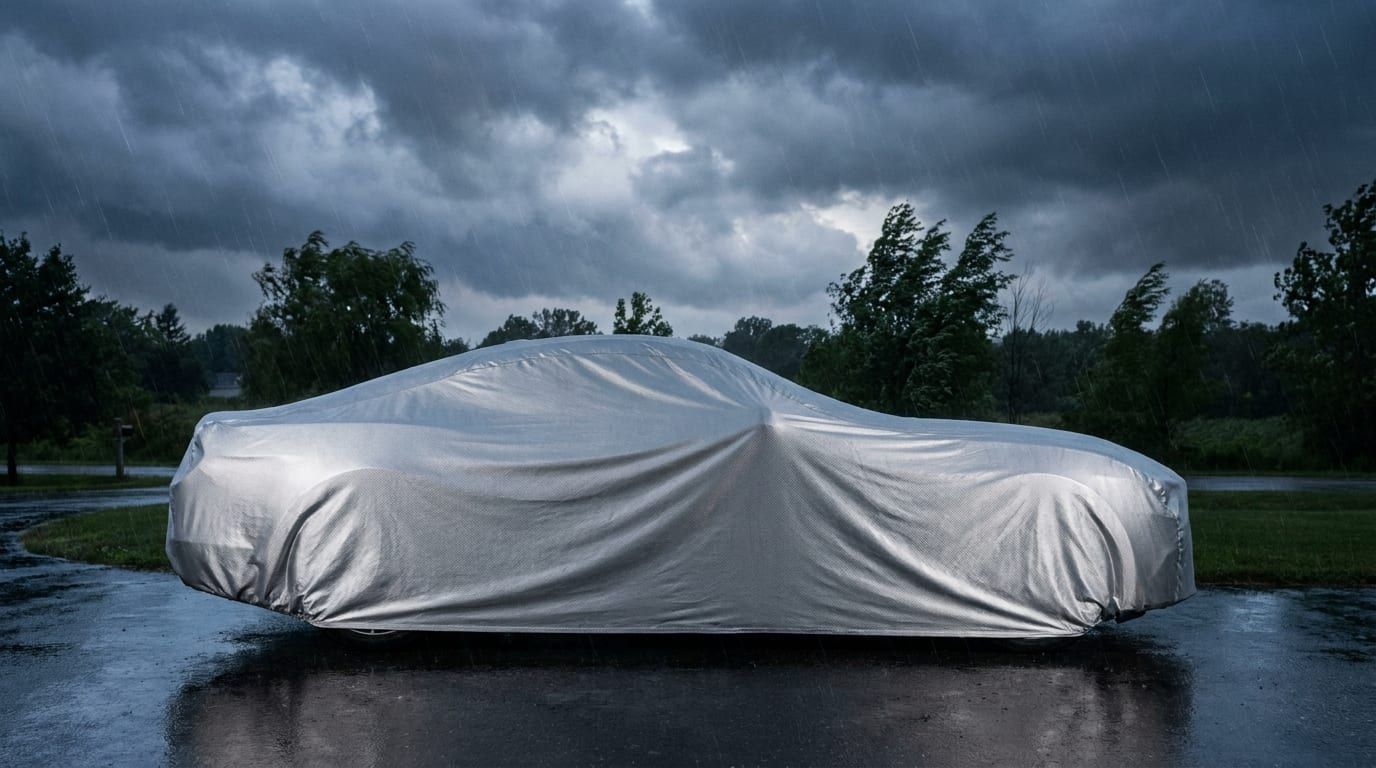
Sun damage is slower than water damage, which is exactly why people underestimate it. Give it enough months of daily exposure and UV rays will fade paint, crack dashboard plastic, and dry out rubber door seals until they crack too. None of that shows up overnight. It shows up as a Civic that looks five years older than it is.
A cover with real UV protection uses a UV-treated outer shell, and often a reflective or light-colored top layer that bounces sunlight instead of absorbing it. Cheaper covers skip this treatment entirely and rely on the fabric's thickness alone, which does less than people assume.
How much this matters depends on where you park. A Civic sitting outside in Phoenix or Miami needs serious UV protection. One parked outside in Seattle or Portland is dealing with rain more than sun, so the priority shifts. Weigh this against price tier: paying extra for aggressive UV treatment makes sense in the Southwest or Southeast, less so in a mild, cloudy climate. If you're deciding whether UV protection alone justifies buying a cover for summer parking, this guide on keeping a car cool in summer lays out the heat side of that equation.
Custom-Fit vs. Universal Covers for the Civic
Universal covers are cheap for a reason. They're cut to a rough size range, not your Civic's actual body lines, which means loose fabric, a wind flap that doesn't seal right, and edges that flap in the breeze. That flapping isn't just annoying, it's what causes fine scratching on your clear coat over months of use, especially at the mirrors and side panels where the fabric rubs repeatedly.
A custom-fit car cover built to the Civic's exact dimensions solves this. Tighter seam sealing, a snugger hem, and a cover that actually moves with the car's shape instead of billowing around it.
One thing to get right before ordering: Civic generations aren't all the same shape. A sedan, a hatchback, and an Si or Type R with its wider body kit all fit differently under a cover. Confirm your exact trim and body style before you buy, because a cover cut for a standard sedan won't sit right over a Type R's flared fenders. Check the sizing guide to confirm your Civic's measurements, and if you're not sure which cover line applies to your specific Civic, Honda's cover page is the place to start narrowing it down.
If your Civic is only outside occasionally, a universal cover might get you by. But for daily outdoor parking, the extra cost of custom-fit pays for itself in reduced flapping, better sealing, and a lot less paint wear.
Why a Tarp or Generic Cover Falls Short Outdoors
The tarp temptation is real. It's cheap, it's at the hardware store, and it technically covers the car. But a tarp isn't built for this job, and it shows fast.
Tarps have no elastic hem, so wind gets underneath the edges and lifts them, which means the whole thing shifts around and rubs against the paint as it moves. The plastic material itself is often abrasive enough to leave fine scratches over time, especially in windy conditions where it's constantly sliding across the surface. There's no UV treatment on a hardware-store tarp either, so it does nothing for fading. And because it doesn't breathe, condensation builds up underneath it just like it would with no cover at all.
Here's the actual math: a purpose-built outdoor cover costs more upfront than a tarp, but a repaint job or interior repair from years of tarp damage costs a lot more than that difference. If you want the full side-by-side on this, the tarp versus car cover comparison breaks down every failure point in detail.
Installing and Securing Your Cover for Long-Term Outdoor Use
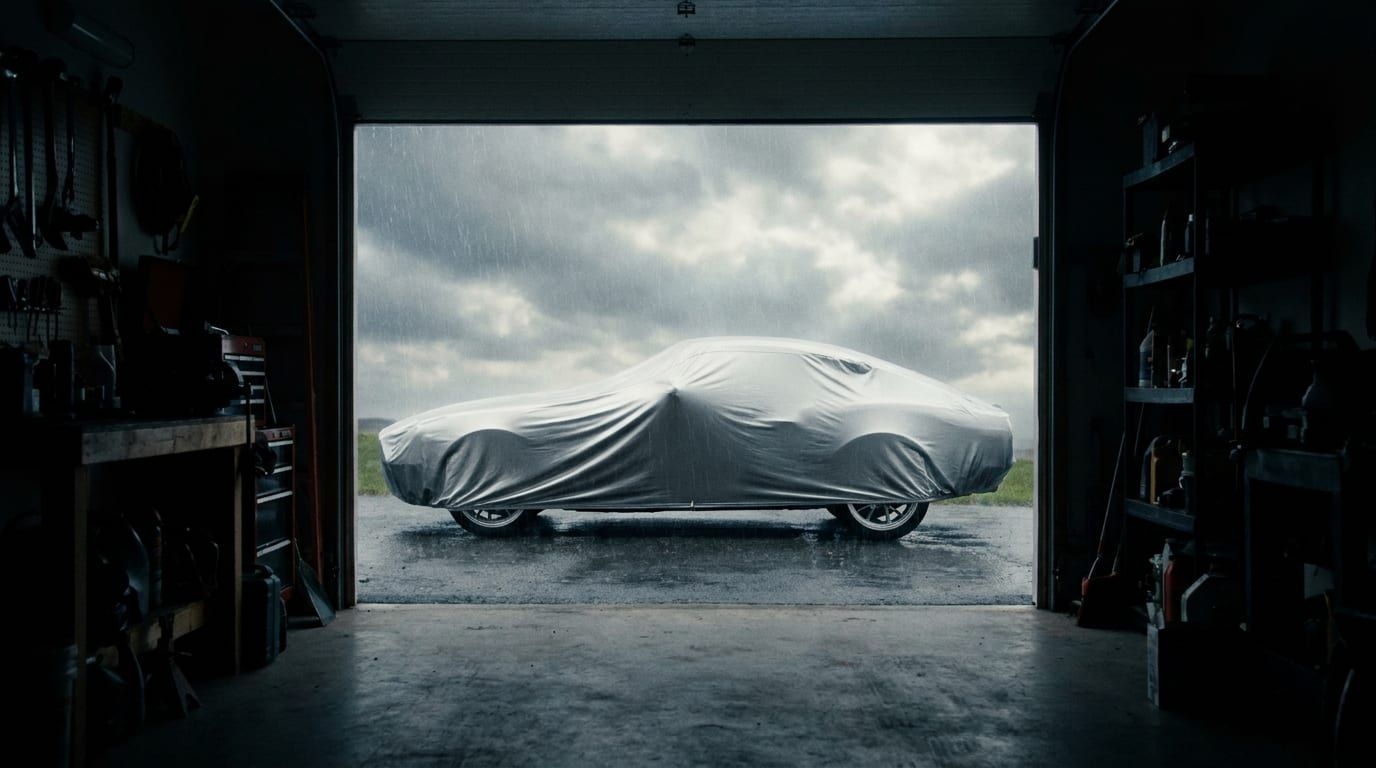
Getting the cover on right matters as much as buying the right one. Start front to back, working the fabric over the hood before you move to the roof and trunk. Tuck the mirror pockets over each mirror so the fabric doesn't bunch or pull at the seams. Once it's on, cinch the hem straps snug against the Civic's body so there's no loose fabric left to catch wind.
If your Civic sits in an open driveway or anywhere the wind picks up, don't skip gust straps. A cover that shifts or lifts in strong wind wears out faster and can scuff the paint doing it. Wind straps are a small add-on that keeps the whole setup anchored, even at highway-adjacent wind speeds if you're near a busy road.
If the Civic is parked somewhere shared, like street parking or an apartment lot, a cable lock is worth adding too. It won't stop everything, but it deters someone from casually pulling the cover off overnight. This installation guide walks through setting one up properly.
Maintaining Your Cover So Waterproofing and UV Protection Last
A cover's waterproofing and UV treatment aren't permanent. Dirt buildup grinds into the fabric over time, and washing it wrong, harsh detergents, a trip through the washing machine, strips the coatings right off. Once that happens, you've got a cover that looks fine but doesn't actually perform anymore.
The fix is simple maintenance, not a lot of it. Rinse the cover and let it air-dry about once a month. Spot-clean sap or bird droppings as soon as you notice them instead of letting them set. And when you're not using the cover, store it dry, not folded up damp in a trunk somewhere, because that's how mildew gets started. For the full wash process, including what NOT to use on treated fabric, this cleaning guide covers it step by step.
Making the Decision: Warranty, Guarantee, and Buying Your Civic's Cover
Before you check out, run through the short list: confirmed waterproof rating (not just "weather-resistant" marketing language), UV-treated fabric, a custom fit built for your Civic's exact body style, and wind straps or a cable lock if your parking situation calls for it.
Worth understanding what you're actually buying into with warranty terms too. A lifetime warranty generally covers material defects and stitching failures, which tells you the manufacturer expects the cover to hold up for years, not one season. And a no-hassle guarantee takes some of the risk out of buying your first cover, since you're not stuck with something that doesn't fit or perform the way it should.
If you've made it this far, you already know more about what makes an outdoor car cover for Honda Civic actually work than most people shopping by price alone. Take a look through the options, match one to your Civic's specific body style, and if you want more on keeping your car in shape season to season, the articles section is worth bookmarking.
Updated