
The Best Outdoor Car Cover for Your Land Rover Defender: Waterproofing & UV Protection Compared
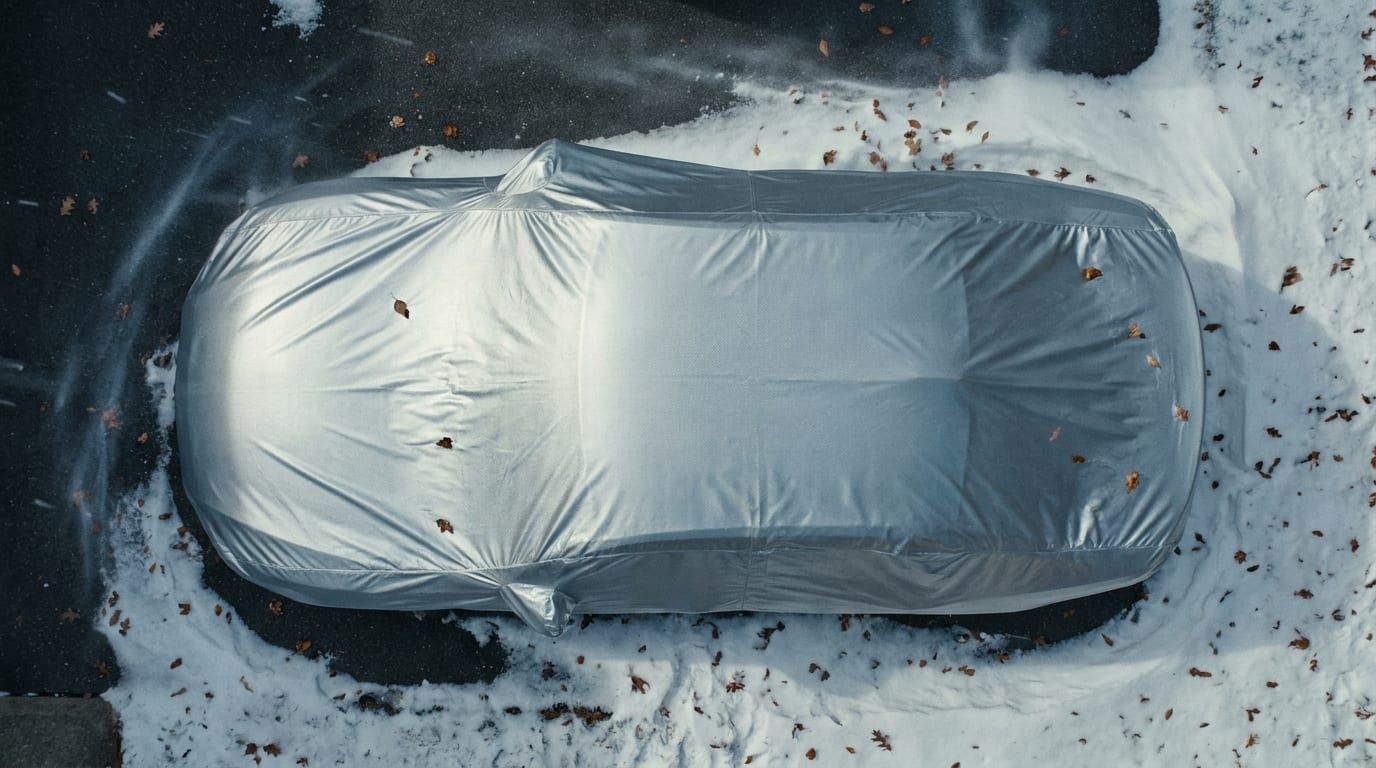
Parking a Defender outside isn't the same as parking a sedan outside. The boxy panels catch standing water instead of shedding it, the roof rails collect grit, and those matte or satin paint finishes some trims come with show water spots and sun fade faster than a glossy curve ever would. If you're shopping for an outdoor car cover for Land Rover Defender ownership that actually holds up, you need to get two things right before you even look at price: waterproofing and UV protection. Everything else is secondary.
Why Your Defender Needs Outdoor-Specific Protection
A Defender sitting in a driveway or on a job site is living a different life than one tucked into a garage. It's taking direct midday sun for hours, catching tree sap, getting hit with road grit kicked up from the street, and sitting through rain that pools instead of running off a curved hood. The flat roof panels and exposed roof rails are the giveaway here. Water sits on them. Sun bakes them. Over months, that adds up.
An indoor cover wasn't built for any of this. Neither was a generic tarp from the hardware store. Both will let water through eventually, and neither has the coating to stop UV rays from chalking the paint. A purpose-built outdoor car cover is made to take repeated exposure, cycle after cycle of wet and dry, hot and cold, without breaking down.
So before you buy anything, you need answers to two questions: how waterproof is it, really, and how much UV protection does the fabric actually block. The rest of this guide walks through both.
Waterproofing: What Actually Keeps Water Off a Defender

"Water-resistant" and "waterproof" get used almost interchangeably in cover listings, and they shouldn't be. Water-resistant fabric repels light rain or mist. It won't hold up against a sustained downpour or standing water pooling on a flat panel. Waterproof fabric is built to block that sustained exposure, which is what you actually need if your Defender sits outside through real weather.
Seam construction matters more here than people expect. A Defender's flat roof and roof rack cutouts create extra seams and stress points where water likes to find its way in. Taped or sealed seams close that gap. Untaped seams on a cheaper cover are basically an invitation for leaks right where the roof meets the rails.
Breathability is the part people miss. A cover that blocks every drop of rain but doesn't let trapped moisture escape will sweat the vehicle underneath it. That trapped condensation sits against the paint and clear coat, which defeats the whole point of covering the truck in the first place. Good outdoor fabric blocks rain from getting in while still letting vapor out.
Last thing to check: the hem system. An elastic hem or a strap-and-buckle setup keeps the cover sealed tight against the Defender's boxy wheel arches, even in wind-driven rain that would otherwise work its way up under a loose edge. Read through CarCovers' guide to using a car cover outdoors for a deeper breakdown of how waterproofing, wind, and UV all interact once a cover's actually on the vehicle.
UV Protection: Stopping Sun Damage Before It Starts
Rain gets all the attention, but sun does more lasting damage. UV exposure fades paint, dries out rubber seals and trim until they crack, and bakes a Defender's dash through the windshield even when the truck's just sitting there, parked, going nowhere. You don't need the engine running for sun damage to happen. You just need time and exposure.
A cover with a UV-blocking outer layer is doing a fundamentally different job than one that's only water-repellent. Water-repellent fabric with no UV treatment will keep rain off just fine and let the sun cook the paint right through it. Those aren't the same cover, even if they look similar on a product page.
If you're in the Southwest or Southeast, UV protection should probably outrank rain protection on your priority list. Sun exposure in those regions is relentless, and a cover that's light on UV blocking will show fading and brittleness within a season.
There's a resale angle here too. Factory paint that chalks or fades unevenly is an easy thing for a future buyer to notice and a hard thing to fix without a repaint. A UV-blocking cover is cheap insurance against that.
Fit Matters: Covering the Defender's Shape Correctly
Universal-fit covers struggle with the Defender's shape. The raised roofline, the spare tire mount on the back door, the side-hinged rear door swinging a different direction than a standard tailgate, all of it creates gaps that a generic cover simply drapes over instead of fitting against.
Those gaps aren't cosmetic. A loose cover lets sunlight reach the panels underneath, which undoes your UV protection. It also gives wind somewhere to grab, and wind-driven rain will find that gap and drive right under the cover. At that point you've got all the downsides of no cover with the added annoyance of one flapping around on your truck.
Before buying, check the cover's dimensions against your specific trim. A 90 and a 110 aren't the same footprint, and if you've got a roof rack, ladder, or snorkel added on, that changes what you need too. Use CarCovers' vehicle size guide to confirm fit, or look at custom-fit options if your Defender's running factory add-ons that a standard pattern won't account for. There's also a dedicated Land Rover cover page worth checking for options built around the brand's specific body lines.
Choosing the Right Protection Level for Your Climate
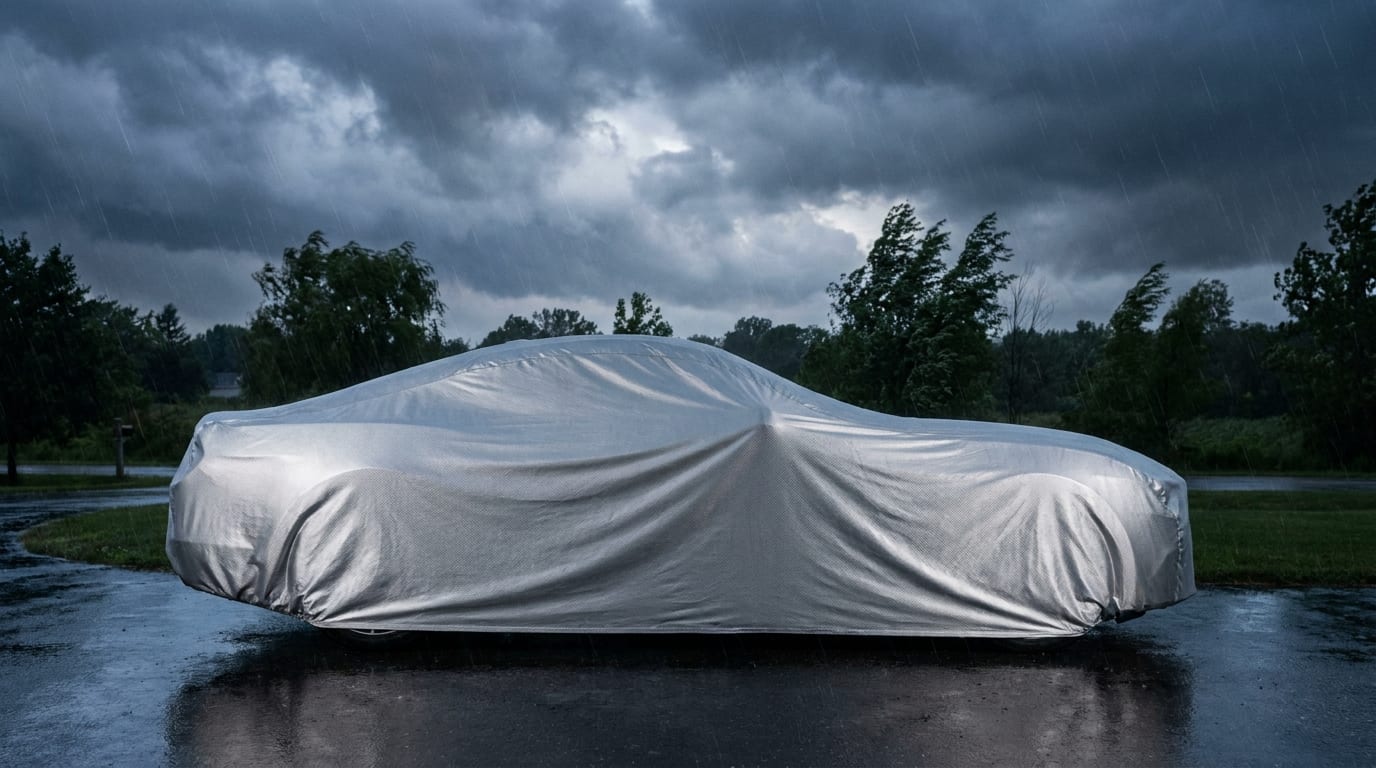
Not every Defender needs the same armor. If you're in a mild, mostly dry climate, a lighter-duty cover with moderate waterproofing and UV resistance will probably do fine. If you're coastal, desert, or anywhere that gets real storms, you want a heavier multi-layer build with the highest waterproof and UV rating you can get.
| Climate type | Recommended cover tier | Trade-off |
|---|---|---|
| Mild, mostly dry | Light-duty water-resistant | Easier to install, less UV blocking |
| Coastal or humid | Mid to heavy waterproof | More bulk, better rain and salt-air resistance |
| Desert or high-UV | Heavy UV-rated multi-layer | Higher cost, best fade protection |
| Storm-prone regions | Heavy waterproof + UV rated | Longest install time, highest protection |
Lighter covers are easier to pull on and off and take up less room in storage, but they trade away UV blocking to get there. Heavier covers protect more and cost more, and they take longer to wrestle onto a vehicle this size. If your Defender lives outside year-round, don't split the difference. Go with the highest waterproof and UV rating you can find and treat price and convenience as secondary.
The mistake people make over and over is buying on price alone. A cheap cover looks fine for a few months, then the UV coating starts breaking down, the fabric gets brittle, and you're back here shopping again within a year. Paying once for the right tier usually costs less than paying twice for the wrong one. Compare top-rated outdoor covers side by side before deciding, rather than grabbing the first one that fits your budget.
Installation and Care to Make the Protection Last

Good fabric only works if it's installed right. Secure the straps under the frame, not just looped around a bumper. Cinch the elastic hem down snug. And don't leave folds or loose fabric pooling on top of the roof, that's exactly where rainwater collects and sits. CarCovers' installation guide walks through the process step by step if you're setting one up for the first time.
Storage matters just as much as installation. Balling up a wet cover and tossing it in a bin is a fast way to grow mildew and wreck the waterproof coating from the inside. Let it dry fully before folding it away.
When you do clean it, stick to non-abrasive methods. Scrubbing hard or using harsh detergents strips the UV-blocking coating right off the fabric, which puts you back at square one on sun protection. CarCovers has a cover cleaning guide that covers what's safe to use.
None of this is complicated, but skipping it shortens the life of both the waterproofing and the UV layer. You already spent money getting the right cover. Routine care is what makes that money actually last.
Land Rover Defender Outdoor Cover FAQs
Can a waterproof cover stay on a Defender through a full storm season without damage? Yes, as long as it's actually rated for sustained rain exposure and the straps are secured properly. A cover rated for light mist won't hold up the same way.
Does a UV-rated cover protect interior trim too? Only indirectly. It blocks sunlight from hitting the windshield and windows while the Defender's parked, which keeps heat and UV off the dash, but it's not doing anything for the interior once you're driving.
Do roof racks or snorkels affect which cover fits? Yes. Factory add-ons change the vehicle's profile enough that a standard cover may not seal properly around them. Check fit notes or look at custom-fit options before buying.
How often should an outdoor cover be replaced? When water stops beading on the surface, or you notice fading on the fabric itself, that's your sign. Both are signs the coatings have worn through.
Bottom Line: Pick the Cover That Matches Your Defender's Conditions
Two things aren't negotiable for a Defender parked outside: verified waterproofing and a UV-blocking fabric layer, matched to how harsh your local climate actually is. Skip either one and you're just delaying the damage, not preventing it.
Fit ties it all together. The best waterproof, UV-rated fabric in the world won't do its job if it's gapping around the roofline or flapping loose at the wheel arches in the wind. A cover that fits snugly is what lets the material actually perform the way it's rated to.
If you're ready to compare options, look at covers sized specifically for your Defender trim and check the warranty before you buy, a solid warranty tells you the manufacturer trusts the fabric to hold up. Browse the lineup, find the one built for your climate, and give your Defender the kind of protection it's actually built to need.
