


The Best Outdoor Car Cover for Your Toyota RAV4: Waterproofing and UV Protection Compared
Leave a RAV4 outside long enough and you'll find both weak points generic covers can't handle: water sneaking through seams during a real storm, and the slow bleach of UV rays turning that factory clear-coat chalky by August. A basic dust cover from the auto parts store handles neither problem well. What you actually need is an outdoor car cover for Toyota RAV4 owners who park in a driveway, a street, or an open lot, day after day, in whatever the sky decides to do.
That's the real split. A weekend garage car can get away with a light, breathable layer that just keeps dust off. A RAV4 that lives outside needs a cover built for continuous exposure, meaning it's tested for both water intrusion and sun degradation, not just one or the other. Before you buy anything, it helps to know what you're actually comparing: waterproofing rating, UV/fade protection, how precisely the cover fits your specific RAV4, and whether the tie-down hardware included will actually keep it in place. Get those four right and everything else (color, brand, accessories) is just preference.
This guide walks through what "waterproof" and "UV-protected" really mean on a spec sheet, so you're not just trusting a marketing label when you pick a cover.
Why Your RAV4 Needs an Outdoor Car Cover Built for Rain and Sun
Two things wreck outdoor-parked RAV4s over time, and they're not the ones most owners expect. The first is water working its way through seams during heavy rain, not through the fabric itself. Fabric usually holds up. Seams and mirror pockets are where leaks start, quietly, until you notice water pooling on the hood under the cover after a storm. The second is UV exposure slowly oxidizing the clear coat, which shows up as fading, dullness, and eventually a chalky texture you can't buff out.
If your RAV4 sits in a garage most nights and only goes outside on weekends, a lightweight dust cover is fine. But daily outdoor parking is a different job entirely. It calls for a cover rated for continuous exposure, not one designed to keep pollen off for a few hours.
So here's the framework worth using when you compare covers: waterproofing rating, UV/fade protection, fit precision, and tie-down security. Everything else is secondary. This guide is for someone who's ready to buy and wants to understand what those first two terms, waterproof and UV-protected, actually mean before picking a specific product.
How Waterproofing Actually Works in an Outdoor Car Cover
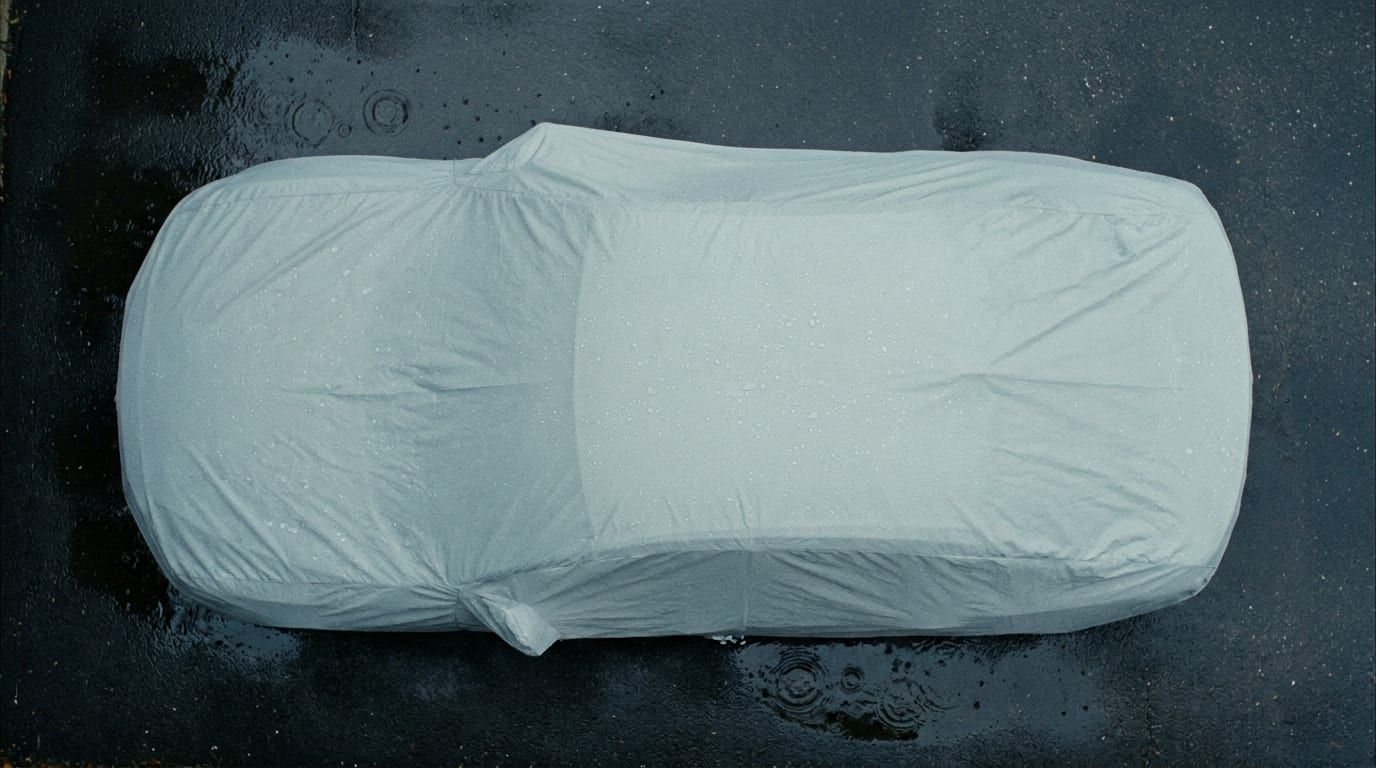
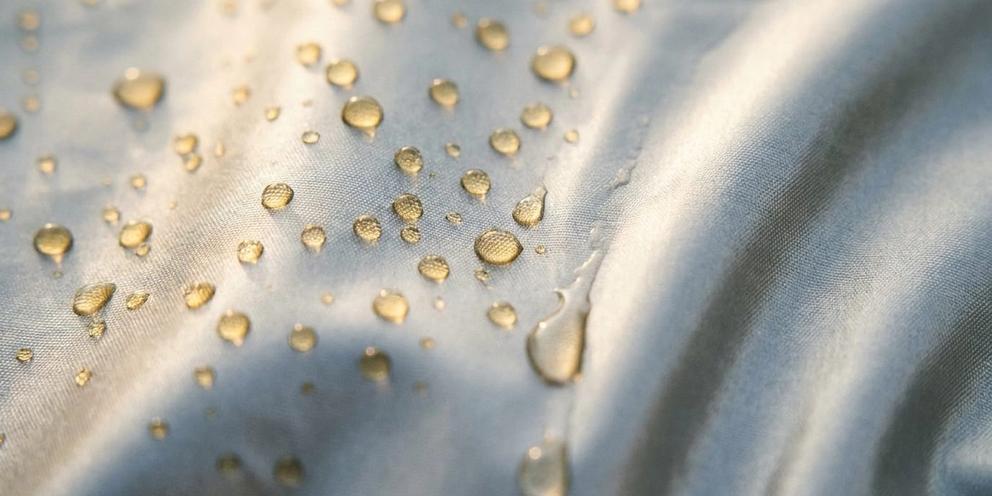
"Waterproof" gets thrown around loosely on product pages, so it's worth breaking down what actually separates a genuinely waterproof cover from one that's just water-resistant. A truly waterproof cover uses multi-layer non-woven fabric with a laminated or coated barrier layer sandwiched inside. Water hits the outer layer, beads, and rolls off. A water-resistant cover, by contrast, is often single-layer treated cotton or a light poly blend. It'll shrug off dew and a light drizzle, but sit through a few hours of steady rain and it starts wetting through, especially at the high points like the roof and hood.
Fabric is only half the story, though. Seam construction matters just as much, since most leaks don't happen through the fabric at all, they happen at the seams and mirror pockets where two pieces of material get joined. Taped or double-stitched seams close that gap. A cheap single-stitched seam is basically a row of tiny needle holes waiting to wick water inward.
There's a simple way to check if a cover's coating is still doing its job: the water beading test. Run a hose over the fabric or wait for a light rain. If water forms distinct beads and rolls off, the coating's active. If it darkens and soaks in instead, the treatment's worn out, regardless of how new the cover looks. This is worth checking every few months on a cover that lives outdoors.
One trade-off owners don't always think about: a cover has to block rain while still letting moisture vapor escape. If it's fully sealed with no breathability, condensation gets trapped underneath and sits against your RAV4's paint, which can do its own kind of damage over time. The better waterproof car covers are engineered to manage both directions at once, not just to keep rain out.
UV Protection: Stopping Sun Damage Before It Starts
UV exposure doesn't just fade paint. It cracks plastic trim, dries out rubber door seals, and over a couple of summers can leave a RAV4 parked outside looking years older than one kept in a garage. It's cumulative and slow, which is exactly why owners underestimate it until the damage is already visible.
Covers fight this with UV-blocking fabric treatments, usually UV-stabilized resins or coatings baked into the material. Here's the part people miss: that protection degrades with age. It's not something you can wash back to life. A cover that did a great job blocking UV in year one might be offering a fraction of that protection by year three, even if it still looks fine from a few feet away. At some point the answer isn't cleaning the cover, it's replacing it.
There's an interior angle too. A properly fitted outdoor cover blocks sun through the windows, which cuts down on interior heat buildup and slows dash fading and cracking. If you've ever popped into a covered car on a hot day and been surprised how much cooler it was than the car parked next to it, that's the UV barrier doing its job on the inside, not just the outside.
Here's the thing worth understanding before you shop by feature checklist: UV protection and waterproofing aren't really two separate things to evaluate. They're both determined by the same fabric layer system. A cover engineered for heavy UV-stabilized protection is almost always the same multi-layer construction that handles waterproofing well, because both jobs come down to how the outer layer is treated and layered. You're not choosing between "the waterproof one" and "the UV one." You're choosing a fabric tier that does both, to varying degrees. For a deeper look at how these fabrics are engineered, this breakdown of waterproof fabrics is worth a read.
Comparing Cover Tiers for Your RAV4: Which Level of Protection Do You Need

Not every RAV4 owner needs the same cover. Someone in coastal Oregon dealing with sustained rain half the year has a different problem than someone in Phoenix baking in full sun with maybe ten rainy days annually. Matching the tier to your actual climate saves money and prevents you from under-protecting your paint.
| Tier | Waterproofing | UV Protection | Best For | Rough Price Band |
| Entry-level | Light rain, morning dew | Basic UV-resistant coating | Mild, dry climates, occasional outdoor parking | Lower |
| Mid-tier | Sustained rain exposure | Moderate UV coating for regular sun | Daily outdoor parking, moderate climates | Mid-range |
| Top-tier / all-weather | Driving rain, standing water resistance | Heavy UV-stabilized multi-layer fabric | Daily full-sun exposure, high-rain regions, combined rain/snow/UV | Higher |
Entry-level covers are fine if your RAV4 only sees outdoor parking occasionally and you live somewhere dry. Mid-tier makes sense for the average daily-outdoor-parking owner in a climate with real seasons. Top-tier, all-weather covers are the ones engineered to handle rain, snow, and UV all in one fabric system, and they're the right call if you're in a region that throws more than one kind of weather at your car through the year.
Warranty coverage tends to track with tier, too, and it's a decent proxy for how long the manufacturer expects the fabric to actually hold up. A cover backed by a stronger warranty is usually signaling more confidence in the fabric's long-term durability, not just better customer service. Worth checking before you buy, especially if you're deciding between two covers at a similar price. For a broader look at what "outdoor-rated" actually covers in terms of wind, rain, and UV combined, this guide to using a cover outdoors is a good next read.
Getting the Right Fit: Custom vs. Semi-Custom Covers for the RAV4
A loose, universal-fit cover undoes a lot of the protection you just paid for. Gaps at the wheel wells or around the bumpers let wind-driven rain get up underneath. And a cover that's too big flaps in the wind, which sounds like a minor annoyance but actually wears down the UV coating and fabric surface faster through constant friction, especially at the edges.
A RAV4-specific or semi-custom cover accounts for the shapes a generic cover ignores: roof rails, the rear spoiler on certain trims, and mirror pocket placement that matches where your mirrors actually sit. RAV4 body dimensions have shifted across generations, so a cover sized for a 2015 model won't sit right on a 2022, even though they're both "RAV4s" on the label.
Before buying, run through a quick checklist:
- Measure bumper-to-bumper length and compare it against the listed size range for your model year
- Check that mirror pocket placement matches your RAV4's actual mirror position
- Confirm the cover accounts for roof rail clearance if your trim has them
- Look for a rear spoiler cutout if your trim includes one
If you're not sure which size category your RAV4 falls into, this sizing guide walks through how to match cover dimensions to your specific model. You can also browse Toyota-specific cover options directly if you want to skip straight to fitment by model.
Installing and Securing Your Cover for Long-Term Outdoor Use
Fit matters, but so does tension. A cover that's snug and correctly seated stays put. A loose one flaps every time the wind picks up, and that constant movement wears down fabric and coating far faster outdoors than it would in a still garage.
Gust straps are the piece that actually keeps a cover anchored to the RAV4 during real wind, not just a light breeze. They run underneath the vehicle and cinch the cover down so it can't lift or shift, which also protects the seams from tearing under repeated stress. If your cover didn't come with straps installed correctly, it's worth walking through how to install gust straps properly rather than guessing at tension.
A cable lock does double duty. It's a theft deterrent, sure, but it also keeps wind from lifting the cover's front and rear edges, which is where most flapping starts. Installing a cable lock correctly means threading it through grommets at both ends and securing it under the vehicle, not just draping it over the top.
The install order that actually works: front to back, drape the cover and align the mirror pockets first, secure the straps underneath, then cinch the base tension before locking it down. Skipping the tensioning step and going straight to the lock is the most common mistake, and it's why so many covers end up loose within a week.
Maintaining Waterproofing and UV Protection Over Time
Dirt sounds like a cosmetic problem. It's not. Grime buildup breaks down water-repellent coatings faster than plain weather exposure does, because dirt particles sit on the surface and grind into the fabric with every gust of wind or shift of the cover. Regular cleaning isn't about keeping the cover looking nice, it's part of keeping the protection working.
The right method is simple: mild soap, no harsh detergents, air dry fully before storing or refitting. Harsh chemicals strip the UV and waterproof treatments right along with the dirt, which defeats the purpose. This cleaning guide covers the specifics if you want a step-by-step.
Know the warning signs that a cover's done, too. Water soaking through instead of beading on the surface. Fabric that's gone stiff or brittle to the touch. Visible fading of the cover material itself, not just your paint. Any of those means the treatment's worn out, and cleaning won't bring it back.
How often you should check depends on where you live. RAV4 owners in high-UV regions (the desert Southwest, for instance) or high-rain regions should be inspecting more often than someone in a mild, moderate climate. Twice a year is a reasonable baseline; monthly spot-checks make sense if you're in one of those harsher climates.
Choosing Your RAV4 Outdoor Cover: Final Checklist and Next Steps
Before you buy, run through the four things that actually matter: waterproof rating, UV protection level, fit precision, and whether tie-down hardware is included or sold separately.
The decision rule is simple. Mild, dry climate? A lighter waterproof tier is enough, and you'll save some money. High-rain or high-sun region? Default to the heaviest all-weather tier, because that's the one engineered to handle combined exposure rather than just one threat at a time.
If you're stuck between two covers at similar prices, let warranty coverage break the tie. It's usually the clearest signal of how long the manufacturer actually expects the fabric to last.
If you found this useful, it's worth exploring more of our car cover guides as you narrow down your options, or subscribing if you want more comparisons like this one before you commit to a purchase. When you're ready to see specific options, use the vehicle cover finder to pull up outdoor cover choices sized to your RAV4's exact model year and trim.
Updated