


Waterproof Car Cover for Mercedes-Benz S-Class: Climate-Specific Protection Guide
A Mercedes-Benz S-Class isn't just another sedan sitting in the driveway. It's got acres of painted surface, chrome trim that shows every water spot, and a nose full of radar sensors and cameras that don't love moisture. If you're searching for a waterproof car cover for Mercedes-Benz S-Class ownership actually demands, you already know a generic cover from the auto parts store isn't going to cut it. This guide walks through how to match a cover to the climate your S-Class actually lives in, not just the one with the highest price tag.
Why Your S-Class Needs More Than a Basic Cover
Look at the exterior of an S-Class and you'll notice how much of it is exposed and expensive to fix. The paint is deep and glossy in a way that shows swirl marks from cheap fabric. The chrome window surrounds and grille pit if left wet too long. And behind that grille and windshield sits a cluster of radar sensors and cameras that make Distronic and the driver-assist features work, none of which appreciate sitting under standing water or ice.
Even owners who garage their S-Class most nights still deal with the occasional rainy commute, a work trip where the car sits outside for a week, or a weekend at a house without covered parking. Generic "universal" covers are built to loosely fit a huge range of vehicles, which means they fit none of them well. Gaps at the wheel wells, sagging fabric on the trunk, none of that holds up.
The better approach: figure out what your car's actual environment throws at it, rain, snow, sun, salt, and pick a waterproof car cover for Mercedes-Benz S-Class that's built for that specific fight.
What 'Waterproof' Actually Means in a Car Cover

"Waterproof" and "water-resistant" get used interchangeably in cover marketing, and that's a problem. Water-resistant fabric beads off a light drizzle just fine, then wets through once it faces a sustained downpour or the car sits under sprinklers for an hour. Waterproof means fully sealed, no moisture getting through to the paint no matter how long the rain lasts.
Good waterproof covers are built in layers. There's an outer shell that handles wind and abrasion, a middle barrier that actually blocks water, and a soft inner layer that keeps the fabric from marking up your clear coat while you drive around town with it folded in the trunk. Skip any one of those layers and you're compromising somewhere.
Seams are where most cheap covers fail. A cover can use great fabric and still leak at every stitch line if the seams aren't sealed or taped. Rain finds the weak point, always, and stress points around the mirrors and windshield are usually it. Worth reading up on waterproof fabric construction before you buy, since the fabric spec on a product page rarely tells you how the seams are finished.
There's also a breathability trade-off nobody talks about enough. A cover that blocks water perfectly but doesn't let trapped condensation escape will cook moisture right under the surface, and you'll open it up to mold or water spotting on the paint. The best options block liquid water from outside while letting vapor from inside work its way out.
Matching Cover Features to Your Climate
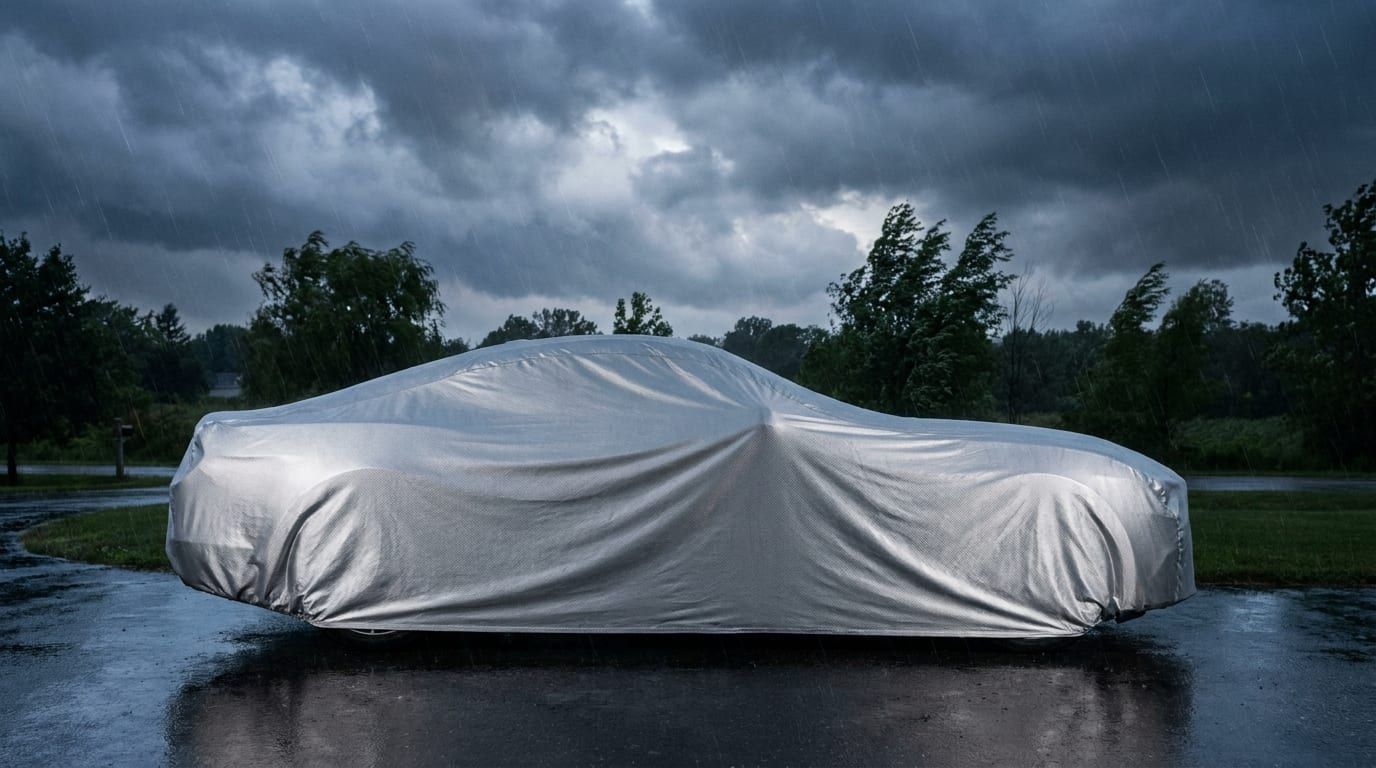
This is where most buyers go wrong: they buy the same cover their neighbor has, regardless of whether they live somewhere completely different climate-wise.
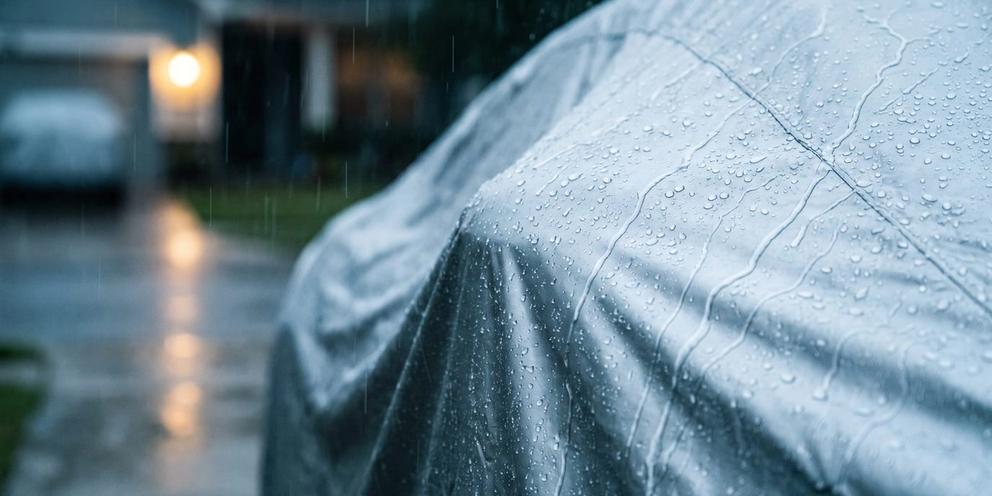
Rain-heavy and humid regions need fully sealed, taped seams above almost everything else, plus mildew-resistant fabric that can handle staying damp for stretches without breaking down. Fit matters here too. A loose cover pools water on the trunk and hood instead of shedding it, and that standing water eventually finds a way in.
Snow and ice regions call for reinforced, tear-resistant material. Cheap fabric goes brittle and cracks in freezing temps, right when you need it most. You also want a design built to shed snow load rather than sag under it, since a sagging cover stretches and can tear at the seams over a winter.
Desert and high-UV regions put fading and heat, not water, at the top of the risk list. A UV-resistant coating protects the S-Class's paint from sun bleaching, and it keeps heat from building up under the cover on the hottest afternoons, which matters for both paint and any interior surfaces exposed near the windows.
Coastal and salt-air regions need materials that resist corrosion and don't trap salt residue against the chrome and trim. Salt air is relentless on metal, and a cover that holds moisture and salt against the surface does more harm than no cover at all.
If none of these matches your exact situation, most owners deal with two or three of these conditions across a year, which is exactly why picking based on the waterproof car cover buying guide categories, rather than the flashiest description, gets you a better result.
Getting the Fit Right for S-Class Body Variants
The S-Class isn't one size. Standard-wheelbase and long-wheelbase (including Maybach) models differ by several inches, and that difference matters a lot more than it sounds like it should. A cover cut for the shorter body will pull tight and expose the rear bumper on a long-wheelbase car, or hang loose and flap in the wind on the shorter one. Either way, you get gaps, and gaps are where water gets in.
A snug, model-specific or semi-custom fit does two things. It seals the car properly, and it cuts down on wind flap, which sounds minor until you realize that constant flapping fabric wears through waterproof coating from the inside over months of use. That's a slow leak nobody notices until the damage is already done on the paint underneath.
Small details count for a lot here too. Mirror pockets keep the cover snug around the side mirrors instead of billowing there. Antenna cutouts mean you're not forcing a hole through fabric that's supposed to be sealed. On a car with as many exterior features as the S-Class carries, cameras, sensors, chrome strips, those small design details are what separate a cover that actually works from one that just looks close enough on the box. Check what size car cover fits your specific S-Class before you buy rather than after.
Outdoor Storage vs. Indoor Storage for a Luxury Sedan
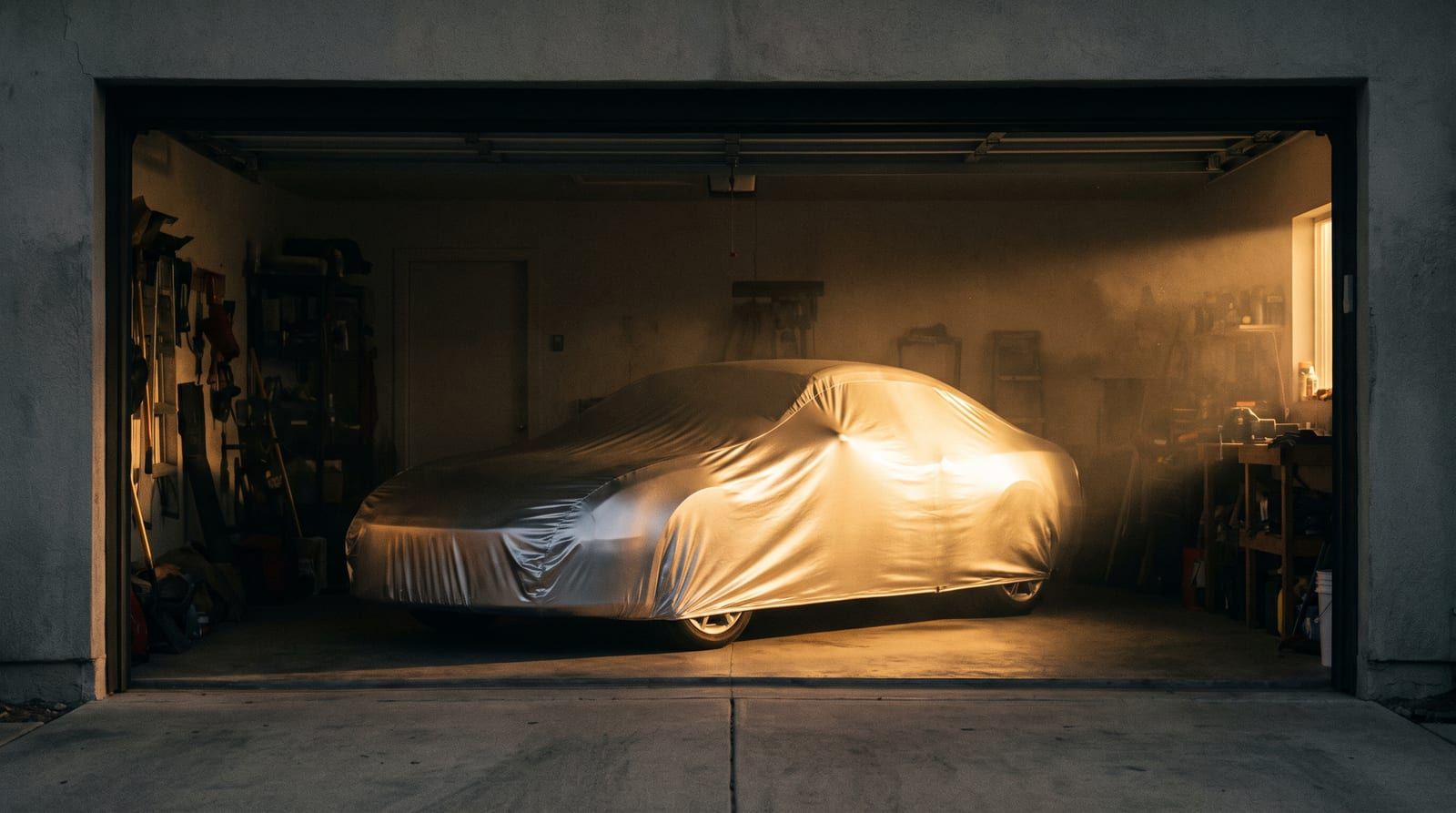
Even a garaged S-Class picks up dust, and dust plus an accidental bump with a bike or a ladder means scratches. A lightweight indoor cover handles that without needing to be waterproof at all, since it's never seeing rain.
Driveway or street parking is a different conversation entirely. If your S-Class sits outside regularly, a waterproof, outdoor-rated cover isn't optional. It's the only thing standing between the car and whatever the sky decides to do that week. Rain, sap, bird droppings, morning dew, an outdoor cover deals with constant exposure that an indoor cover was never built to handle.
Owners in mixed climates, garage most nights but occasionally park outside for days at a time, are often better off owning both an indoor cover and an outdoor cover rather than assuming one product can do both jobs well. Asking a lightweight indoor cover to survive a rainstorm, or an outdoor cover to sit folded in the trunk without leaving fabric marks, is asking it to do a job it wasn't designed for.
Securing the Cover in Wind and Storm-Prone Areas
A waterproof cover only protects the car if it stays on the car. Wind can lift a poorly secured cover right off mid-storm, which defeats the entire purpose at the exact moment you needed it most.
Gust straps and cable locks solve this. Straps cinch the cover down at the mirrors and undercarriage so wind can't get underneath and start peeling it back. If you're in a region with regular high winds, check that the cover you're considering actually has built-in grommets or tie-down points, not just a basic elastic hem. Installing them properly isn't complicated, and the guide to installing gust straps walks through it in a few steps.
Cable locks add a second benefit beyond wind. For S-Class owners parking outdoors in public lots, apartment complexes, or anywhere semi-public, a locking cable deters someone from just lifting the cover and helping themselves to whatever's underneath. It's a small addition that pays for itself the first time someone tries.
Maintaining Waterproofing Over Time
A waterproof cover isn't a buy-it-once-and-forget-it item. Dirt and road grime build up on the fabric surface, and that grime breaks down the water-repellent coating faster than plain weather exposure does on its own. Cleaning the cover periodically, not just the car, keeps that coating doing its job.
Drying matters just as much as cleaning. Folding a damp cover and stuffing it in a bag invites mildew, and mildew doesn't stay contained to the cover. It can transfer onto your paint the next time you put the cover back on. Let it air-dry fully first, every time. The cover cleaning guide covers the specifics on detergents and drying that won't strip the waterproof coating.
One more thing worth checking before you buy: does the cover carry a lifetime warranty on materials? That's a decent signal the manufacturer expects the waterproofing to actually hold up across seasons, not just look good in the first month.
Choosing the Right Cover for Your S-Class
Start with your climate, not your budget. Figure out whether rain, snow, UV, or salt air is the dominant threat where your car actually sits, then compare covers built for that specific job. A waterproof car cover for Mercedes-Benz S-Class ownership makes sense will look different for someone in Phoenix than someone parking near the coast in Charleston.
Fit and seam sealing matter just as much as the fabric itself. A great waterproof material stitched with unsealed seams still leaks. A perfect fit with mediocre fabric still lets moisture through eventually. You need both working together, which is why it's worth reading the full guide to using a car cover outdoors before settling on one.
If you're still weighing whether a cover is worth it at all for a car this exposed, this rundown on why a car cover matters is a good place to start. And when you're ready to compare fitted options, take a look at the Mercedes-Benz cover lineup to see what actually matches your S-Class's dimensions. Bookmark this guide, or subscribe for more climate-specific advice, so you're not guessing the next time your storage situation changes.
Updated