


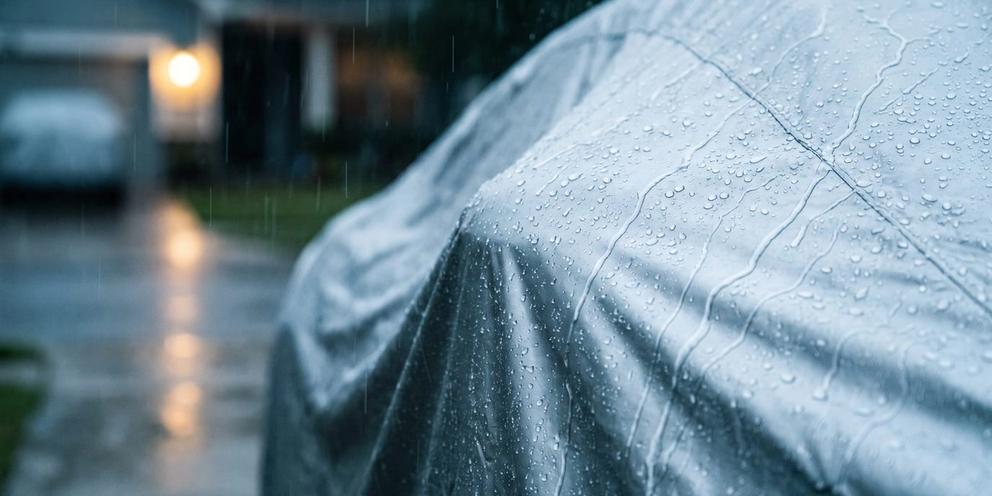
Waterproof Car Cover for Subaru Outback: Climate-Specific Protection Guide
A Subaru Outback owner buys the wagon because it's supposed to handle whatever the weather throws at it. Then it sits in the driveway getting rained on, snowed on, or baked under the sun, and the same logic that sold you the car should apply to how you protect it. A waterproof car cover for Subaru Outback owners isn't a generic accessory decision. It's a climate decision, and getting it wrong means paying for protection that doesn't actually protect.
Why Your Subaru Outback Needs Climate-Matched Waterproof Protection
Outbacks get marketed as go-anywhere, all-weather wagons, which is exactly why so many owners park them outside year-round. That's the irony. The vehicle is built to handle rain, snow, mud, and coastal salt air, but most owners still leave it exposed to those same conditions without a second thought about what's actually happening to the paint, trim, and rubber seals over time.
There's a real difference between a cover that gets rained on once a month and one that lives outdoors, 24/7, in a specific regional climate. A cover rated "waterproof" in a lab test somewhere doesn't mean much if it can't handle three months of Pacific Northwest drizzle, or a Phoenix summer, or salt air rolling in off the coast every single day. One-size-fits-all covers tend to underperform precisely because they're built for an average condition that doesn't exist anywhere in particular.
So this guide isn't about finding "a waterproof cover." It's about matching the cover's features to your actual climate, rain-heavy, snow and ice, high-UV desert, or humid coastal, because that's what determines whether the cover earns its keep. And regardless of where you live, the Outback's roofline, roof rails, and boxy rear liftgate are fit factors that matter no matter what climate you're shopping for. You can browse Subaru-specific cover options to get a sense of what's built around those shapes, and it's worth reading up on outdoor car covers generally before you narrow down by climate.
What 'Waterproof' Actually Means on a Car Cover
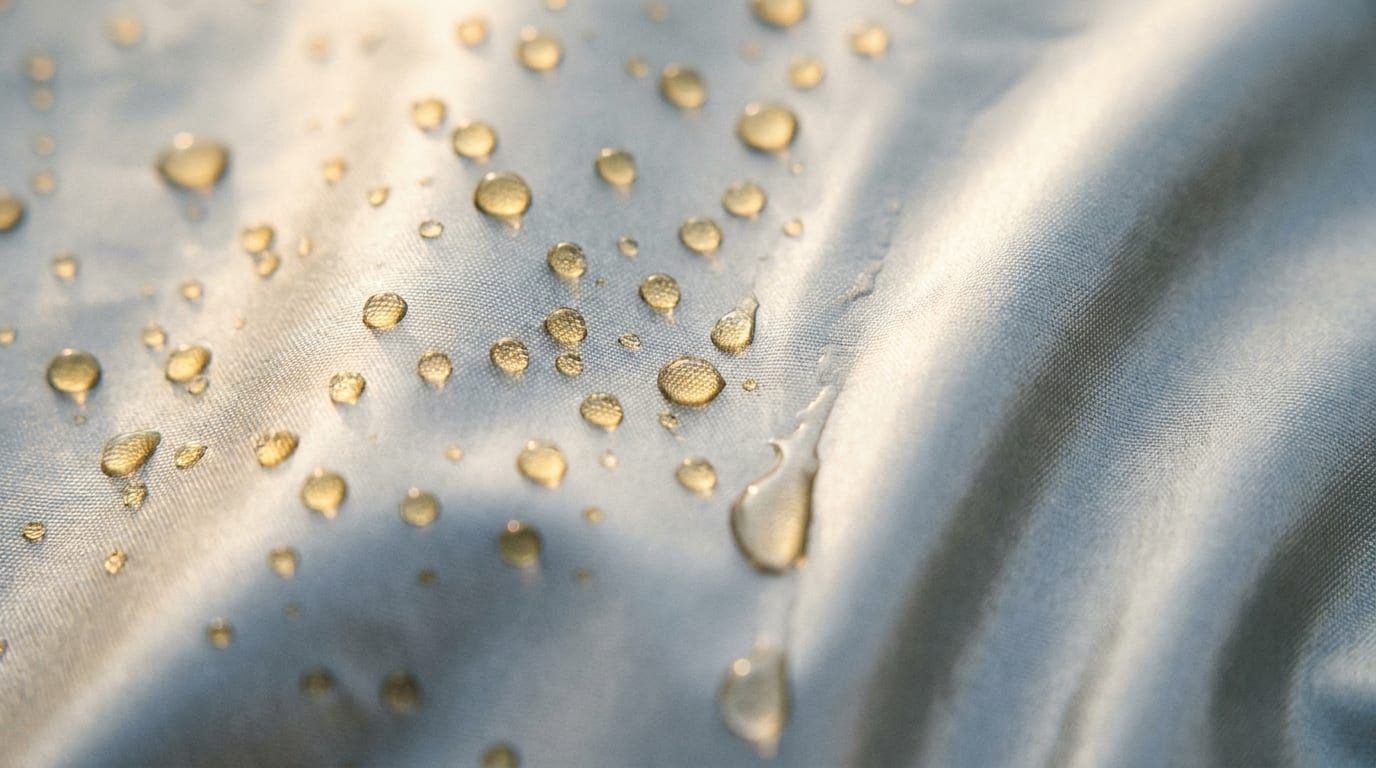
Here's where a lot of buyers get tripped up. "Waterproof" and "water-resistant" get used almost interchangeably in product listings, but they're not the same thing. Waterproof means a fully sealed, non-breathable layer that keeps water from passing through at all. Water-resistant means a treated fabric that beads water and sheds most of it, while still letting air move through.
Sounds like waterproof wins every time. It doesn't. A fully sealed, non-breathable cover left on a car outdoors for weeks can trap condensation underneath it. Moisture that can't escape sits against your paint and trim, and over time that causes more damage than the rain would have. This is why genuine outdoor protection almost always comes from multi-layer construction: a water-repellent outer shell paired with breathable inner layers that let trapped moisture vent out while still keeping rain from soaking through.
The details matter more than the marketing word. Look at seam construction. Taped or sealed seams stop water from creeping in at the stitch lines during a hard rain, which is usually where a "waterproof" cover actually fails. Check the hem too. An elastic or grommet-and-cord hem that cinches snug around the rocker panels keeps wind-driven rain from sneaking up underneath the cover's edge. If you want the deeper technical breakdown, the waterproof fabrics guide walks through how these layers are actually built, and the waterproof car covers buying guide covers what to look for before you buy.
Matching Cover Features to Your Climate
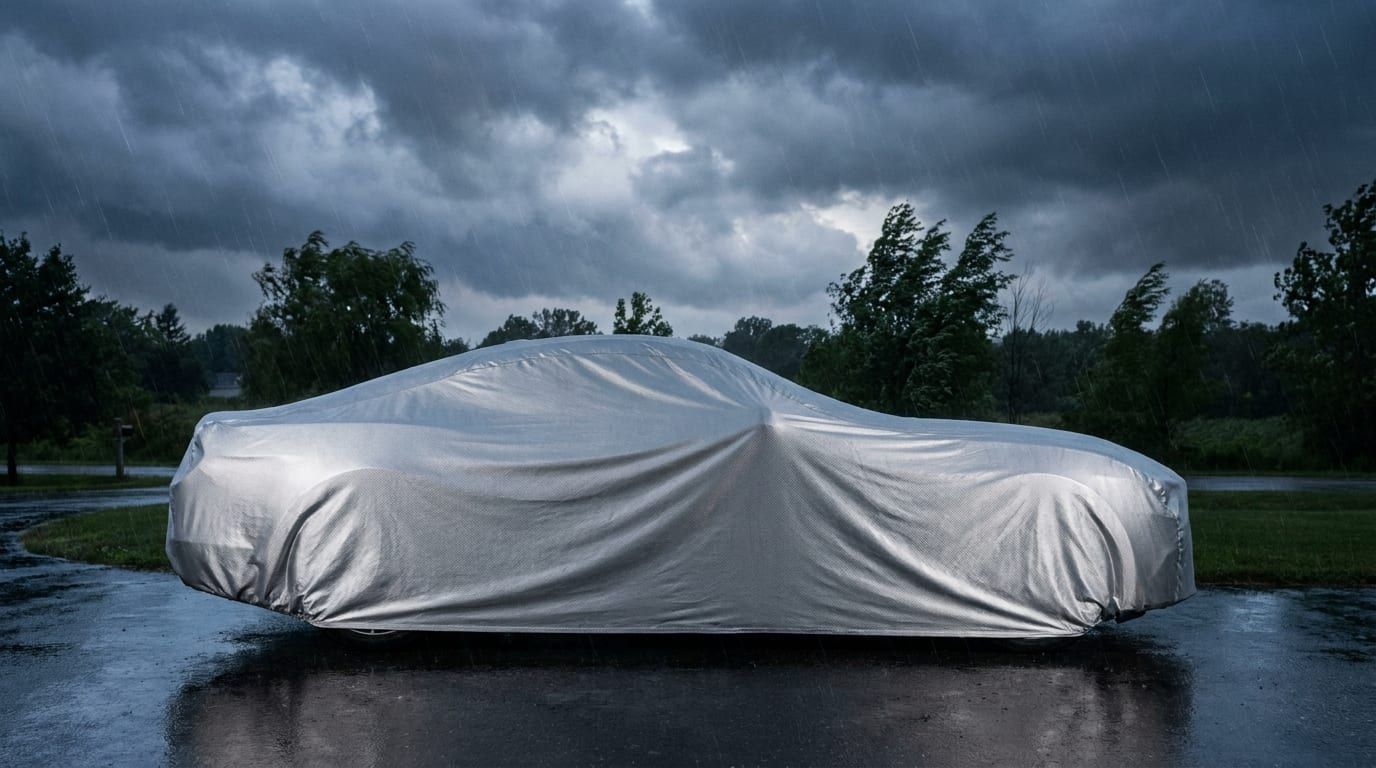
This is the part most buyers skip, and it's the one that actually determines whether your cover works.
Rainy or Pacific Northwest climates
- Fully seam-sealed construction so water doesn't creep in at the stitching
- Mildew-resistant fabric, since a cover that's damp for days at a time will grow mold if it isn't treated for it
- A snug elastic hem that stops wind-driven rain from working its way under the edges during a storm
Snow and ice regions
- Reinforced fabric that won't crack or stiffen in freezing temps (cheap fabric gets brittle fast in the cold)
- A design that shields the door handles and mirrors, so you're not chipping ice off them every morning
- A cover that isn't so tight it becomes a frozen shell you can't remove without a fight
High-UV or desert climates
- UV-blocking outer layers as the priority, arguably above waterproofing itself, because sun exposure fades paint and breaks down fabric faster than rain ever will
- A cover that stays flexible in extreme heat instead of stiffening or warping
Humid or coastal climates
- Breathability first, so moisture doesn't get trapped against the paint
- Salt-air resistance, since salt accelerates corrosion on anything metal it touches, including grommets, zippers, and trim
- Mold resistance on the cover itself, because damp coastal air is exactly the environment mildew thrives in
If you're not sure which category you fall into, read through the guide to using a car cover outdoors. It covers wind, UV, and rain exposure in more depth than a spec sheet ever will.
Getting the Fit Right on an Outback
A waterproof cover that doesn't fit is barely a waterproof cover at all. Loose fabric flaps in the wind, and every flap is an opening for rain to get pushed in sideways. Loose fabric also rubs against the paint every time the wind picks up, which over months turns into fine scratching you didn't see coming.
The Outback has a couple of fit points worth checking specifically: the roof rails, which stick up higher than a sedan's roofline and need a cover cut to clear them without pulling tight across the middle, and the rear spoiler, which can snag a cover that wasn't designed with it in mind. Semi-custom covers get you close. A custom-fit car cover is built to the Outback's actual dimensions, rails and spoiler included, so there's no guessing involved.
Elastic hems and adjustable straps matter here too. You want the cover cinched tight against the rocker panels, not just resting there, so a gust doesn't get underneath and lift the whole thing. And don't skip checking your model year. Outback dimensions have shifted across generations, sometimes more than owners expect, so a cover built for a 2015 won't drape the same way on a 2023. Run your year and trim through a coverfinder tool or check the sizing guide before you buy, not after.
Other Features Worth Checking Before You Buy
A few things beyond waterproofing decide whether a cover holds up long-term.
Anti-theft cable and lock loops matter if your Outback lives in a driveway or shared lot. A cover that can be cabled and locked down is a mild deterrent at minimum, and installation is straightforward if you follow a cable lock installation guide.
Reinforced grommets and tie-down straps earn their keep in high-wind regions. Without them, a strong gust can work a cover loose overnight, and you'll find it three yards away in the morning. The wind strap installation guide shows how these get secured properly.
A soft inner lining or fleece layer protects the paint during long-term outdoor storage, cushioning against the fabric itself rubbing on the clear coat.
Multi-layer versus single-layer fabric is a real tradeoff, not just a price difference. Multi-layer covers protect better and last longer, but they're heavier and slower to put on and take off. If you're covering and uncovering the Outback daily, that weight adds up. If it's parked for weeks at a stretch, durability wins. Worth checking what warranty coverage applies too, since a cover that's supposed to last years should be backed accordingly.
Installing and Maintaining Your Cover for Long-Term Waterproofing
Installation order actually matters for waterproofing to work as intended. Drape front to back, secure any under-vehicle straps first, then cinch the hem last. Do it out of order and you'll end up with seams pulled slightly off-alignment, which creates small gaps exactly where you don't want them.
Cleaning isn't optional maintenance, either. Dirt and grime sitting on the fabric break down water-repellent coatings faster than the weather does on its own. A cover that's been coated in road dust for six months won't bead water the way it did on day one. The cover cleaning guide covers the right method so you're not stripping the coating while trying to clean it.
Drying matters just as much. If the cover comes off wet from rain or snow, let it dry fully before folding it away. A damp cover stored in a bag is a mildew problem waiting to happen. The storage guide has the specifics on how to store it between uses without trapping moisture.
And watch for the tell. When water starts soaking through the fabric instead of beading up and rolling off, the waterproofing is done. No amount of reapplying spray-on treatment fixes fabric that's worn past that point. That's your signal to replace it, not patch it.
Find the Right Waterproof Cover for Your Outback
It really comes down to matching the cover to where you actually park. Rain-heavy climates need seam-sealed, breathable protection. Snow and ice need reinforced, cold-resistant fabric. Desert sun needs UV-blocking as the top priority. Coastal air needs breathability and salt resistance above almost everything else.
Enter your Outback's year and trim into a coverfinder tool to see fit-verified options rather than guessing from a generic size chart, and give the warranty and fit details a look before you check out. Climate exposure is a long-term commitment for a cover, so it's worth a few extra minutes upfront. If you want more seasonal care tips for keeping the Outback in shape year-round, it's worth poking around the rest of the blog while you're at it.
Updated