Which Car Cover Brand Has the Best Reputation for Accurate Sizing?
Published
Here's the direct answer: a car cover brand's reputation for accurate sizing isn't built on marketing copy. It's built on three things you can actually verify: whether the brand patterns its covers from real vehicle dimension data instead of guessing, how many size and trim variations it offers per model, and whether its return policy holds up when a cover doesn't fit. Ask "which car cover brand has the best reputation for accurate sizing?" and you'll get a lot of brand names thrown at you. Ask it a better way, by checking these three things yourself, and you'll get a real answer.
Universal and semi-custom covers work off broad size classes, think small sedan, mid-size SUV, full-size truck, and they're inherently less precise than a cover built from actual make, model, year, and trim measurements. That's not a knock on universal covers. They serve a purpose. But precision and "one shape stretched across a size range" don't belong in the same sentence.
So if you're trying to evaluate which car cover brand has the best reputation for accurate sizing, skip the testimonials page and look at three concrete signals instead: the published measurement methodology (or lack of one), how specific the fit lookup is, and what the brand's fit-related return terms actually say in writing. This isn't a ranking of named competitors. It's a checklist, and it applies just as much to CarCovers as to anyone else selling a cover online.
What 'Accurate Sizing' Actually Means for a Car Cover
There are three tiers, and the difference between them matters more than most buyers realize.
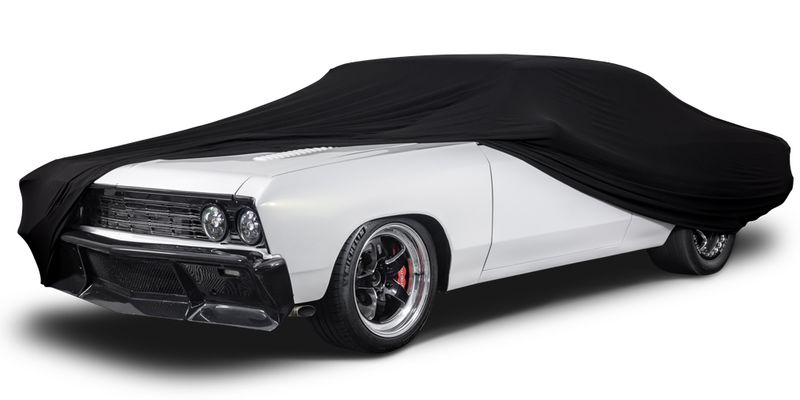
Universal covers use one general shape, stretched or cinched to fit a size range. Semi-custom covers are shaped around a broad vehicle category, sedan, SUV, truck, van, and sized by length. Custom-fit covers are patterned to a specific year, make, model, and trim. Only the last one accounts for the actual contours of your vehicle.
Trim matters more than people expect. Two trims of the same model can have different mirror placement, a factory spoiler on one and not the other, or a wider body kit on the sport trim. A cover that fits the base model's roofline might bunch up around a spoiler on the performance trim, or leave the mirrors pinned under fabric that was never cut for them. If you've ever wondered why a "model-fit" cover from one buyer's garage photo doesn't look like yours, this is usually why.
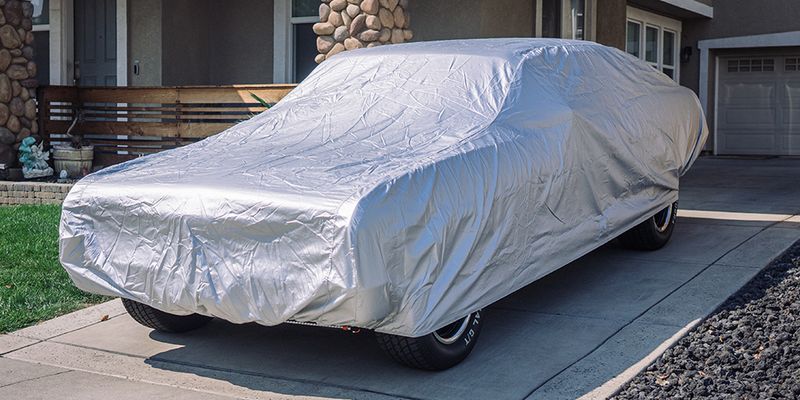
Bad sizing isn't just cosmetic. A loose cover flaps in wind, and that flapping abrades the clear coat over time, the fabric acting like slow-motion sandpaper. Gaps at the hem let water pool or wick upward. UV exposure gets through to any panel that's not fully covered. Straps and grommets designed for a specific wheelbase land in the wrong spot on a mismatched pattern, so they stop doing their job entirely. None of this shows up on the product page. It shows up three months into ownership.
If you want the fuller breakdown of fit types and what each one is actually good for, the guide to choosing the right car cover size covers it in more depth, including how factory add-ons like spoilers and antennas factor into fit and modifications.
How to Check a Brand's Sizing Reputation Yourself
Start with the fit tool. Does it ask for year, make, model, trim, and body style, or does it just want your vehicle's overall length? More inputs generally means a more accurate pattern, because the brand is accounting for variables beyond "how long is this car." A tool that only asks for length is, functionally, a semi-custom size chart wearing a custom-fit label.
Next, check whether the brand references real measurement data. Some use OEM spec sheets. Some do physical fit testing on actual vehicles. Some just publish a size chart with no explanation of where the numbers came from. You usually can't tell which category a brand falls into from the product description alone, but it's worth looking for.
Then read the reviews, and read them for the right thing. Skip past the comments about fabric feel or shipping speed and look specifically for fit complaints or fit praise. A brand's real sizing reputation lives in post-purchase feedback, not in product copy, because nobody writes marketing copy that says "this runs small around the mirrors." Customer reviews are the closest thing to an audit trail you'll get before buying.
Last, and this is the one people skip: what happens if it doesn't fit? Is there a no-cost exchange window? A sizing guarantee? Or does the return policy bury a restocking fee that quietly discourages anyone from correcting a bad order? A brand that's confident in its sizing accuracy generally doesn't need to make returns painful.
How CarCovers Approaches Fit
CarCovers' cover finder tool asks for year, make, model, and trim, then routes you to the matching custom-fit option instead of handing you a generic size chart and letting you guess. That's the mechanism, not a claim about beating anyone else on it.
The custom-fit car cover line is built to accommodate factory features, spoilers, roof racks, mirrors, antennas, rather than assuming every sedan has the same silhouette. That's the whole point of trim-level patterning: it's the difference between a cover that drapes over your spoiler and one that gets caught on it every time you pull it off.
And if you order the wrong size anyway, because the wrong year got selected or a trim got misread, there's a no-hassle return and exchange process built for exactly that. Here's the thing about sizing reputation: it doesn't get decided on the product page. It gets decided at the exchange counter, when a customer who ordered wrong finds out whether the brand makes fixing it easy or expensive.
Red Flags That Signal a Brand's Sizing Claims Are Weak
A few patterns are worth watching for, because they tend to show up together.
Listings that offer only three or four broad sizes, small, medium, large, extra-large, for every passenger car regardless of body style. A coupe and a sedan are not the same shape, and a four-size system can't tell the difference.
Fit tools that ask only for vehicle length or width, nothing else. That approach can't account for a spoiler, a roof rack, or where the mirrors sit. It's a semi-custom process dressed up to look more precise than it is.
Strict non-returnable sizing policies are a tell, too. If a brand won't take back a wrong-size cover, that usually means they expect a meaningful share of orders to come back wrong, and they've decided it's cheaper to push that cost onto the customer than to fix the sizing process. Compare that against a brand backing its covers with something like a lifetime warranty, which only makes financial sense if the product is actually built to hold up and fit as described.
And watch review patterns, not isolated reviews. One person complaining their cover didn't fit could be a fluke order, a mismatched trim, a one-off mistake. A recurring theme of "didn't fit as described" across dozens of reviews isn't a fluke. That's a sizing process problem.
Find Your Exact Fit
Guessing by vehicle length is the single most common reason people end up unhappy with a car cover. It's an easy mistake to make, since length is the number most people actually know off the top of their head, but it's the wrong input for a cover that needs to clear a spoiler or seat correctly around the mirrors.
The better move is to run your year, make, model, and trim through a proper fit lookup before you buy, not after the cover shows up loose around the bumper. It takes a couple of minutes and it settles the question for good.
If you're still working through what "accurate sizing" should even look like for your specific vehicle, it's worth bookmarking this piece or subscribing for more straight-answer guides like it. No pressure to buy anything today, just worth having in your back pocket before you order a cover for a car you actually want protected.