


Affordable Car Cover for Mercedes-Benz C-Class: A Budget Buyer's Guide
A C-Class is not a cheap car to fix if the paint goes wrong. That's the uncomfortable math a lot of owners run into once the factory warranty expires and they start pricing out cover options. The good news: an affordable car cover for Mercedes-Benz C-Class owners isn't a myth or a compromise you'll regret. It just means knowing what to look for before you add to cart. This guide walks through the real price tiers, the quality floor you shouldn't drop below, and how to match a cover to the way you actually park.
Why Your C-Class Needs a Cover Even on a Budget
There's a common assumption that protecting a Mercedes means paying Mercedes-level prices. It doesn't. Weather doesn't check your badge before it bakes clear-coat or soaks an interior. Darker C-Class colors (obsidian black, the deeper blues) show UV fade and water spotting faster than lighter paint, and that sunroof you love lets UV cook the dash and seats just as easily as it lets light in.
Body style matters here too. A sedan, a coupe, and the discontinued convertible all have different roof lines, mirror placement, and rear ends, so a cover built loosely around "C-Class" without accounting for trim can bunch, gap, or flap in the wind regardless of price.
This guide is about finding genuinely affordable options, not the cheapest thing that technically exists. There's a difference. Something that rips, fades, or shrinks after one season isn't a deal, it's a slower way to pay full price twice. Affordable doesn't have to mean disposable. There's a minimum bar worth holding even when you're working with a tight budget.
The Minimum Quality Bar: What Cheap Shouldn't Mean

Even at the low end, a few things shouldn't be negotiable. Look for multi-layer woven fabric, not single-ply vinyl or the kind of plastic sheeting that tears if you look at it wrong. Reinforced seams matter more than people expect. And the hem needs an elastic edge or strap system, because a cover that isn't tensioned at the bottom will catch wind and sand paint like fine-grit cloth.
Water resistance and true waterproofing are not the same thing, and a budget cover doesn't need to claim the latter. What it does need to do is shed light rain and morning dew without soaking through. If it can't manage that much, it's not doing its job.
Breathability gets overlooked constantly. A cheap cover that traps moisture underneath can actually cause more paint damage than leaving the car uncovered, because now you've got condensation sitting against the surface with nowhere to go.
Stitching quality and grommet placement are the fastest way to spot corner-cutting, whether you're shopping in person or scrolling product photos online. Loose threads, crooked seams, grommets placed where they'll rub against trim: all signs the manufacturer prioritized speed over durability. Before you buy anything, it's worth reading through the custom-fit car covers guide, since fit is the first filter that separates a cover that'll actually last from one that won't.
Price Ranges to Expect: What You Get at Each Tier

Pricing for an affordable car cover for Mercedes-Benz C-Class tends to fall into three rough bands, and knowing what each one buys you keeps you from overpaying or underbuying.
| Tier | Price Range | What You Get |
| Entry | Under $50 | Universal or semi-custom fit, single-layer fabric, best for indoor or mild-climate use only |
| Mid | $60 to $100 | Semi-custom or custom shaping, added water resistance, better hem and strap systems |
| Upper-affordable | $100 to $150 | Full custom fit for the C-Class body style, multi-layer weatherproof fabric, UV-rated for year-round outdoor use |
The jump in price between tiers is driven almost entirely by fit precision and fabric layering, not by branding. A $120 cover isn't pricier because of a logo, it's pricier because it's cut to the actual contours of your car and built from fabric with more than one functional layer.
Worth noting: sedan, coupe, and convertible C-Class trims can price differently within the same tier, simply because some shapes are more complex to pattern than others. A coupe's sloped roofline or a convertible's folded-top bulge takes more precise cutting than a straightforward sedan silhouette, and that shows up in cost.
Universal, Semi-Custom, or Custom-Fit: Which Saves You Money Long-Term
Universal covers are the cheapest upfront, and that's really their only advantage. The looser fit means more fabric flapping in wind, more friction against paint over time, and more chance it just doesn't sit right on your specific body style.
Semi-custom splits the difference. It's sized roughly to sedan length and body type, which makes it a reasonable middle option for owners who park in mixed conditions and don't want to overspend.
Custom-fit costs more at checkout, but it's often the real affordable choice once you look past the first purchase. Proper tension and full coverage mean less wear, fewer returns, and a cover that's still doing its job two or three years out instead of needing replacement after one rough winter. Before buying anything, run your VIN or trim through a vehicle size and fit guide. Buying the wrong size and having to reorder is the single most common way budget buyers end up spending more than they planned.
Matching the Cover to How You Actually Park
Where your C-Class sleeps at night should decide a good chunk of your budget, honestly more than people account for.
Garage or indoor storage: a lighter, less expensive indoor car cover is genuinely enough. There's no reason to pay for weatherproofing you'll never put to use.
Daily street parking or driveway living: here, budget should go toward UV and water resistance first, softness and indoor-grade finish a distant second. This is where an outdoor car cover earns its keep.
Mixed climates, the kind with real rain, occasional snow, and brutal summer sun, call for picking the one feature that matters most for your region rather than trying to pay for all of them at once. If you're in the desert Southwest, UV rating wins. If you're in the Pacific Northwest, go waterproof first and treat UV as a bonus.
Matching the cover to your actual parking habits, instead of buying the most feature-loaded option you can afford, is how you get real value out of a budget purchase rather than overbuying features you'll never use.
Red Flags That Signal a Cover Won't Last
A few warning signs show up again and again on covers that don't survive a season:
- No stated fabric layer count, or vague "all-weather" language with zero specifics backing it up
- No elastic hem, no strap system, no tie-down points anywhere, which is close to a guarantee of wind lift and paint scratching
- No warranty or return policy attached to the product, a pretty clear tell the seller doesn't expect it to hold up
- Reviews mentioning shrinkage, color fading within a couple months, or seams splitting
Before you buy, check what backs the product up. A real warranty and a workable no-hassle return policy are cheap insurance on a budget purchase. If a seller won't stand behind it, that tells you something about how long they expect it to last.
Stretching the Life of a Budget Cover
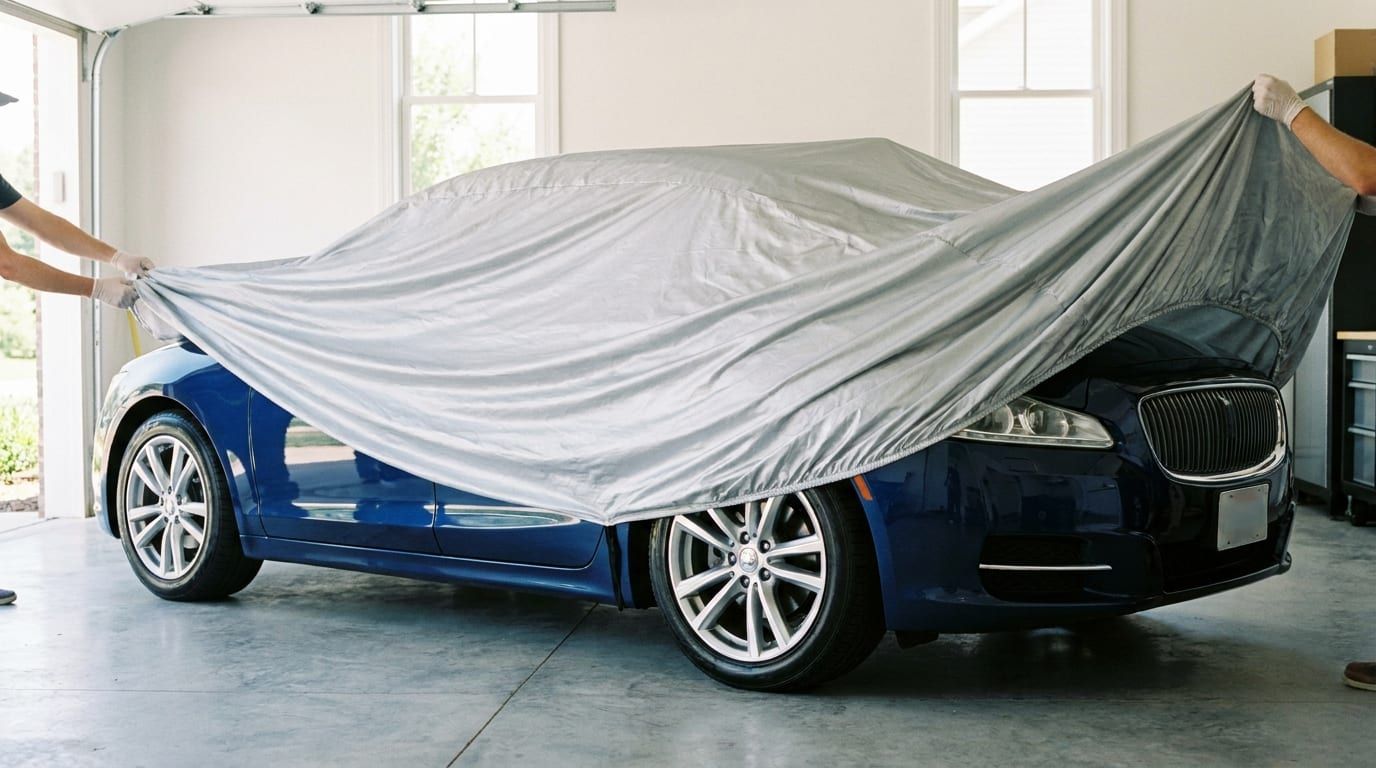
Good habits matter more here than on a premium cover, because budget fabric simply has less margin for rough handling.
Fold it properly between uses instead of balling it up, which stresses the fabric and creates permanent creases over time. Clean it regularly, since dirt and grit trapped against the surface act like sandpaper every time the cover shifts in the wind (the cover cleaning guide covers the basics). And get the installation right: secure the straps properly, and never drag the cover across pavement while putting it on or taking it off. One good installation guide read-through will save you from the small mistakes that tear lower-cost material early.
A premium cover might shrug off careless handling for a while. A budget one won't. Treat it right and it'll outlast its price tag.
Finding Your Fit: Next Steps
The path here is pretty simple: figure out where and how you park, decide on the minimum fabric and feature bar you're not willing to go below, then compare custom-fit pricing against semi-custom for your specific body style.
If you want to skip the guesswork, running your car through a cover finder tool will pull up options actually sized for the C-Class instead of a generic Mercedes template. It's also worth checking current clearance listings now and then. Discounted stock is a legitimate way to land a higher-quality cover at a lower price, not a sign of a lesser product.
If you're still comparing options, our car covers page is a good place to see what's available across fit types and price points. And if protecting your Benz has you thinking about car care more broadly, stick around and explore more of our guides. One thing's worth remembering before you check out: the cheapest cover that lasts one season always ends up costing more than the slightly pricier one that lasts three.
Updated