


Best Indoor Car Cover for Honda Pilot: Soft Lining & Dust Protection for Garage Storage
Garages feel safe. Four walls, a roof, maybe a space heater in the corner. But safe isn't the same as clean. Dust settles everywhere, drywall dust from that shelving project, pollen that snuck in when the door was open, fine grit tracked in on tires. All of it lands on your Pilot's paint and just sits there until you wipe it off, and wiping dry dust off clear coat is how you get swirl marks. That's the real argument for an indoor car cover for Honda Pilot owners who think their garage already handles the job. It doesn't, not fully.
Why Your Garage-Kept Honda Pilot Still Needs an Indoor Cover

Even a well-sealed garage isn't a clean room. Dust settles constantly, along with pollen tracked in from outside, fine drywall particles left over from home projects, and whatever fumes drift off stored paint cans, gas, or cleaning chemicals. None of that stays suspended in the air forever. It lands on horizontal surfaces, including the hood and roof of your Pilot.
Here's the part people miss: Honda's clear-coat finish is thin and it's not immune to abrasion. Dry dust sitting on paint, then getting brushed off with a hand or a shop towel, creates fine scratching known as swirl marks. You won't notice it in flat light. You will notice it in direct sun, as a hazy web across the hood.
Garages bring their own specific hazards too. Mice and other pests can leave scratch marks on tires and lower panels. If you've got a cat that wanders in, claws on a bare hood are a real risk. A soft-lined indoor car cover sits as a physical barrier between all of that and your paint, which is really the whole point of one.
If you're reading this, you're probably past the "do I need a cover" question and into "which one." Good. That's the right place to be, because generic covers or skipping one entirely both leave your Pilot exposed to problems that are cheap to prevent and expensive to fix.
What Actually Makes a Cover 'Indoor-Grade' (Soft Lining + Dust Protection Explained)
Not every cover labeled for a garage actually earns that label. The thing that separates a real indoor cover from a repurposed outdoor one is the inner layer. Indoor covers use a brushed fleece or satin-style lining designed to rest against clear coat without grinding in fine particles every time the fabric shifts. Outdoor-grade weaves, by contrast, are built stiffer to survive wind and rain, and that stiffness is exactly what you don't want touching your paint for weeks at a time.
Breathability matters differently indoors too. Outside, a cover has to manage condensation and trapped moisture from weather swings. Inside a garage, that's rarely the issue. So indoor covers shift their engineering priority toward softness and dust-weave density instead of waterproofing. That's a deliberate trade-off, not a missing feature.
This is also why swapping in a heavy waterproof cover for garage use is a mistake, even though it seems like "more protection can't hurt." Those coarser waterproof fabrics create more surface friction over time, not less, especially once dust works its way between the fabric and the paint. You'd actually be trading one risk for a worse one.
Tiering follows this same logic. Entry-level indoor covers use a lighter dust-weight fabric, fine for everyday protection. Premium tiers step up to a heavier, denser soft-lining knit, meant for cars that spend more time sitting still under the cover. Neither is wrong, they're just built for different amounts of time spent parked.
Getting the Fit Right for Your Honda Pilot Generation
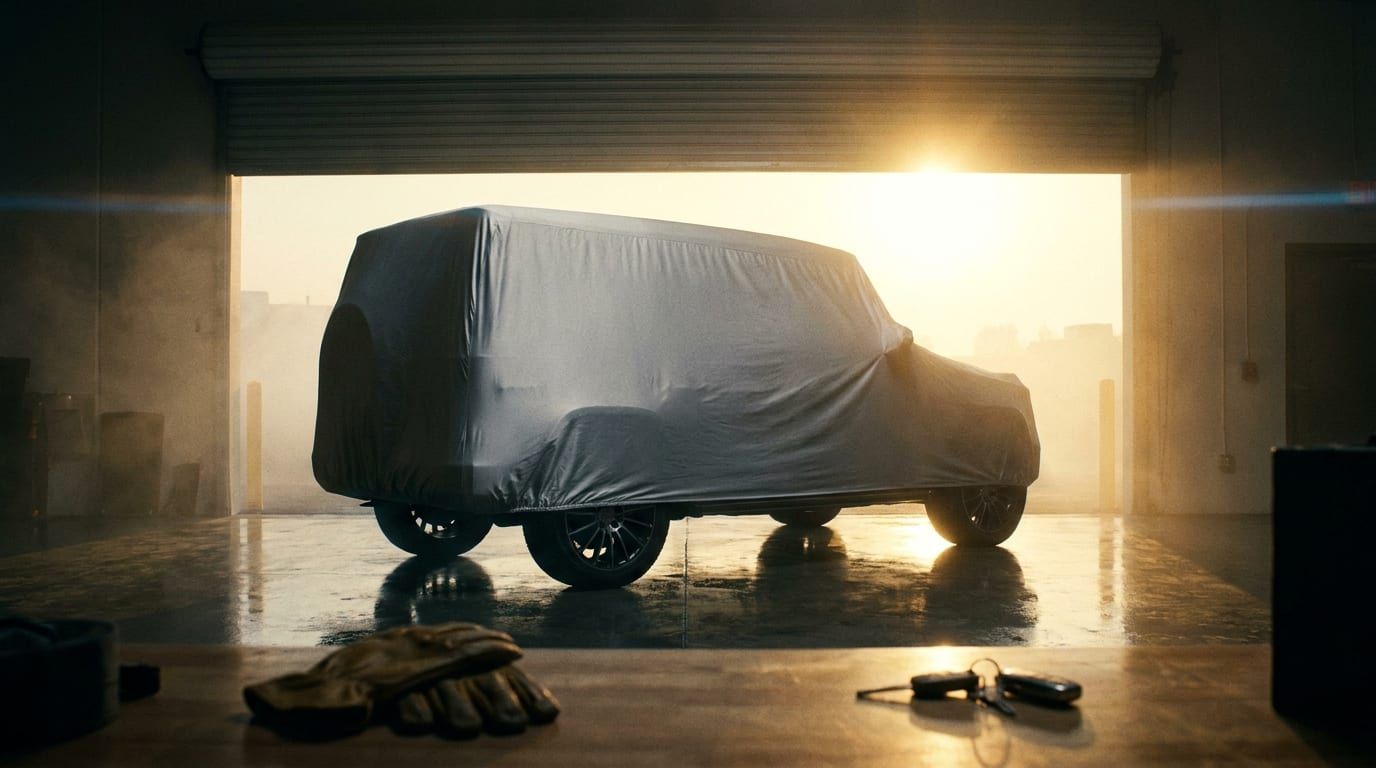
The Pilot has changed shape four times since 2003, and each generation has a genuinely different body: first-gen (2003-2008), second-gen (2009-2015), third-gen (2016-2022), and the current fourth-gen (2023-present). A cover cut for one won't sit right on another. The roofline, mirror placement, and rear liftgate contour all shifted between generations.
This is where universal "fits most SUVs" covers fall apart. They're built to a loose average, which means excess fabric bunching at the mirrors, flapping near the running boards, or sagging across the roof. That slack fabric rubs against the body every time it moves, which is precisely the micro-abrasion problem a soft-lining cover is supposed to prevent. A loose universal cover with a nice lining is still a loose cover.
Trim matters too, not just model year. Higher trims often add roof rails or running boards that change the panel contours a cover needs to clear. Before you buy, it's worth confirming those trim-specific dimensions rather than assuming "Pilot" is one shape across the lineup.
The straightforward way to handle this is to start from Honda's SUV cover page to find your generation, then run your VIN or trim details through the vehicle size lookup tool to confirm exact fit before checkout. A properly custom-fit cover is the difference between a cover that protects the paint and one that quietly scuffs it.
Comparing Indoor Cover Tiers for the Pilot: Which Level of Protection Do You Need?
Not every Pilot owner needs the same level of indoor protection, and honestly, the premium tier is overkill for a lot of daily drivers. Here's how the tiers generally break down:
| Tier | Fabric | Best For |
| Entry | Lightweight dust-cover fabric, single-layer soft lining | Daily-driven Pilots parked nightly, occasional short storage |
| Mid (satin-style) | Denser knit exterior, smoother satin hand-feel | Pilots that sit longer between drives, shared or multi-use garages |
| Premium | Heaviest soft lining, reinforced stitching at mirrors and door edges | Long-term garage storage, collector-adjacent vehicles |
If you're driving your Pilot most days and just covering it overnight, the entry tier does the job. It's light, easy to pull on and off, and the dust protection is enough for daily cycling. Where the mid tier earns its price is in households sharing a garage with bikes, tools, or foot traffic, since the denser knit and smoother satin feel hold up better against incidental contact.
The premium tier makes sense when the Pilot isn't moving much, think seasonal storage, a second vehicle, or a Pilot you're keeping in showroom condition. The reinforced stitching at high-contact points like mirrors and door edges pays off over months, not days. For a side-by-side look at what separates the mid and premium options, the indoor black satin cover page is a useful reference point.
Weigh the price against how the vehicle actually gets used. A daily driver rarely needs premium-tier reinforcement, and paying for it is paying for storage durability you won't use.
Installing and Maintaining Your Indoor Cover for Long-Term Dust Protection
How you put the cover on matters almost as much as which one you buy. Drape it roof-first, then let it fall to the hood and trunk, then work the sides down last. Doing it in this order keeps the cover's underside from dragging across dusty panels on its way down, which defeats the purpose before you've even finished tucking it in. For a step-by-step walkthrough, the installation guide covers the process in more detail.
If your garage floor kicks up dust, from concrete, from construction, from whatever's stored nearby, give the cover's interior a shake-out or a light vacuum before each use. It only takes a minute, and it keeps you from pressing settled grit straight into the paint the next time you drape it on.
Wash frequency is lower for indoor covers than outdoor ones, since they're not fighting mud and road grime. But "lower" isn't "never." Every few months, that soft lining needs a proper wash, because it's been quietly collecting the dust it's been keeping off your paint, and over time that dust redistributes right back onto the surface it's supposed to protect. The cover care guide walks through the safe way to clean it without wearing down the lining. For general context on indoor use overall, the guide to using car covers inside is worth a read too.
Sharing the garage with a cat or another pet changes the calculus a bit. Claws are a different kind of threat than dust, and a standard soft lining isn't built to stop them. If that's your situation, it's worth checking the scratch-protection guide for pet owners before you assume any indoor cover will hold up.
Choose the Right Indoor Cover for Your Pilot and Order With Confidence
The decision path here is pretty short once you break it down. Confirm your Pilot's generation and trim first, since that determines fit. Pick a tier based on how often it's actually driven versus parked long-term. Then verify the fit with a proper sizing check before you check out, rather than guessing off a generic SUV listing.
The soft lining and dense dust-weave are the actual reason to spend more than a generic cover costs. A universal cover might technically "fit," but loose fabric rubbing paint every time a door opens nearby isn't protection, it's a slow scratch machine. An indoor car cover for Honda Pilot owners built around soft-lining construction and true generation-specific fit solves the problem a universal cover creates.
If you're weighing the cost of a good cover against the cost of a paint correction down the road, it's worth knowing what you're covered for. Check the lifetime warranty details before you decide, since that's part of what you're actually paying for with a proper indoor cover.
Ready to stop guessing and get the right fit? Shop the custom-fit indoor cover for your Honda Pilot, and while you're at it, poke around the rest of our SUV cover lineup or subscribe to keep learning what actually protects your paint versus what just looks like it does.
Updated