
Car Cover vs. Carport: What Is the Difference (and Which One Protects Your Vehicle Better)?
Published
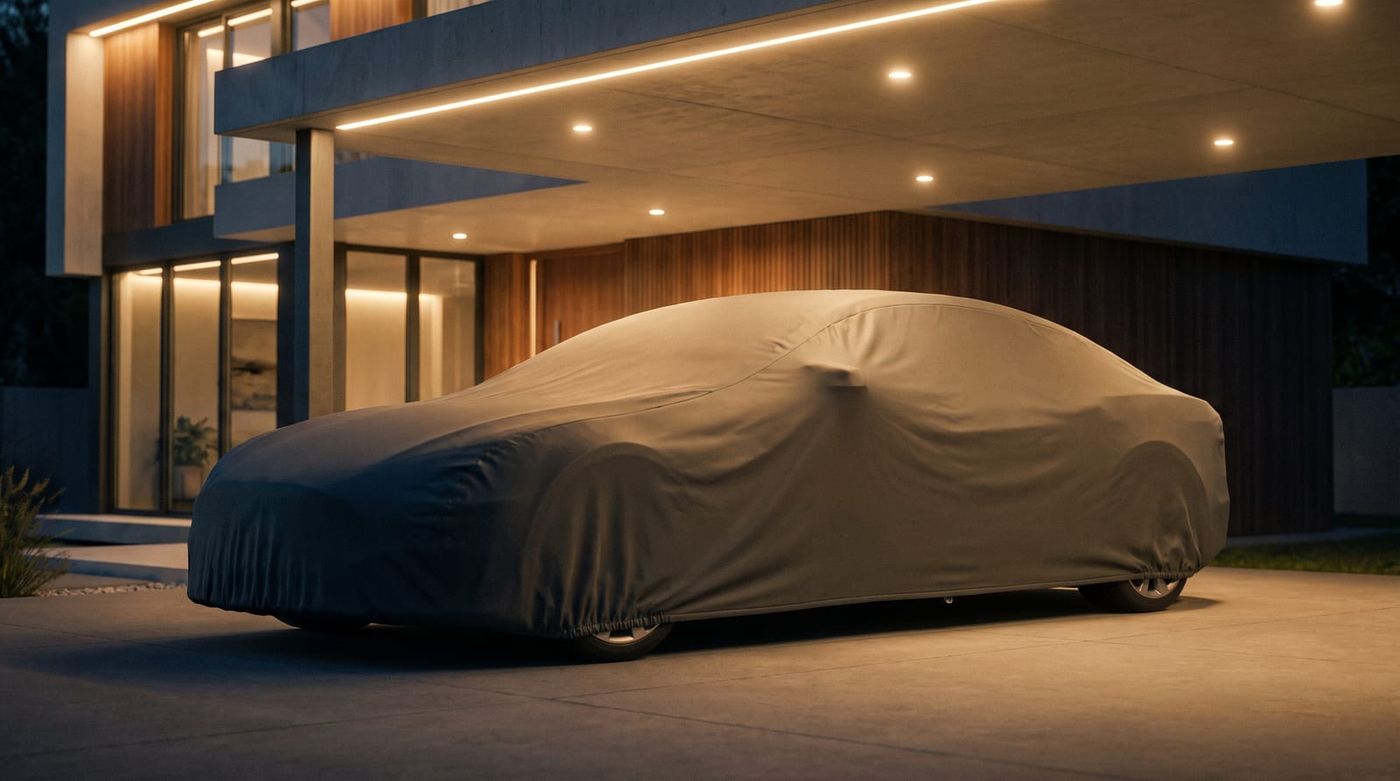
A car cover and a carport solve the same basic problem, keeping your vehicle out of the weather, but they go about it in completely different ways. So what is the difference between a car cover and a carport, really? A car cover is a fitted fabric shell that wraps directly around your vehicle's body. A carport is a fixed or freestanding roofed structure, open-sided or enclosed, that your vehicle sits under or inside. One touches the paint. The other doesn't.
That distinction matters more than it sounds. A car cover protects against direct contact: dust settling on the hood, bird droppings, tree sap, UV rays, scratches from branches, light rain or snow. What it won't do is stop wind-driven rain from getting under the edges the way a solid roof blocks it from above. A carport does the opposite job. It blocks sun and precipitation falling straight down, but the open sides let dust, pollen, wind-blown debris, and the occasional curious animal reach the paint anyway. A lot of owners end up running both for exactly this reason.
Cost separates them fast, too. A quality car cover typically runs $100 to $400 depending on fit and fabric. A carport costs a lot more once you add materials and installation, anywhere from a few hundred dollars for a pop-up canopy kit to several thousand for a permanent steel structure with footings. If you're trying to protect a vehicle on a budget, that gap alone usually settles the decision.
Material & Fabric Comparison: Car Covers vs. Carports

The materials tell you a lot about what each option is actually built to do. Car cover fabric is engineered to sit against painted panels and flex without rubbing. Carport roofing is engineered to hold up a structure against snow load and wind, not to touch your car at all.
Outdoor car covers are usually multi-layer polypropylene or polyester blends, built in tiers like Basic or Deluxe depending on how much weather exposure they're rated for. The good ones are breathable, which matters: a cover that traps moisture against your paint does more harm than no cover at all. Indoor-only covers skip the weatherproofing and use soft fleece or satin linings instead, since their only job is blocking dust and preventing scratches in a garage. Carports go a different direction entirely. Entry-level pop-up kits use galvanized steel or aluminum frames with polyethylene tarp canopies. Permanent structures step up to powder-coated steel frames topped with corrugated metal or polycarbonate panels.
| Metric | Car Cover | Carport |
|---|---|---|
| Material | Polypropylene/polyester blends, laminated waterproof shells, fleece/satin linings | Steel or aluminum frame with poly tarp (pop-up) or metal/polycarbonate roofing (permanent) |
| Water resistance | Beads water directly off the surface | Blocks rain from above, not from the sides |
| UV resistance | UV-blocking layers sit inches from paint | Shade only, angle depends on sun position |
| Breathability | Designed to vent trapped moisture | Not applicable, it's a structure, not fabric against the car |
| Typical lifespan | A few years before lining or straps wear out | Years to decades depending on construction |
| Portability | Folds into a storage bag, goes anywhere | Fixed in place, or requires disassembly |
If you're trying to decide which fabric weight actually fits your climate, the waterproof fabric breakdown goes into more detail on how each layer performs.
Protection Level: Weather, Sun, and Debris
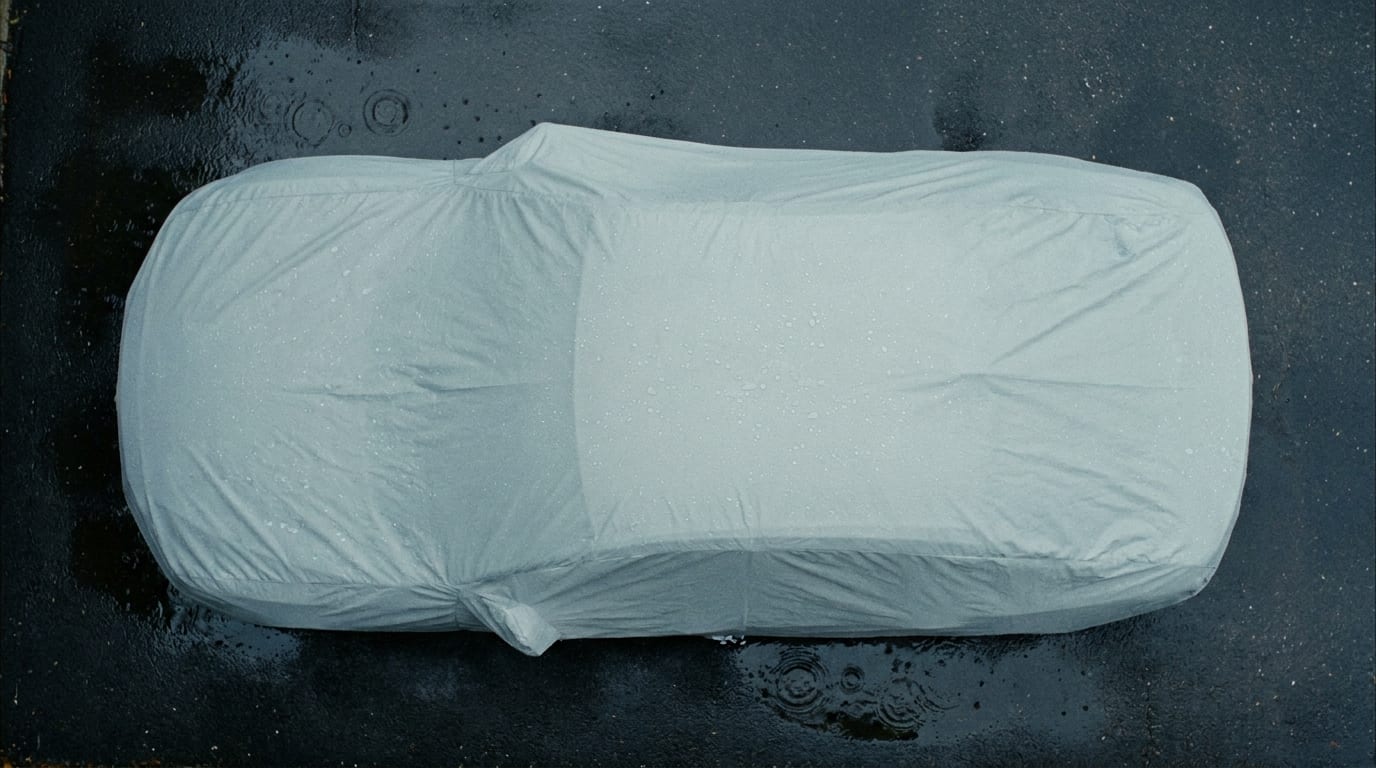
Rain behaves differently depending on which option you're using. A waterproof car cover sheds water directly off its surface, right at the source. A carport roof diverts rain, sure, but wind can still push moisture in sideways, and if you've ever parked under a carport during a storm, you already know the back half of the hood doesn't always stay dry.
Hail is where the gap widens further. A dedicated hail car cover with extra padding absorbs small-impact dings before they reach the paint. A solid carport roof stops hail completely, no question there. But a canopy-style carport with a tarp top generally doesn't, since tarp material just isn't built to take repeated impact.
Sun exposure is another place the cover wins on consistency. A cover with UV-blocking layers sits right against the paint, all day, regardless of where the sun is. A carport's open sides mean the sun angle still gets in during early morning or late afternoon, depending on which way the structure faces. And on debris: a cover stops bird droppings, sap, and dust from settling directly on the paint. A carport only stops what falls straight down. Anything blown in sideways still lands on the hood. For a deeper look at handling these exact conditions, the guide to using a car cover outdoors covers wind, UV, and rain scenarios in more detail, and the waterproof car cover category is worth a look if rain protection is your main concern.
Cost, Installation, and Permanence
A car cover is about as low-friction as vehicle protection gets. You buy it once, there's no installation, no permit, nothing. It fits in a storage bag and you're covering the car in under a minute.
Carports ask a lot more of you. A temporary canopy kit is DIY-assembly and usually doesn't need a permit, but a permanent structure often does, plus a concrete footing and professional installation. That's not a weekend project.
Long-term value cuts both ways. A cover wears out eventually, the lining thins, straps loosen, and you'll replace it every few years, but even then you're spending a fraction of what a carport costs. A carport is the bigger investment up front, and it pays off differently: it can shelter more than one vehicle over time and it adds value to the property itself. One thing worth factoring in if you're nervous about committing to a purchase: CarCovers backs its covers with a lifetime warranty, which takes some of the risk out of buying one versus sinking money into a structure you can't easily undo.
Portability and Flexibility
This is where a car cover has no real competition. It travels with you. Use it at home, on a road trip, at a storage unit, wherever the vehicle ends up. Renters and apartment dwellers who can't install anything permanent still have full access to this option.
A carport is stuck where you put it. Permanent units obviously don't move, and even canopy-style kits require disassembly if you want to relocate them. If you move vehicles between locations often, or you don't own the property you're parking on, a carport just isn't practical.
A cover can also move between vehicles, as long as you've got the right size or a custom-fit cover for each one. A carport shelters whatever happens to be parked under it that day, nothing more. And covers work across categories, cars, trucks, SUVs, motorcycles, ATVs and UTVs, RVs, where a carport's footprint is fixed the moment it's built.
When to Use a Car Cover, a Carport, or Both
A car cover alone makes the most sense for renters, multi-vehicle households, seasonal storage, or anyone who just wants to protect a daily driver without the yard space for a structure. A carport alone fits homeowners who need permanent shade or rain cover for multiple vehicles, or who want to combine vehicle storage with a boat or RV parked nearby.
Honestly, running both is the strongest setup if you can swing it. The carport handles the direct rain, sun, and hail. The cover catches everything the carport's open sides let through: dust, wind-blown debris, pests. This combination matters most for classic cars or RVs sitting in long-term storage, where every bit of protection adds up. If you want the reasoning behind why a cover still earns its keep even with a roof overhead, why buy a car cover walks through it. And if you've already got a garage or carport and you're just trying to pick the right cover weight now, that's really a separate decision: check the indoor car cover options if the vehicle never sees open weather, since you don't need the same heavy-duty fabric a fully outdoor cover requires.
Choosing the Right Protection for Your Vehicle
Here's the short version: a carport is a fixed shelter investment, a car cover is portable, lower-cost, vehicle-specific protection. Most owners benefit from having a cover regardless of whether they've also got a carport sitting in the driveway. That's really the answer to what is the difference between a car cover and a carport when you boil it down to what matters for your car's paint.
If you're ready to look at options, it's worth finding one built for your exact make and model rather than settling for a generic fit. And if you're still weighing fabric choices, materials and weatherproofing details are worth a closer read before you decide. Either way, protecting the paint is the part that pays off, structure or no structure.






