


Custom-Fit vs. Universal Car Covers for the Hyundai Elantra: Which One Actually Fits?
Search "car cover for Hyundai Elantra" and you'll get two very different products calling themselves a solution: a universal cover that claims to fit "compact to mid-size sedans," and a custom fit car cover for Hyundai Elantra built to that car's actual dimensions. They are not the same product wearing different price tags. One is shaped to your car. The other is shaped to a rough average of dozens of cars that happen to be roughly the same size.
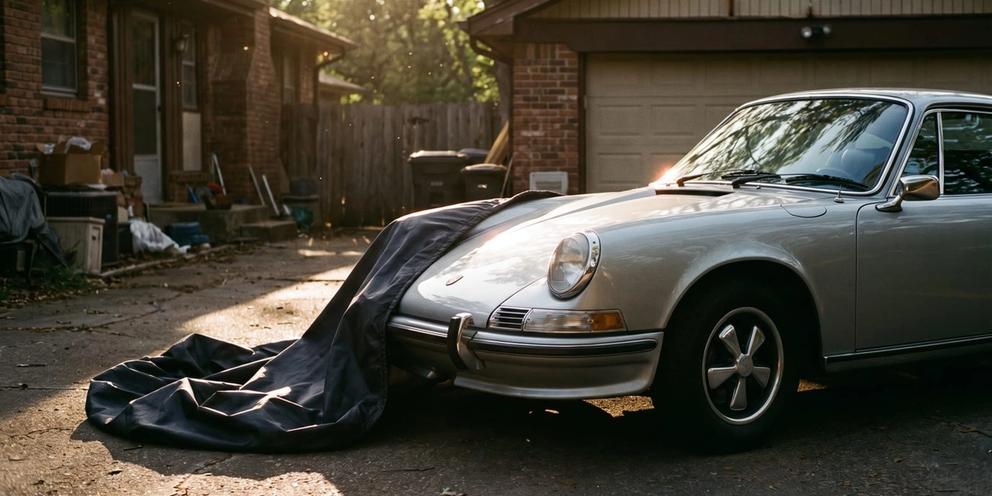
Here's the stakes, plainly: a poorly fitted cover on a compact sedan like the Elantra flaps in the wind, pools water at the trunk and hood seams, and rubs against the clear coat every time a breeze picks up. Over months, that friction shows up as swirl marks and dull patches you didn't put there on purpose.
This article walks through fit accuracy, protection level, price, installation, and long-term value, comparing a custom-fit cover against a universal one specifically for the Elantra. Worth noting up front, too: the 6th-gen sedan and the 7th-gen CN7 redesign don't share a body shape. Sharper creases, a different roofline, a longer overall footprint. A universal cover's "one size fits most" claim glosses right over that.
Custom-Fit vs. Universal Car Covers for the Hyundai Elantra: Side-by-Side
Fit accuracy
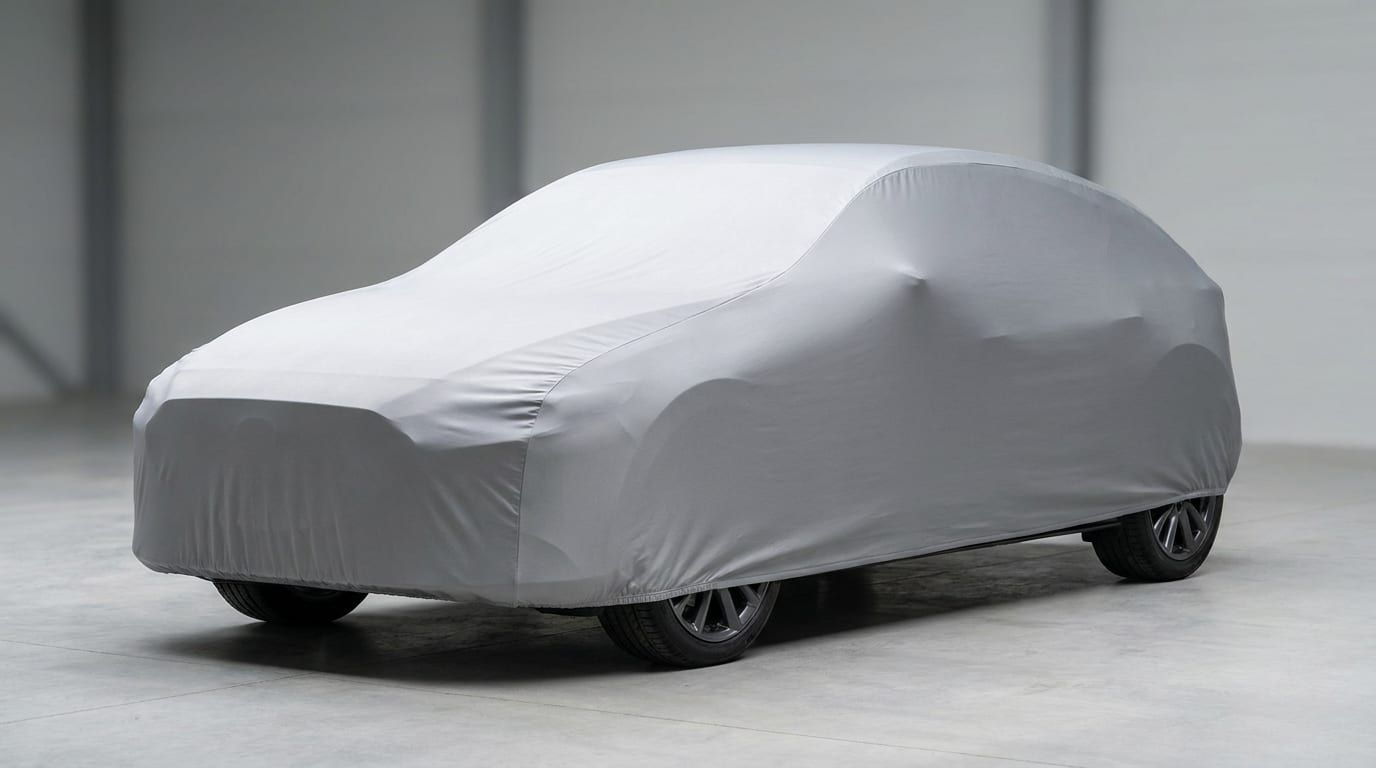
- Custom-fit: Patterned to the Elantra's exact length, mirror pockets, and roofline for that specific generation
- Universal: Sized by a generic "compact sedan" length range, which usually leaves slack at the front and rear bumpers
Material coverage
- Custom-fit: Reinforced fabric placed exactly where the Elantra needs it: hood, roof, trunk lip
- Universal: Uniform fabric across the whole cover, so it overcompensates in some spots and comes up short in others
Weather protection
- Custom-fit: Seals tighter at the wheel wells and rocker panels, which matters if you're relying on a waterproof car cover to actually keep water out
- Universal: Gaps at those same points because the shape isn't matched to the car, letting wind-driven rain sneak underneath
Installation and daily use
- Custom-fit: Goes on in one motion since the shape already matches the car; see this step-by-step cover installation guide for the general process
- Universal: Needs extra tucking, bungees, or straps to take up the excess fabric
Price
- Custom-fit: Higher upfront cost
- Universal: Cheaper to buy, but the flapping and abrasion that comes with a loose fit tends to shorten how long it lasts
Appearance
- Custom-fit: Hugs the Elantra's body lines
- Universal: Looks baggy, which isn't just cosmetic. A car that looks obviously under a tarp draws more attention than one with a cover that fits like it belongs there
If you own a Hyundai, the shape difference between these two options isn't subtle once you've seen both on the same car.
Why the Elantra's Body Shape Makes a Generic Cover Risky
The Elantra isn't shaped like a generic sedan, whatever that means. It's got a low, sloped hood, a compact trunk, and a roofline that changes noticeably depending on which generation you're driving. The 6th-gen sedan carries softer, rounder lines. The CN7 redesign brought sharper creases and a more aggressive stance. A universal cover doesn't know the difference. It's built to a length range, not a silhouette.
Universal covers sized for "mid-size sedans" tend to overestimate the Elantra's length. That excess fabric bunches at the ends, catches crosswinds, and rubs against the clear coat every time the car sits outside on a windy day. It's a slow abrasion process, not a dramatic one, which is part of why people don't notice it happening until the paint already looks tired.
Mirror pockets and antenna placement are the other common failure point, specifically on the Elantra. A cover built for a generic sedan often has a mirror pocket sized for a bigger mirror housing or positioned a few inches off, which means it either doesn't seat right or leaves the mirror exposed. Getting the right size cover for your vehicle starts with knowing these details matter, not just overall length and width.
Trim level plays into this too. An Elantra N Line or N with a larger rear spoiler changes how a cover needs to be shaped at the trunk to seat properly without straining the fabric. A cover pattern built for the base sedan won't always account for that spoiler. If your car has body modifications or trim-specific styling, it's worth checking fit modification options before assuming a standard pattern will work.
What You Give Up With a Universal Cover on an Elantra

Loose fabric at the front and rear overhangs is the first thing you'll notice, and it's the thing that does the most damage. Every time wind kicks up near a road or parking lot, that excess material flaps against the paint. It's slow, cumulative wear, and by the time you see it, it's already there.
Gaps at the wheel wells are the quieter problem. Rain and road spray wick up under a loose-fitting cover instead of running off the sides like it's supposed to. At that point the cover isn't protecting the car so much as trapping moisture against it, which is close to the opposite of the intended effect.
Excess material bunching near the mirrors causes its own wear pattern. Every time you pull the cover on and off, that loose fabric drags across the mirror housing. Do that enough times and you'll see small cracks or scratches show up on plastic that would otherwise hold up fine.
Sun exposure adds one more layer. A cover that doesn't lie flat leaves seams and folds that shift position day to day, which means the hood and trunk fade unevenly instead of uniformly. A cover that actually sits flush against the paint blocks UV more consistently across the whole surface.
Cost Comparison: Is Custom-Fit Worth the Extra Money for an Elantra
Universal sedan covers usually run cheaper than a custom-fit Elantra cover, sometimes by a noticeable margin. That difference buys you two things: material placed where the car actually needs reinforcement, and a shape that doesn't rely on straps and bungees to stay put.
Here's where the math shifts, though. A universal cover that flaps and rubs against the paint doesn't wear evenly. It frays at the stress points first, usually around the bumpers and wheel wells, and needs replacing sooner than a custom-fit cover used the exact same way. So the lower upfront price doesn't always mean lower cost over two or three years. It's worth running that comparison for your own situation using a side-by-side car cover comparison before you decide.
A universal cover still makes sense in a few situations: short-term storage, a tighter budget, or a car you're planning to sell soon and don't want to sink money into. Nothing wrong with that trade-off if it fits your timeline.
But if you're parking the Elantra outdoors daily, holding onto it long-term, or protecting a newer or higher-trim model, custom-fit is the clear call. It's the difference between a cover that ages gracefully and one that becomes the thing that ages your car.
How to Choose the Right Custom-Fit Cover for Your Elantra
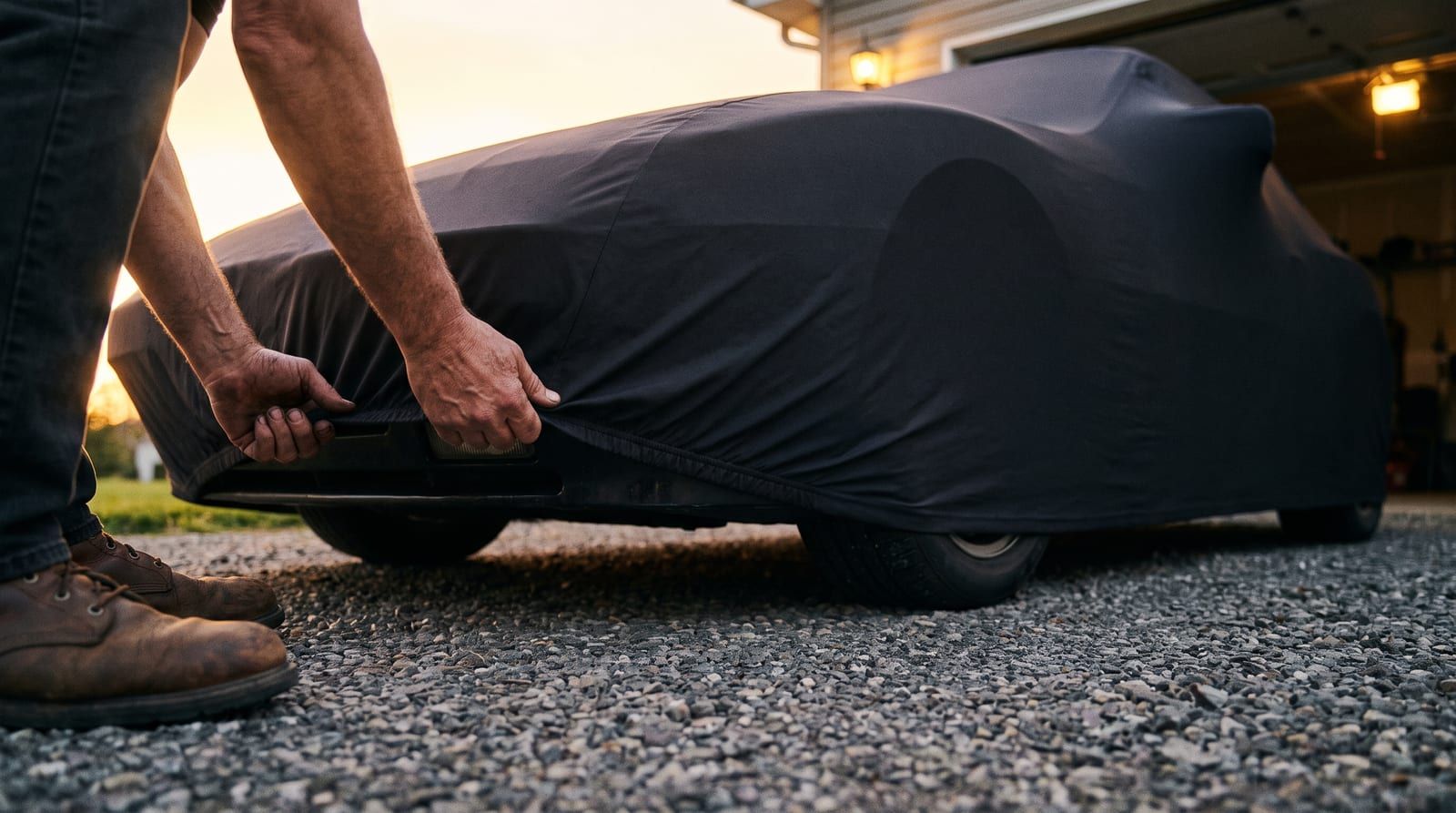
Start with your model year and generation. This matters more than people expect, since the sedan's shape changed enough between the 6th-gen and the CN7 to affect how a cover sits. Guessing here defeats the purpose of buying custom-fit in the first place. A cover finder tool makes this step quick if you're not sure which generation you've got.
Next, match material to how and where you actually park. If the Elantra lives in a garage, a lighter indoor satin option is plenty. If it's outside year-round, you want something built for outdoor use with real waterproofing and UV resistance, not just water resistance on the label.
Look for a few Elantra-relevant features specifically: reinforced grommets if you're using a cable lock, an elastic hem so the bottom edge stays snug under the rocker panels instead of flapping loose, and a mirror pocket actually cut for the Elantra's mirror shape rather than a generic approximation.
A couple of add-ons solve real friction points too. An antenna patch helps if the Elantra's antenna placement conflicts with how the cover sits over the roof. A storage bag makes it easier to actually use the cover daily instead of leaving it balled up in the trunk because pulling it out is a hassle. And check the warranty terms before buying, since a cover you're planning to use for years should be backed accordingly.
Bottom Line: Get the Cover Built for Your Elantra
If you're keeping your Elantra and covering it outdoors on a regular basis, custom-fit wins. Not by a small margin, either. Tighter seal, less flapping, less abrasion, and it just looks better sitting in the driveway. A universal cover isn't a real long-term protection strategy for this car. It's a stopgap, useful in narrow situations, but not something to build a multi-year plan around.
If you're ready to buy, find the cover matched to your exact Elantra by year and trim, and check the warranty coverage before you check out. And if you're still weighing your options, our articles page has more guides on choosing and maintaining a cover that actually protects your car the way it's supposed to.
Updated