


Do I Need a Cover If I Park in a Garage?
Yes, a garage-kept car still benefits from a cover, just not the heavy-duty kind. Dust, humidity swings, minor scratches, and the odd mouse looking for shelter all happen indoors too. The risk is lower than parking outside, but it isn't zero. So the honest answer to "do I need a cover if I park in a garage" depends on the garage itself: how sealed it is, what else lives in there, and how long the car sits between drives.
Do You Need a Car Cover If You Park in a Garage?
It's tempting to treat "garage" as a synonym for "protected." It isn't, not entirely. A garage handles the big threats (rain, sun, snow) almost completely. What it doesn't handle is everything smaller and slower: the fine layer of dust that settles overnight, the temperature swing that leaves a film of condensation on the hood, the bike handlebar that grazes the door on the way past.
So this isn't a flat yes or no. If you're asking do I need a cover if I park in a garage because you're weighing whether it's worth the extra step, the real question is what your specific garage looks like day to day. A clean, insulated, single-car garage with nothing else stored in it is a different situation than a two-car garage doubling as a workshop with a workbench, a lawnmower, and a cat that comes and goes. For a broader look at why covers matter at all, why buy a car cover breaks down the reasoning beyond just weather.
What Can Still Damage a Car in a Garage?
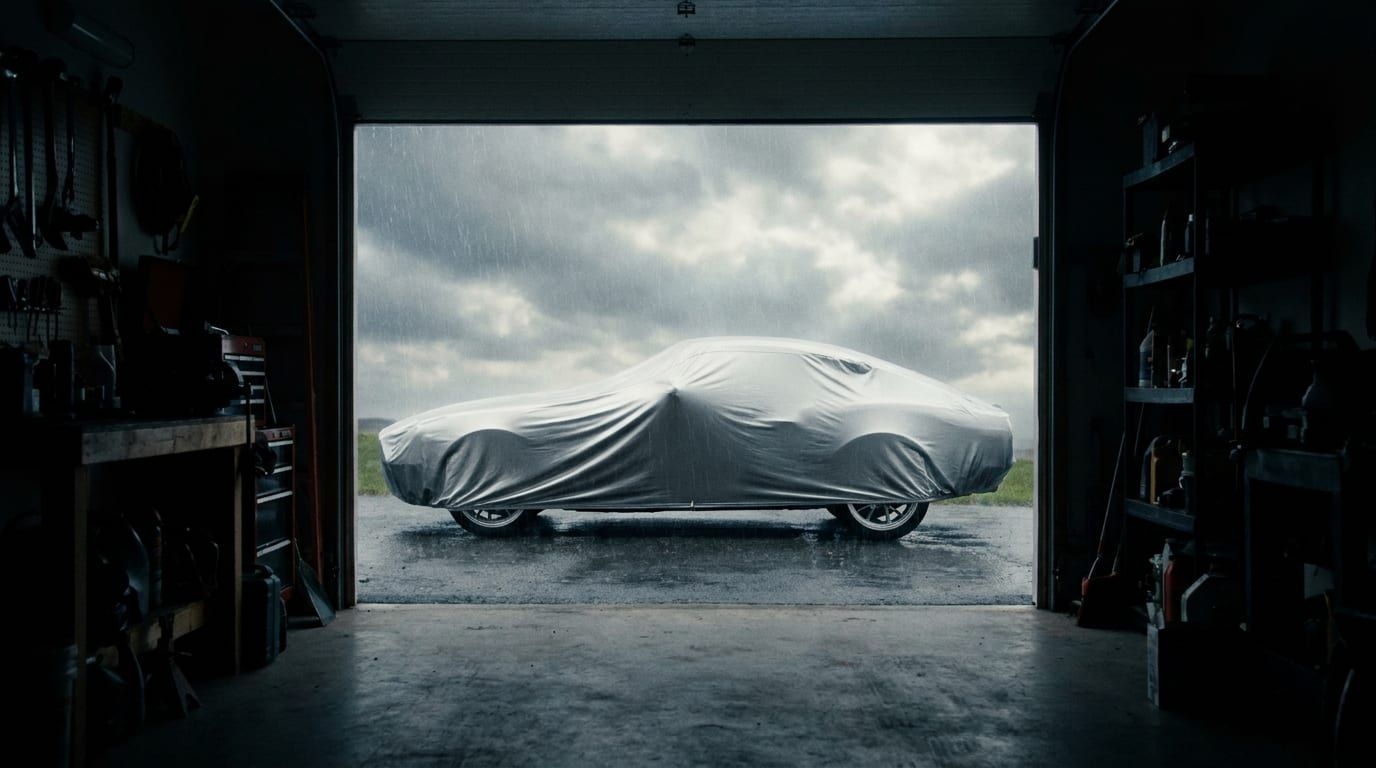
Garages collect dust, and most people underestimate how much. If yours isn't sealed or climate-controlled, especially one with a workbench, power tools, or a furnace and water heater running nearby, particles are constantly circulating and settling on every horizontal surface, including your hood and roof.
Temperature and humidity swings are the other quiet problem. An attached or uninsulated garage can get cold enough overnight that condensation forms on the paint by morning, especially in humid climates. That moisture doesn't just sit there and evaporate cleanly. Over time it contributes to water spotting and, in bad cases, surface corrosion around trim and seams.
Then there's plain accidental contact. Bikes lean. Ladders slip. Garden tools get propped against a fender and forget they're there. A second car's door swings open a little too fast in a tight two-car garage. None of this is dramatic, but it adds up to scuffs and dings that a cover would have simply absorbed.
Rodents deserve their own mention. Garages are one of the most common entry points mice and rats use to get into a structure, and once they're in, they don't care that there's a car sitting there. They'll nest under the hood, chew on wiring, and leave a mess in the cabin if they get inside. If this is a real concern where you live, how to protect your car from rodents covers it in more depth.
Does a Garage Fully Protect Against Weather Damage?
Here's what a garage does get right: it eliminates UV exposure, rain, snow, and hail almost entirely. Those are the main things outdoor car covers are built to fight, and if your car never sees direct sun or precipitation, you've already solved most of the weather-related risk without spending a dime on a cover.
The exception is moisture that gets trapped rather than washed away. A garage with poor ventilation or no insulation can hold onto humidity, especially after a wet car pulls in from outside or the weather changes seasonally. That trapped moisture is what leads to musty odors on upholstery and, over months, mildew spots you don't notice until they're already there.
This is also why indoor-specific covers exist as their own category. Since you don't need waterproofing or UV blockers indoors, a garage-kept car does better under something lighter and softer, like a breathable indoor car cover, rather than a heavy outdoor cover that's overbuilt for a job it doesn't need to do.
Can a Cover Prevent Scratches From Pets, Kids, or Stored Items?
Most garage scratches aren't caused by weather at all. They're caused by daily life. A cat jumps onto the hood because it's warm from the drive home. A kid leans a bike against the quarter panel while grabbing a helmet. A stack of moving boxes gets pushed a little too close during a garage cleanout.
A soft indoor cover won't stop hail, but it will stop all of that. It's a physical barrier between the paint and whatever brushes against it, which is exactly the kind of damage that happens indoors far more often than anyone expects. If you've got a cat or dog with regular garage access, protecting your car from cat and pet scratches is worth a read, since claws do more damage to bare paint than most people assume.
What Type of Cover Is Best for a Garage-Kept Car?
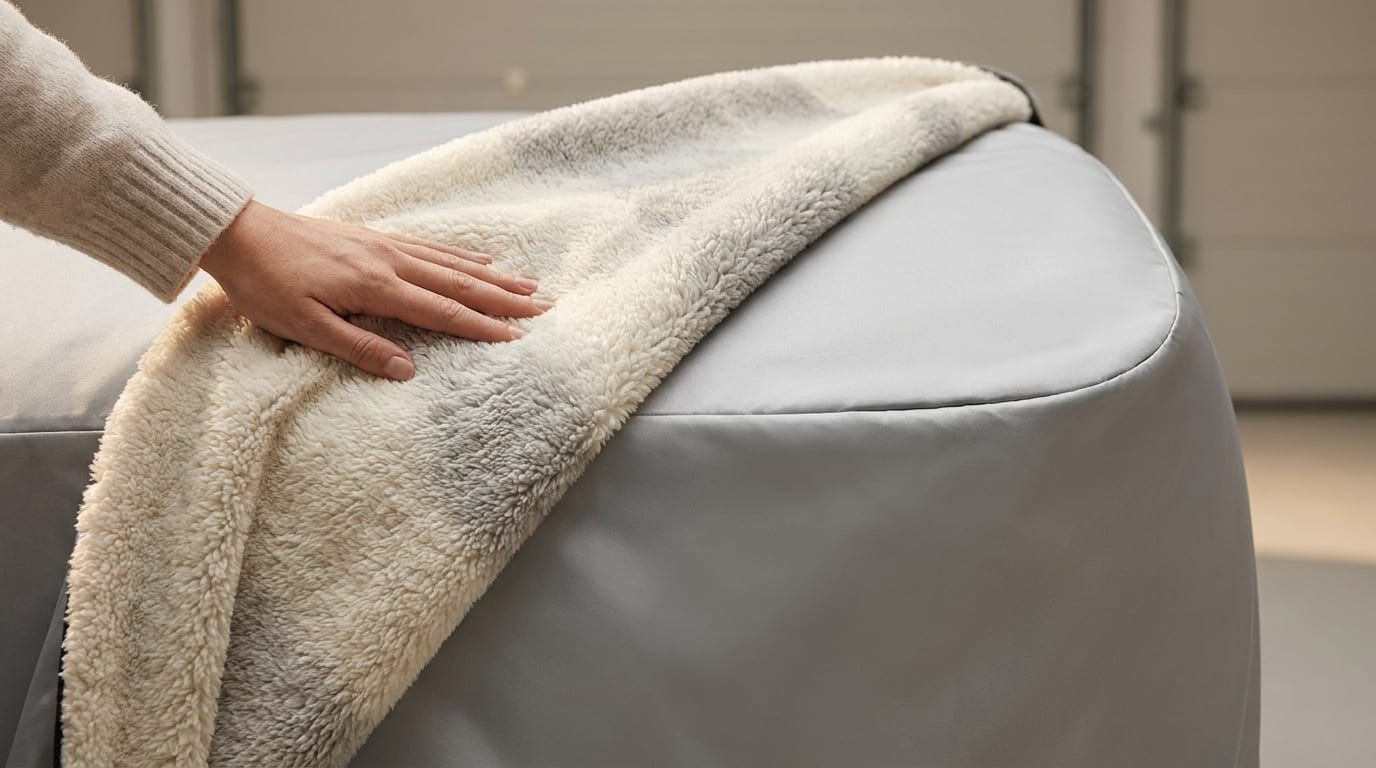
Skip the waterproof outdoor cover for a garage-kept car. It traps moisture against the paint instead of letting it breathe, which defeats the purpose. What you want is a breathable material, something like satin or fleece-lined fabric, that keeps dust and light contact off the car without holding humidity underneath it. The indoor car cover guide walks through the material differences in more detail.
Fit still matters indoors, more than people expect. A loose, universal cover shifts around, bunches at the mirrors, and leaves gaps at the seams where dust just drifts right in. A custom-fit cover sits close to the body and stays put without sliding off overnight. If you're not sure what size you actually need, the car cover sizing guide is a quick way to get it right before you buy.
For anyone who wants a specific example rather than a general category, the indoor black satin cover is built for exactly this scenario: soft against the paint, breathable, and not overengineered for weather it'll never see. And if you're comparing materials more broadly across indoor and outdoor use, what's the best car cover material lays out the tradeoffs.
When Is a Garage Cover Not Necessary?
There are real cases where skipping a cover is a fine call. A clean, sealed, climate-controlled garage with nothing else stored in it, no pets wandering through, no bikes or tools leaning against the walls, doesn't present much risk. If that's your setup, you're not losing much by leaving the car bare.
Daily drivers are the other honest exception. If you're in and out of that garage every morning and evening, covering and uncovering the car twice a day just isn't worth the hassle for the marginal protection it buys you.
Where a cover earns its keep is anything sitting for weeks or months at a stretch: a classic, a seasonal convertible, a second car that only comes out on weekends. Long-term storage is where dust and trapped moisture actually accumulate enough to matter. If that's the kind of car you're storing, it's worth treating the garage as a stopgap and the cover as the real protection, and browsing the full car covers lineup to find something matched to how long it'll actually sit. For anyone who's owned a cover long enough to wear one out, it's also worth looking at what over a decade of building car covers has actually taught a company about materials that hold up.
Keep a Garage-Kept Car Protected Year-Round
Garage parking cuts out most of the risk, but it doesn't cut it out completely. Dust, scratches, and the occasional rodent don't care that your car is indoors. The cases where a cover genuinely doesn't matter are narrower than people think, mostly limited to clean, sealed garages with daily drivers and nothing else stored inside.
If you're not in that narrow case, a lightweight indoor cover sized to your exact vehicle is a small habit that heads off a lot of small problems. Worth browsing what's out there and seeing what fits your car and your garage before the dust settles in for good.
Updated