
How Do You Identify What Material Your Car Cover Is Made Of? A Step-by-Step Guide
Published
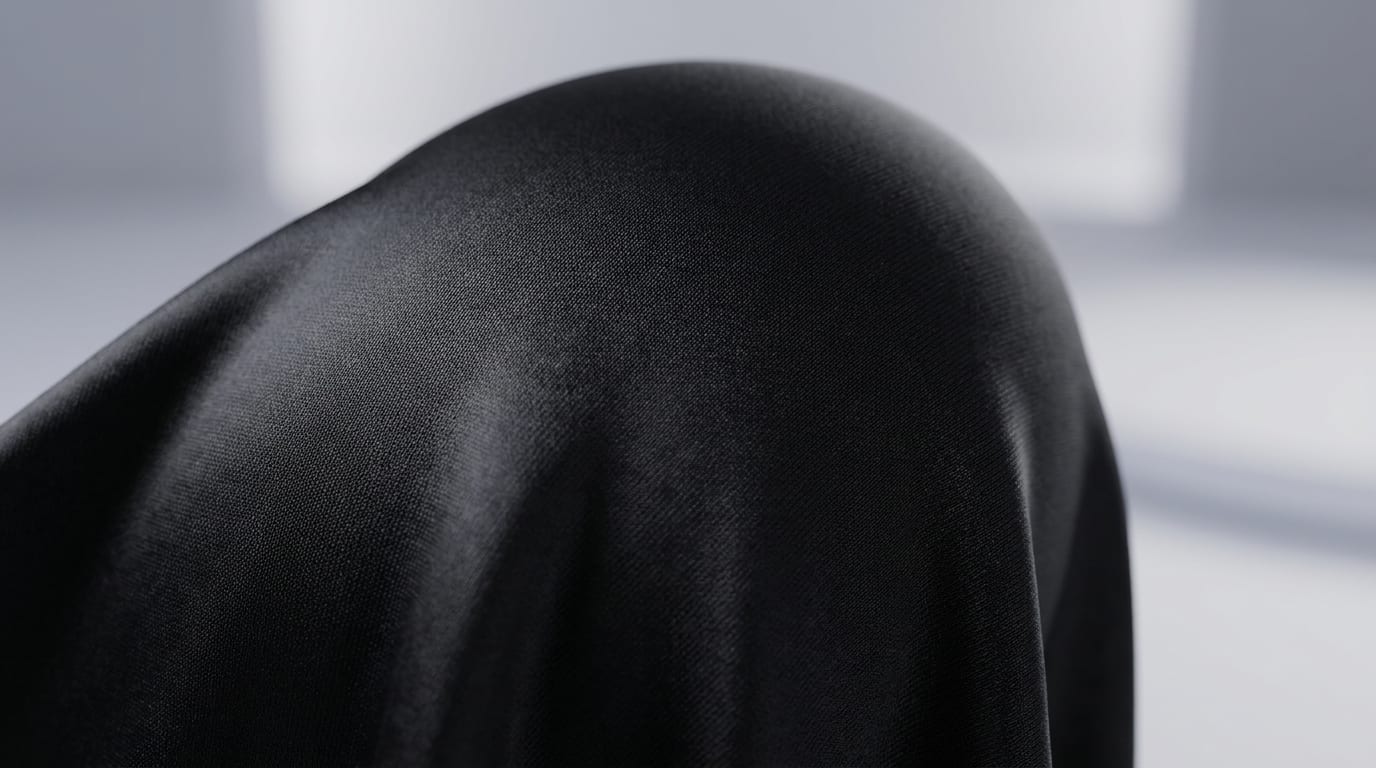
Why It Matters to Know Your Car Cover's Material
The fabric your cover is made of decides almost everything about how well it does its job. Polyester shells handle rain and sun; cotton blends are built for garage dust, not weather. Get the material wrong and you'll end up with condensation trapped under a non-breathable cover, or a "waterproof" indoor cover that was never meant to see a driveway.
So how do you identify what material your car cover is made of when the tag's gone or you just don't know what you're looking at? This usually comes up in a handful of situations: you inherited a cover from the previous owner, bought a used car with one thrown in, lost the original packaging years ago, or you're trying to figure out if a new cover you're eyeing is actually an upgrade. Whatever got you here, the steps below work whether your cover still has its label intact or is a complete mystery.
Step 1: Check the Label or Care Tag First
Before you touch, smell, or pour water on anything, look for a sewn-in tag. It's usually near a seam, along the hem, or tucked into a corner pocket. Most manufacturers print the fabric name right there: polyester, polypropylene, cotton blend, PVC, vinyl, something along those lines. Care instructions are often printed alongside it, which is its own clue (hand wash only tends to point to a more delicate blend, machine washable usually means a sturdier synthetic).
If the tag's there but faded past reading, snap a photo and zoom in on your phone. Text that's unreadable to the naked eye often comes back legible once you crop and enlarge it. Some tags also carry a model or batch number instead of a plain material name. That number can usually be looked up on the manufacturer's site or a basic search.
This step sounds obvious, but skip it at your own risk. It's the fastest and most reliable way to answer how do you identify what material your car cover is made of, and every other method in this guide is really a workaround for when the tag has failed you.
Step 2: Track Down the Original Purchase Record
No tag, no problem yet. Before you start poking at the fabric itself, dig through your email for an order confirmation, a packing slip, or a receipt. Retailers almost always name the material in the product title or description, something like "3-Layer All-Weather Polyester Cover" tells you most of what you need right there.
If you bought it online, log into your account on the retailer's site and check your order history. Even years-old orders tend to stick around in a dashboard somewhere. No luck there either? If the cover was a gift or it came bundled with a used vehicle, try contacting whoever gave it to you, or check the vehicle's manual or accessory list. Dealerships sometimes list factory-included covers as part of the vehicle's documented spec sheet, which can save you the guesswork entirely.
Step 3: Run a Visual and Touch Test
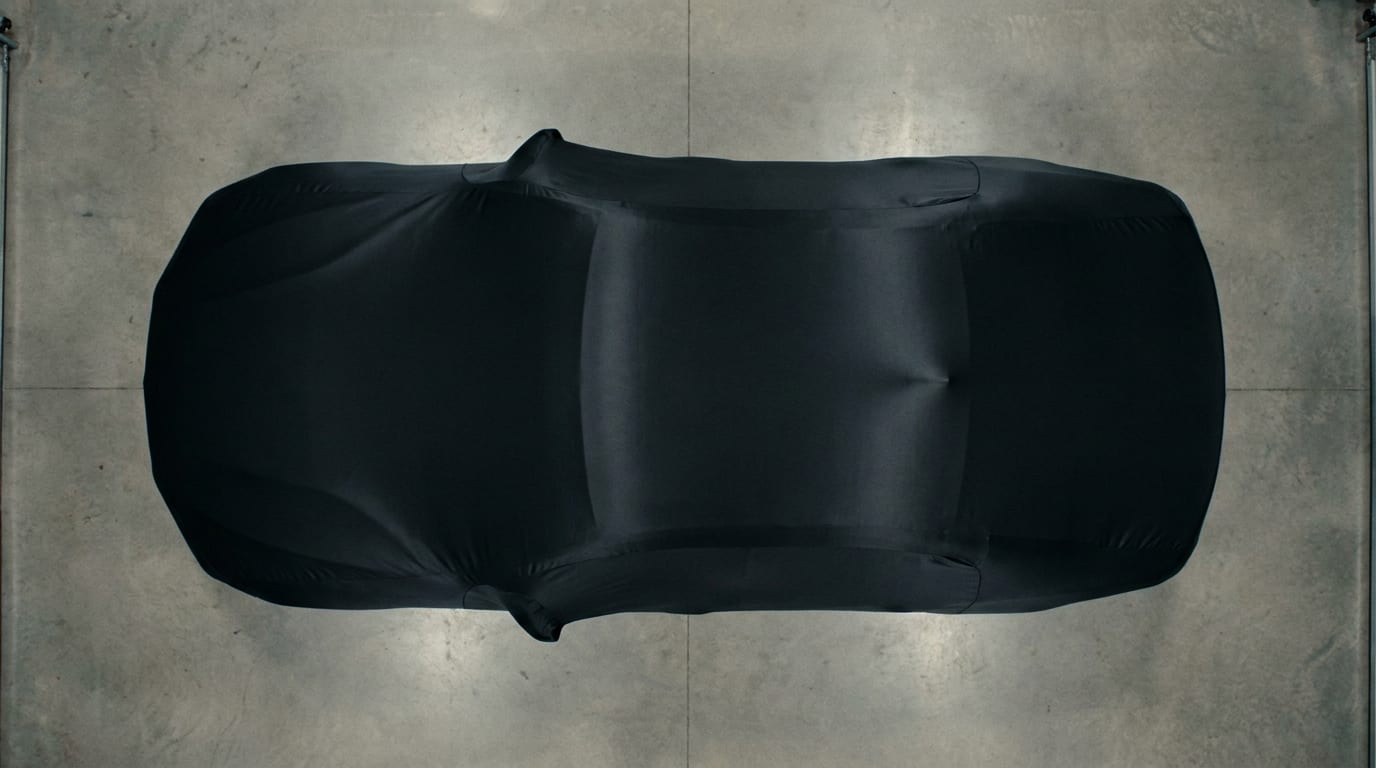
This is where things get hands-on. Hold the fabric up to light and run your fingers over it.
Woven polyester and polypropylene tend to feel lightweight with a faint sheen, and if you look closely you can usually make out the individual woven threads crossing in a tight grid pattern. Cotton and flannel blends are the opposite: soft, matte, a little fuzzy to the touch, with zero shine no matter how you angle it in the light.
Vinyl and PVC covers are easy to spot once you know what to feel for. They're thick, a bit rubbery, smooth to the touch, and you can often see a visible coating layer on one side if you look closely at a cut edge or seam. These show up most often on universal-fit covers or cheaper storage covers meant to just keep dust and light rain off.
One thing people miss: indoor covers with a satin or fleece lining can feel completely different on each side. The inside might be soft and plush against the paint, while the outer shell is a totally different woven material. Always check both sides before you decide, because judging a cover by one surface alone is how people misidentify what they've got.
Step 4: Do a Simple Water Test

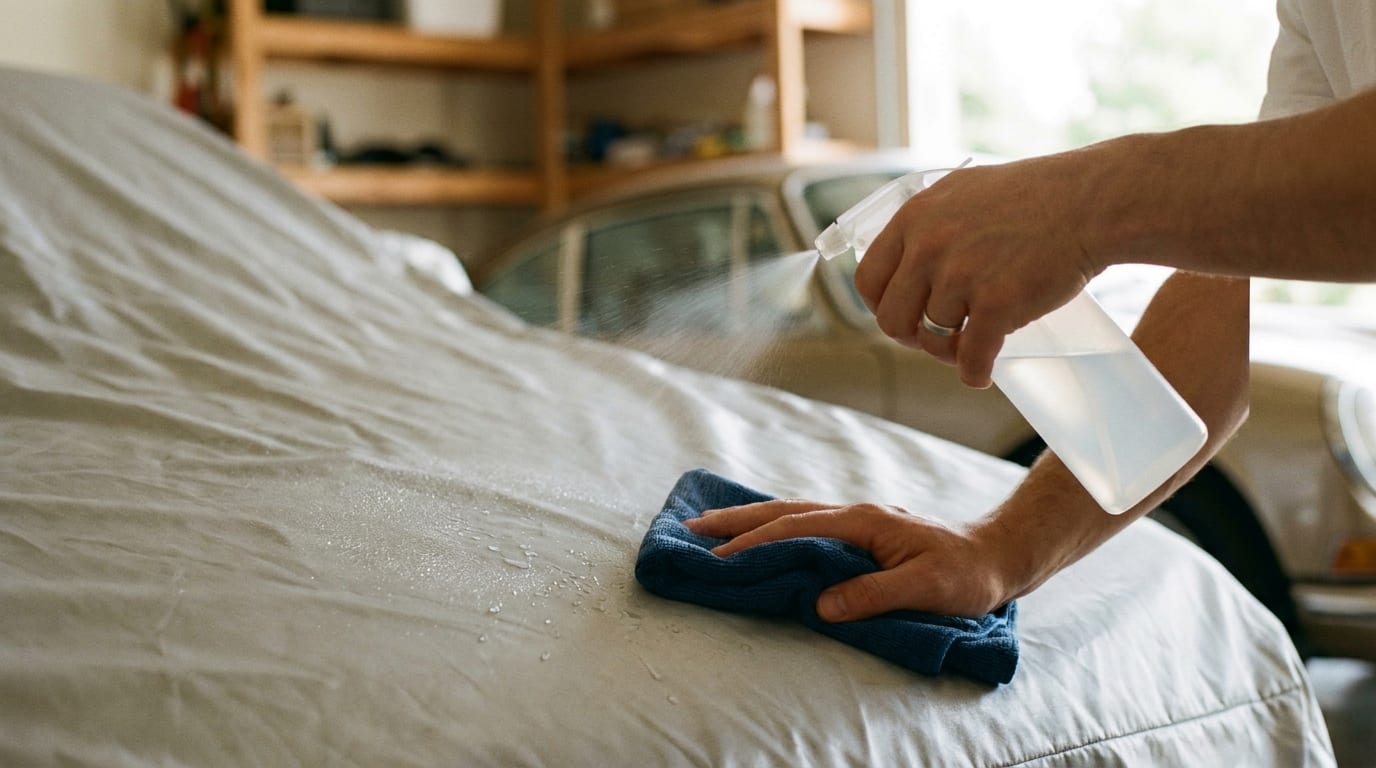
If touch alone doesn't settle it, water will. Pour a small amount onto the fabric and watch what happens. If it beads up and rolls off, you're looking at a waterproof or water-resistant treated material, the kind of fabric that's doing real work in our waterproof car covers guide and similar outdoor-rated products.
If the water soaks in fast instead of beading, that's a breathable, non-waterproof fabric. Nothing wrong with that, it just means the cover was built for dry, indoor storage rather than facing actual weather. You can read more about how that distinction plays out in our guide to waterproof fabrics.
One caution here: test on an inconspicuous spot first, like an inside seam. Some coatings and dyes react oddly to water, and you don't want a stain on the outward-facing panel just to confirm what material you're dealing with.
Step 5: Check Weight, Thickness, and Layering
Pick the whole cover up. Weight alone tells you a lot.
A single, thin layer that barely has any heft is almost always polyester or polypropylene, built for dust and light indoor protection, not for sitting through a storm. Multi-layer covers (often three to five layers, with a felt or fleece inner lining) are a different animal entirely. They're noticeably heavier, bulkier when folded, and they're the ones designed to handle sun, rain, and temperature swings outdoors for months at a time. Our guide to using a car cover outdoors breaks down why that extra bulk matters more than people assume.
One more tell: if the outer layer has a slightly reflective or metallic feel, that's usually a UV-resistant coating applied over a base fabric, not a separate material on its own. It's a common upgrade on premium outdoor covers and it's worth noting when you're comparing one cover to another.
Quick Reference: Common Car Cover Materials and Their Traits
| Material | Key Traits | Typical Use |
|---|---|---|
| Polyester | Lightweight, moderate water resistance | All-weather covers |
| Polypropylene / non-woven fabric | Breathable, affordable | Universal indoor covers |
| PVC / vinyl | Fully waterproof, heavier | Budget outdoor or truck bed covers |
| Cotton / flannel or satin blend | Soft, scratch-free | Indoor storage only |
Worth knowing: a lot of premium covers don't use just one material at all. A polyester shell paired with a fleece lining is common, and it's exactly that kind of layering that makes "what's it made of" a more complicated question than it sounds. If you're shopping indoor options specifically, our indoor car covers guide walks through how those linings are built and why they matter for paint protection.
Next Steps: Choosing or Replacing Your Cover
Once you've actually figured out how do you identify what material your car cover is made of, the next question answers itself pretty quickly: does this material even match how you store your vehicle? A polypropylene dust cover living outdoors through a rainy winter isn't doing its job, no matter how well it fits.
If you store outside, compare what you found against our outdoor car covers guide and the indoor equivalent above. If the material you've identified is holding up fine, a quick refresher on cleaning a car cover will probably do more for you than replacing it. If it's not holding up, or it was never the right material to begin with, it's worth looking at custom-fit car covers built specifically for your conditions.
Either way, now you know what you're actually working with, and that's half the battle. Poke around our car cover buying guide if you want to keep reading before you decide, or browse current options with your vehicle's storage conditions in mind.






