How Do You Tell If Your Car Cover Is Breathable? A Step-by-Step Guide
Published
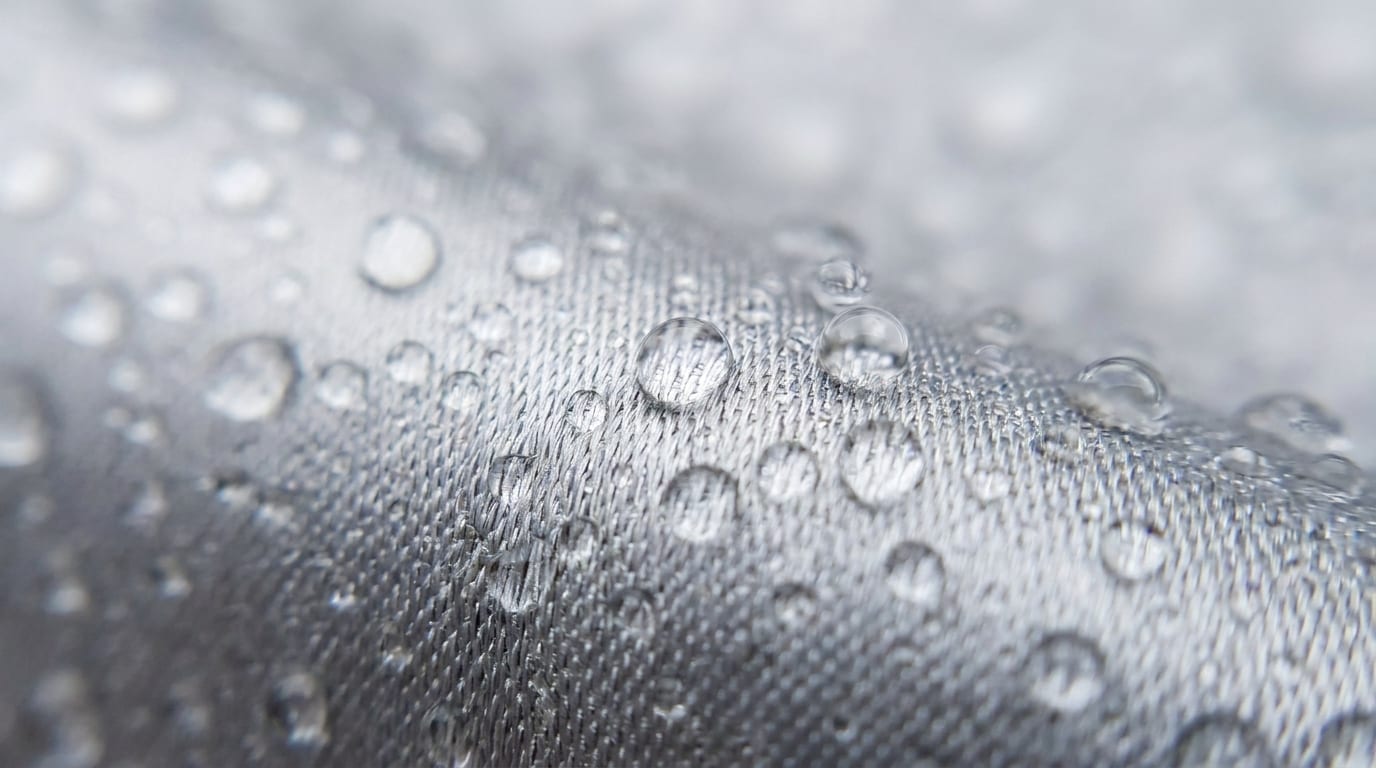
Water beading on top but soaking the fabric underneath, a musty smell when you unfold it, random water spots on the hood that won't buff out... these are the kinds of clues that answer the real question most car cover owners eventually ask: how do you tell if your car cover is breathable? You can't just look at a cover and know. You have to test it, and that's what this guide walks you through, step by step, with checks you can run in your driveway in under ten minutes.
What 'Breathable' Actually Means for a Car Cover
A breathable cover does one specific job: it lets water vapor and trapped heat escape from underneath while still keeping rain, dew, and dust from getting in. Think of it like a good rain jacket. It keeps the storm off your back but doesn't turn into a sauna an hour into a hike.
Here's why that distinction matters. When a cover can't breathe, moisture that forms under it from temperature swings, overnight humidity, or a car that wasn't fully dry before covering has nowhere to go. It just sits there, against your paint, for hours or days. Over time that trapped moisture causes water spots, mildew on the fabric, and a clear coat that starts to look cloudy instead of glossy.
This is also where most of the confusion starts. People assume "waterproof" and "breathable" mean the same thing, and they really don't. A cover can be fully waterproof and still trap every drop of condensation that forms underneath it, because waterproofing is about blocking liquid water from one direction while breathability is about letting vapor pass through in the other. You can read more on how these fabrics are actually built in our waterproof fabrics guide, but the short version is this: a cover rated for waterproof protection isn't automatically a breathable one, and figuring out which one you own is the whole point of this article.
Step 1: Check the Fabric Label or Product Description
Start with the easiest thing: read the actual product description, not just the marketing headline.
Look for specific language. "Multi-layer woven fabric," "micro-porous," and "moisture-wicking" all point to a construction that's designed to move air and vapor through the material. Vague terms like "heavy-duty" or "all-weather" tell you nothing about airflow. A cover can be heavy-duty and still seal moisture in like a tarp.
Some listings go a step further and mention a vapor permeability rating, or at least say the cover is suitable for long-term outdoor or indoor storage. That's a decent signal the manufacturer actually tested for breathability rather than just assuming it.
One red flag worth memorizing: single-layer vinyl or plastic covers. These are almost always non-breathable, no matter what the packaging claims. Vinyl is a continuous, non-porous sheet. Nothing about "all-weather" branding changes that fact.
Step 2: Run the Simple Water-and-Palm Test

If the label doesn't give you a clear answer, test it yourself. This step takes about five minutes.
Lay the cover flat on a table or the ground. Pour a small amount of water on top, maybe a tablespoon. A breathable cover will usually let the water bead slightly or absorb slowly into the surface layer, rather than pooling into one solid sheet that just slides off.
Now the important part. Immediately slide a dry hand underneath the fabric, right at the wet spot. Wait a minute or two. If you feel a cool, damp sensation coming through, air and vapor are passing through the material, which is exactly what you want.
If the underside stays bone-dry, even after sitting for a few hours, that's your answer. The cover is likely doing a fine job keeping water out, but it isn't letting anything out either. That's the gap this whole guide exists to catch: a cover that passes every "does it repel water" test while failing the breathability one entirely.
Step 3: Inspect the Weave Under Light
Grab the cover and hold a section up against sunlight or a bright lamp. Really look at it.
A woven, breathable fabric will show you tiny, consistent pinpricks of light scattered across the weave. It won't look like a window, but you'll see a faint, even speckle of brightness coming through. That's the microscopic structure doing its job.
A solid vinyl or tarp-style cover does the opposite. Hold it up to the same light and you'll see nothing. No pinpricks, no speckle, just a flat block of shadow, because it's one continuous non-porous sheet with no path for air to move through.
One caveat here. A lot of quality covers are built with multiple layers: a breathable woven layer on the outside and inside, with a water-resistant membrane sandwiched in the middle. If you test the whole assembled cover against light, that middle layer can make it look less breathable than it actually is. Do the light test on the outermost woven fabric specifically, not through the full thickness of the material.
Step 4: Check for Condensation After Overnight Use
This is the real-world version of the tests above, and honestly, it's the one I'd trust most if I only had time for one.
Cover your car overnight like you normally would. The next morning, before you do anything else, lift the cover and feel the hood and roof directly underneath.
A breathable cover should leave the paint mostly dry, maybe just a light dampness in spots. If you're finding heavy condensation, visible wet streaks, or catching a musty smell the second you lift the fabric, that's trapped moisture with nowhere to go. That's a non-breathable cover doing exactly what non-breathable covers do.
Run this check more than once if you can, ideally after a humid night or right after washing the car while it's still slightly damp underneath. A dry climate and a dry car can mask a bad cover for weeks. The real test comes when there's actual moisture for the cover to deal with. For more on what outdoor conditions do to a cover over time, our guide to using a car cover outdoors covers wind, UV, and moisture exposure together.
Step 5: Look for Mold, Mildew, or Musty Odor Over Time
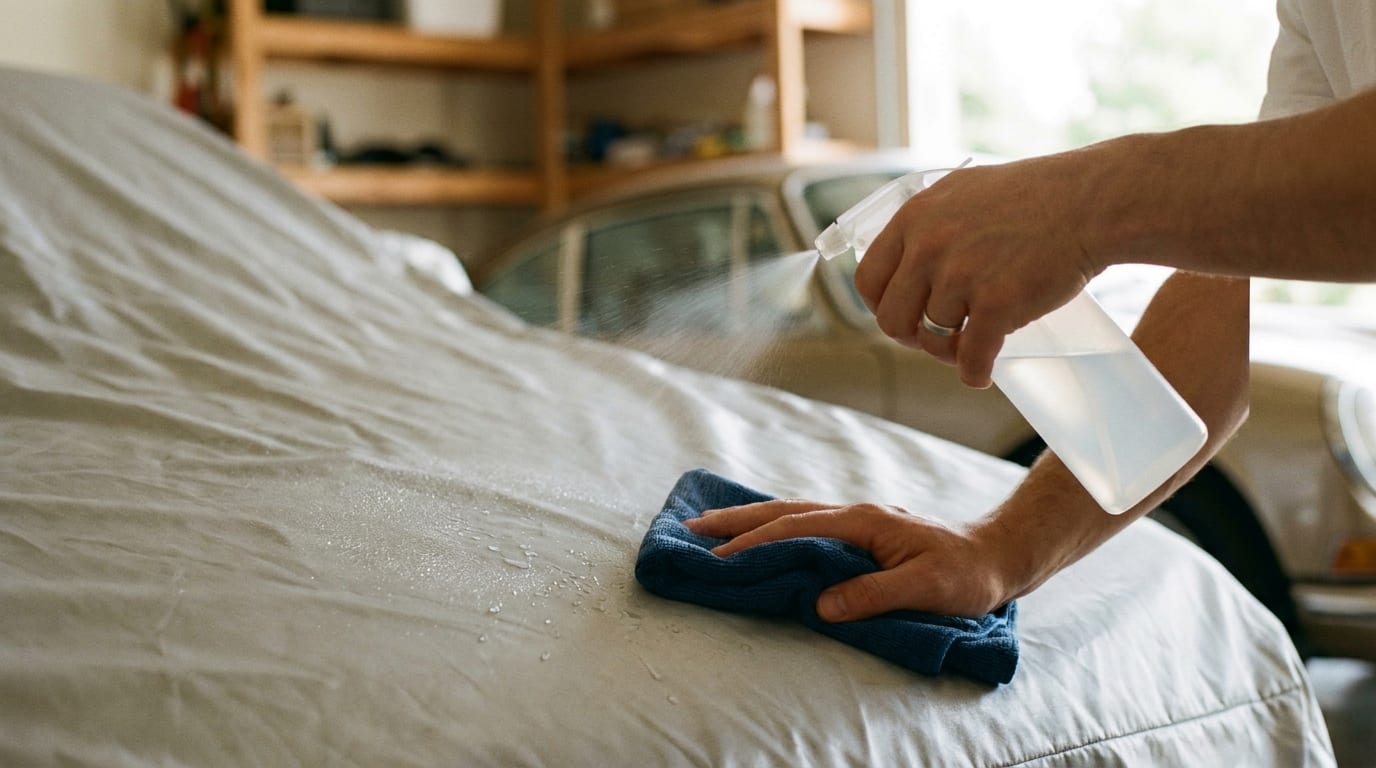
If you've had the cover for a few weeks or months, your own usage history is already giving you the answer. You just have to pay attention to it.
Recurring mildew spots, whether on the underside of the cover or on the vehicle's paint itself, are the clearest long-term sign of poor breathability. One instance might be bad luck. A pattern means the cover isn't doing its job.
Same goes for smell. If you fold the cover up for storage and it smells musty or damp even after a dry day, moisture has been getting trapped under it rather than escaping through it. That smell doesn't come from nowhere.
Check the care instructions too, since they often hint at construction without saying so directly. Covers built to breathe typically recommend air-drying only and warn against folding or storing them while still damp. That instruction exists because the manufacturer knows trapped moisture is the enemy. If your cover's care tag says nothing about drying time at all, that's worth noticing. For the full process on keeping a cover in good shape between washes, see our guide to cleaning a car cover and the related cover care tips.
Choosing a Breathable Cover From the Start
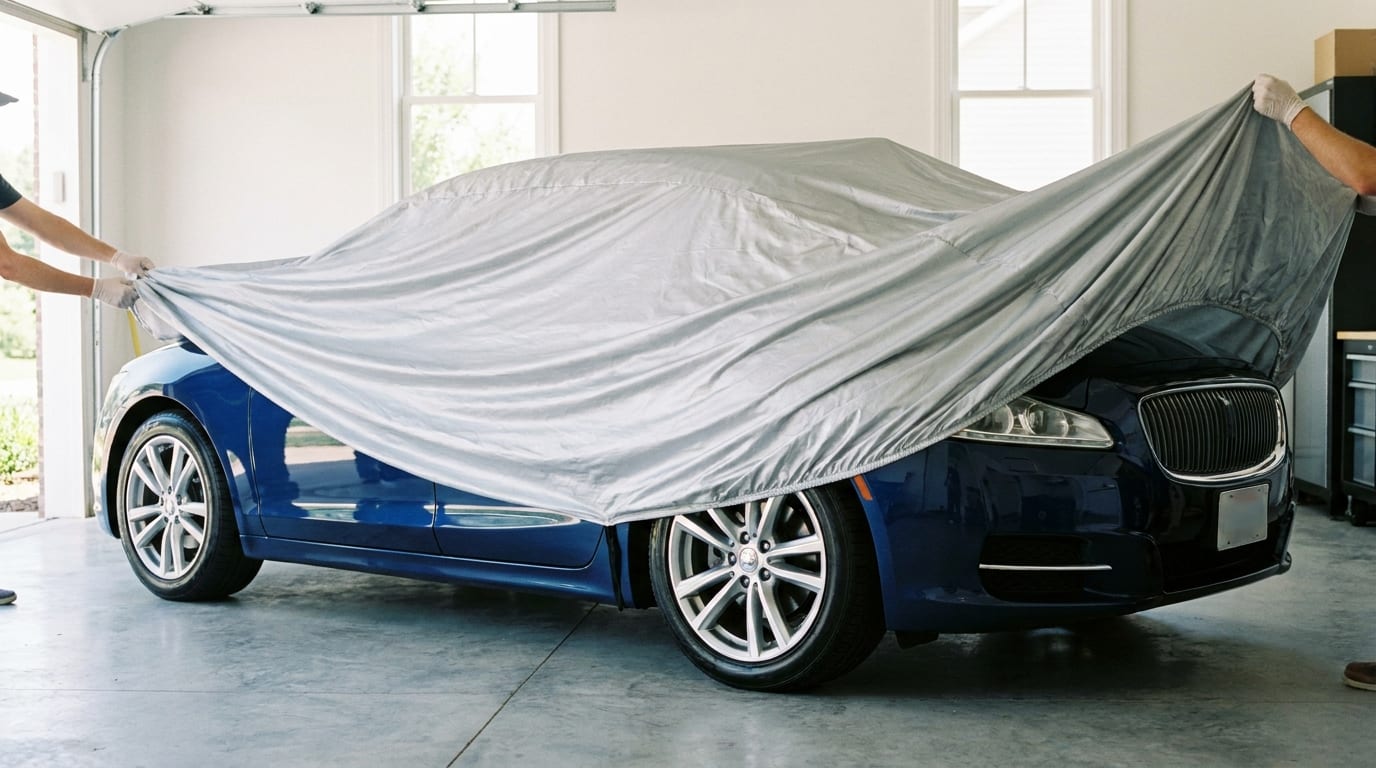
Honestly, most breathability problems never need to happen. They start with the wrong cover for the situation: an indoor-only fabric pushed into daily outdoor use, or a budget vinyl cover bought because it was the cheapest waterproof option on the shelf. Matching the cover type to how and where you'll actually use it solves this before it becomes a problem you're troubleshooting at 7am with a damp hood.
If you're shopping with breathability in mind, pay attention to whether you need something built for daily outdoor exposure or a lighter option for garage storage. The construction, and the climate it's meant for, is different for each.
Subscribe to our articles or browse a few more cover guides while you're here. And if you'd rather skip the guesswork entirely, run your vehicle through our cover finder tool to get matched with a cover built from breathable, multi-layer fabric from the start.