


How to Remove Mold From a Car Cover: A Step-by-Step Cleaning Guide
Mold on a car cover looks worse than it usually is, but it won't go away on its own. If you're wondering how to remove mold from a car cover, the short version is: mix a mild detergent or oxygen-based cleaner with warm water, scrub the affected spots with a soft brush, rinse completely, and let the cover dry all the way before you fold it or put it back on the car. Speed matters here. Mold spreads fast on a damp cover that's been balled up in a trunk or garage corner, so the longer it sits, the worse the staining and smell get. Skip the bleach. It might look like the obvious fix, but bleach and other harsh solvents break down waterproof coatings and weaken fabric fibers, which just trades one problem for another.
How Do You Remove Mold From a Car Cover?
Mix warm water with a mild dish soap, a car-cover-safe detergent, or an oxygen-based cleaner like OxiClean if the stains are stubborn. Scrub the moldy patches with a soft-bristle brush, working in small circles, then rinse until every trace of soap is gone. Hang or lay the cover flat until it's bone dry.
That's the whole process, but the timing piece trips people up. A cover that goes back into its bag even slightly damp will grow mold again within days, sometimes faster if it's warm out. And that urge to reach for bleach when you see black spots? Resist it. Bleach eats through the waterproof laminate that makes a decent cover worth owning in the first place, and it can rot elastic hems over time.
Why Does Mold Grow on Car Covers?
Mold needs two things: moisture and a surface that can't breathe. Car covers end up with both more often than you'd think. Rain, morning dew, condensation from temperature swings, or throwing a cover over a car you just washed (thinking it's "basically dry") all trap water against the fabric. If that fabric can't release moisture, mold sets up shop within a couple of days.
The most common trigger by far is storage. People fold a damp cover, zip it into its storage bag or toss it in a plastic bin, and don't think about it again until the next time they need it. That sealed, dark, humid environment is close to ideal for mold growth. It's the car-cover equivalent of leaving a wet towel balled up in a gym bag.
Fabric quality plays a role too. Non-breathable or cheaply made covers hold onto moisture far longer than breathable, water-resistant materials designed to let vapor escape while still blocking rain. If you're not sure what your cover is made of or whether it's suited to your climate, it's worth reading up on what makes one car cover material different from another before you assume the mold is just bad luck.
What Supplies Do You Need to Remove Mold From a Car Cover?
You don't need anything specialized. A basic kit covers almost every case:
- Mild dish soap, a detergent made for car covers, or an oxygen-based cleaner like OxiClean for tougher, set-in mold
- A soft-bristle brush or sponge (never a stiff wire brush, it'll tear coated or laminated fabric)
- White vinegar diluted with water as a gentler, natural option for light mold and musty odors
- A bucket, a hose, and a flat, open space to work
What you want to avoid is just as important as what you use. Bleach, ammonia, and strong solvents will strip waterproof coatings and degrade the elastic in hems and grommets, which shortens the life of the cover a lot faster than the mold would on its own. If your cover is rated waterproof, treat that coating like something you're actively trying to protect, not just fabric you're scrubbing clean. For covers built with that kind of coating, it helps to understand what waterproof car covers are actually designed to handle before you pick a cleaning product.
How Do You Hand-Wash Mold Off a Car Cover Step by Step?
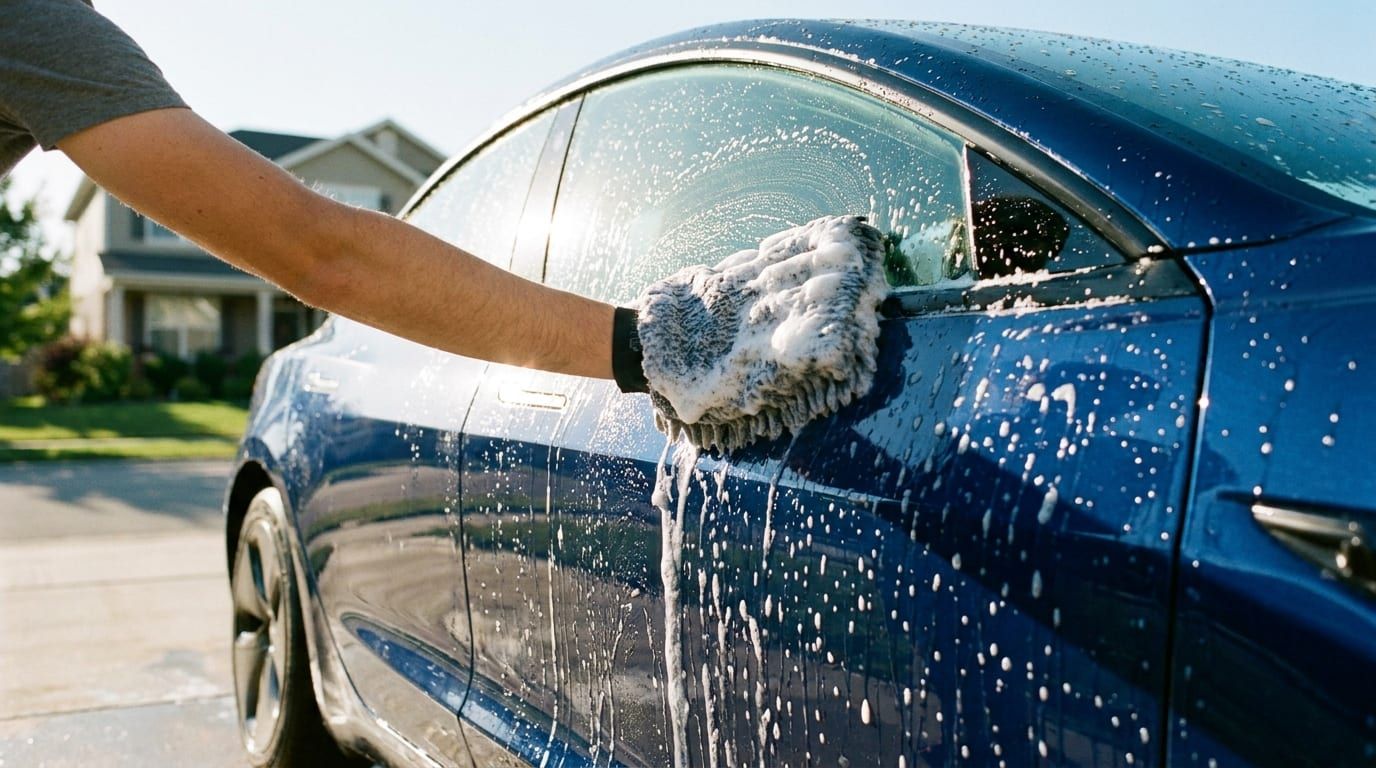
Step 1. Shake off loose dirt and debris outside, then pre-rinse the cover with a hose. Do this in a large open space, a driveway works, or a bathtub if you're dealing with a smaller cover.
Step 2. Mix warm water with a mild detergent, or dilute white vinegar in a bucket if you're going the natural route.
Step 3. Scrub the moldy patches gently, using small circular motions with your soft brush. Pay extra attention to seams, hems, and grommets. Mold loves to hide in stitching where moisture lingers longest.
Step 4. Rinse thoroughly. Keep rinsing until you can't feel any soap residue left in the fabric. Leftover detergent actually attracts dirt and grime, which defeats the point of washing it.
Step 5. Lay the cover flat or hang it fully open somewhere with sun and airflow. Don't fold it until it's completely dry, not "mostly dry." Damp folds are exactly how this problem started.
If you're washing your cover regularly (not just for mold emergencies), it's worth bookmarking the full car cover cleaning routine for wash frequency and fabric-specific guidance, since a lightweight cotton blend and a multi-layer waterproof cover don't need the exact same care.
Can You Machine Wash a Moldy Car Cover?
Sometimes, but check the care label before you do anything. Lightweight, non-coated covers are often fine on a gentle cold cycle. Custom-fit covers with multiple layers, elastic hems, grommets, or waterproof laminate usually aren't built for a washing machine at all. The agitation can loosen seams, warp grommets, and wear through coatings that took real engineering to get water-resistant in the first place.
Skip the dryer no matter what. Heat shrinks fabric and breaks down water-resistant treatments fast. Air-drying takes longer, but it's the only method that doesn't risk undoing the protection you paid for.
How Do You Prevent Mold From Coming Back?
Cleaning the mold off is only half the job. If storage habits don't change, it'll be back within a season.
Never put a cover on a wet car, and never fold one away while it's still damp, even a little. That's the single biggest cause of repeat mold problems. Store the cover loosely in a breathable bag rather than sealing it in a plastic bin. Bins trap whatever moisture is left, and that's often enough to restart the cycle.
Picking the right cover for where it actually lives matters too. If your car sits outside most of the time, look at outdoor car covers built to breathe while still blocking rain. If it's garage-kept, indoor car covers are a lighter, less moisture-prone option since they're not fighting the weather. For anyone leaving a vehicle outside long-term, this guide to using a car cover outdoors covers the moisture and weather issues in more depth than mold alone.
Even in long-term storage, pull the cover off every few weeks and let it air out fully. Ten minutes of sun and airflow now beats another round of scrubbing later.
When Should You Replace a Moldy Car Cover Instead of Cleaning It?
Some mold problems are past the cleaning stage. If black staining has worked its way deep into the fibers and won't lift no matter how hard you scrub, that's embedded, not surface-level. Same goes for a musty smell that lingers after a full wash and complete dry. If you can still smell it, the mold's still there, just not visible anymore.
Brittle, thin, or flaking fabric is another sign it's done. And if repeated cleanings (especially with anything harsher than mild soap) have stripped the waterproof coating, the cover isn't protecting the car anymore no matter how clean it looks. At that point it's just fabric sitting on your paint.
Don't reach for a tarp as a stopgap while you decide. Tarps don't breathe at all, which means they trap moisture against the paint even worse than a failing cover does. There's a good breakdown of why a tarp isn't a real substitute for a car cover if you're tempted to go that route in the meantime.
Keep Mold Off Your Car Cover for Good
The routine really is that simple: clean it fast, use gentle products, dry it completely, and store it loose. Most mold problems trace back to one of those steps getting skipped, usually the drying part.
Get the material and the storage habits right from the start and you'll rarely need this guide again. If you're still deciding whether a cover is worth adding to your routine at all, our page on why a car cover is worth buying lays out the case, and our car care hub has more guides like this one if you want to keep your vehicle in shape beyond just the cover.
Updated