


Outdoor Car Cover for Ford Explorer: Best Waterproof & UV-Blocking Options
Park a Ford Explorer outside for a season and you'll see why a flimsy tarp-style cover doesn't cut it. The Explorer isn't a compact crossover with tucked-in panels. It's a big three-row SUV with a wide, flat hood and a roofline that catches water and sun in equal measure. If you're shopping for an outdoor car cover for Ford Explorer models, size works against you from the start: more exposed surface area means more square footage for rain to pool, tree sap to drip, and UV rays to bake into the clear coat.
Owners who park these outside for months at a stretch report the same two complaints over and over: fading across the hood and roof, and a dashboard that cracks or discolors faster than expected. Both are avoidable. This guide breaks down what waterproofing and UV protection actually mean on a spec sheet, so you're buying based on real protection instead of price alone. For background on how outdoor car covers differ from indoor-only designs, and how that applies to a specific model like the Ford Explorer, start there before you dig into tiers and pricing.
What Actually Makes an Outdoor Cover Waterproof

"Waterproof" gets thrown around loosely in this category, and it shouldn't be. Water-resistant fabric handles light rain and morning dew fine. It'll bead up, roll off, no problem. Sustained downpours or snowmelt sitting on the roof for hours are a different test entirely, and a lot of covers marketed as all-weather simply aren't built for that.
The covers that actually hold up outdoors use a layered construction. An outer weatherproof shell blocks the water, a breathable middle layer lets trapped moisture and heat escape so mold and mildew don't set up shop underneath, and a soft inner lining keeps that whole stack from scratching the paint. Skip any of those three layers and you get a problem: too much shell with no breathability, and you're trading rain damage for mildew damage.
Fabric only matters if the construction around it holds water out, too. Seam sealing, elastic hem placement, and grommet positioning matter just as much on an Explorer, especially around the wheel wells and the rear liftgate seam, where water likes to pool and find its way in. A cover that's rated waterproof but fits loose at those points will still let moisture creep in over time. If you want the deeper technical breakdown on ratings and fabric science, the waterproof car covers guide covers it in more detail than we need to here.
UV Protection: What It Prevents on a Ford Explorer Specifically
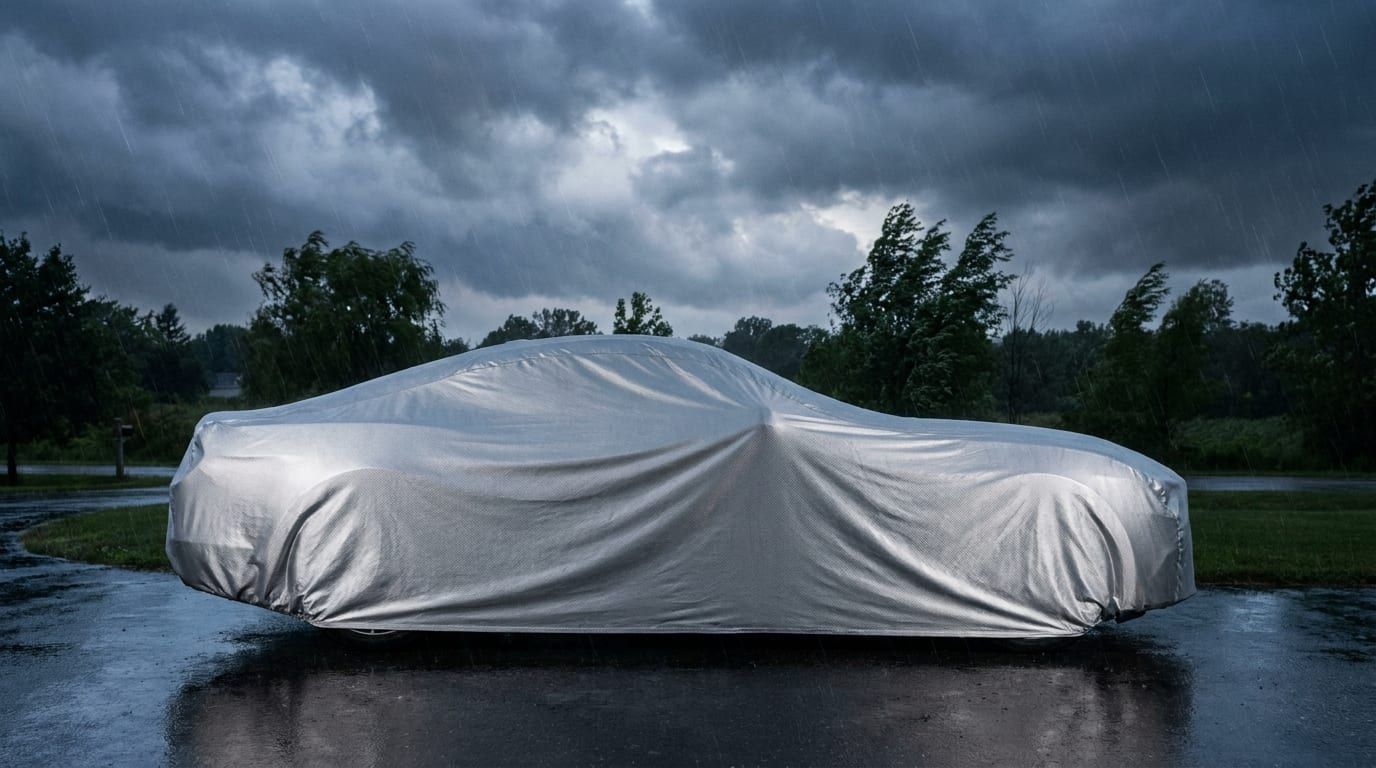
Sun damage is quieter than water damage, which is exactly why it sneaks up on people. UV exposure oxidizes clear coat over time, and on an Explorer that shows up first on the hood, the roof, and the rear liftgate spoiler area, the flattest panels that catch the most direct light.
It doesn't stop at the exterior. Even with no direct sun hitting the seats, UV rays baking through the windshield and windows raise cabin temperature enough to crack dashboards and fade upholstery over months of exposure. A cover doesn't just block direct rays, it interrupts that heat buildup cycle entirely.
Good UV protection isn't just "thicker fabric." It comes from UV-inhibiting treatments woven into the fabric or a reflective outer layer that actually bounces sunlight instead of absorbing it. Cheaper covers skip this step and rely on bulk material alone, which slows fading a little but doesn't stop oxidation the way a treated layer does.
Worth noting for newer Explorers specifically: the panoramic roof available on higher trims and the more raked windshield angle both mean more glass surface exposed to direct sun than older generations had. More glass, more heat transfer into the cabin, more reason a UV-rated cover earns its keep.
Getting the Fit Right for Your Explorer's Model Year
The Explorer hasn't looked the same for very long. The fifth generation (2011 to 2019) rode on a unibody platform with different body lines than the sixth generation (2020 and up), which moved to a rear-wheel-drive-based platform with a noticeably different profile. A cover cut for one won't sit right on the other, and "fits most Explorers" on a listing is a claim worth being skeptical of.
Custom-fit covers are cut to the Explorer's actual body lines, which matters more than it sounds like it should. A cover that hugs the body doesn't flap in wind, and wind flap is one of the sneakier ways a waterproof coating wears out early, from constant friction against the same panels over and over. Universal and semi-custom covers cost less upfront, sure, but they leave gaps at the mirrors and bumpers, exactly where water gets in and UV rays find their way underneath the edges.
Before you buy anything, check the sizing guide against your Explorer's actual year and trim. Wrong fit is the single most common reason outdoor covers get returned, and it's entirely avoidable with a five-minute check. If you've decided fit matters more than saving a few dollars, the custom-fit car covers option is worth the extra look.
Comparing Outdoor Cover Tiers for Waterproofing and UV Strength

Not every outdoor cover needs to handle the same conditions, and paying for top-tier protection when you park in a mild, dry garage-adjacent driveway is overkill. But if your Explorer sits outside daily in a harsher climate, tier matters a lot more than most buyers expect going in.
| Tier | Waterproofing | UV Protection | Wind Hardware | Best Climate Fit |
| Entry | Light rain, dew only | Basic fade resistance | Standard elastic hem | Mild, mostly dry regions |
| Mid | Sustained rain | Moderate UV-inhibiting layer | Reinforced grommets | Mixed seasonal weather |
| Top | Standing water, snow load | Reinforced UV-inhibiting outer shell | Grommets plus tie-down points | Coastal, desert, snowbelt |
The wind hardware line matters more than people give it credit for. A storm doesn't just test waterproofing, it tests whether the cover stays put long enough for that waterproofing to matter. Top-tier covers build in stronger grommets and tie-down points specifically so seams don't tear loose mid-storm.
Here's the actual math on price: an entry-tier cover costs less today, but if your Explorer sits outside in a coastal or desert climate, you'll likely be paying for hood and roof paint correction within a couple of years from UV damage the cover wasn't built to stop. That's not a hypothetical, it's the tradeoff entry-tier covers are built around. Choosing an outdoor car cover for Ford Explorer ownership in a tougher climate usually means paying for mid or top tier once instead of paying for paint damage repeatedly. Top-tier covers also tend to carry stronger warranty coverage, which is worth factoring into the price comparison, not just the sticker number.
Installing and Maintaining Your Cover for Long-Term Waterproofing
A great cover installed loosely performs like a mediocre one. The elastic hem, cable lock, and wind straps all work together to keep the waterproof seal tight during storms, and skipping any one of them is how wind gets underneath the edge and starts working the seams loose.
Cleaning matters more than most owners assume, too. Dirt and grit sitting on the fabric grinds against the water-repellent coating every time wind moves the cover even slightly, and that friction wears the coating down faster than sun or rain does on its own. A quick rinse and proper cleaning routine on a regular schedule keeps that coating doing its job for years instead of one season.
One Explorer-specific check worth doing every time you put the cover on: the mirror pockets and antenna cutout. These are the most common leak points because they're the spots most likely to be misaligned, and a half-inch of gap there defeats the whole waterproof rating everywhere else on the cover. For step-by-step help getting the fit right the first time, the installation guide and the wind strap installation guide both walk through it, and the cover care guide covers the cleaning side in more depth.
Ready to Protect Your Explorer? What to Check Before You Buy
Before you check out, run through it one more time: does the cover match your Explorer's actual model year, is the waterproof rating built for your climate, does the UV tier match how much sun the vehicle actually sits in, and does it come with real wind-securing hardware instead of just a basic elastic hem. Miss any one of those and you're back to the same fading or leaking problems this guide started with.
Warranty coverage is worth a second look too. An outdoor cover is a multi-year investment piece, and knowing it's backed by something more than a 30-day return window is part of buying with confidence, not just buying on price.
If you're ready to see what actually fits your Explorer's year and trim, it's worth browsing options built for your specific setup rather than guessing from a generic size chart, and subscribing to future guides here if you want more of this kind of buying breakdown before your next purchase.
Updated