


Outdoor Car Cover for Ford Mustang: Waterproofing & UV Protection Buying Guide
A Mustang parked outside isn't just exposed to weather, it's exposed to weather in a shape that makes things worse. That long hood and low stance mean water sits where a taller SUV would just shed it, and the sun bakes the same flat panels hour after hour. If you're shopping for an outdoor car cover for Ford Mustang ownership that actually holds up, the two specs that matter most are waterproofing and UV resistance, and most buyers get at least one of them wrong.
Why Your Mustang Needs More Than a Basic Cover Outdoors
Two things do the most damage to a Mustang left outside. The first is standing moisture: rain that pools on the hood, seeps into trim seams, and works its way through door gaps to sit on seats and carpet until mold shows up. The second is UV exposure, which fades clear coat, cracks dashboards, and dries out convertible tops until they crack at the seams.
A regular sedan sheds water off a taller roofline and spreads sun exposure across more curved surface. A Mustang doesn't get that luxury. The hood and trunk lid are long, flat, and low to the ground, so water collects instead of running off, and the sun hits those same panels at a more direct angle for more of the day. That's the real argument for a dedicated outdoor car cover for Ford Mustang models rather than whatever universal cover happens to be cheapest. The rest of this guide is about matching a cover's waterproof rating and UV protection level to how and where your car actually sits, not just picking something labeled "outdoor" and hoping for the best.
How Real Waterproofing Works in an Outdoor Car Cover

"Waterproof" gets used loosely on cover packaging, and it's worth knowing what you're actually paying for. A genuinely waterproof cover uses a fully sealed, multi-layer fabric with taped or heat-sealed seams, the kind of construction that keeps water out at the stitch lines where it would otherwise leak through. A water-resistant coating is a different thing entirely. It repels light rain at first, then wears down after a few months of sun and handling until it's basically just fabric.
The good ones also breathe. A breathable inner layer keeps rain from getting in while still letting engine heat and condensation escape, which matters more than people expect. Seal a car under fully non-breathable plastic and you trap moisture inside, which does the exact damage you bought the cover to prevent.
Underneath, the lining matters just as much as the shell. A soft fleece or non-abrasive inner surface won't scratch paint when it's wet, and a waterproof shell that scuffs your clear coat every time the wind moves it isn't protecting anything. Last piece: grommets, elastic hems, and cable or strap systems that cinch the cover snug against the body. Wind-driven rain doesn't need a big gap to get in, just a loose edge flapping in a storm. For a deeper breakdown of how these layers work together outdoors, the guide to using a car cover outdoors covers wind and UV factors beyond just rain.
UV Protection: Stopping Sun Damage on a Mustang Left Outside
UV-blocking fabric treatments do more than just prevent visible fading. They cut down heat buildup under the cover, which is what actually cracks vinyl and leather seats and dries out a convertible top's fabric over time. Paint fade is the obvious symptom, but the interior damage is usually what costs more to fix.
Darker Mustangs feel this first. Black and red paint show UV fade faster than lighter colors, so if your car's one of those, a high UV-rated cover isn't optional, it's the whole point of buying one. Here's something buyers skip past: the cover itself needs UV-stabilized fabric too. A cheap cover left in direct sun for a few seasons will degrade, crack, and stop doing its job, right around the time you need it most.
Check that a cover is explicitly rated for both waterproofing and UV resistance together. Plenty of "outdoor" covers only address one of those, usually the water side, and leave UV protection as an afterthought. That's a real gap if your Mustang sits in full sun most of the year.
Custom-Fit vs. Universal Fit: Why It Changes Waterproofing and UV Performance
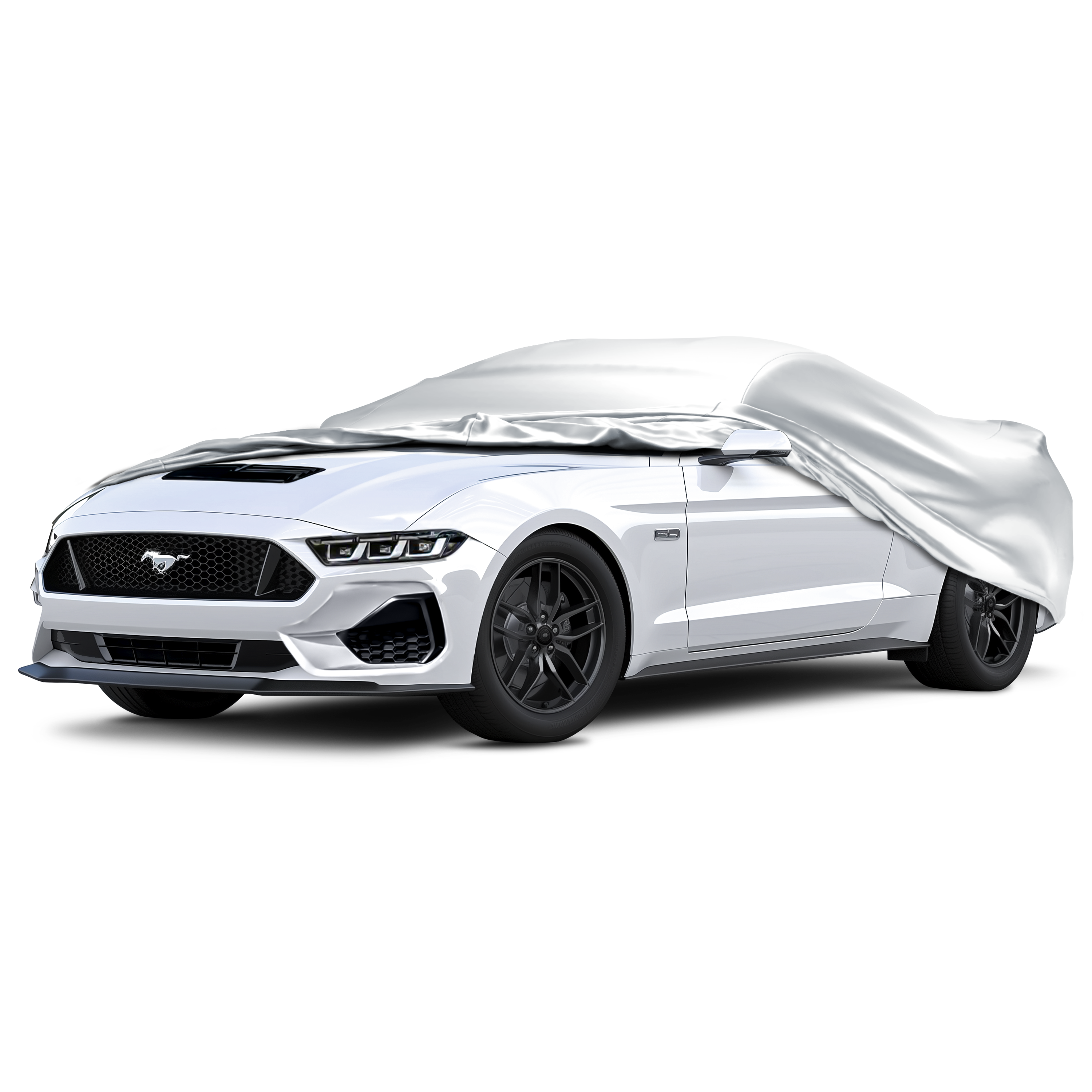
A loose universal cover looks fine folded up in a box. On the car, it flaps in the wind, and every flap is an opportunity for rain to drive underneath the edge. Gaps at the hood and trunk lines also mean sun still reaches painted panels even with the cover on, which defeats the UV protection you paid for.
Mustangs have specific fit needs depending on body style. A coupe and a convertible have different roofline profiles, and a cover cut for one won't sit right on the other. Mirror pockets and antenna patch cutouts matter too, since those are exactly the spots where a generic cover bunches up or leaves a gap. A properly cut custom-fit car cover accounts for all of it, sealing tight against the body instead of sitting loose like a tarp.
Here's the plain decision point: if you want the full waterproof and UV benefit outdoors, a custom or semi-custom fit built for your Mustang's exact body style beats a generic sedan-shaped cover every time. It's not a marginal upgrade, it's the difference between a sealed cover and one that's just guessing at your car's shape. If you're unsure what fit or size applies to your model year, this sizing guide walks through it, and Ford-specific options are worth checking on the Ford cover page before you buy anything universal.
Comparing Outdoor Cover Tiers by Water and UV Protection Level

Not every Mustang owner needs the same cover, and tier really does matter here.
| Tier | Fabric weight | Water/UV protection | Best for |
| Basic outdoor | Light | Light rain, moderate UV resistance | Mild climates, short-term outdoor parking |
| Mid-tier | Medium | Regular rain, moderate to strong UV | Owners who park outside most days but have some cover from trees or a carport |
| Top-tier all-weather | Heaviest | Full waterproofing, highest UV rating, snow/hail resistance | Year-round outdoor storage, harsh or unpredictable climates |
The decision rule is simple, even if people ignore it: match the tier to the harshest condition your Mustang actually sits through in a typical month, not the mildest day. If you get two or three heavy storms a month, buy for the storms, not the sunny days in between.
Price scales with fabric weight and layer count, which cuts both ways. Overbuying a heavy all-weather waterproof car cover for a car that spends most nights in a garage-adjacent driveway just wastes money on protection you don't need. Underbuying for a genuinely rainy or sunny climate does the opposite: it shortens the life of both the cover and the paint underneath it.
Installing and Maintaining Your Cover to Keep It Waterproof and UV-Rated
A great cover installed loosely performs like a mediocre one. Straps and grommets need to be snug, not just clipped on, and every gap you leave is a place water and sun can reach the paint. If you're new to the process, this installation guide walks through the steps that actually keep a cover sealed instead of just draped over the car.
Cleaning matters more than most owners assume. Harsh detergents strip UV coatings and waterproof treatments right off the fabric, which means a cover that's technically still on the car but no longer doing its job. Stick to the proper cleaning method instead of whatever's under the kitchen sink.
Worth doing every few months: check the seams and elastic hems for wear. A cover that's lost its seal isn't waterproof or UV-rated anymore, no matter what the tag says. That's the part people skip, and it's the part that actually determines whether the cover is still earning its keep.
Choosing and Buying the Right Cover for Your Mustang
Run through the checklist before you buy: body style fit (coupe or convertible), waterproof rating, UV protection level, and how harsh your local climate actually gets. Skip any one of those and you're guessing.
Warranty coverage is worth checking too. A real warranty is a decent signal that the manufacturer trusts its waterproofing and UV materials to actually hold up over years outside, not just look good on a spec sheet. It's worth comparing coverage details, like what's outlined in the lifetime warranty on car covers, against whatever the seller you're considering offers.
If you want to dig deeper into what the "GT" badge actually changes about a Mustang's build, this explainer is worth a read before you shop for a cover.
Getting this right starts with matching the cover to your exact model year and body style, not just grabbing whatever says "Mustang" on the box. Take the time to find the right one before you buy, and if you want more buying guides like this one, it's worth browsing what else is on the site while you're at it.
Updated